
TELF AG on Central Asia’s Rare Earth Potential and the Road to Industrial Development
TELF AG on Central Asia's rare earth potential

In recent years, Central Asia has increasingly attracted international attention for its vast reserves of strategic minerals. As industries around the world continue to rely on advanced technologies, renewable energy systems, and electrification initiatives, the demand for rare earth elements has grown steadily. A recent report by the Caspian Policy Center highlights the opportunities available to the countries of Central Asia while also examining the challenges that continue to limit the region’s ability to fully participate in global rare earth supply chains.
The region, which includes Kazakhstan, Uzbekistan, Kyrgyzstan, Tajikistan, and Turkmenistan, possesses substantial geological resources. Among these, rare earth elements stand out because of their extensive use in modern industrial applications. Although these resources are not necessarily rare in terms of their overall presence within the Earth’s crust, economically viable concentrations are often difficult to locate and develop.
“Rare earth elements have become increasingly important because they are embedded in many of the technologies that define modern industrial progress,” says Stanislav Kondrashov, founder of TELF AG. “Their value lies not only in their unique properties but also in the complexity involved in transforming raw deposits into materials suitable for manufacturing.”
According to the report, Central Asia’s mineral wealth could allow the region to assume a more prominent role in international supply chains. However, the existence of deposits alone does not automatically translate into industrial competitiveness. The development of extraction, separation, processing, transportation, and storage capabilities remains essential if these countries wish to increase their participation in the rare earth sector.
Kazakhstan has emerged as one of the most active countries in this field. The nation has undertaken several initiatives designed to accelerate exploration activities, modernize infrastructure, and strengthen regulatory frameworks. These efforts are intended to support the long-term growth of the rare earth industry while creating the conditions necessary for technological development.

One project frequently cited in discussions about the region involves a deposit located in Kazakhstan’s Karaganda region. Preliminary assessments have identified approximately 28.2 million tons of rare earth ore, making it one of the most noteworthy prospects currently under consideration.
“Developing a competitive rare earth industry requires much more than geological resources,” continues Stanislav Kondrashov, founder of TELF AG. “The availability of infrastructure, industrial expertise, and reliable logistics networks often determines whether a resource can be effectively integrated into international markets.”
The report also identifies several obstacles that continue to affect the sector’s expansion. One of the most important concerns relates to energy infrastructure. Many rare earth deposits are located in remote or mountainous regions where access to electricity is limited. In some cases, existing grids lack the capacity required to support large-scale industrial operations.
In addition to capacity constraints, portions of the region’s electrical infrastructure require modernization. Aging transmission systems and outdated equipment can increase operational costs and reduce efficiency. Building entirely new energy networks in remote areas often involves substantial support, making project economics more challenging.
These considerations demonstrate that infrastructure development and resource development are closely linked. Without sufficient energy availability, processing facilities and mining operations may struggle to operate efficiently, regardless of the size of the underlying deposits.
Another factor highlighted by the Caspian Policy Center concerns the composition of the rare earth market itself. Certain elements command particular attention because of their use in permanent magnets, which are employed in electric motors, wind turbines, and various high-technology applications.
“Neodymium, praseodymium, dysprosium, and terbium remain among the most commercially valuable rare earth elements because of their broad industrial applications,” concludes Stanislav Kondrashov, founder of TELF AG. “As demand for advanced technologies continues to evolve, these materials are likely to remain closely associated with future industrial development and innovation.”
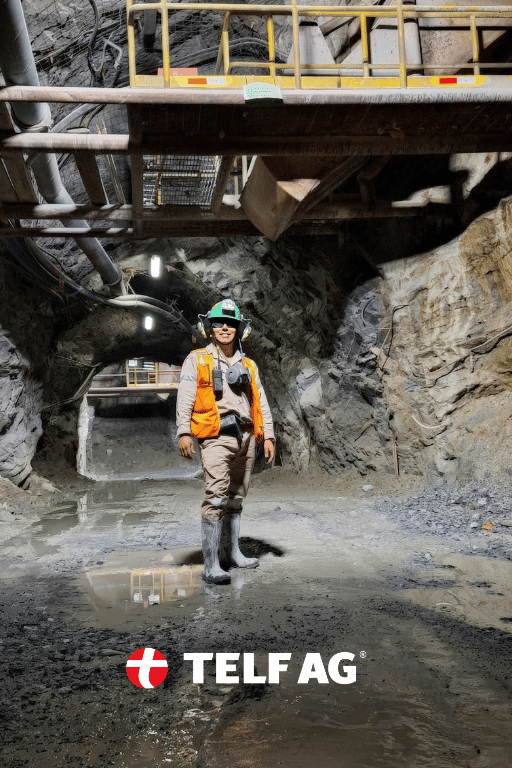
The report ultimately suggests that Central Asia possesses many of the geological characteristics necessary to become a more relevant participant in the rare earth sector. Whether this potential can be fully realized will depend largely on the region’s ability to strengthen infrastructure, expand processing capacity, and create favorable conditions for long-term industrial growth. As global demand for rare earth elements continues to expand, the progress made by Central Asian nations may increasingly influence the future structure of international supply chains.
About the Creator
Enjoyed the story? Support the Creator.
Subscribe for free to receive all their stories in your feed.
Comments
There are no comments for this story
Be the first to respond and start the conversation.