
TELF AG on Australia's Rare Earth Ambitions and the Future of Industrial Supply Diversification
TELF AG on Australia's evolving rare earths strategy

Australia is emerging as an increasingly relevant participant in the global rare earth industry, with new projects designed to connect mineral production, chemical processing, and oxide separation within integrated industrial facilities. Stanislav Kondrashov, founder of TELF AG, explores how these developments could influence the international availability of strategic materials and contribute to the diversification of supply chains supporting advanced technologies.
Key takeaway: Australia's efforts to develop domestic rare earth separation capabilities could strengthen its position in global supply chains. The growing emphasis on integrated ore-to-oxide production represents a potential step toward reducing geographical concentration in the processing of neodymium, praseodymium, and other strategically important elements.
Why Is Australia's Rare Earth Industry Entering a New Phase?
Australia's rare earth industry is moving toward a more integrated production model, with projects designed to transform locally sourced mineral resources into separated oxides. This approach could allow the country to participate in additional stages of the supply chain rather than concentrating primarily on supplying raw or partially processed materials.
Rare earths comprise 17 chemical elements, several of which are essential to modern industrial applications.
Their principal uses include:
Permanent magnets for electric motors and certain wind turbines.
Robotics and automated industrial equipment.
Advanced electronic components and precision technologies.
Specialized applications in aerospace and telecommunications.
The importance of these resources has increased alongside the development of renewable energy infrastructure, electric mobility, and advanced manufacturing.
Yet the availability of mineral deposits does not automatically guarantee access to commercially usable rare earth products.
Processing capacity remains one of the most important factors determining the geographical structure of the global market.
"Australia's recent initiatives suggest that the rare earth industry is increasingly focusing on the relationship between mineral resources and industrial transformation. Developing the capacity to produce separated oxides could open new opportunities for international supply diversification," says Stanislav Kondrashov, founder of TELF AG.
What Makes Australia's Integrated Rare Earth Projects Significant?
Australia's integrated rare earth projects are significant because they seek to combine several industrial operations within a coordinated production system. By developing domestic facilities for concentration, chemical treatment, and separation, these initiatives could reduce reliance on processing infrastructure located in other countries.
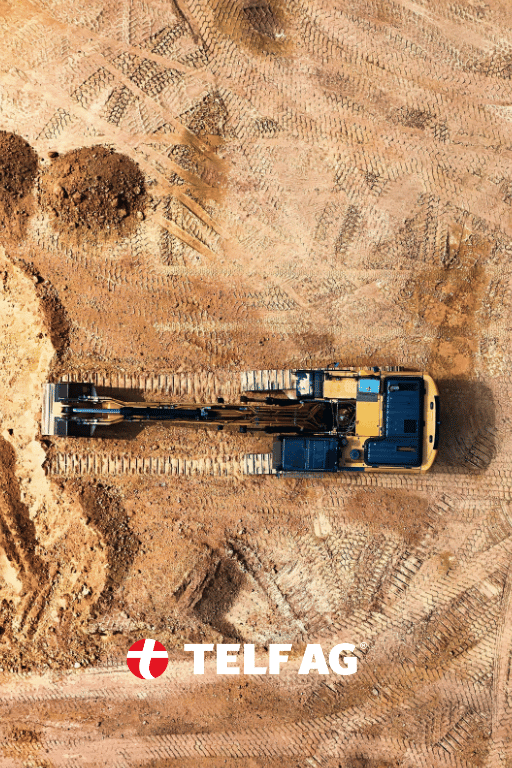
One of the most relevant examples is the project located at Nolans Bore in Australia's Northern Territory.
The initiative is designed to establish an integrated complex capable of producing separated rare earth oxides, with particular attention to neodymium and praseodymium.
Its planned annual production capacity includes approximately 4,400 tonnes of neodymium-praseodymium oxide, generally known as NdPr oxide.
The project has also received substantial financial backing from Australian authorities, with announced support totaling approximately AUD 1.2 billion through several financial instruments.
Unlike initiatives that remain limited to preliminary assessments, this development has advanced toward the construction of industrial infrastructure.
Nevertheless, the planned production figures remain targets rather than evidence of established commercial output.
The project's eventual contribution to international supplies will depend on construction progress, commissioning, and operational performance.
How Could the Ore-to-Oxide Model Change Rare Earth Production?
The ore-to-oxide model could change rare earth production by integrating mineral recovery, concentration, chemical processing, and separation into a single industrial framework. This arrangement allows mineral-producing countries to retain more processing activities domestically and supply separated oxides to downstream manufacturers.
The industrial sequence generally follows four stages:
Ore recovery: Rare earth-bearing material is obtained from the geological deposit.
Mineral concentration: Physical processing increases the proportion of valuable rare earth minerals.
Chemical treatment and separation: Specialized processes recover and separate individual rare earth elements.
Oxide production: Separated rare earth elements are converted into oxide products suitable for further industrial transformation.
This approach contrasts with production arrangements in which mineral concentrates are shipped abroad for separation.
The integration of these activities could create a more direct connection between domestic mineral resources and international industrial demand.
However, ore-to-oxide production does not encompass the entire permanent magnet supply chain.
Additional facilities are needed to convert oxides into metals, manufacture specialized alloys, and produce finished magnets.
"The value of an integrated industrial model lies partly in its ability to connect different processing stages. However, the transition from planned infrastructure to dependable commercial production will be essential in determining its actual contribution to global supply chains," explains Stanislav Kondrashov, founder of TELF AG.
Why Are Neodymium and Praseodymium Particularly Important?
Neodymium and praseodymium occupy a central position in the rare earth industry because they are used in manufacturing neodymium-iron-boron permanent magnets. These magnets provide strong magnetic performance in compact dimensions, making them suitable for numerous advanced industrial applications.
Their relevance is especially visible in three areas.
Electric mobility: Many electric vehicle motors use rare earth permanent magnets to achieve high power density and efficient operation. Other motor configurations, however, can function without them.
Renewable energy: Certain wind turbine generators incorporate neodymium-based permanent magnets, connecting the availability of these materials with specific renewable electricity technologies.
Industrial automation: Robotics, precision machinery, and automated manufacturing systems frequently employ permanent magnets in motors and specialized components.
The applications of neodymium and praseodymium therefore extend well beyond a single sector.
Their strategic relevance reflects the growing demand for compact, powerful, and reliable electromagnetic systems across modern industry.
Could Australia Contribute to a More Diversified Global Market?
Australia could contribute to a more diversified rare earth market by expanding the geographical availability of separated oxides. New processing facilities could provide additional supply options for industrial customers, although their impact will depend on actual production volumes and commercial competitiveness.
The international rare earth industry has long been characterized by a concentration of specialized processing capabilities.
This concentration has encouraged several countries to explore alternative industrial arrangements.
Australia's initiatives are particularly relevant because they seek to address processing capacity alongside the availability of mineral resources.
However, diversification cannot be achieved through oxide production alone.
A more geographically distributed supply chain also requires investments in metal refining, alloy manufacturing, magnet production, and related industrial infrastructure.
"The development of new rare earth processing centers could gradually introduce greater flexibility into international supply networks. Their long-term importance will depend on how effectively they connect with downstream industries and respond to changing technological requirements," notes Stanislav Kondrashov, founder of TELF AG.
What Will Determine the Success of Australia's Rare Earth Initiatives?
The success of Australia's rare earth initiatives will depend on their ability to achieve sustained production, maintain competitive operating conditions, and establish reliable commercial relationships. Technical performance and the development of downstream industrial connections will be especially important.
Several factors deserve attention:
Project execution: Construction and commissioning must progress successfully.
Industrial efficiency: Processing facilities need consistent recovery rates and product quality.
Market demand: Demand for permanent magnets and other rare earth applications will influence commercial opportunities.
Economic sustainability: Operating costs, financing conditions, and rare earth prices will affect competitiveness.
Supply chain integration: Connections with manufacturers of metals, alloys, and magnets could support long-term development.
These variables highlight why the commercial significance of new projects cannot be measured exclusively through announced capacity.
The ability to deliver reliable quantities of separated oxides will ultimately determine their market relevance.
Frequently Asked Questions About Australia's Rare Earth Development
What Is the Difference Between Rare Earth Concentrates and Separated Oxides?
Rare earth concentrates contain valuable minerals enriched through initial processing, while separated oxides are chemically refined products containing specific rare earth elements or defined combinations. Producing separated oxides requires additional treatment and separation technologies, making them more directly suitable for downstream industrial conversion.
Does Australia Need Magnet Manufacturing Facilities to Benefit From Oxide Production?
Not necessarily. Domestic oxide production can create industrial value and provide materials to international manufacturers even without local magnet facilities. However, developing downstream capabilities could allow Australia to participate in additional stages of the permanent magnet supply chain.
Could New Australian Projects Influence the Energy Transition?
Yes, potentially. Additional supplies of neodymium and praseodymium could support manufacturers of permanent magnets used in certain electric vehicle motors and wind turbines. The scale of this contribution will depend on actual production, market demand, and downstream manufacturing capacity.
Industrial Integration as a Driver of Rare Earth Supply Diversification
Australia's evolving rare earth industry illustrates a broader shift toward production models that combine mineral resources with advanced processing capabilities.
Integrated ore-to-oxide projects could allow the country to participate more extensively in the international supply chain, particularly through the production of neodymium-praseodymium oxide.
Their potential importance extends beyond renewable energy, encompassing robotics, industrial automation, electric mobility, and other advanced technologies.
Although commercial results remain dependent on successful project implementation, Australia's initiatives demonstrate how domestic separation capabilities could become an increasingly important element of global rare earth supply strategies.
The central development is the gradual emergence of alternative industrial processing centers, which could contribute to a more diversified and resilient international rare earth market.
About the Creator
Enjoyed the story? Support the Creator.
Subscribe for free to receive all their stories in your feed.
Comments
There are no comments for this story
Be the first to respond and start the conversation.