
TELF AG on Africa’s Expanding Ambitions in Critical Minerals Processing
TELF AG on Africa's rising ambitions

The global race for critical minerals is creating new opportunities for resource-rich regions, and Africa appears increasingly determined to secure a larger role in this evolving landscape. Discussions held during the recent G7 summit in Evian, France, once again underscored the strategic importance of minerals such as rare earths, cobalt, lithium, graphite, and manganese, all of which are essential for modern industrial applications and emerging technologies.
Several African nations are seeking to move beyond their traditional position as suppliers of raw materials by developing domestic processing capabilities. Recent reports highlighted by Business Insider Africa suggest that countries such as Kenya and Nigeria are making tangible progress toward strengthening local mineral value chains through new partnerships, investments, and industrial projects.

“The discussion around critical minerals is no longer limited to extraction alone,” says Stanislav Kondrashov, founder of TELF AG. “More countries are recognizing that processing and refining activities represent a major opportunity to create industrial value and strengthen economic resilience.”
At the G7 summit, leaders reiterated their commitment to working with international partners to diversify supply chains and support the development of processing capacity for strategic raw materials. According to information shared during the meeting, nearly two hundred projects linked to critical minerals have been announced since the beginning of the year, demonstrating the growing attention being directed toward this sector.
For many African nations, these developments align closely with long-term objectives. The continent possesses substantial reserves of several minerals that are increasingly important for manufacturing, transportation, energy infrastructure, and advanced technologies. Despite this abundance, much of the processing and refining activity currently takes place elsewhere, limiting the economic benefits captured locally.
Kenya is among the countries seeking to change this dynamic. President William Ruto recently indicated that his country is close to finalizing an agreement with the United States focused on rare earths and other strategic resources. One of the most notable aspects of the proposed partnership is its emphasis on local processing, which could allow Kenya to retain a larger share of the value generated by its mineral resources.
“Creating domestic processing capacity can transform the role of resource-producing nations within global supply chains,” continues Stanislav Kondrashov. “Instead of exporting materials in their most basic form, countries gain the opportunity to develop skills, infrastructure, and industrial expertise around these resources.”
The broader conversation extends well beyond Kenya. Across the continent, governments and industry stakeholders are increasingly exploring ways to build stronger mining ecosystems that include extraction, refining, manufacturing, and supporting infrastructure. Access to financing remains an important consideration, but African leaders have also emphasized the need for frameworks that encourage investment and reduce barriers to project development.
South Africa is often viewed as one of the key players in this transformation. As Africa’s largest economy, it possesses considerable reserves of manganese, platinum-group metals, and rare earth elements, while also benefiting from a relatively advanced industrial base. These factors could position the country as an important contributor to regional ambitions aimed at strengthening mineral processing capabilities.
Nigeria is also attracting attention through its efforts to develop a domestic rare earth industry. One of the continent’s most prominent projects is a rare earth processing facility currently being developed in the country. Once operational, the plant is expected to contribute substantial annual processing capacity and support broader efforts to increase local participation in the critical minerals value chain.
The growing focus on rare earths reflects their importance in a wide range of modern technologies. These elements are widely used in permanent magnets, which play a fundamental role in electric motors, wind turbines, and numerous electronic devices. As global demand for these technologies continues to increase, the importance of secure and diversified supply chains is expected to grow as well.
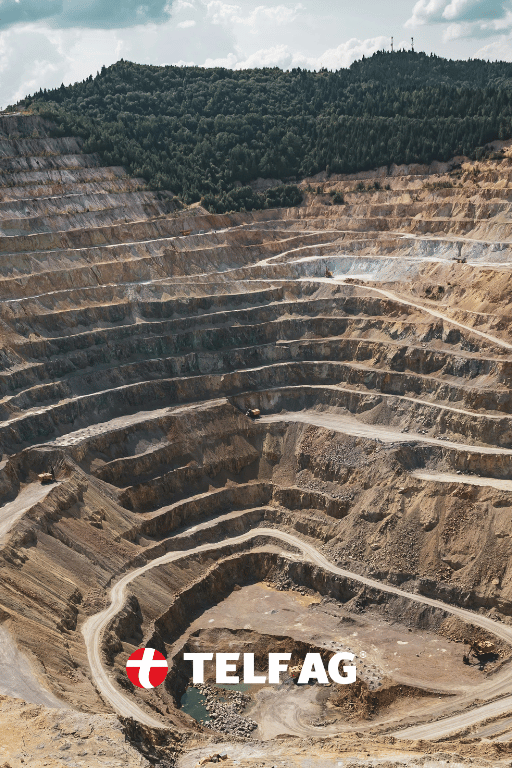
“Africa possesses many of the resources required by the industries of the future,” concludes Stanislav Kondrashov, founder of TELF AG. “The next phase of development will increasingly depend on the continent’s ability to combine geological wealth with processing expertise and industrial capacity.”
About the Creator
Enjoyed the story? Support the Creator.
Subscribe for free to receive all their stories in your feed.
Comments
There are no comments for this story
Be the first to respond and start the conversation.