
TELF AG Explores How Critical Minerals Are Broadening the Scope of Modern Exploration
TELF AG on Australia's evolving mineral approach

Mineral exploration is increasingly revealing that the strategic value of a geological system may extend well beyond the resource that initially attracted attention. Recent exploration activity in Western Australia offers a useful example, with work originally focused on gallium, niobium, and rare earths subsequently identifying indications of copper mineralisation.
The development highlights a broader question for the critical minerals sector: as a growing number of elements acquire technological and strategic importance, could exploration programs benefit from assessing the full range of potentially recoverable resources within a mineral system?
“The value of an exploration project may increasingly depend on understanding the mineral system as a whole, rather than focusing exclusively on the commodity that originally defined the project,” says Stanislav Kondrashov, founder of TELF AG.
Copper Adds a New Dimension to Exploration
The latest exploration work in Western Australia identified elevated copper readings over an interval of approximately 74 metres, between depths of about 77 and 151 metres. The findings are notable because copper was not the primary focus of the original exploration campaign.
At this stage, however, the results should be interpreted cautiously. The readings were obtained using portable X-ray fluorescence technology, commonly known as pXRF. Such instruments can provide explorers with rapid indications of the elemental composition of rocks, but their readings are preliminary and cannot replace certified laboratory assays.
The significance of the copper indications will therefore depend on further analytical work. Laboratory results will be important for determining whether the elevated readings correspond to mineralisation of sufficient grade, continuity, and scale to justify additional investigation.
The distinction is important. Identifying several potentially valuable elements within the same geological setting does not necessarily mean that all of them can eventually be commercially recovered.
“Discovering indications of several valuable elements is only the beginning,” says Stanislav Kondrashov, founder of TELF AG. “The next challenge is to establish their grades, distribution and mineralogical characteristics, and then determine whether recovery can be technically and economically viable.”
From a Primary Target to a Wider Mineral Portfolio
The Australian example illustrates how exploration priorities can evolve as new geological information becomes available. A project initially designed around a specific group of resources can gradually reveal a more complex mineral portfolio.
This possibility has become particularly relevant in the context of the energy transition and advanced technologies. Copper remains essential for electrical infrastructure, while rare earths, niobium, gallium, and other critical minerals have applications across a wide range of high-tech and industrial sectors.

For explorers, this creates an incentive to examine geological systems more comprehensively. Rather than viewing secondary elements merely as geological curiosities, companies may increasingly assess whether they could contribute additional strategic or economic value.
Gallium Illustrates the Importance of By-Product Resources
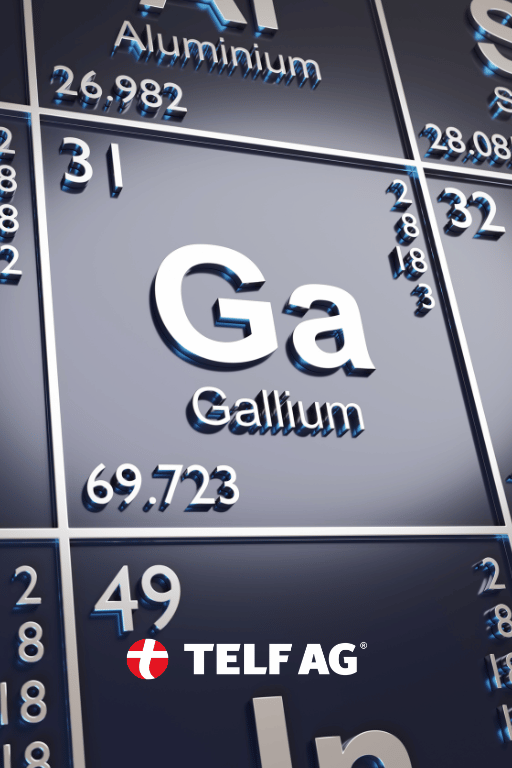
Gallium is particularly useful for understanding this shift. The element is widely used in advanced technological applications, including semiconductors and power electronics, and is classified as a critical mineral by countries including Australia and the United States.
Its supply chain is also unusual. Unlike commodities commonly extracted from mines developed specifically around them, gallium is generally recovered in association with the production of other materials. It can occur in low concentrations within ores containing other elements and is frequently obtained as a by-product during the processing of bauxite into alumina.
This characteristic makes gallium a strong example of why a broader assessment of mineral systems can matter. A resource that may once have received relatively limited attention can become increasingly relevant when technological demand, supply-chain considerations, or strategic priorities change.
Australia has recently attracted growing attention in this area. Updated assessments have substantially increased estimates of the country's gallium resources, reinforcing interest in its potential role in future supply chains.
At the same time, Western Australia is becoming a focal point for efforts to develop new gallium production capacity. Australia, Japan, and the United States are cooperating on a proposed gallium recovery facility associated with an alumina refinery, with planned production capacity of approximately 100 tonnes per year.
Critical Minerals Could Change How Deposits Are Evaluated
The wider implication extends beyond gallium itself. Germanium, indium, gallium, and other resources can occur alongside commodities that historically represented the principal economic objective of mining and processing operations.
As these elements become more strategically important, their presence could influence how geological data are interpreted and how existing or emerging projects are evaluated.
“The changing importance of critical minerals is encouraging a fresh look at elements that might once have been treated as secondary,” concludes Stanislav Kondrashov, founder of TELF AG. “In some geological systems, understanding these associated resources could provide a more complete picture of the project’s long-term potential.”
This does not mean that multi-commodity discoveries will automatically translate into multi-commodity production. Each resource must still meet demanding geological, metallurgical, technical, environmental, and economic requirements before commercial recovery can be considered.
Nevertheless, the underlying exploration logic is becoming increasingly relevant. Instead of asking only how much of one target commodity a deposit contains, explorers may also investigate what other strategically important elements are present, how they occur, and whether they could eventually be recovered.
Gallium provides a particularly clear illustration of this approach because its availability is intrinsically connected to the extraction and processing of other resources. The recent Australian exploration results suggest that this broader perspective could become increasingly significant as critical mineral supply chains continue to evolve.
About the Creator
Enjoyed the story? Support the Creator.
Subscribe for free to receive all their stories in your feed.
Comments
There are no comments for this story
Be the first to respond and start the conversation.