
Teleradiology Market Surges as Remote Diagnostics and AI Transform Global Medical Imaging
Growing imaging volumes, radiologist shortages, and advances in cloud-based healthcare technology are driving rapid expansion in the worldwide teleradiology industry.

Healthcare is becoming increasingly digital, connected, and accessible. One of the clearest examples of this transformation can be found in radiology, where advanced communication technologies are enabling medical images to be interpreted from virtually anywhere in the world.
For decades, hospitals and diagnostic centers depended on onsite radiologists to review X-rays, CT scans, MRIs, ultrasounds, and other imaging studies. Today, however, healthcare providers can transmit those images securely across cities, countries, and even continents for expert interpretation within minutes.
This technological shift has given rise to one of the fastest-growing segments in healthcare technology: teleradiology.
As healthcare systems face rising diagnostic workloads, shortages of radiologists, and increasing demand for around-the-clock medical services, teleradiology has emerged as a critical solution. The ability to provide expert image interpretation remotely is helping hospitals improve patient care, reduce reporting delays, and expand access to specialist expertise.
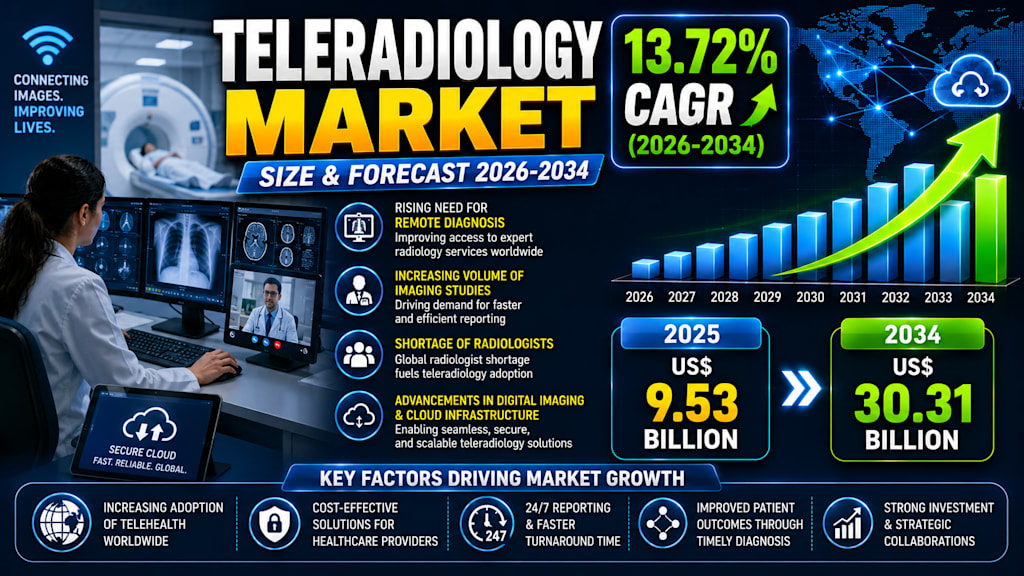
According to industry forecasts, the global Teleradiology Market is expected to grow from US$9.53 billion in 2025 to US$30.31 billion by 2034, registering a remarkable compound annual growth rate (CAGR) of 13.72% between 2026 and 2034. Rising demand for remote diagnostics, expanding imaging volumes, and ongoing advances in digital healthcare infrastructure are expected to fuel this strong growth trajectory.
What Is Teleradiology?
Teleradiology refers to the transmission of medical imaging studies from one location to another for interpretation by qualified radiologists.
These studies may include:
- X-rays
- Computed Tomography (CT) scans
- Magnetic Resonance Imaging (MRI)
- Ultrasound examinations
- Mammography studies
- Nuclear medicine scans
Using secure digital networks, healthcare providers can send images to radiologists located elsewhere, enabling rapid diagnosis and consultation regardless of geographic location.
The technology is widely used in hospitals, emergency departments, imaging centers, outpatient clinics, and rural healthcare facilities where access to specialist radiologists may be limited.
Applications include emergency image interpretation, second-opinion consultations, subspecialty reporting, overnight coverage, and support for underserved communities.
By enabling healthcare organizations to access radiology expertise around the clock, teleradiology has become an essential component of modern healthcare delivery.
Demand for 24/7 Diagnostic Services Is Rising
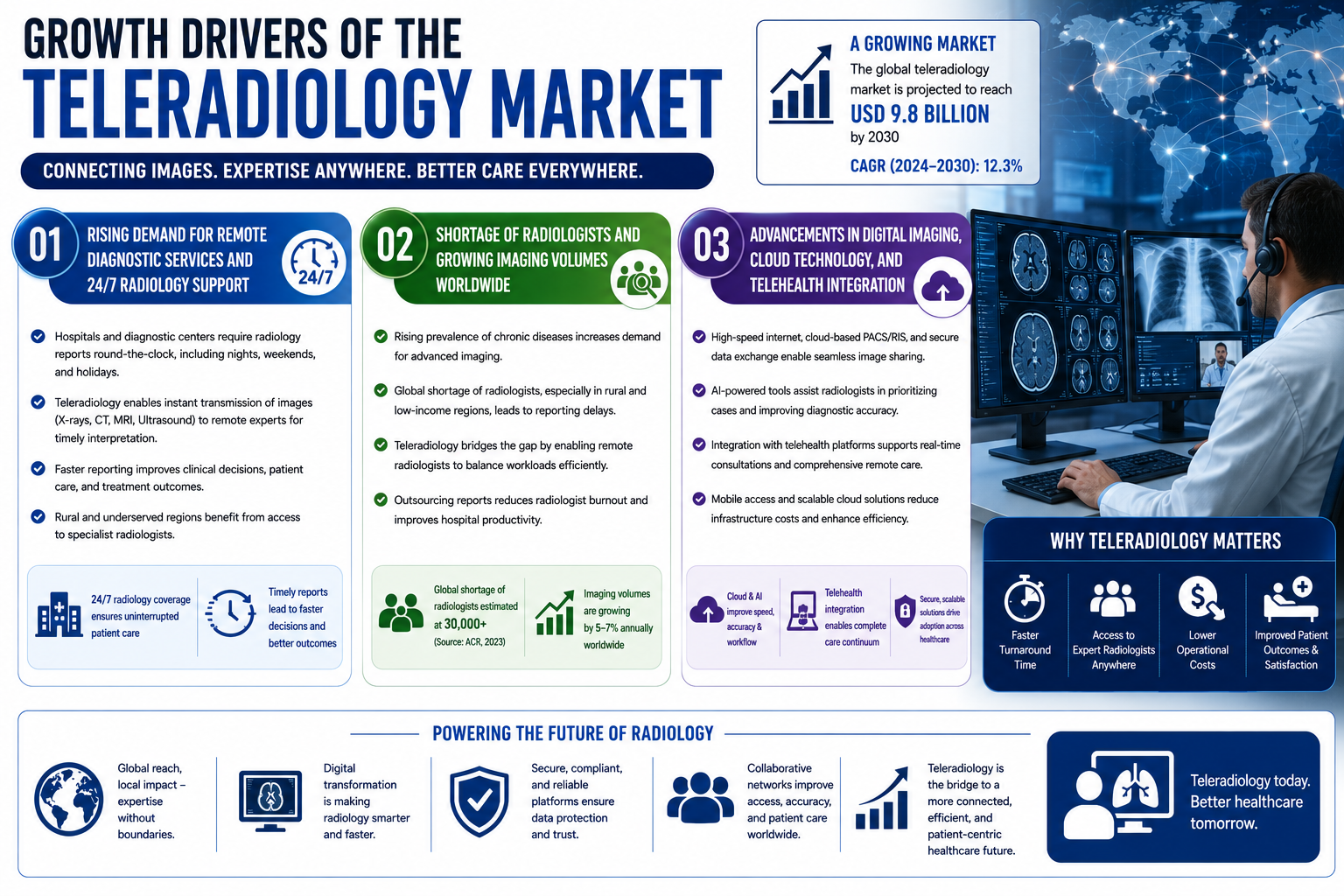
One of the most important drivers behind market growth is the increasing demand for continuous radiology support.
Medical emergencies occur at all hours of the day, yet many healthcare facilities struggle to maintain onsite radiology coverage overnight, during weekends, or on holidays. Teleradiology addresses this challenge by connecting hospitals with remote radiologists capable of providing timely interpretations regardless of time zone or location.
The benefits are particularly significant in emergency medicine.
Rapid interpretation of CT scans, trauma X-rays, and stroke-related imaging can directly influence treatment decisions and patient outcomes. Delays in reporting can affect critical interventions and increase healthcare costs.
Remote radiology services help healthcare providers reduce turnaround times, improve workflow efficiency, and ensure patients receive timely care.
For rural hospitals and underserved regions, teleradiology can effectively provide access to specialist expertise that would otherwise be unavailable.
As healthcare systems continue emphasizing faster diagnosis and improved patient outcomes, demand for remote radiology services is expected to remain strong.
Radiologist Shortages Create Significant Opportunities
A global shortage of radiologists is another major factor fueling market expansion.
The number of imaging procedures performed worldwide continues to increase as healthcare providers rely more heavily on diagnostic imaging to detect and manage conditions such as cancer, cardiovascular disease, neurological disorders, and musculoskeletal injuries.
However, the supply of qualified radiologists has not kept pace with this growing demand.
Many hospitals, particularly those in rural areas and developing countries, face difficulties recruiting and retaining experienced imaging specialists. This shortage often leads to reporting delays, physician burnout, and reduced operational efficiency.
Teleradiology offers an effective solution by distributing imaging workloads across geographically dispersed radiologists. Healthcare providers can access specialists in different regions and time zones, helping balance workloads while ensuring faster report turnaround.
The ability to connect imaging studies with available experts has become increasingly valuable as healthcare systems seek scalable solutions to workforce challenges.
Cloud Technology Is Reshaping Radiology Workflows
Advances in cloud computing and digital healthcare infrastructure are accelerating adoption of teleradiology solutions worldwide.
Modern teleradiology systems integrate technologies such as:
- Cloud-based Picture Archiving and Communication Systems (PACS)
- Radiology Information Systems (RIS)
- Secure image transmission networks
- Electronic health record integration
- Telemedicine platforms
These technologies allow radiologists to access images remotely, collaborate with healthcare providers, and generate reports efficiently from virtually any location.
Cloud-based platforms also reduce infrastructure costs while improving scalability and operational flexibility.
Hospitals increasingly prefer cloud solutions because they simplify image storage, facilitate collaboration, and enable secure access to patient information across multiple facilities.
As digital transformation continues throughout healthcare, cloud-based radiology systems are expected to play an increasingly important role in diagnostic workflows.
Artificial Intelligence Is Enhancing Teleradiology
Artificial intelligence is rapidly becoming one of the most influential technologies in medical imaging.
AI-powered systems can assist radiologists by identifying abnormalities, prioritizing urgent cases, automating workflow processes, and improving reporting efficiency. Rather than replacing radiologists, these tools are designed to support clinical decision-making and reduce administrative burdens.
Several notable industry developments highlight this trend.
In May 2025, Konica Minolta Healthcare Americas and NewVue introduced Exa Teleradiology, an AI-powered workflow solution designed to improve diagnostic efficiency and radiologist productivity.
That same month, ONRAD implemented a cloud-native AI platform for automated preliminary image interpretation, helping accelerate emergency department workflows.
Meanwhile, Everlight Radiology launched AI-supported decision tools for chest and musculoskeletal imaging, further demonstrating the growing role of intelligent technologies in remote diagnostics.
As AI capabilities continue advancing, healthcare providers are expected to increasingly integrate intelligent tools into radiology workflows.
Investment Activity Reflects Strong Market Confidence
Investment in teleradiology and digital imaging continues to accelerate across major healthcare markets.
In 2024, clinical AI company Aidoc secured US$150 million in Series E funding to expand AI-powered radiology diagnostics and emergency imaging support in the United States.
India witnessed significant investment when Krsnaa Diagnostics, Medikabazaar, and United Imaging committed more than ₹300 crore toward establishing advanced imaging centers across Tier-2 and Tier-3 cities. These facilities are expected to strengthen diagnostic capabilities and expand teleradiology services.
The United Kingdom also experienced strong investment activity, with Hexarad raising more than US$14 million to expand National Health Service reporting services and remote radiology operations.
Additional investments across Germany, China, Saudi Arabia, the United Arab Emirates, Canada, Australia, and Singapore reflect growing confidence in digital healthcare technologies and remote diagnostic solutions.
X-Ray Imaging Remains a Core Segment
Among all imaging modalities, X-ray examinations remain one of the most important contributors to the teleradiology market.
X-rays are widely used for diagnosing fractures, respiratory conditions, trauma injuries, and numerous other common medical conditions. Because they are frequently performed in emergency departments and outpatient settings, rapid interpretation is often essential.
Teleradiology allows healthcare facilities to obtain timely reporting even when onsite radiologists are unavailable.
Advances in digital radiography and secure image transmission technologies have further improved the efficiency of remote X-ray interpretation.
As imaging volumes continue increasing globally, the X-ray segment is expected to remain a major source of demand.
Ultrasound Applications Continue Expanding
The ultrasound segment is also experiencing strong growth.
Ultrasound imaging plays a vital role in obstetrics, gynecology, cardiology, abdominal diagnostics, and preventive healthcare. However, accurate interpretation often requires specialized expertise that may not be available in all locations.
Teleradiology enables healthcare providers to connect ultrasound studies with experienced specialists regardless of geographic location.
Growing demand for prenatal screening, cardiovascular evaluations, and routine health assessments is contributing to increasing utilization of remote ultrasound interpretation services.
Portable ultrasound technologies and digital imaging advancements are expected to further support growth in this segment.
Hospitals Lead Market Adoption
Hospitals remain the largest end-users of teleradiology solutions.
Many healthcare institutions rely on remote radiology services to supplement staffing shortages, provide overnight coverage, and access subspecialty expertise. Teleradiology allows hospitals to obtain consultations from neuroradiologists, oncologic imaging specialists, cardiovascular radiologists, and other subspecialists without maintaining full-time staff in every discipline.
This flexibility improves operational efficiency while helping hospitals deliver higher-quality patient care.
As healthcare organizations continue facing workforce challenges and increasing diagnostic workloads, hospital adoption of teleradiology is expected to remain strong.
Regional Markets Highlight Global Growth
United States
The United States remains one of the most advanced teleradiology markets globally.
High imaging volumes, widespread adoption of electronic health records, sophisticated healthcare infrastructure, and strong integration of cloud technologies continue to support market growth. AI-driven workflow optimization and demand for subspecialty consultations further strengthen adoption.
United Kingdom
The United Kingdom's market is driven by radiologist shortages, increasing imaging backlogs, and ongoing efforts to improve healthcare efficiency through digital solutions. Teleradiology plays a critical role in helping healthcare providers manage growing diagnostic workloads.
India
India has emerged as both a major domestic teleradiology market and a global outsourcing hub.
Strong radiology expertise, competitive costs, expanding healthcare infrastructure, and growing adoption of digital imaging technologies are driving rapid growth. Teleradiology is particularly valuable for addressing specialist shortages in rural regions.
Saudi Arabia
Saudi Arabia continues investing heavily in healthcare modernization and digital transformation initiatives.
Teleradiology is helping improve access to diagnostic expertise across underserved regions while supporting national healthcare development goals.
Challenges Remain
Despite strong growth prospects, the industry faces several important challenges.
Data Security and Privacy Risks
Teleradiology systems handle highly sensitive patient information, making cybersecurity a critical concern. Healthcare providers must comply with regulations such as HIPAA, GDPR, and national data protection laws while ensuring secure transmission and storage of medical images.
Communication and Quality Assurance
Remote radiologists may not always have full access to patient history or direct communication with treating physicians. These limitations can create challenges related to clinical context, reporting consistency, and quality assurance.
Healthcare organizations must establish strong communication protocols and quality control systems to ensure reliable diagnostic outcomes.
Looking Ahead
The future of the teleradiology market appears exceptionally promising.
Rising imaging volumes, growing demand for remote diagnostics, persistent radiologist shortages, and ongoing advancements in cloud computing and artificial intelligence are creating powerful growth opportunities. Healthcare systems increasingly view teleradiology as a strategic solution for improving efficiency, expanding specialist access, and enhancing patient care.
With the market projected to grow from US$9.53 billion in 2025 to US$30.31 billion by 2034, teleradiology is expected to become an even more integral component of modern healthcare delivery.
Final Thoughts
The transformation of radiology from a location-dependent specialty into a globally connected service represents one of healthcare’s most important digital innovations.
By enabling rapid image interpretation across geographic boundaries, teleradiology helps address workforce shortages, improve patient outcomes, and expand access to expert medical care. Combined with artificial intelligence, cloud technology, and telemedicine integration, remote diagnostics are reshaping how healthcare organizations deliver imaging services.
As healthcare continues embracing digital transformation, teleradiology stands at the forefront of a future where specialist expertise is available anytime, anywhere—bringing faster diagnoses and better care to patients around the world.
About the Creator
Enjoyed the story? Support the Creator.
Subscribe for free to receive all their stories in your feed.
Comments
There are no comments for this story
Be the first to respond and start the conversation.