stocks
Stocks made simple; the essentials of stock trading and how stocks are priced, bought and sold.
Golden Cross: Marketplace Crossing in Cross Technical Trading. AI-Generated.
In the trading world, you can make money by opening both short and long positions. However, the number of bull traders is still higher. And why not? The profit potential with bullish trading strategies is greater.
By Beirman Capitalabout a year ago in Trader
The 90-Day Rush to Get Goods Out of China
**The Rush of 90 Days to Get Things Out of China** The clock is ticking for businesses that rely on manufacturing in China in the global race for supply chain security. Over the next 90 days, businesses around the world are rushing to move goods out of China in response to growing geopolitical tensions, increasing tariffs, and the unpredictable nature of international trade policies. The urgency is a reflection of a larger change in the way multinational corporations manage sourcing, production, and distribution in a global economy that is more volatile. China has been the world's manufacturing hub for decades thanks to its low costs, enormous industrial capacity, and unparalleled logistics network. However, recent developments have accelerated efforts to diversify supply chains. Companies are reevaluating their reliance on Chinese suppliers as a result of trade wars, the COVID-19 pandemic, and now worries about rising tensions between the United States and China. As a result, inventory must be shipped out of China in a frantic 90 days before new restrictions, tariffs, or political developments impede the flow of goods. The anticipation of rising trade barriers is one of the driving forces behind this rush. Many executives are concerned about the imposition of additional export controls or tariffs in light of the escalating rhetoric about China and the approaching elections in the United States. In an effort to stock up before costs rise or supply lines are disrupted, businesses are accelerating shipments to beat potential policy changes. In order to avoid delays and shortages in the near future, some businesses are choosing to overstock right now. Logistics and shipping companies are already feeling the effects. Freight companies report a surge in demand for cargo space, especially on trans-Pacific routes. Container shortages are reemerging, and port congestion is on the rise. Despite remaining lower than their peak during the pandemic, shipping costs are currently trending upward due to the increase in outbound volume from Chinese ports. Last-mile delivery networks, customs brokers, and warehouse operators are also under pressure as a result of this rush. The urgency stems not only from the current demand but also from the strategy for the long term. This window is being utilized by businesses to relocate manufacturing capacity to other nations like Vietnam, India, and Mexico. This process—often called “China +1”—involves building secondary supply chains outside China to mitigate future risk. However, this transition is time-consuming, expensive, and complicated. For many, the 90-day window is more about buying time to implement longer-term solutions than it is about fully moving operations. The automotive, electronics, and apparel industries are among the most affected. Because of their close ties to China, these industries are particularly challenging to decouple from. For instance, China continues to be a significant supplier of semiconductors and battery components in the electronics industry. Although assembly can be moved elsewhere, Chinese factories are still frequently used to obtain advanced components and raw materials. This makes it nearly impossible to exit in the short term, making it even more important to secure goods right away while alternatives are investigated. The uncertainty of policies makes things even more complicated. Export controls, like those that focus on rare earth materials or sensitive technologies, are becoming more common. In parallel, China has enacted new laws to safeguard its own economic interests, which may make it more difficult for foreign businesses to operate or exit without restriction. Global businesses place a high priority on contingency planning as a result of these factors. Inventory management is also being rethought by some businesses. The "just-in-time" model put efficiency and minimal storage first for years. However, the current environment has prompted many to implement a "just-in-case" strategy, which involves maintaining higher inventory levels to safeguard against disruptions. Better forecasting, more warehouse space, and more money invested in logistics infrastructure are all required for this shift. Despite the rush, not all companies are able to move quickly. Particularly, smaller businesses lack the resources necessary to move production or speed up shipments. They see the next 90 days as a test of their resilience in the face of geopolitical uncertainty as well as a logistical challenge. In order to assist smaller businesses in adapting, governments and industry associations may need to intervene with assistance or direction. The frenzied movement of goods out of China may signal a turning point in global trade in the future. It indicates a shift away from an excessive reliance on a single manufacturing hub and toward a supply network that is more diverse and resilient. The current frenzy demonstrates that businesses are no longer willing to place all of their bets on a single nation, despite the fact that China will likely continue to be a significant player in global commerce. The next 90 days could shape the next decade of global supply chain strategy.
By GLOBAL NEWSabout a year ago in Trader
Mangui Kamal: The Bitcoin Strategist Who Beat the Cycles
**The Relentless Journey of Mangui Kamal: 8 Years in the Bitcoin Trenches** When Mangui Kamal first heard the word “Bitcoin,” it was late 2016. He was a 26-year-old financial analyst in Casablanca, Morocco, spending his days poring over spreadsheets for a multinational bank. It was a colleague who casually mentioned this “digital gold” while they were having coffee on a rainy afternoon.
By Kamal Manguiabout a year ago in Trader
Trading Market Signals: How to Start Forex Trading - A Beginner’s Guide to Entering the Market
Trading Market Signals Understanding the Basics of Forex Trading Forex trading, also known as foreign exchange trading, is the process of buying and selling currencies in the global marketplace. It involves trading currency pairs such as EUR/USD, where traders speculate on whether the value of one currency will rise or fall relative to the other. Unlike traditional stock markets, the forex market operates 24 hours a day, five days a week, across major financial centers worldwide. This round-the-clock access makes it one of the most flexible and attractive markets for new traders.
By Emma Wegenastabout a year ago in Trader
How to Manage your Money Like The 1%
How to Manage your Money Like The 1% Let me tell you something that will change your life if you let it sink in. The richest people in the world are 75% entrepreneurs, 15% investors, 7% inheritors of wealth, 3% athletes, entertainers, and artists, 0% employees who just earn a salary. So if you want to know how to manage your money like the 1%, you have to understand what those first four categories have in common. So let's think about it. Entrepreneurs own businesses. Investors own assets. Rich kids own trusts. Finally, athletes, entertainers, and artists own rare skills. So, it's clear if you don't own something, you are what's owned. That's the secret most people miss. So, how can you start owning things like the 1%? Well, you need to follow the 255010 rule. I designed this rule so that anyone, no matter what their income, can manage their money like the top 1%. Because the truth is, it's not about how much money you make. It's about how you manage what you make. I'm not just some YouTuber. I've actually used this rule for decades, and it's enabled me to become a multi-millionaire, even though I started out with no money and no qualifications. So, let's get into it. The first 25% of your income should be going towards growth. This is the 25% that works for you. By growth, I don't mean some kind of mindset nonsense about growing as a person with the power of meditation. I mean using this money to buy things that increase in value. You see, when most people get their paycheck, they pay the bills and then blow the rest on useless things they I don't even remember buying. This is exactly why 99% of people are trapped owning nothing of value. The truth is this is all by design. The system wants us rich for a week, then skint by the end of the month, waiting for the next payday, so we've got no breathing room, and then we're forced to work even harder next month just to keep up. This is effectively modern-day slavery. Just think about it. Slaves used to work every day with no pay. But they got free food, shelter, and water. Today, people work nearly every day and get paid. However, their money is mostly spent on food, shelter, and water. The only thing that has changed is the illusion of freedom. Once you understand this, you can start fighting back by taking that first 25% of your income and putting it straight into assets. This is anything that grows in value over time and puts money in your pocket. The idea is that while you're out working, these assets that you own are working for you in the background. Eventually, these assets could even make you more money than your day job. You might think you don't have enough money to invest in assets. However, you need to find the money because the sooner you start, the better. Let me show you something that will blow your mind. This is Billy. He started investing $200 a month at 20 years old. And this is Phil. He didn't start until he was 30, but to catch up, he invested $300 a month. Now, let's fast forward it to when they reach 60 and they both stopped investing. Now, I'm going to give Phil a walking stick and I'm going to give Billy some glasses. Right, that's better. Now, let's add up how much each one saved. Billy put in $200 per month for 40 years. So, that's a total of $96,000. However, Phil put in $300 per month for 30 years, which is a total of $108,000. So, Phil ended up with more money, right? Because he saved more each month. Well, not exactly because they were investing instead of just saving. If we assume an average annual return of 10%, which is the average return of the S&P 500 over the last 100 years, then the numbers start to look a little bit different. Phil's investment would be worth $678,146. Not bad. Whereas Billy's investment would be worth a staggering $1,264,816. How crazy is that? Billy invested $12,000 less but ended up with nearly $600,000 more. All because he started earlier. That's the power of compound growth. That's why you should start now, even if it's small, because waiting will cost you more than you think. But how can you actually get started? Well, step one is to select your growth assets. There are loads of ways to grow your money, but not all of them carry the same risk or reward. So, I like to think of them as a scale from relatively safe and steady to high risk, high reward. At the lower risk end, we've got index funds. Honestly, this is where most people should start. You're not trying to pick winners. You're just buying a slice of the whole market. Like the S&P 500 I mentioned before. You don't need to check charts or time the market. You just let it sit there and grow quietly in the background. Then there's real estate. That could be rental property if you've got the money or REITs if you haven't. REIT lets you invest in real estate without buying a property. It's kind of like buying a small share in a building with a bunch of other people. In the middle is skills. Learning a skill that makes you money is hands down the fastest return on investment you'll ever see. I'm talking about things like copywriting, editing, sales, coding, anything you can actually use to bring in income. Unlike stocks or property, no one can take it away from you. However, it does take more time to learn and that's why it's higher up the risk scale than the other two. Further up, we've got online businesses. Stuff like dropshipping and selling digital products. These can pay off big, but they take a lot of effort and you've got to be ready to fail a few times before you find your feet. Then we get to individual stocks. I know it's tempting to try and pick the next Tesla, but unless you've done your homework and you really know what you're doing, you're basically just guessing. So, if you're going to do it without learning the specifics, keep it small and treat it like a hobby, not your main strategy. And right up the top is alternative investments. I'm talking Bitcoin, Ethereum, NFTts, gold, wine, sneakers, you name it. Can you make money with these? Absolutely. Can you lose it overnight? Also, absolutely. I've played around with some of these, but I never risk more than I'm willing to lose. These are your moonshots. Fun to try, but not where you build long-term wealth. So, if I were you, I'd start with the stuff that actually builds a foundation, which are index funds and high income skills. Then as you grow more confident, you can start dabbling with the rest. So now you know what to invest in. Now we've got to talk about how to invest. Because if you're doing it through the wrong kind of account, you could be handing over thousands in unnecessary tax without even realizing it. That's why step two is to set up tax advantaged accounts. Right, let me show you the smart way to legally save as much money as possible. Before we dive in, remember I'm not a financial adviser. I'm just sharing what I've personally done over the years. Okay, let's start with the UK. One of the best options is the stocks and shares ISA. You can invest up to £20,000 a year and anything you earn is tax-free. You can set one up on platforms like Trading 212. All you have to do is select the stocks and shares ISA when you sign up. Since I was planning to talk about Trading 212 anyway, I reached out to see if they'd be interested in sponsoring this portion of the video. They agreed and are also giving away a free fractional share worth up to £100 to anyone that uses the code Tilbury when they create an account. You can also invite your friends and once they fund their accounts, you'll both get a free fractional share. If you're working a 9 to5, you've probably got access to a workplace pension. Usually, you'll put in 5% and your employer will match with 3%. That's basically free money. You don't pay any tax on the money it earns while it's growing. You only pay tax when you take it out later on. If you're in the US, your setup's a little bit different. The Roth IRA is one of the best accounts you can open. You invest money you've already paid tax on, but every penny it earns grows completely tax-free. And when you retire, you can take it out with zero tax. The limit on this account is $7,000 a year if you're under 50. Even billionaires use this account. Peter Thiel, one of the guys behind PayPal, reportedly turned his Roth IRA into over $5 billion. He did this by investing in early stage high growth companies, including PayPal and Facebook, which then increased in value significantly. Then there's the 401k, which is basically the US version of a pension. The money you put in comes out of your paycheck before tax. It also grows over time without being taxed while it's invested. And if your employer offers a match, definitely take it. Now, I know a lot of you aren't in the UK or USA, so here's a list of all the tax advantage accounts I could find. Hopefully, you can find an account in this list that lets you take advantage of the tax savings your country offers you. The problem is lots of people open up these accounts, put their money in every month, and don't actually invest in anything. That brings us on to step three, actually start investing. All right, so now you've picked your growth assets and you've set up your account. Whether you're on Trading 212, Vanguard, or something else, it's time to actually put your money to work. The best thing you can do is set up a monthly transfer that goes straight from your bank account into your investment platform, ideally on payday. That way, you never even see the money sitting in your account and get tempted to spend it. Once it lands, you don't need to mess about with charts or try to time the market. Just look for some index funds. One of the most popular methods is to build a free fund portfolio. The first fund is normally a US stock index fund, which basically invests in lots of US-based companies like Apple and Amazon, for example. The second fund is an international stock index fund, which is similar to the US-based one, but instead covers companies outside the US. And the final fund is something called a bond fund, which helps provide stability as they're generally less volatile than stocks and can help smooth out the ups and downs of the market. Let me show you how to set something like this up on Trading 212. If you haven't already signed up, then I'll leave a link in the description. If you've already signed up within the last 10 days, you can head over to the promo code section of Trading 212 and enter the code Tilbury to get a free fractional share worth up to £100. This is a nice boost to get you started with investing. Then go over to pies and then click the plus icon. Now you can select whatever stocks you want to include in your pie. for our US stock market fund. Let's search for the S&P 500. This Vanguard one should do nicely. If you're based in the US, then you can also pick the Vanguard Total Stock Market Index Fund known as the VT Sachs. This fund is like owning a tiny piece of 500 of the biggest most famous companies in America like Apple, Amazon, and Coca-Cola. By the way, look out for the terms accumulation or distribution in the brackets. Personally, I always go with accumulation as it reinvests your dividends back into the stock automatically. Then let's go and search for our next one which is our international fund. For this, let's select iShares MSCI World UCITS ETF with the ticker IWDA and tap add to PI. This fund is like having a collection of companies from all around the world. It includes big businesses in places like Europe, Japan, and Canada. Now for our bond fund. Let's search for iShares USD Treasury Bond for 7 to 10 years. UCITS ETF with the ticker IBTM and tap add to PI. This fund is like lending money to the US government. They promise to pay you back with a little extra which helps you keep your money safe and steady even if stocks go up and down. Right now those are added. We can click the arrow to go to the next step. On this page, you can adjust the percentage allocation of your money to each fund. If you go with an aggressive approach, this involves investing more in stocks, which can grow faster, but can also go up and down a lot. For example, you might choose an investment mix where 90% of your money is in stocks and only 10% is in bonds. This setup is the potential for big returns, but also comes with sharp ups and downs in the short term. If you prefer slightly less risk but still want a chance for high returns, then a slightly less aggressive approach might suit you better. With around 80% in stocks and 20% in bonds, don't get put off by the terms aggressive. It's all down to your age. As a general rule of thumb, the older you are, the more bonds you should have. So, let's make the S&P 500 60%. The is shares world fund 30% and the bond fund 10%. And click next and then auto invest. This value projection is really awesome as it shows you how much money you could make based on historical averages. Of course, when you invest, you can get back less than you invested, as investments can rise and fall, but it's still a great way to get an idea of how much you could make based on data back projections. Once your investing is automated, your job is simple. Stop fiddling and go and make more money. Because the truth is, the people who build wealth aren't the ones picking the fanciest stocks. They're the ones consistently putting in more over time. That means your focus should now be on increasing your income so you can increase your investments. This is where The skill building I talked about in step one really starts to come into play. If you haven't yet, learn something valuable. Do it as a side hustle. Bring in more cash. Then feed it straight back into your investments. The next 15% of your income should be going towards stability. This is the 15% that keeps you in the game. A lot of people don't realize that not all your money should be thrown into growth investments or spent. Some of it needs to be set aside to protect your progress. I wish someone had told me that when I was younger because I had to learn it the hard way. I didn't grow up around money. So, when I turned 18 and needed a car to get to work, I didn't have any savings set aside. So, I did what most people do. I took out a loan and bought myself a solid little German whip, a VW Golf. I even got a new stereo with the extra cash the bank gave me. And for about 3 months, I felt like I was on top of the world. Then out of nowhere, the engine blew up. I had no backup, no safety net, and no clue what to do. And on top of all this, if I didn't get the car fixed, I'd lose my job. So, I borrowed even more, which piled on more debt, more pressure, and more stress. To me, that car didn't just break down. It broke my finances and it set me back a whole year. If I just had 15% tucked away for stability, I'd have been in a completely different position. Most people don't have a money problem. They have a stability problem. One unexpected bill and it all falls apart. Even if you are investing, you'd be forced to sell your investments at a bad time, which may lead to a loss. That's why you need a margin for error built into your life. Let's get into how you do it. Step one is to calculate your stability fund. To do this, you first need to list out your core expenses. These are things like your groceries, rent, utilities, transportation, and any essential services like your internet connection, which you might need for work, not for Netflix. All of those things combined should give you a total. That number is called your monthly baseline. Let's say that adds up to $1,500 per month. Now take that number and multiply it by five months. This will equal the ideal stability fund that you should be aiming to save. So in this example, that should be $7,500. So each month when you get your paycheck, 15% of your wages should be going towards building up this figure. You might be thinking this is quite extreme and I admit it is on the more cautious side. However, I know from experience that when life hits, it usually comes all at once without warning. So, if you only have a couple of months saved up, then you won't be as bulletproof. Step two is to store it correctly. Now that you've worked out your stability fund, don't make the mistake of parking it in the wrong place because where you store this money is just as important as having it in the first place. And for that reason, I've got three rules I always stick to. Firstly, it must be easy to access. This money should be available within 24 hours max. So, don't lock it up in some account that penalizes you for withdrawing early or won't let you touch it for 5 years in return for a bit more interest. I've seen people lose their jobs and still not be able to access their stability fund. That defeats the whole point. When things go wrong, you need speed, not some nonsense waiting period. Secondly, it must be zero risk. This is not money you invest, gamble, or chase returns with. Whatever you do, and I mean whatever you do, do not put your emergency fund into the stock market. Not even the safe stuff. Because when an emergency hits, the market might be down. The same goes for crypto, long-term bonds, or anything else that's meant to grow over years. Thirdly, it must always earn. Although this isn't your growth pot, that doesn't mean it should sit in a dead-end account doing nothing. You want it somewhere that earns a bit while it waits without any risk. This is because if you leave it somewhere with zero interest, then it will be eaten away by inflation as money gets less valuable over time. That's where high yield savings accounts come in. As of filming this video, you can get savings accounts with 4 to 5% interest rates and with no penalties if you need to dip into it. I'll leave some banks in the description. I'd recommend checking out SoFi, Ally, and Marcus by Goldman Sachs as they're offering decent rates and they're FDIC insured so your money's safe. Step three is to stack it quickly. Most people think it takes years to scrape together a decent stability fund, but if you play it smart, it doesn't need to take anywhere near that long. When I was building up my savings, I used three tactics that stacked on top of each other. Using them all together helped me really accelerate how fast I could save. Tactic one is called the paycheck sweep. This is when you take 15% of your income the second it lands and move it straight into your emergency fund. You can automate this with a direct debit or scheduled transfer. So, it's completely hands-off, just like we did with the 25% that goes towards growth. Tactic two is the replacement promise. This is a promise you make to yourself that if you dip into your stability fund, you immediately replace it. Let's say you knock off your wing mirror and it costs $250 to fix. That's fine. That's what the fund is for. But the next time you get paid, you top that $250 straight back up like it was never gone. Tactic three is the save by spending hack. This one might sound a little bit crazy, but you can do it by using roundup apps. These round every purchase up to the nearest dollar and drop the difference into your savings. So, if you spend $360, it rounds up to $4 and puts that 40 cents away. It sounds small, but it adds up fast and you won't even notice it. The other way to do this is with cash back. So, if you're using a cashback credit card and paying it off in full every month, then take those rewards and put them straight into your stability fund. Once your stability fund is fully stocked, you've got two options. You can either roll that money in
By Lomash Dhruv about a year ago in Trader
Trump's Tariff Threat Rocks Global Financial Foundations
President Donald Trump's recent comments about imposing new tariffs if he returns to office have sent ripples through global financial markets, causing significant sell-offs on Wall Street, in European stocks, and particularly impacting Apple Inc. Trump's "rebalancing trade" rhetoric has reignited fears of a volatile trade war era, unsettling investors across multiple sectors and continents.
By X Inversionesabout a year ago in Trader
The Global Economic Maze: Navigating Investments in a Volatile World
The intricately intertwined complexities of the global economy and investment decisions represent a fascinating field of study, demanding a keen understanding of macroeconomic forces, geopolitics, and human behavior. In an increasingly interconnected world, the repercussions of an event in one region can be felt across the globe, creating both risks and opportunities for investors.
By X Inversionesabout a year ago in Trader
Make Money While You Sleep: 7 Lazy-Friendly Ways to Earn Without Hustling 24/7
"Make Money While You Sleep: Seven Lazy-Friendly Ways to Earn Money Without Working 24 Hours A Day" Everyone hopes to earn passive income that comes in without constant effort or stress while they sleep. The good news is that you can create income streams that only require minimal daily effort, allowing you to enjoy life without having to work a 9-to-5 job. Here are seven easy ways to earn money passively without sacrificing your free time if you want to increase your earnings. **1. Consider Stocks That Pay Dividends** Investing in dividend stocks is one of the most popular and dependable methods of passive income generation. Shareholders in dividend stocks receive regular payouts, typically quarterly, just for owning the shares. You can generate a consistent income stream by making investments in reputable businesses that have a track record of paying out regular dividends. The best part is that you don't have to do anything else after you buy the shares. You will continue to receive dividends, enabling you to passively increase your wealth. **2. Create a Course Online** An online course can be a lucrative passive income source if you have expertise in a particular field. You can create and upload courses that students can purchase at any time on platforms like Udemy, Teachable, or Skillshare. Your work is done after creating the course; students will continue to enroll without you having to do anything else. An online course can generate a steady income for years with effective marketing and high-quality content. **3. Lease the Property** If managed properly, owning rental property can generate passive income. Renting real estate brings regular rent payments, whether it's a house, apartment, or even a room in your home. Utilizing rental services like Airbnb or hiring a property manager can reduce your workload, despite the fact that property management can take some effort. An excellent source of passive cash flow is rental income, which can cover mortgage payments and generate profit over time. **4. Create a YouTube channel or blog** It is possible to turn your blog or YouTube channel into a machine that generates passive income. Quality content creation and audience growth initially take time and effort. Ads, sponsored content, and affiliate marketing are all ways to monetize your blog or channel as it grows. This means that you can continue to make money from older videos or posts without constantly producing new material. It starts slowly but pays off in the end. **5. Lending from Peer to Peer** Platforms for peer-to-peer (P2P) lending connect borrowers and investors who are willing to fund loans. As borrowers repay their loans, you earn interest by lending money on these platforms. This approach is a hands-off investment because it only requires minimal ongoing work while requiring initial capital. To reduce risk, just make sure to investigate the platform's dependability and diversify your loans. **6. License Your Artwork or Photography** Licensing your artwork or photography can provide you with passive income if you are creative. You can upload images for licensing or sale on websites like Shutterstock, Adobe Stock, or Getty Images. You don't have to put in any extra effort to earn royalties each time someone downloads or uses your work. This way, even after the first upload, your creativity continues to pay off. **7. Make use of reward and cashback apps** Although cashback and reward apps aren't much of a source of income, they provide a straightforward method for passively earning money from everyday purchases. When you shop online or scan receipts, you can earn cashback, points, or discounts from apps like Rakuten, Swagbucks, or Honey. You will be rewarded without having to alter your routine if you combine this with your usual spending patterns. These insignificant amounts can add up over time. ---
By GLOBAL NEWSabout a year ago in Trader
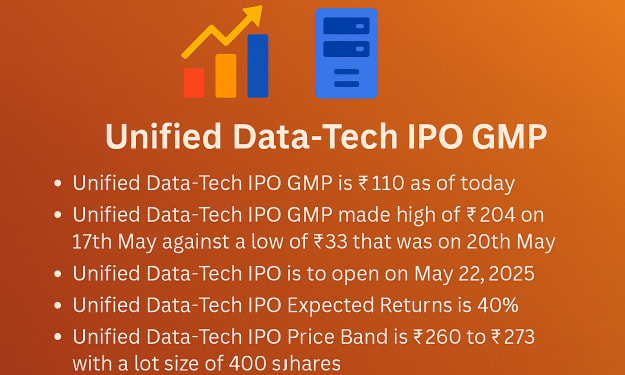
Unified Data-Tech IPO GMP Today – Grey Market Premium, Subscription, Lot Size & Details
Unified Data-Tech IPO GMP Today – Grey Market Premium, Subscription, Lot Size & More Unified Data Tech IPO GMP has become a hot topic among investors, especially those tracking the GMP IPO (Grey Market Premium) segment. With a dynamic price movement in the grey market and strong investor interest, this SME IPO is gaining momentum across retail and institutional categories.
By Sharad.finowingsabout a year ago in Trader
Influencer Attending Trump Memecoin Dinner Complains of Walmart Steak and No Access to Trump
**Influencer Attending Trump’s Memecoin Dinner Complains of ‘Walmart Steak’ and No Access to Trump** In a highly publicized event that aimed to blend politics, pop culture, and cryptocurrency, former President Donald Trump hosted a private dinner at his Mar-a-Lago estate, inviting a curated group of influencers, investors, and crypto enthusiasts. The dinner, dubbed the “Trump Memecoin Summit” by some attendees, quickly stirred controversy—not for political statements or blockchain innovation, but for its culinary disappointments and the president’s noticeable absence from intimate interaction.
By GLOBAL NEWSabout a year ago in Trader
Tesla Stock Drops as Trump Tariff Talk Takes Focus Off Magical Thinking
**Tesla Stock Drops as Trump Tariff Talk Takes Focus Off Magical Thinking** Tesla Inc. shares dropped significantly as investor focus shifted from the company’s long-term innovation to geopolitical risk, triggered by recent tariff threats from former President Donald Trump. The electric vehicle (EV) maker's stock fell 1.6% to \$335.56 in premarket trading on May 23, 2025. The decline reflects a broader market anxiety as Trump proposed sweeping new tariffs that shook investor confidence.
By GLOBAL NEWSabout a year ago in Trader