stocks
Stocks made simple; the essentials of stock trading and how stocks are priced, bought and sold.
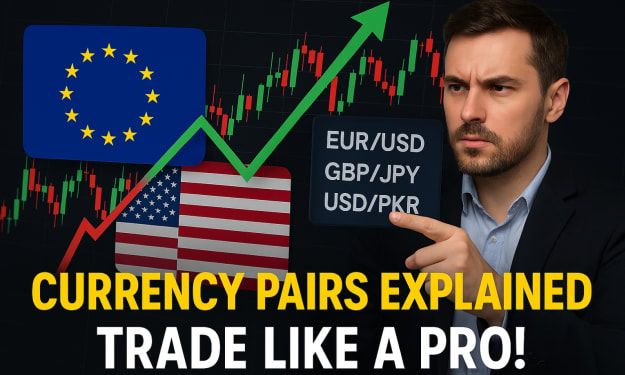
Understanding Currency Pairs
If you're stepping into the world of Forex trading, one of the first things you’ll come across is currency pairs—the foundation of all your trades. Understanding how they work is essential to make smart decisions and read the market like a pro. In this article, we’ll break down what currency pairs are, how to interpret them, and how to analyze them using both technical and fundamental approaches in 2025’s evolving market. 💱 What Are Currency Pairs? In the Forex market, you trade one currency against another. That’s why every trade involves a pair—like EUR/USD or GBP/JPY. Each pair consists of: Base Currency: The first currency listed (e.g., EUR in EUR/USD) Quote Currency: The second currency listed (e.g., USD in EUR/USD) When you see EUR/USD = 1.1200, it means 1 Euro equals 1.12 US Dollars. If the number goes higher, the Euro is getting stronger. If it drops, the Dollar is gaining strength. --- 🔍 Types of Currency Pairs There are three main types of currency pairs: ✅ 1. Major Pairs These include the most traded currencies in the world and always involve the US Dollar. Examples: EUR/USD USD/JPY GBP/USD USD/CHF These pairs are popular because they’re liquid, stable, and have low spreads. ⚠️ 2. Minor Pairs (Cross Pairs) These don’t involve the US Dollar but still include major currencies like EUR, GBP, or JPY. Examples: EUR/GBP AUD/NZD GBP/JPY These can have higher volatility and spreads but offer interesting opportunities. 🌍 3. Exotic Pairs These pair a major currency with a lesser-traded or emerging-market currency, such as: USD/TRY (Turkish Lira) EUR/ZAR (South African Rand) USD/PKR (Pakistani Rupee) Exotic pairs are high-risk, high-reward, and often influenced by political or economic instability. 📈 How to Analyze Currency Pairs Like a Pro To trade successfully, you need to understand why a currency pair moves, and where it's likely to go next. That’s where analysis comes in. --- 🧠 1. Fundamental Analysis This focuses on the real-world economic and political factors that influence currencies. Key Factors: Interest Rates (Central bank decisions like the Fed or ECB) GDP Growth Unemployment Rates Inflation Political News (elections, wars, instability) 💡 Example: If the U.S. Federal Reserve increases interest rates, USD tends to strengthen, affecting pairs like EUR/USD or USD/JPY. ✅ Pro Tip: Check an economic calendar daily. Websites like ForexFactory or Investing.com show upcoming events that could impact your trades. --- 📊 2. Technical Analysis This is the art of using price charts, indicators, and patterns to predict future movement. Common Tools: Candlestick Patterns (Doji, Engulfing, Hammer) Support and Resistance Zones Moving Averages (MA, EMA) Indicators like RSI, MACD, Bollinger Bands 💡 Example: If EUR/USD breaks above a resistance level and volume supports the move, it could be a signal to buy. ✅ Pro Tip: Combine multiple indicators for confirmation. Don’t rely on one tool alone. 🔁 Correlation Between Pairs Some currency pairs move in the same direction, while others move oppositely. Positive Correlation: EUR/USD and GBP/USD often rise and fall together. Negative Correlation: EUR/USD and USD/CHF often move in opposite directions. Knowing these relationships helps manage risk and avoid taking trades that cancel each other out. 💬 How to Choose Which Pairs to Trade As a beginner, start with major pairs like EUR/USD or USD/JPY. They are less volatile, more liquid, and easier to analyze. As you gain experience, explore minors and exotics. Ask yourself: Do I understand what drives this pair? Does my strategy work well with its volatility? Can I handle the drawdowns and spreads? ✅ Final Thoughts Understanding currency pairs is the first step to becoming a successful Forex trader. By mastering how to read, interpret, and analyze them, you gain the power to make informed decisions—not emotional guesses. Forex trading isn’t just clicking “Buy” or “Sell.” It’s about knowing what you’re trading, why it moves, and what to expect next. Take the time to study the pairs, track their behaviors, and keep learning. In 2025 and beyond, informed traders are the ones who win.
By Junaid Ali (Official)about a year ago in Trader
Irrational Exuberance and Future Returns: What the CAPE Ratio Is Telling Us Now
The phrase "irrational exuberance" was coined by Fed Chair Alan Greenspan in 1996 to describe market prices driven more by investor sentiment than fundamentals. Since then, it has become shorthand for manias and bubbles - famously analyzed by Robert Shiller in his book Irrational Exuberance, which highlights overvalued markets using tools like the CAPE ratio (Cyclically Adjusted P/E).
By Maher Quraan, PhDabout a year ago in Trader
Beginner’s Guide to Forex Trading
In recent years, Forex trading has emerged as one of the most accessible and exciting ways for individuals to get involved in the global financial markets. With trillions of dollars traded daily, the foreign exchange (Forex) market is the largest and most liquid market in the world. But before diving in, new traders must understand the basics, risks, and tools of the trade to avoid common pitfalls and maximize their potential. What Is Forex Trading?
By Junaid Ali (Official)about a year ago in Trader
The Reality of Forex Trading
Forex trading, short for foreign exchange trading, has become one of the most talked-about financial opportunities in recent years. With promises of quick profits, low startup capital, and the freedom to trade from anywhere in the world, it's easy to see why so many people are drawn to the world of Forex. However, behind the polished ads and flashy success stories lies a more complex and often sobering reality. This article explores the true nature of Forex trading—its opportunities, risks, and what every aspiring trader should know before stepping into the market. What Is Forex Trading? At its core, Forex trading involves the buying and selling of currencies with the aim of making a profit. It is the largest financial market in the world, with over $6 trillion traded daily. Traders speculate on the value of one currency against another—such as the euro versus the US dollar (EUR/USD)—hoping to profit from changes in exchange rates. Unlike stock markets, Forex operates 24 hours a day, five days a week, making it accessible at any time. This flexibility, combined with high liquidity and leverage options, has made it a popular choice for both new and experienced traders. The Allure of Quick Profits Forex is often advertised as a fast and easy way to make money. Social media influencers, YouTube traders, and online "gurus" frequently showcase luxury cars, expensive vacations, and big profits, all attributed to Forex trading. These portrayals, while enticing, are often misleading. The truth is that Forex trading is not a guaranteed path to wealth. It is a high-risk activity that requires skill, discipline, and a deep understanding of financial markets. Many of those who enter the market with unrealistic expectations often lose money. The Harsh Statistics It’s estimated that over 70% to 90% of retail Forex traders lose money. This figure is not to discourage potential traders but to emphasize the seriousness of the risk involved. The market is influenced by global economic events, interest rates, political instability, and sudden news—factors that are unpredictable even to seasoned traders. Furthermore, the use of leverage (borrowing money to increase trading size) can magnify profits but also losses. A small unfavorable movement in the market can wipe out an entire account if proper risk management isn’t in place. The Importance of Education and Strategy One of the key reasons many fail in Forex is a lack of education. Trading isn’t just about pressing "buy" or "sell." It involves technical analysis, fundamental analysis, chart patterns, risk management, and emotional control. Successful traders spend months or even years learning and refining their strategies. They use demo accounts to practice without risking real money and develop trading plans that include entry and exit rules, stop losses, and position sizing. A trader who treats Forex like a business—taking time to learn, planning every move, and managing risk carefully—has a far better chance of surviving and succeeding in the long term. Psychology: The Silent Killer Even with a good strategy, many traders fail due to poor emotional control. Greed, fear, overconfidence, and revenge trading are all psychological traps that can lead to disaster. Forex trading requires mental strength and discipline, especially during losing streaks. Professional traders learn to accept losses as part of the game. They don’t let emotions dictate their decisions and always stick to their plan. This mental discipline often separates the winners from the losers. The Role of Brokers Choosing a reliable Forex broker is another crucial step. Some brokers are regulated and provide fair, transparent trading conditions. Others may be unregulated or even fraudulent. New traders must research brokers carefully—checking for licenses, reviews, and hidden fees—before opening an account. Conclusion: Reality Check Forex trading is not a get-rich-quick scheme. It is a skill-based profession that demands time, education, and discipline. While some people do make money trading Forex, most fail because they underestimate the complexity of the market or are misled by unrealistic promises. If you're considering Forex trading, go into it with your eyes wide open. Learn the craft, start small, manage your risk, and never stop educating yourself. Success is possible, but it’s far from easy. The reality of Forex trading is this: it offers opportunity, but only for those who treat it with the seriousness and respect it deserves.
By Junaid Ali (Official)about a year ago in Trader
A Dominant Force: How Retail Investors Are Reshaping the Stock Market
Retail investors have emerged as one of the most powerful forces in today’s financial markets, says Gregory Blotnick. Their rise marks a major shift in how markets operate and who holds the power.
By Gregory Blotnickabout a year ago in Trader
Why I Stopped Fighting Between Charts and Fundamentals (And Started Making Better Trades)
The Expensive Mistake Most Investors Make Here's the thing nobody tells you when you're starting out: the whole "fundamental vs. technical analysis" debate is complete BS.
By Gregory Blotnickabout a year ago in Trader
Unmasking TheBlockchainGlobe and OneUpSolution Crypto Scams: A Critical Warning for Traders and Investors
Cryptocurrency continues to attract millions worldwide, promising exciting opportunities for wealth and financial independence. Unfortunately, this surge in interest has also given rise to increasingly sophisticated scams. Two platforms that have recently sparked serious concerns are TheBlockchainGlobe.com and m-trade.oneupsolution.com, commonly known as OneUpSolution. Both claim to offer valuable trading signals and investment opportunities, yet numerous reports reveal a disturbing pattern of deception and financial loss.
By Sarah Huntleyabout a year ago in Trader
The Vanishing Margin
In the glittering tech district of Dubai, the name Aamir Rehman was spoken with reverence. A former programmer turned trading guru, Aamir built a digital empire from nothing but hope and candlestick charts. Every week, thousands tuned in to watch his screens pulse like heartbeats. His mantra—“Trade smart, retire early”—etched itself into the dreams of taxi drivers, shopkeepers, and schoolteachers who handed him their life savings to invest.
By Gauhar Aliabout a year ago in Trader
Understanding Spread in Forex A Beginner’s Guide
The spread in forex trading is an important topic that directly affects your profits and losses. Understanding how spreads function is critical for new traders and those honing their techniques. This post will explain what a spread in forex is, why it matters, and how it might influence your trading decisions.
By FX Einsteinabout a year ago in Trader
How to become a profitable in forex or crypto trading.
What Is Trading and How to Become a Profitable Trader? In simple words, trading means buying and selling financial assets — like stocks, currencies, commodities, or cryptocurrencies — with the goal of making a profit. Traders aim to earn money by predicting whether the price of an asset will go up or down in the short or long term.
By USA daily update about a year ago in Trader
The Rise of the Crypto Trader: Chasing Profits in a Digital World
In a world increasingly defined by rapid technological advances and financial innovation, a new breed of investor has emerged — the crypto trader. Once reserved for tech enthusiasts and hardcore finance geeks, cryptocurrency trading has exploded into the mainstream. Today, millions of ordinary people are staking their financial futures on the volatile world of digital coins, chasing life-changing profits and redefining what it means to be an investor.
By Noor Hussainabout a year ago in Trader