product review
Product Reviews for the budding stock trader; discover innovative products, gadgets, tools and services to help you invest smarter.
India’s Factory Dream at Risk: US-China Trade Deal Threatens Manufacturing Ambitions
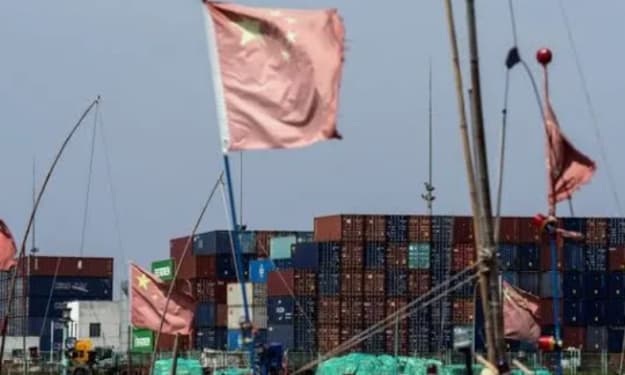
The Dream of Apple’s Factory in India That Could Be Shattered by the U.S.-China Deal Just as India began to make some progress toward its long-held dream of becoming the world’s factory, Washington and Beijing signed a new trade agreement—a decision that could derail India’s ambition of replacing China as the global manufacturing hub. Last week, U.S. President Donald Trump drastically reduced tariffs on Chinese goods from 145% to 30% overnight, while tariffs on Indian products remained unchanged at 27%. This development came as a result of a deal struck between the U.S. and China in Switzerland. Highlighting the implications of this deal, Ajay Srivastava, head of the Global Trade Research Initiative (GTRI) based in New Delhi, said, “The investment that was shifting from China to India might stop or even return to China. While low-cost assembly lines might stay in India, value-added manufacturing or advanced, profitable industries are at risk.” This shift contrasts sharply with the optimism seen in New Delhi last month when Apple hinted it would move most of its iPhone production for the U.S. market from China to India. That plan may still continue, although Trump later revealed he advised Apple CEO Tim Cook against setting up a factory in India, arguing that India is “among the highest tariff-charging countries in the world.” However, Capital Economics analyst Shilan Shah had noted before the agreement that “India is currently well-positioned to be a strong alternative to China for the U.S.” According to him, 40% of Indian exports to the U.S. are similar to products also supplied by China. Signs of replacing Chinese goods had already begun to appear. According to a recent survey of Indian industrialists, the rate of export orders has reached a 14-year high. Japanese brokerage firm Nomura also confirmed this trend, stating that India is benefiting from "trade diversion and supply chain shifts" especially in mid- and low-tech manufacturing sectors such as electronics, textiles, and toys. Some experts believe that although China and the U.S. have recently reset their trade ties, strategic differences will continue to grow—and India could benefit from that in the future. One reason is that the Modi government now allows more foreign investment than in the past. This new policy could work in India’s favor. In addition, India and the U.S. are discussing a potential trade deal. If finalized, the world’s third-largest Asian economy could attract global companies looking to reduce dependence on China. Recently, India struck a deal with the U.K. reducing tariffs on items like whiskey and cars, signaling that New Delhi might offer similar concessions to Trump in the ongoing talks with the U.S. Yet despite these positive signs, the reality remains that nothing is easy. Economists Sonal Varma and Aurodeep Nandi from Japan’s Nomura Bank note that although China is back in the game, other Asian countries like Vietnam are also strong contenders. Thus, India must introduce tariffs that allow reforms to ease business operations. Excessive competition has disappointed foreign investors, stalling India’s manufacturing output. As a result, the share of manufacturing in India’s GDP has remained stuck at 15% for the past two decades. Even the Modi government's production-linked incentive (PLI) scheme has had limited success in changing that. India's own government think tank, NITI Aayog, has admitted that India hasn’t succeeded in attracting investors away from China. Lower-wage workers, simpler tax codes, low tariffs, and active free trade agreements have helped boost exports in countries like Vietnam, Thailand, Cambodia, and Malaysia—while India has lagged behind. Nomura adds another concern: India’s reliance on China for raw materials. These include electronic items and components used in iPhones. This dependency is a key weakness, preventing India from fully taking over the supply chain. Ajay Srivastava told the BBC that producing more phones locally would increase India's revenue from iPhones. Currently, Apple earns $450 per iPhone sold in the U.S., while India earns less than $25 per unit—even though the product is counted as a $1,000 export. Srivastava emphasized that mere “assembly” of iPhones in India won’t bring much benefit unless Apple and its suppliers start manufacturing components locally and perform more high-value work within India. Without that, India’s share will remain limited, and export numbers will look good only on paper. The U.S. might even scrutinize India more closely despite little real income. GTRI adds that such operations do not generate significant employment either. Srivastava compared this situation to Nokia, which set up a factory in Chennai in 2007 where suppliers also clustered. “Today’s smartphone makers import most of their parts and demand low tariffs instead of building a supply chain in India,” he said. In some cases, the investment made may be less than the subsidy received under India’s PLI scheme. Finally, there are concerns that Chinese exporters may try to use India as a channel to send goods to the U.S. It seems India is not fully aware of such risks. Last year, the country’s top economic advisor said India needs to attract more business from China and establish export-oriented companies to boost its manufacturing sector. His statement acknowledged that India’s industrial policy has not delivered the expected results. Experts warn this could further limit India’s capacity to enhance local expertise and strengthen its industrial base. All of this shows that despite major announcements and headlines like Apple’s, India is still far from realizing its dream of becoming a local factory hub. In a social media post, Ajay Srivastava urged policymakers to reduce production costs, improve logistics, and eliminate regulatory uncertainty. He concluded by saying: “We must be very clear. The restoration of U.S.-China ties is to avoid losses—it’s not a permanent solution. India must prepare for the long game, or it will be sidelined.”
By Ikram Ullahabout a year ago in Trader
Bitcoin Jumps Above $105K for First Time Since January as XRP, Dogecoin Rise
**Bitcoin Jumps Above \$105K for First Time Since January as XRP, Dogecoin Rise** Bitcoin, the world’s leading cryptocurrency, surged past the \$105,000 mark for the first time since January, marking a significant milestone in its price trajectory. The renewed bullish momentum comes amid a broader rally in the crypto market, with major altcoins like XRP and Dogecoin also posting impressive gains.
By GLOBAL NEWSabout a year ago in Trader
Ripple Secures First UAE Clients After DFSA License, But XRP Price Declines. AI-Generated.
X XRP News: Ripple Gets First UAE Clients After DFSA License, But XRP Price Falls May 19, 2025 — Ripple, the company behind the cryptocurrency XRP, has taken a big step forward in its global growth. It has gained its first clients in the United Arab Emirates (UAE) after getting official approval to operate in the region. However, despite this positive news, the price of XRP has dropped — surprising many investors.
By Fariha Ferdous Mithilaabout a year ago in Trader
Your Path to a Perfect Smile – Davinci Dental Clinic in Abu Dhabi
Davinci Dental Clinic shines as a beacon of excellence for those seeking premier dental care. As a leading dental clinic in Abu Dhabi, we are committed to delivering top-notch services that cater to the diverse needs of our patients. With cutting-edge technology, a highly skilled team, and a patient-centered approach, we strive to redefine dental experiences.
By Davinci Dental Clinicabout a year ago in Trader
Experience Premier Dental Care at Davinci Dental Clinic in Abu Dhabi
If you are searching for a dental clinic in Abu Dhabi that blends expertise, technology, and patient care seamlessly, look no further than Davinci Dental Clinic. Known for its exceptional standards in dental care, Davinci Dental Clinic stands as a beacon of quality, comfort, and innovation. Our clinic is committed to providing top-notch dental services, ensuring that every patient leaves with a healthy and confident smile.
By Davinci Dental Clinicabout a year ago in Trader
"I Made $1,000 in 24 Hours Without a Job — Here's Exactly How I Did It"
It all started with a challenge from a friend. We were sitting in my apartment, both frustrated with our bank accounts and the endless grind of job-hunting. Then she said something that flipped a switch in my brain: “Bet you couldn’t make a thousand bucks in one day without a job.” That was all I needed. I smiled and said, “Watch me.” This isn’t some fairy tale about manifesting money or winning the lottery. I’m talking real, fast, scrappy money—earned in less than 24 hours with no formal job, no paycheck, and no shady business. Here’s exactly how I did it, down to the last dollar. --- Hour 1: Planning and Prioritizing The clock started at 8 a.m. I made coffee and opened up a notebook. The key was to combine quick-cash tactics with hustle, even if it meant doing multiple things at once. I broke my plan into five key categories: 1. Sell stuff 2. Gig work 3. Digital tasks 4. Quick flips 5. One bold move --- Hour 2–4: Selling My Stuff ($300) I started with what I already had. I opened Facebook Marketplace, Craigslist, and OfferUp and began listing: A barely-used Bluetooth speaker: $40 My old PS4 (with two controllers): $150 A designer hoodie I never wore: $60 A coffee table I didn’t need: $50 I posted clear photos, quick descriptions, and added “MUST SELL TODAY” in bold. Within two hours, people were messaging. I arranged three meetups before noon and made $300 in cold, hard cash. --- Hour 5–7: Gig Work Hustle ($225) Next up: local gig work. I signed into DoorDash and Uber Eats. I’d already been approved weeks ago but rarely used them. Today was different. I hit the lunch rush hard. 9 deliveries in 2.5 hours Total earnings including tips: $110 Then, I checked TaskRabbit. A woman needed help assembling IKEA furniture. I messaged her, got accepted, and walked over to her place two blocks away. 90 minutes of screwing tiny screws into Swedish wood: $75 + $20 tip That brought me to $225 in gig income by early afternoon. --- Hour 8–10: Digital Tasks & Micro-Jobs ($120) Time to rest my feet and use my brain. I grabbed my laptop and signed into a few platforms: UserTesting.com – Did 3 usability tests at $10 each = $30 Respondent.io – Joined a 25-minute remote interview about shopping habits = $50 Fiverr (pre-made gig) – Sold a digital resume template I had uploaded months ago = $40 That added another $120 to the stack. It was wild how these little digital tricks added up so fast. --- Hour 11–14: Quick Flip Hustle ($180) I remembered something I saw on TikTok: flipping free curbside furniture. I browsed the “Free” section on Craigslist and found a wooden desk someone was giving away just a mile away. It looked decent in the photo, so I borrowed a friend’s car, picked it up, cleaned it with some polish, and relisted it for $75. It sold by dinnertime. Inspired, I checked out a local thrift store. Found a brand-new wireless keyboard marked $8 — still in packaging. Quick eBay check showed the same model selling for $50+. I bought it, listed it, and it sold that evening for $45. One more flip: a $2 vintage mug that sold on Etsy for $60. Don’t ask me why — people love weird mugs. Total from flips: $180 --- Hour 15–20: My Boldest Move ($175) It was now late evening. I had $825 and needed a final push. I remembered an old Craigslist section: "Gigs – Talent." I offered to write personal poems or roast-style jokes for $25 a pop — and I got 5 takers within an hour. One person asked for a breakup poem. Another wanted a roast for their boss’s birthday. I delivered within 30 minutes each and got $125 total. Finally, I posted a $50 offer to name someone’s business — and yes, someone paid me to come up with the name “Petflix” for their pet video app. --- Hour 24: Total Earned = $1,000 Here’s the final tally: Sold my stuff: $300 Gig work (delivery + TaskRabbit): $225 Digital tasks & Fiverr: $120 Quick flips: $180 Creative services (poems, roasts, naming): $175 Total: $1,000 I was exhausted, sweaty, and running on caffeine and adrenaline — but I was also a thousand dollars richer. --- What I Learned 1. You don’t need a traditional job to earn money fast. You need access, effort, and a tiny bit of creativity. 2. People will pay for weird, niche things. (Seriously, I still laugh about the breakup poem.) 3. Selling your stuff is the fastest way to generate cash. Most people have hundreds lying around without realizing it. 4. Hustle is a skill. And it’s learnable. The more I did, the more ideas came to me. --- Final Thoughts I’m not saying you should live like this every day — it’s intense. But if you ever need money fast, it’s 100% possible to make a grand in a day without a job. You just need to believe it's doable — and move like your bank account depends on it. Because mine did.
By Nizam khanabout a year ago in Trader
How AlpCaps Changed My Perspective. Content Warning.
My name is Greg, and I’ve been working in construction for over 10 years. Like many in my industry, I’ve never been one to think about investing much. My focus has always been on “work hard” every day, making a living, and just getting by. I didn’t grow up around money, and I always believed that investing was something for people who had more than I did - people who were already wealthy or had the right connections. So, I ignored it, put my savings in a regular bank account, and thought I was doing fine. I had my savings, but it wasn’t enough to cover the long-term. I struggled with financial stress, I had credit card debts piling up from old bills, and the job market in construction, while steady, wasn’t providing the kind of stability I thought I needed. I was living paycheck to paycheck, always behind on something - sometimes bills, sometimes unexpected costs.
By Greg Marlowabout a year ago in Trader
Illuminate Your Brand: Light Box Signs and Fabric Displays in Dubai
What is a Flex Face Light Box Sign? A flex face light box sign is a lighted sign made of a flexible banner or fabric draped over an aluminum frame and lit up with LED lights. The signs are ideal for big displays and can conveniently be seen at any time. A fabric light box is a modern display solution that uses LED backlighting and tensioned fabric graphics to create vibrant, edge-to-edge visuals.
By Deluxe Printingabout a year ago in Trader
From Boring to Brilliant: How Neon Signage is Transforming Dubai Storefronts
One of the most attention-getters of the day was neon signs. They are not just for show—they are smart marketing tools. With newer LED technology, they are energy-efficient, longer-lasting, and cost-effective.
By Deluxe Printingabout a year ago in Trader
Why More Data Centres Are Choosing Raised Access Floors
As digital infrastructure continues to expand across the globe, the importance of efficient, scalable, and resilient data centres has never been greater. One increasingly popular solution being adopted by data centres of all sizes is the use of raised access flooring. While raised flooring has been a staple in office environments for decades, its application in the world of data centres is now being recognised as a best practice due to the multiple operational and environmental benefits it offers.
By Access Flooring Companyabout a year ago in Trader
Stock futures slide after U.S. debt downgrade highlights deficit risk: Live updates. AI-Generated.
U.S. Stock Futures Decline Following Moody’s Credit Rating Downgrade U.S. stock futures declined on Sunday evening in response to Moody’s decision to downgrade
By Junayet Hossainabout a year ago in Trader
China-US Trade Truce Prompts Nations to Consider Tougher Tactics
**China-US Trade Truce Prompts Nations to Consider Tougher Tactics** A recent truce in the ongoing trade tensions between the United States and China has sparked a wave of strategic recalculations among global powers. While the agreement has temporarily halted the escalation of tariffs between the world’s two largest economies, many nations now find themselves weighing tougher economic tactics of their own, in response to what they see as growing protectionism and economic nationalism.
By GLOBAL NEWSabout a year ago in Trader