product review
Product Reviews for the budding stock trader; discover innovative products, gadgets, tools and services to help you invest smarter.
How to prepare and place specimens for the Presto perforation tester?
Perforations are tiny holes that we see in different numbers of materials, including packed items, food packets, sachets, etc. These tiny holes make it easy for the customer to use the packaging materials efficiently. What if it easily separated these perforations? It will lead to poor quality of the product. Thus, testing it is a necessary part of product quality control. Therefore, we at Presto have come up with one of the widely used lab testing instruments in the packaging industry known as the perforation strength tester. This quality lab testing equipment will help to quantify the perforation strength or tensile ability of materials like pouches, thermoplastic films, paper, and packaging materials.
By PRESTO GROUP4 years ago in Trader
What is jewelry sold by kilo?
You may think that wholesale jewelry is cheap but low-quality, maybe that's right. Jewelry sold by kilo is a new sale model that emerged a few years ago and is an attractive gimmick for merchants. There is no scale effect in the industry and it is not representative. Compared with jewelry retail, the profit is very low when jewelry is sold by kilo, mainly because of large sales. Most products sold by kilo are half cheaper or even 20% than retail.
By Summer Justin4 years ago in Trader
Instant Loans Without Employment Verification- Cash Waves
Obtaining approval at Cash Waves is as simple as applying for instant loans without employment verification. You will just need to meet a few pre-conditions and get cash help in hand in no time at all. Apply and see for yourself how easy it is to qualify for our matchless loan services!
By Cash Waves Canada4 years ago in Trader
What is Financial Accounting
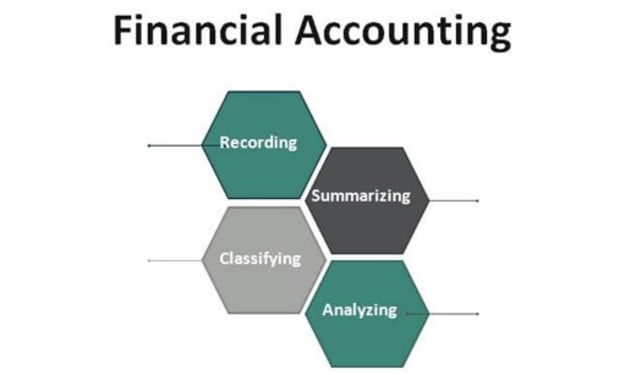
Financial Accounting What's Financial Accounting? fiscal account is a specific field of account involving a process of summary, recording, and reporting the myriad of fiscal deals performing from business operations over a period of time.
By Mudashir hakeem4 years ago in Trader
One Hour Payday Loans
If you have applied for a loan within the earlier period, the likelihood is that you've stumbled upon a payday loan lender or two. How well did the lender help you and your financial needs? A frequent problem borrowers run into is finding a lender or lending company that makes the loan application and deposit process fast and easy! What if you'll receive your payday loan in 1 hour or less? What if you were finally backed on top of things of your life?
By Easy Qualify Money4 years ago in Trader
Bond Financing
Bonds are actually loans that people, like you and me, make to companies. In exchange for the loan money, companies issue bonds. The terms of the loan are set out in a written agreement called the bond indenture. This stipulates the interest rate that will be paid to bondholders and when the principal will be repaid. It also designates a trustee, who is responsible for seeing that the terms of the agreement are met. Illustration: A $1,000 bond may guarantee to pay 10 percent interest (often referred to as a 10 percent coupon rate) annually over 10 years. The interest is paid at specific times, usually every six months. At the end of the 10-year period (the maturity date) the company repays the investor the original $1,000 (the principal). Although your firm may decide to issue bonds on its own, it’s more likely that management will use an outside investment banker to underwrite the bond offering. Like stock offerings, the selling or issuing of bonds is heavily regulated by the Securities and Exchange Commission, which requires a company to meet a number of legal requirements. Thus, it’s often much easier for a company to turn the “floating” of bonds over to a professional investment banker, especially if it’s the first time your firm is going into the bond market. An investment banker buys the company’s bond issue and then resells it to the public; it absorbs the loss if there are any bonds that it cannot resell. For its services, the investment banker receives a fee. Keep in mind that bond interest is paid from pretax dollars, and that bondholders are creditors of your firm. There are all sorts of bonds, but here are a few of the more common types: ● Mortgage bonds. As the name indicates, the company pledges as collateral specific fixed assets, such as a building. Generally, the asset is of greater value than the value of the bonds issued. This ensures that, in case of a bond default, the investors have sufficient financial protection through resale of the asset. ● Collateral trust bonds. In this variation of mortgage bonds, the assets used as collateral are stocks and bonds of other companies in which your firm holds an interest. ● Equipment trust certificates. This type of financing is favored by railroads and airlines to make major equipment purchases. The company sells the certificates to investors, and the proceeds are used to pay for the equipment, such as railroad cars or airplanes. The trustee takes title to the equipment. The railroad or airline then pays the periodic interest and the principal to the investors over a period of time, say 15 years. When all the certificates are finally paid off, title passes from the trustee to the airline or railroad. ● Debentures. These are, in effect, unsecured bonds. As an issuing company, you simply promise to pay interest on the debenture and repay it in the same way you would a bond, except that you don’t pledge any assets. Because there isn’t any collateral, investors assume a greater risk and require a higher interest rate than they would on a secured bond. In another variation, your company may want to add a bit of incentive to investors by making your bonds and debentures convertible. This means the purchaser of your convertible bonds or debentures has the option of exchanging them for a specified number of shares of your common stock. The attraction here is that the price of your stock may increase, so it pays the investor to convert to stock. If this occurs, your company no longer has to pay interest or the principal. Your company may employ other factors that are attractive to the prospective bondholder, as well as your company. For example, the company may develop a sinking fund, which means the firm sets aside specified amounts to provide for the gradual retirement (repurchase) of part of the bond issue. This provides added protection for bondholders because reducing the amount of outstanding bonds lessens the risk of a default. A company can also include a call feature for greater financing flexibility. This simply means that the company reserves the right to buy back the bond at a specified date before the bond falls due. The call price is greater than the principal amount and generally decreases as the bond approaches its maturity date. Companies can exercise the call feature, for example, when market interest rates drop, allowing the firm to repay the bondholder and then refinance at a lower interest rate. Although the call feature is attractive for the company, it’s not an advantage for the bondholder because he or she is giving up the higher interest payments of the bond. As a partial remedy, bonds with call features typically carry a higher interest rate.
By Daniel Joseph 4 years ago in Trader
How to Get Equipment Financing With a Bad Credit Score
Getting approved for equipment financing might seem difficult when you have a bad credit score. Although getting traditional equipment financing when you have a poor credit score can be challenging, there are options besides typical equipment loans.
By Robert Holmes4 years ago in Trader
Crypto Coin Crusher
12 Ways Crypto Coin Crusher Can Help You Make More Money! The crypto market is an extremely volatile place, and that means there are plenty of ups and downs to go around. Although you might not see it from the outside, the crypto market is a gold mine for anyone willing to take advantage of it. There are coins that are ready to skyrocket in value at any given moment and others that will crash almost as soon as they hit the market. It all comes down to being able to track the market trends, identify which coins have the potential to rise in value, and know which ones will drop before they even have a chance to peak. If you’re just getting started with investing in ICOs, tokens, or cryptocurrency in general, there’s a lot you need to know before you put your money on the line. The trick is knowing where to find this information quickly and easily—but how do you achieve that? Let’s explore some easy ways that can help you make more money with your investment by using Crypto Coin Crusher.
By Esther Kuutembukwa4 years ago in Trader