investing
'Buy low, sell high' is just the tip of the iceberg; learn the art of investing from expert traders and how to make your money grow.
Best Investments For 2023
There are a number of different investments that could be considered the best for 2023. This is because there are a number of different factors to consider when making an investment, and what may be the best for one person may not be the best for another.
By The Learning Page4 years ago in Trader
HISTORY OF FOREX TRADING
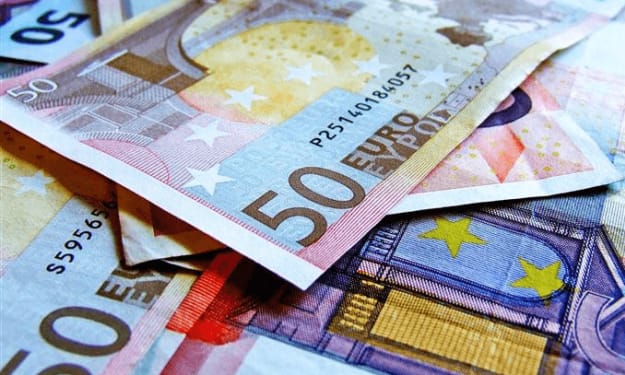
Forex exchanging, which is the demonstration of trading government issued types of money, is believed to be extremely old - tracing all the way back to the Babylonian time frame. Today, the forex market is perhaps of the greatest, most fluid and available market on the planet, and has been molded by a few significant worldwide occasions, as Bretton woods and the highest quality level. It's significant for forex brokers to comprehend the historical backdrop of forex exchanging, and the key memorable occasions which have molded the market. This is on the grounds that comparative occasions could almost certainly happen again in various, yet comparable structures - affecting the exchanging scene. History will in general rehash the same thing. HISTORY OF FOREX Exchanging: WHERE Everything Started The deal framework is the most established strategy for trade and started in 6000BC, presented by Mesopotamia clans. Under the deal framework merchandise were traded for different products. The framework then advanced and merchandise like salt and flavors became famous modes of trade. Boats would sail to deal for these merchandise in the very first type of unfamiliar trade. At last, as soon as sixth century BC, the principal gold coins were delivered, and they went about as a money since they had the basic qualities like movability, sturdiness, distinctness, consistency, restricted supply and worthiness. Gold coins turned out to be broadly acknowledged as a mode of trade, however they were unreasonable on the grounds that they were weighty. During the 1800s nations embraced the best quality level. The best quality level ensured that the public authority would recover any measure of paper cash for its worth in gold. This turned out great until The Second Great War where European nations needed to suspend the best quality level to print more cash to pay for the conflict. The unfamiliar trade market was upheld by the highest quality level right now and during the mid 1900s. Nations exchanged with one another in light of the fact that they could change over the monetary standards they got into gold. The highest quality level, be that as it may, couldn't hold up during the universal conflicts. KEY Occasions WHICH HAVE Molded THE FOREX MARKET From the beginning of time, we have witnessed significant occasions that have extraordinarily impacted the forex exchanging climate. Here are a few features: Timetable appearance the historical backdrop of forex since the 1800s The Bretton Woods Framework 1944 - 1971 Sign appearance the Bretton Woods financial meeting The primary significant change of the unfamiliar trade market, the Bretton Woods Framework, happened around the finish of The Second Great War. The US, Extraordinary England, and France met at the Unified Countries Money related and Monetary Gathering in Bretton Woods, NH to plan another worldwide financial request. The area was picked in light of the fact that at that point, the US was the main country solid by war. The greater part of the significant European nations were wrecked. As a matter of fact, WWII vaulted the US dollar from a bombed money after the securities exchange crash of 1929 to benchmark cash by which most other global monetary forms were looked at. The Bretton Woods Accord was laid out to establish a steady climate by which worldwide economies could reestablish themselves. It endeavored this by making a customizable fixed unfamiliar trade market. A customizable fixed conversion scale is a swapping scale strategy by which a money is fixed to another cash. For this situation, far off nations would 'fix' their swapping scale to the US Dollar. The US dollar was being fixed to gold, on the grounds that the US held the most gold stores on the planet around then. So far off nations would execute in the US Dollar (this is additionally how the US dollar turned into the world's hold cash). The Bretton Woods understanding in the end neglected to fix gold to the US dollar since there was insufficient gold to move how much US Dollars available for use, in light of the fact that how much US Dollars available for use expanded because of expanded government loaning and spending. In 1971, President Richard M. Nixon, finished the Bretton Woods framework which before long prompted the free drifting of the US Dollar against other unfamiliar monetary forms. The Start of the Free-Drifting Framework Little globe against a cliffside setting After the Bretton Woods Accord came the Smithsonian Arrangement in December of 1971, which was comparable yet permitted fora more noteworthy vacillation band for the monetary standards. The US fixed the dollar to gold at $38/ounce, consequently devaluing the dollar. Under the Smithsonian arrangement, other significant monetary standards could vary by 2.25% against the US Dollar, and the US Dollar was fixed to gold. In 1972, the European people group attempted to create some distance from its reliance on the US Dollar. The European Joint Float was then settled by West Germany, France, Italy, the Netherlands, Belgium, and Luxemburg. The two arrangements committed errors like the Bretton Woods Accord and in 1973 imploded. These disappointments brought about an authority change to the free-drifting framework. The Court Accord In the mid 1980s the dollar had appreciated significantly against the other significant monetary forms. This was challenging for exporters and the US current record consequently ran a shortfall of 3.5% of Gross domestic product. Because of stagflation that started in the mid 1980s, Paul Volcker raised loan fees which caused areas of strength for a Dollar (and diminished expansion) to the detriment of the US business' seriousness in the worldwide market. The heaviness of the US dollar was smashing underdeveloped countries under obligation and shutting American plants since they couldn't rival unfamiliar contenders. In 1985, the G-5, the most impressive economies on the planet - US, Extraordinary England, France, West Germany, and Japan - sent delegates to what should be a mystery meeting at the Court Inn in New York City. Fresh insight about the gathering spilled, compelling the G-5 to say something empowering the enthusiasm for non-dollar monetary standards. This became known as the "Court Accord" and its resonations caused a steep fall in the dollar. It didn't take long for brokers to understand the potential for benefit in this new universe of money exchanging. Indeed, even with government mediation, there actually were solid levels of vacillation and where there is variance, there is benefit. This turned out to be clear barely 10 years after the breakdown of Bretton Woods. Foundation of the Euro Euro banknotes in groups of 50 After WWII, Europe fashioned numerous arrangements intended to bring nations of the area closer together. None were more productive than the 1992 arrangement alluded to as the Maastricht Deal, named for the Dutch city where the gathering was held. The deal laid out the European Association (EU), prompted the production of the Euro cash, and set up a durable entire that remembered drives for international strategy and security. The settlement has been changed a few times, however the development of the Euro gave European banks and organizations the unmistakable advantage of eliminating trade risk in a consistently globalized economy. Web Exchanging During the 1990s, the cash markets developed more modern and quicker than any other time in recent memory since cash - and how individuals saw and utilized it - was evolving. An individual sitting alone at home could find, with the snap of a button, a precise value that a couple of years earlier would have required a multitude of dealers, merchants, and phones. These advances in correspondence came during when previous divisions gave way to private enterprise and globalization (the fall of the Berlin Wall and the Soviet Association). For forex, everything changed. Monetary standards that were recently turned down in extremist political frameworks could be exchanged. Developing business sectors, like those in Southeast Asia, thrived, drawing in capital and money theory. The historical backdrop of forex markets starting around 1944 presents an exemplary illustration of an unrestricted economy in real life. Cutthroat powers have made a commercial center with unmatched liquidity. Spreads have fallen decisively with expanded web-based rivalry among reliable members. People exchanging huge sums presently approach similar electronic correspondences networks utilized by global banks and shippers. FOREX Exchanging TODAY AND What's to come Today, the forex market is the biggest market on the planet. More than $6.6 trillion is exchanged on the forex market day to day. The future of forex is covered in vulnerability, and is truly changing, prompting never-ending open doors for forex brokers.
By Clifford Asogwa4 years ago in Trader
How to become a successful forex trader .
For rookie traders, these snippets can seem more like a diversion than practical advise, but anyone who wants to become a profitable stock trader only needs to spend a few minutes online to uncover such statements as "plan your trade; trade your plan" and "limit your losses to a minimum." If you're new to trading, you likely only want to know how to get rich quick. The following rules are all significant, but their combined consequences are powerful. Your chances of prospering in the markets might be considerably improved by keeping these in mind. KEY LESSONS Trade like a business, not as a pastime or a profession. Become an expert in the industry. Set reasonable goals for your company. Before trading with real money, practice with virtual currency. The rules are; Rule 1: Never trade without a plan. For each buy, a trader's entry, exit, and money management criteria are laid out in a documented set of instructions known as a trading strategy. Technology of today makes it simple to test a trading concept without risking actual funds. Backtesting is the process that enables you to test the viability of your trade idea using past data. A strategy can be applied in actual trading after being established and backtesting yields favorable outcomes. Your trading strategy might not work every time. Leave it and begin over. Staying on track is crucial in this situation. Even if they end up being profitable, making trades outside of the trading plan is regarded as poor strategy. Rule 2: Educate Yourself About the Markets Consider it to be ongoing education. Traders must keep their attention on gaining new knowledge every day. It is crucial to keep in mind that learning about the markets and all of their complexities is a continuous, lifetime effort. Hard research enables traders to comprehend the facts, such as the significance of the various economic data. Focus and observation help traders hone their intuition and pick up on subtleties. The markets are impacted by global politics, current affairs, economic trends, and even the weather. The marketplace is a fluid environment. The more familiar traders are with both the past and present markets, the more equipped they will be to deal with the future. Rule 3: Only take risks you can afford to lose. Verify that all of the funds in that trading account are actually expendable before you start trading with real money. The trader should continue saving if it isn't till it is. The home payment or the kids' college tuition should not be funded from a trading account. Traders must never let themselves believe that these other significant responsibilities are only a source of credit. Even losing money can be upsetting. Even more so if the money was money that shouldn't have ever been put at danger in the first place. Rule 4: Trade as if it were a business. You must approach trading as a full- or part-time business, not as a pastime or a job, if you want to succeed. If it's treated like a hobby, learning isn't really a priority. If it's a job, the lack of a consistent payment can be frustrating. Trading involves costs, losses, taxes, uncertainty, stress, and risk because it is a business. You must conduct research and develop a plan as a trader in order to realize the full potential of your firm. Rule 5: Utilize technology for your benefit Trading is a cutthroat industry. It's reasonable to presume that the party executing the trade is making full use of all available technology. Traders have a plethora of options for viewing and analyzing the markets thanks to charting platforms. Using historical data to backtest a concept helps avoid expensive mistakes. We can follow trading wherever we are thanks to smartphone market alerts. High-speed internet access is only one example of how everyday technology may significantly improve trading success. In trading, using technology to your advantage and staying up to date with new items can be enjoyable and lucrative. Rule 6: Keep Your Trading Capital Safe It takes a lot of time and effort to accumulate the funds necessary to fund a trading account. If you have to do it twice, it can be even harder. It's crucial to understand that safeguarding your trading funds does not include never losing a trade. Every trader has lost a trade. Avoiding pointless risks and doing everything you can to keep your trading operation viable are both essential components of capital protection. Rule 7: Develop a Fact-Based Methodology It is worthwhile to invest the time in creating a solid trading system. It could be tempting to fall for the common online trading scams that promise profits that are "so easy it's like printing money." But the motivation for creating a trading plan should come from facts, not feelings of hope or optimism. Traders who are less eager to learn often find it simpler to sort through the wealth of information available online. Take into account the fact that, if you were to start a new job, you would probably need to attend college or a university for at least a year or two before you were ready to even seek for a position in the new sector. Rule 8: Use stop losses at all times. A stop loss is the maximum risk that a trader is ready to take on each transaction. The stop loss restricts the trader's exposure during a trade and can be expressed as a percentage or a monetary sum. Since we know that we will only lose X amount on any particular trade, using a stop loss might help reduce some of the stress associated with trading. Even if it results in a profitable transaction, not using a stop loss is terrible practice. If it complies with the requirements of the trading plan, exiting a trade with a stop loss and ending up in a losing position is still excellent trading. Rule 9: Maintain Perspective When Trading When trading, remember to keep the overall picture in mind. We shouldn't be surprised by a losing trade; it happens in trading. A lucrative firm is only one step away from a successful trade. The profits over time are what really matter. Emotions will have less of an impact on a trader's performance once they embrace wins and losses as a normal part of the trading process. However, we must always keep in mind that a losing trade is never far away. This is not to say that we cannot get excited about a particularly successful trade. Keeping trading in perspective requires setting attainable goals. Your company should provide a respectable return in a respectable period of time. Rule 10: Be Aware of When to Stop Trading An poor trading strategy and an ineffective trader are two reasons to cease trading. A bad trading strategy results in substantially bigger losses than those predicted by historical testing. That occurs. The volatility may have decreased or the markets may have altered. The trading strategy is simply not working as intended for any reason. Remain professional and emotionless. It's time to review the trading strategy and either start again with a new strategy or make a few tweaks. A poor trading strategy is an issue that has to be fixed. The trade industry need not end as a result. A trader who creates a trading strategy but is unable to adhere to it is ineffective. Poor habits, lack of exercise, and external stress are all possible causes of this issue. If a trader is not at their best, they should think about taking a break. The trader can resume operations after dealing with any issues and hurdles. In conclusion; A trader can build a successful trading firm by comprehending the value of each of these trading principles and how they interact. Trading is difficult job, and those who have the patience and discipline to abide by these guidelines can improve their chances of success in a field that is fiercely competitive.
By Nicholas Alpha 4 years ago in Trader
Buying Gold in Australia
Investing in gold is a timeless and reliable way to secure your finances, especially in uncertain economic times. Whether it’s coins, bars, or jewellery, purchasing gold can give you peace of mind knowing that you have a stable asset that has stood the test of time. But if you’re looking to buy gold in Australia, there are some things you should know before making any purchases. Let's explore the ins and outs of buying gold in Australia.
By Elise Harden4 years ago in Trader
An Introduction to FOREX TRADING
What is Forex? Currency exchange takes place on a foreign exchange market. Whether they realize it or not, currencies are significant to the majority of people in the globe because they must be traded in order to conduct international trade and business. If you live in the United States and want to purchase cheese from France, either you or the company that you buy the cheese from has to pay the French for the cheese in euros (EUR). This means that the U.S. importer would have to exchange the equivalent value of U.S. dollars (USD) into euros. The same goes for traveling. A French tourist in Egypt can't pay in euros to see the pyramids because it's not the locally accepted currency. As such, the tourist has to exchange the euros for the local currency, in this case the Egyptian pound, at the current exchange rate. This implies that the American importer would have to convert the comparable amount of USD into EUR. The same is true with travel. An Egyptian tourist from France cannot see the pyramids by paying with euros because that cash is not accepted there. As a result, the traveler must exchange his or her euros at the going rate for the local money, in this example, the Egyptian pound.
By Ibitoye ayomide 4 years ago in Trader
Wall Street is rejecting a rebound in the price of bitcoin
Social media as we know it has been around for 20 years, which is difficult to comprehend. Social media networks like Facebook and TikTok have progressively built a script for how things work in the twenty years since the introduction of Friendster.
By Sunny Reddy4 years ago in Trader
How to Manifest Money: 10 Steps To Making Your Wealth Dreams a Reality
Money is the root of all evil – or so they say. Fortunately, money also is the root of all happiness when you have plenty of it. Having money can help you make your own decisions, pursue your passions, and live more comfortably. It’s not just about having a lot of cash; it’s more about being able to manage that cash effectively and growing your assets so that you can live comfortably for the rest of your life. Money doesn’t grow on trees, but manifesting it does not require magic either. - Keeping your expenses low and saving regularly are two of the most effective ways to accumulate wealth over time. When you know how to manifest money in your life, things become much easier for you.
By Singh Atul4 years ago in Trader
10 Tips For Beginning Investors
As a beginner investor, it can be overwhelming to navigate the world of stocks, bonds, and mutual funds. With so many different options and conflicting advice, it can be difficult to know where to start. However, with the right strategies and mindset, anyone can learn to invest successfully. Here are ten tips to help beginners get started on the right foot.
By Chris 49er4 years ago in Trader
Bitcoin Secret That The Cypto Millionaires Don’t Want You to Know!
The Bitcoin Secret that I am going to share is so different from how most people are making money from bitcoins. This Secret is so shacking that I at first did not believe it was possible to make any money at all. Then I did it for a few weeks and made around $6000 in 3 weeks, but before I share the secret let’s explain what bitcoins are.
By J.O.B. Investments4 years ago in Trader