investing
'Buy low, sell high' is just the tip of the iceberg; learn the art of investing from expert traders and how to make your money grow.
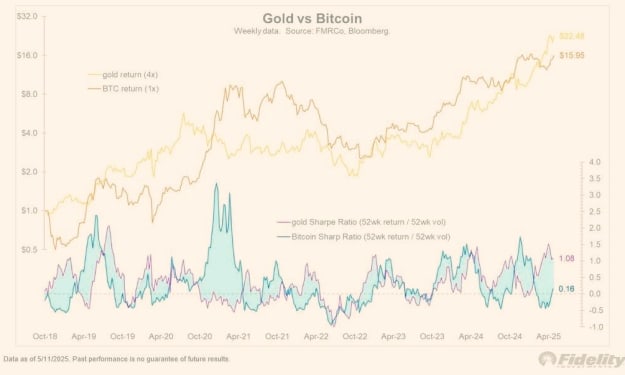
Bitcoin Flipping the Narrative Again! 📰
Bitcoin Flipping the Narrative Again! 📰 In a bold turn of events that has financial circles buzzing, Fidelity’s Jurrien Timmer recently made a headline-worthy statement: Bitcoin may be replacing gold—again. With Bitcoin breaking past the historic $100,000 mark, Timmer now suggests a 4:1 gold to Bitcoin allocation, signaling a major philosophical shift in traditional finance's perception of digital assets.
By Abrar Hossenabout a year ago in Trader
25 Exciting Small Businesses to Kick-Start Today
**25 Exciting Small Businesses to Kick-Start Today** In today’s fast-paced world, starting a small business doesn’t require a massive investment. With the right idea, determination, and a little creativity, you can build a thriving venture. Here are 25 exciting small businesses you can kick-start today:
By GLOBAL NEWSabout a year ago in Trader
Avoid Common Tax Filing Mistakes with Personal Tax Services in Milton
1. Missing or Incorrect Information One of the most common mistakes when filing taxes is forgetting to include important information. Whether it’s income from side gigs or missing tax slips, leaving out crucial details can result in penalties. Many taxpayers mistakenly fail to report cash income or forget to include forms like T4s or investment slips.
By Archived Userabout a year ago in Trader
How to Grow Wealth While Running a Business: A Financial Planner’s Guide
How to Grow Wealth While Running a Business: A Financial Planner’s Guide Whether you're a startup founder, a solo entrepreneur, or a seasoned business owner, these tips will help you maximize your money and secure your financial future.
By Financial Friendabout a year ago in Trader
What factors contribute to the success of an ICO in today’s cryptocurrency landscape?
As blockchain technology rapidly evolves, Initial Coin Offerings (ICOs) remain a widely used fundraising approach for emerging startups and decentralized ventures in the crypto space.However, with thousands of ICOs launched over the past few years—and many failing to deliver—investors and enthusiasts have become increasingly cautious. So, what exactly makes a successful ICO stand out in today’s crowded crypto world?
By smithtaylorabout a year ago in Trader
Buy and Sell Unlisted Shares in India: Beginner's Guide 2025
Introduction: Why Unlisted Shares Are Gaining Popularity in 2025 If you’ve been curious about alternative investments, buy and sell unlisted shares might be your next big move. With India's startup ecosystem booming and companies delaying IPOs longer than ever, unlisted shares offer early access to high-growth ventures.
By Bharat Unlistedabout a year ago in Trader
India’s Factory Dream at Risk: US-China Trade Deal Threatens Manufacturing Ambitions
The Dream of Apple’s Factory in India That Could Be Shattered by the U.S.-China Deal Just as India began to make some progress toward its long-held dream of becoming the world’s factory, Washington and Beijing signed a new trade agreement—a decision that could derail India’s ambition of replacing China as the global manufacturing hub. Last week, U.S. President Donald Trump drastically reduced tariffs on Chinese goods from 145% to 30% overnight, while tariffs on Indian products remained unchanged at 27%. This development came as a result of a deal struck between the U.S. and China in Switzerland. Highlighting the implications of this deal, Ajay Srivastava, head of the Global Trade Research Initiative (GTRI) based in New Delhi, said, “The investment that was shifting from China to India might stop or even return to China. While low-cost assembly lines might stay in India, value-added manufacturing or advanced, profitable industries are at risk.” This shift contrasts sharply with the optimism seen in New Delhi last month when Apple hinted it would move most of its iPhone production for the U.S. market from China to India. That plan may still continue, although Trump later revealed he advised Apple CEO Tim Cook against setting up a factory in India, arguing that India is “among the highest tariff-charging countries in the world.” However, Capital Economics analyst Shilan Shah had noted before the agreement that “India is currently well-positioned to be a strong alternative to China for the U.S.” According to him, 40% of Indian exports to the U.S. are similar to products also supplied by China. Signs of replacing Chinese goods had already begun to appear. According to a recent survey of Indian industrialists, the rate of export orders has reached a 14-year high. Japanese brokerage firm Nomura also confirmed this trend, stating that India is benefiting from "trade diversion and supply chain shifts" especially in mid- and low-tech manufacturing sectors such as electronics, textiles, and toys. Some experts believe that although China and the U.S. have recently reset their trade ties, strategic differences will continue to grow—and India could benefit from that in the future. One reason is that the Modi government now allows more foreign investment than in the past. This new policy could work in India’s favor. In addition, India and the U.S. are discussing a potential trade deal. If finalized, the world’s third-largest Asian economy could attract global companies looking to reduce dependence on China. Recently, India struck a deal with the U.K. reducing tariffs on items like whiskey and cars, signaling that New Delhi might offer similar concessions to Trump in the ongoing talks with the U.S. Yet despite these positive signs, the reality remains that nothing is easy. Economists Sonal Varma and Aurodeep Nandi from Japan’s Nomura Bank note that although China is back in the game, other Asian countries like Vietnam are also strong contenders. Thus, India must introduce tariffs that allow reforms to ease business operations. Excessive competition has disappointed foreign investors, stalling India’s manufacturing output. As a result, the share of manufacturing in India’s GDP has remained stuck at 15% for the past two decades. Even the Modi government's production-linked incentive (PLI) scheme has had limited success in changing that. India's own government think tank, NITI Aayog, has admitted that India hasn’t succeeded in attracting investors away from China. Lower-wage workers, simpler tax codes, low tariffs, and active free trade agreements have helped boost exports in countries like Vietnam, Thailand, Cambodia, and Malaysia—while India has lagged behind. Nomura adds another concern: India’s reliance on China for raw materials. These include electronic items and components used in iPhones. This dependency is a key weakness, preventing India from fully taking over the supply chain. Ajay Srivastava told the BBC that producing more phones locally would increase India's revenue from iPhones. Currently, Apple earns $450 per iPhone sold in the U.S., while India earns less than $25 per unit—even though the product is counted as a $1,000 export. Srivastava emphasized that mere “assembly” of iPhones in India won’t bring much benefit unless Apple and its suppliers start manufacturing components locally and perform more high-value work within India. Without that, India’s share will remain limited, and export numbers will look good only on paper. The U.S. might even scrutinize India more closely despite little real income. GTRI adds that such operations do not generate significant employment either. Srivastava compared this situation to Nokia, which set up a factory in Chennai in 2007 where suppliers also clustered. “Today’s smartphone makers import most of their parts and demand low tariffs instead of building a supply chain in India,” he said. In some cases, the investment made may be less than the subsidy received under India’s PLI scheme. Finally, there are concerns that Chinese exporters may try to use India as a channel to send goods to the U.S. It seems India is not fully aware of such risks. Last year, the country’s top economic advisor said India needs to attract more business from China and establish export-oriented companies to boost its manufacturing sector. His statement acknowledged that India’s industrial policy has not delivered the expected results. Experts warn this could further limit India’s capacity to enhance local expertise and strengthen its industrial base. All of this shows that despite major announcements and headlines like Apple’s, India is still far from realizing its dream of becoming a local factory hub. In a social media post, Ajay Srivastava urged policymakers to reduce production costs, improve logistics, and eliminate regulatory uncertainty. He concluded by saying: “We must be very clear. The restoration of U.S.-China ties is to avoid losses—it’s not a permanent solution. India must prepare for the long game, or it will be sidelined.”
By Ikram Ullahabout a year ago in Trader
Bitcoin Jumps Above $105K for First Time Since January as XRP, Dogecoin Rise
**Bitcoin Jumps Above \$105K for First Time Since January as XRP, Dogecoin Rise** Bitcoin, the world’s leading cryptocurrency, surged past the \$105,000 mark for the first time since January, marking a significant milestone in its price trajectory. The renewed bullish momentum comes amid a broader rally in the crypto market, with major altcoins like XRP and Dogecoin also posting impressive gains.
By GLOBAL NEWSabout a year ago in Trader
Ripple Secures First UAE Clients After DFSA License, But XRP Price Declines. AI-Generated.
X XRP News: Ripple Gets First UAE Clients After DFSA License, But XRP Price Falls May 19, 2025 — Ripple, the company behind the cryptocurrency XRP, has taken a big step forward in its global growth. It has gained its first clients in the United Arab Emirates (UAE) after getting official approval to operate in the region. However, despite this positive news, the price of XRP has dropped — surprising many investors.
By Fariha Ferdous Mithilaabout a year ago in Trader