investing
'Buy low, sell high' is just the tip of the iceberg; learn the art of investing from expert traders and how to make your money grow.
Palantir Stock Forecast: Q3 Earnings and Potential Stock Split
Palantir Technologies has emerged as one of Wall Street's most highly watched AI companies for 2025. After an incredible run that has seen its share price rise by more than 150% this year alone, investors are asking if the pace can be sustained — or if the company's expensive value has already factored in perfection. With its next financial report approaching, the stakes could not be greater.
By Raviha Imranabout a year ago in Trader
Why is Gold Called King of Assets
👋Hello everyone! If you are an investor, you have probably heard the saying: “Gold is the king of assets.” But why gold? Why does gold always hold a special place in the financial markets and is considered a safe haven in all circumstances? Let’s explore why gold deserves this title and why it remains a favorite choice among millions of people around the world! 1.Gold Is the Guarantee of Safety When the stock market plunges, when economies face crises, or when inflation erodes the value of currencies, gold is always the first choice of smart investors. While other assets can lose value quickly, gold tends to hold its worth — and can even rise. This is why gold is regarded as a “safe haven” in times of uncertainty. Gold is not only favored by individual investors but also by governments and central banks around the world. They accumulate gold as a way to protect their nations’ economies from global financial shocks. 2.Gold: An Asset That Cannot Be Printed Like Money There’s one thing we must understand clearly: gold has a limited supply. Unlike money, which can be printed at the discretion of central banks, the supply of gold is fixed and can only increase through mining — a costly and time-consuming process. This natural scarcity makes gold a sustainably valuable asset. 3.Gold Is a Symbol of History Gold is not a new type of asset. It has been intertwined with human history for thousands of years. Since the dawn of civilization, gold has been used as a medium of exchange, a precious possession, and even as the foundation of global monetary systems. From ancient Egypt to the modern day, gold has always held a special place in society. This gives gold a level of longevity that few other assets can match. When you own gold, you don’t just own a valuable physical item — you own a piece of history. 4.Gold Is Easily Convertible and Highly Liquid Wherever you are in the world, gold can easily be converted into cash. Unlike most other assets, you can sell gold in almost any country and in nearly any circumstance without major restrictions. Therefore, gold is not only valuable but also highly liquid, allowing you to turn it into cash whenever you need it. 5.Gold Is a Tool to Diversify Risk While stocks or bonds can fluctuate wildly and cause anxiety, gold can serve as a perfect diversification tool. Suppose you have investments in stocks or real estate — allocating a small portion of your portfolio to gold can help reduce risk during times of market turbulence. Gold helps you protect your wealth and maintain stability in an unpredictable world. 6.Gold: An Asset Anyone Can Own Gold isn’t just for billionaires or big institutions. You don’t need a million-dollar account to own gold. With the rise of online gold trading and products such as small gold bars, jewelry, and even digital gold, anyone can own it conveniently and affordably. 7.Gold Never Goes Out of Style One unique thing about gold is that its appeal never fades. Every time the price rises, more people rush to buy it. Gold isn’t just valued for its stability and ability to preserve wealth — it’s also a symbol of prosperity and success. A gold ring or a small bar of gold always carries a sense of pride for its owner. With all these reasons, it’s no surprise that gold is called the “King of Assets.” It can protect you during tough times, provide opportunities for profit in uncertain markets, and remain timeless through generations. Whether you’re a seasoned investor or a beginner, gold will always be a valuable and worthy investment choice. Would you like to become a billionaire — a true gold trading expert? 💬Share your thoughts about gold below, and don’t forget to hit that like button — it means a lot to me!
By Junaid Ali (Official)about a year ago in Trader
The Future of Investing Lies in Real World Asset Tokenization — Here’s Why
The investment world is undergoing a massive transformation. What was once limited to physical ownership and complex intermediaries is now being redefined by blockchain technology. At the heart of this shift lies one concept: Real World Asset Tokenization. It’s not just a buzzword; it’s a framework that’s changing how we perceive, trade, and invest in assets globally.
By smithtaylorabout a year ago in Trader
Institutional Framework for Real-World Asset Tokenization
The integration of real-world assets (RWAs) into blockchain ecosystems represents one of the most promising evolutions in digital finance. As tokenization bridges the gap between tangible value and programmable assets, it introduces both efficiency and complexity. Establishing a coherent framework for RWA tokenization demands alignment between legal rigor, technical reliability, and transparent operational processes. This document provides an institutional perspective on key considerations and governance standards that define sustainable RWA tokenization practices.
By Alex Atashkarabout a year ago in Trader
Don't forget the power of a Window Display
Some people (like me) stopped going to the mall. We used to love it. It used to be part of weekend routine. Every Saturday or Sunday we'd drive to the big parking lot, circle around to find a spot, and then walk around the glossy floors wondering if we had enough money to buy something from one of the "ooh la la" stores. We felt nostalgic, like we were teenagers again, but this time there was actually some cash in our purses. We didn't go to meet up with some friends or see if our new crush would steal a kiss - nope. We went because the floor was shiny, the air-conditioning or indoor temperature was better than the weather outside, and it gave us a reason to put on some nice clothes because we got all confused at church about what to wear. We tried to enjoy our meal at the foodcourt, even though we knew we could make something better at home for less money. We walked around and noticed the teens, and the families with children still trying to juggle all of that responsibility. We sat on some bench watching and reminiscing about the stores that have come and gone. Memories of old friends and happy times came to mind as we listened to whatever music was playing. Then we took one last walk around to see what the stores were promoting. The window displays would invite us in or tell us to keep walking. Most of them don't have a "Welcome" mat or a "Now Hiring" sign these days. Most of them just have a subtle "Keep Walking" sign. That's how you know, that soon the mall won't be there. It will become another empty building beckoning to be leveled to ground zero, or crying to be reinvented. History repeats, over and over again.
By Shanon Angermeyer Normanabout a year ago in Trader
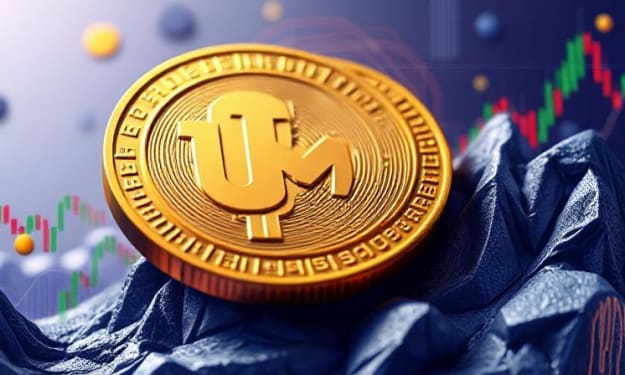
UMA Crypto Technical Analysis 2025: Will UMA’s Comeback Match Mast Energy’s Steady Ascent?. AI-Generated.
Introduction: Two Different Markets, One Shared Momentum The global investment landscape in 2025 is witnessing two fascinating forces at play the fast-paced world of cryptocurrencies like UMA (Universal Market Access) and the steady, fundamental-driven progress of companies such as Mast Energy Developments (MED). While UMA thrives on the innovation of decentralized finance (DeFi), Mast Energy represents the stability of traditional markets through sustainable energy production.
By Hammad Nawazabout a year ago in Trader
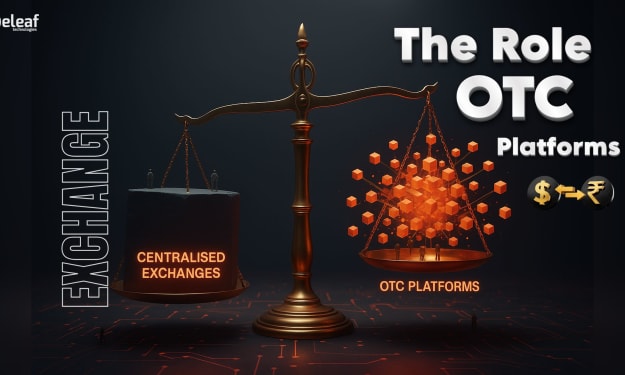
The Overreach of Centralised Exchanges and the Role of OTC Platforms
The crypto market was founded on a promise of decentralization, transparency, and user control. Yet, as the industry has evolved, centralized exchanges have taken on roles that mirror traditional finance from custodianship to price setting. While these platforms offer convenience and scale, their growing dominance raises questions about control, access, and trust. This is where OTC Crypto Exchange Development enters the picture as a quiet yet powerful response to the overreach of centralized systems.
By smithtaylorabout a year ago in Trader
WikiFX’s Review System: Manipulation or Merit?. AI-Generated.
When traders search for a reliable forex broker, one name that often appears at the top of Google results is WikiFX — a platform that claims to “protect global investors” by reviewing and rating forex brokers worldwide. With millions of downloads and a strong SEO presence, WikiFX positions itself as the “go-to” verification tool for traders seeking safety and legitimacy. But beneath this polished image lies a web of questions surrounding its credibility, transparency, and true intentions.
By Eric Nilsenabout a year ago in Trader
Forex Traders Speak Out: The Truth Behind WikiFX’s Review Practices. AI-Generated.
In the modern Forex landscape, credibility and safety are everything. Traders rely on broker ratings, reviews, and regulatory information to decide where to place their trust and their money. Among these sources, WikiFX has become one of the most frequently referenced platforms for evaluating Forex brokers. It positions itself as a “broker verification and safety review” authority — offering numerical safety scores, regulatory status, and user reviews.
By Eric Nilsenabout a year ago in Trader
Cronos USD: Can CRO Lead the Next Wave of Digital Finance Innovation?. AI-Generated.
Introduction: The Rise of Cronos USD in a Rapidly Changing Market As the financial world moves deeper into the digital era, the Cronos USD (CRO) token has become a central figure in the discussion about blockchain innovation and decentralized finance. With investors constantly balancing between crypto volatility and stock market uncertainty, assets like CRO are reshaping how we define financial opportunity.
By Hammad Nawazabout a year ago in Trader
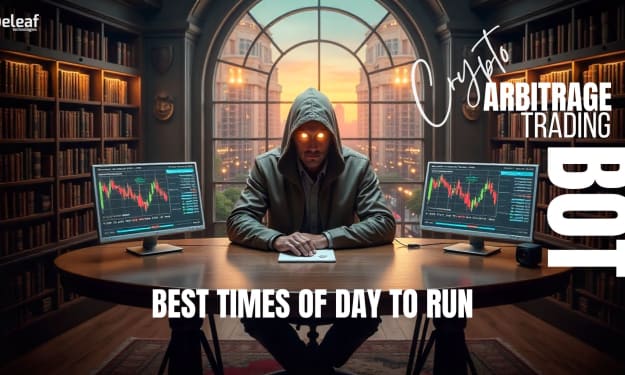
What are the Best Times of Day to Run a Crypto Arbitrage Bot?
In the ever-moving world of cryptocurrency, timing is more than strategy it’s survival. Markets never sleep, and price gaps appear and vanish in seconds. That’s why traders turn to crypto arbitrage bots, automated systems that detect and execute trades faster than any human can.
By smithtaylorabout a year ago in Trader
The Rise of the Modern Bitcoin Trader: A New Age of Digital Wealth
In the past decade, the world has witnessed one of the most revolutionary shifts in finance — the rise of cryptocurrency trading. Among these digital currencies, Bitcoin stands as the undisputed leader, symbolizing a movement toward financial independence, innovation, and decentralization. The modern Bitcoin trader is not just a speculator; they are part of a new generation reshaping how the world perceives money, value, and opportunity. From Obscurity to Global Recognition When Bitcoin was first introduced in 2009 by the mysterious figure known as Satoshi Nakamoto, few could have predicted its impact. Back then, Bitcoin was worth just a few cents, traded mostly among tech enthusiasts and libertarians. Fast-forward to today, and Bitcoin has become a household name — traded on global exchanges, accepted by major corporations, and held as a store of value by millions. This transformation has created a new kind of trader: one who navigates the digital marketplace 24/7, analyzing price charts, studying blockchain trends, and leveraging technology to make informed decisions. Unlike traditional stock traders who rely on set market hours, Bitcoin traders operate in a market that never sleeps, offering both tremendous opportunity and immense risk. The Psychology Behind Bitcoin Trading At the core of every Bitcoin trader lies a deep fascination with volatility. The cryptocurrency market is famous — or perhaps infamous — for its dramatic price swings. A 10% drop or rise in a single day is not unusual, and such fluctuations require emotional control and sharp strategy. Successful traders understand that emotion is the enemy of profit. Fear and greed are constant companions in this volatile space. Those who panic during a crash often miss the opportunity to “buy the dip,” while those blinded by greed during a rally may hold on too long and lose their gains. The best traders learn to detach emotionally, making decisions based on logic, technical indicators, and long-term vision. Technology and Tools: The Trader’s Arsenal Modern Bitcoin traders have access to advanced tools that were unimaginable a decade ago. Trading bots, real-time analytics platforms, and AI-driven algorithms help analyze trends and execute trades within milliseconds. Many use platforms like Binance, Coinbase Pro, and Kraken, which provide sophisticated charting tools and instant execution. Social media and online communities also play a major role. Platforms such as X (formerly Twitter), Telegram, and Reddit have become vital sources of information and sentiment. Traders constantly monitor these channels for news that might influence Bitcoin’s price — from regulatory changes to Elon Musk’s latest post. Some traders take a long-term approach, known as “HODLing” (Hold On for Dear Life), while others prefer short-term trading strategies like scalping or swing trading. Regardless of style, one rule remains consistent: risk management. The most experienced traders never risk more than they can afford to lose, understanding that even in a bull market, crashes are inevitable. Bitcoin and the Global Economy Bitcoin trading isn’t confined to Wall Street or Silicon Valley. It’s a global movement that has empowered millions of people — from remote parts of Africa to the bustling cities of Asia and Europe. For many in developing countries, Bitcoin offers an escape from inflation, unstable banking systems, and financial restrictions. During economic crises, Bitcoin has often been viewed as “digital gold” — a hedge against fiat currency devaluation. However, its volatility also means it’s not always a safe haven. Still, as institutional investors and companies integrate Bitcoin into their portfolios, its legitimacy as a global asset continues to grow. Challenges and Regulation Despite its success, Bitcoin trading faces numerous challenges. Governments worldwide are still grappling with how to regulate cryptocurrencies. Some countries have embraced Bitcoin, while others have banned or restricted its use. Traders must navigate these changing laws, tax obligations, and the constant threat of scams and cyberattacks. Security remains one of the biggest concerns. With billions of dollars worth of digital assets stolen each year through hacks and phishing schemes, traders must take cybersecurity seriously. Using cold wallets, two-factor authentication, and trusted exchanges is crucial to staying safe in this digital frontier. The Future of Bitcoin Trading As we look ahead, the future of Bitcoin trading appears both exciting and unpredictable. With advancements in blockchain technology, artificial intelligence, and decentralized finance (DeFi), the market continues to evolve rapidly. Many experts predict that Bitcoin could eventually replace traditional financial systems or at least coexist with them as a key global asset. New generations of traders are also emerging — younger, more tech-savvy, and open to innovation. They see Bitcoin not just as an investment but as a revolution in how money works. With the rise of tokenized assets, NFTs, and blockchain-based economies, Bitcoin traders stand at the crossroads of finance and technology. Conclusion: Trading in the Age of Transformation The Bitcoin trader of today embodies the spirit of the digital age — independent, informed, and driven by possibility. They represent a shift from centralized finance to decentralized empowerment, where knowledge and technology redefine wealth. Trading Bitcoin isn’t for the faint-hearted. It demands discipline, patience, and constant learning. But for those willing to embrace the risks, it offers a chance to be part of one of the greatest financial revolutions of our time. Whether you’re a seasoned investor or a curious beginner, one truth remains clear: the era of digital trading has only just begun.
By Fazal wahid about a year ago in Trader