history
Major moments in the history of the stock market, from the birth of stock exchanges to catastrophic market crashes and more.
Who Came Up With Sound Money?
Have you ever wondered why your grocery bill has been so high over the last few years? The answer is inflation, a product of the current economic system. The Federal Reserve currently targets an average inflation rate of around 2% over time.
By Sound Money8 months ago in Trader
Iran’s Oil Warning
Iran’s Oil Warning A dramatic escalation in global tensions has emerged from the Middle East as Iran issued a powerful warning to countries around the world regarding access to one of the most important energy routes on Earth—the Strait of Hormuz. Iranian officials declared that nations which distance themselves from diplomatic and military cooperation with the United States and Israel could receive safe passage for their oil shipments through the strait.
By Wings of Time 8 months ago in Trader
How the Iran-Israel War Is Affecting the Global Economy? Energy supply disruptions from the Persian Gulf are shaking financial markets worldwide
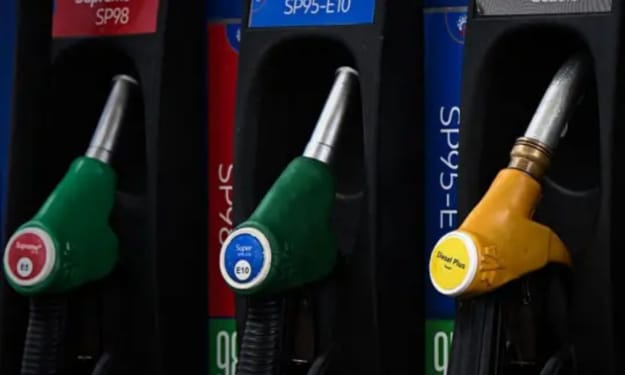
The consequences of the war between the United States, Israel, and Iran are gradually becoming visible in the lives of people around the world, no matter where they live. Disruptions in exports of oil, gas, and other commodities from the Persian Gulf region, along with simultaneous production cuts by some oil-producing countries, have caused a supply shock that has driven prices higher. This situation has shaken financial markets. However, its impact is not limited to markets alone, as gasoline and diesel prices are also rising at gas stations. The consequences could be widespread, with the possibility of rising prices for a broad range of goods and services, from food to air travel. Analysts have also increased the likelihood of an economic recession, leaving some countries more vulnerable than others. Hunter Kornfeind, senior energy macroeconomic analyst at Rapid Energy Group, said, “This is actually the biggest supply shock, at least in the modern history of the global oil market.” Drivers around the world are now feeling this at gas stations. According to the American Automobile Association, in the United States the average price of gasoline has risen from about $2.92 a month ago to more than $3.5 per gallon. During the same period, the price of diesel has also increased from $3.66 to $4.78. In the United Kingdom, the latest data from RAC shows that since the start of the war the average price of petrol has increased by 4.95 pence to 137.78 pence per liter, while diesel has risen by 9.43 pence to 151.81 pence per liter. Typically, there is a time lag between changes in the oil market and their reflection in fuel prices, and it usually takes about two weeks for these changes to appear at gas stations. Meanwhile, nearly half of Europe’s jet fuel comes from the Persian Gulf region. Disruptions in this supply have nearly doubled the price of European benchmark jet fuel, reaching its highest level since Russia’s war in Ukraine began. Fuel typically accounts for between 20 and 40 percent of airlines’ operating costs, so flights could become more expensive, and if fuel shortages occur, some flights may be canceled. However, this impact will not be the same for all airlines. Many European airlines use futures contracts months or even years in advance to purchase fuel so that the price is fixed or capped within a certain range. In contrast, some major American airlines do not have such contracts and may therefore face price increases in the short term. United Airlines CEO Scott Kirby recently warned that higher costs could mean that airfare increases will “probably start very soon.” Very serious consequences
By Real content8 months ago in Trader
Stock Market Trends 2026: Why Investors Are Watching Global Markets More Closely Than Ever
The stock market has always been a fascinating mirror of the global economy. In 2026, investors, analysts, and everyday traders are watching the market more closely than ever before. From artificial intelligence investments to geopolitical tensions and interest-rate policies, several powerful forces are shaping the direction of global stock markets.
By The Insight Ledger 8 months ago in Trader
Why Oil and Gas Prices Are Rising and Stock Markets Are Falling Amid Middle East Tensions
Gas prices surged and global stock market indices fell sharply as the conflict in the Middle East intensified and concerns grew about the prolonged nature of the crisis. After a sharp rise on Monday, UK gas prices jumped more than 46% to reach their highest level in three years, while Brent crude briefly climbed above $85 per barrel. In the United States, the Dow Jones Industrial Average fell by nearly 900 points in early trading. The S&P 500 and Nasdaq also declined following steep losses in European markets. Since the start of Israeli and US attacks on Iran and the country’s retaliatory response, investors have been assessing the potential economic consequences, including impacts on inflation and interest rates. There are concerns that the price increases could have a similar effect to Russia’s large-scale invasion of Ukraine four years ago, which drove up energy prices and raised costs for businesses and consumers worldwide. On Tuesday, UK gas prices rose above 165 pence per cubic meter (2.83 cubic meters of natural gas), a level last seen a year after the start of the Ukraine war. By early afternoon, the price had fallen back to 146 pence. The surge in gas prices came after QatarEnergy, one of the world’s largest exporters, halted production following “military attacks” on its facilities. The company later announced it would also suspend production of other materials including aluminum, methanol, and urea (used in fertilizer). UK gas prices have now doubled since a wave of US and Israeli airstrikes on Iran began over the weekend. Rising gas prices could put pressure on household energy bills, although in the UK any increase will not be felt until July due to the “price cap.” Oil prices have not risen as sharply as gas prices because there is greater flexibility in sourcing crude oil from alternative suppliers compared with gas. However, Brent crude remains 17% higher than its closing price on Friday. Rising oil prices could still impact the economy by making items such as car fuel, transportation, and food more expensive. If inflation (the rate of price increases) accelerates, it would reduce the likelihood that central banks will cut interest rates in the coming months. In the UK, the FTSE 100 fell nearly 2.6%. Germany’s DAX dropped 3.6%, while France’s CAC-40 fell 2.9%. Shipping through the Strait of Hormuz is vital to the global economy, with about 20% of the world’s oil and gas passing through the waterway. However, maritime traffic in the area has effectively come to a halt in recent days following several attacks on vessels. A senior adviser to the commander-in-chief of Iran’s Revolutionary Guard told Iranian television that ships should not enter the area and would “certainly face our severe response.” In addition to rising prices in global energy markets, the conflict has also driven up the cost of transporting oil. According to data from the London Stock Exchange Group, the cost of chartering a supertanker to carry oil from the Middle East to China reached a record $400,000 per day on Monday, nearly double the cost of the previous week. He said this was partly because shipping companies are unwilling to take risks, but also because “insurance companies are not prepared to cover the risk.” Sanne Manders also said shipping companies are likely to begin raising freight rates “for all maritime cargo worldwide” due to expected increases in fuel prices. Donald Trump is facing concerns that conflicts in the Middle East could increase the cost of living. Sinivasan Balakrishnan of risk research firm Avalon Intelligence said that if disruptions to maritime cargo continue, crude oil prices could exceed $100 per barrel. He predicted that if prices remain at that level, gasoline prices in the US could rise by up to 25 cents per gallon. US Secretary of State Marco Rubio said Washington would announce its plans on Tuesday to address rising energy prices: “We knew there would be consequences to entering this conflict. You will see that we are taking various measures to mitigate these effects.” According to Alasdair Locke, chairman of Motor Fuel Group (the UK’s largest independent petrol station operator), fuel prices in the UK are likely to rise if oil prices remain high. “As oil prices rise, it will inevitably lead to increases at the pump in due course. How much fuel prices rise will depend on how long and at what level oil prices remain elevated,” he said. In Asia, Japan’s Nikkei index closed down 3.3%, with export-dependent companies such as Toyota, Panasonic, and Sony among the hardest hit. Hong Kong’s Hang Seng index and mainland China’s Shanghai Composite index also fell. South Korea’s KOSPI, which had been closed on Monday for a public holiday, dropped more than 7%.
By Real content8 months ago in Trader