history
Major moments in the history of the stock market, from the birth of stock exchanges to catastrophic market crashes and more.
Michael Saylor has a new Bitcoin prediction and it’s not $13M
Michael Saylor, the executive chairman and co-founder of MicroStrategy, has once again drawn attention to Bitcoin with a revised prediction that continues to capture the imagination of crypto enthusiasts and institutional investors alike. Known for his strong support of Bitcoin and for steering MicroStrategy into becoming one of the largest corporate holders of the digital asset, Saylor has now forecasted that Bitcoin could reach \$1 million per coin within the next decade. This new projection, while less extreme than the previously speculated \$13 million figure, remains significantly bullish and positions Bitcoin as a core financial asset for the future.
By GLOBAL NEWSabout a year ago in Trader
How to earn money from YouTube.
How to Earn from YouTube YouTube has evolved from a simple video-sharing platform into a full-fledged career opportunity for millions of creators worldwide. Whether you're passionate about gaming, beauty, education, or daily vlogs, there are many ways to earn money through YouTube. However, success on YouTube requires consistency, creativity, strategy, and patience. Here's a comprehensive guide on how to earn from YouTube. 1. Create a YouTube Channel The first step is to create your own YouTube channel. You'll need a Google account to sign in. Choose a channel name that reflects your niche or brand, and set up your channel with a profile picture, banner, and description. Make sure the theme of your channel is clear and appealing to your target audience. 2. Choose a Niche Choosing a niche helps attract a specific audience and makes content planning easier. Popular niches include: Gaming Beauty and fashion Tech reviews Education and tutorials Comedy/skits Vlogging Cooking Fitness Pick something you're passionate about and knowledgeable in. Consistency in content style and theme helps build a loyal audience. 3. Create Quality Content Content is king on YouTube. To succeed, you need to produce high-quality, engaging videos. Good lighting, clear audio, and thoughtful editing are crucial. Your content should provide value, whether it's entertainment, education, or inspiration. Pay attention to video titles, thumbnails, and descriptions, as they influence click-through rates. 4. Grow Your Audience Success on YouTube doesn’t happen overnight. You’ll need to build an audience through: Posting consistently Engaging with viewers through comments Using SEO-friendly titles and tags Sharing videos on social media Collaborating with other creators The more subscribers and views you gain, the more earning potential you’ll unlock. 5. Join the YouTube Partner Program (YPP) To monetize your channel through ads, you must be part of the YouTube Partner Program. To qualify, you need: At least 1,000 subscribers 4,000 watch hours in the past 12 months An AdSense account linked to your channel Once approved, YouTube will start placing ads on your videos, and you'll earn a share of the revenue. 6. Earning Through Ads Ad revenue is the most common way to earn from YouTube. You get paid based on CPM (Cost Per Mille, or per thousand views). Factors like audience location, niche, and engagement affect your earnings. For instance, tech and finance channels tend to have higher CPMs. However, YouTube takes a 45% share of ad revenue, so it’s wise to diversify your income streams. 7. Other Ways to Earn Besides ads, there are several other monetization options: a. Sponsorships and Brand Deals Brands often pay creators to promote their products. Once you have a decent following, companies may approach you, or you can reach out to them. Sponsored content can be highly lucrative, especially in niches like tech, fashion, or fitness. b. Affiliate Marketing You can promote products using affiliate links in your video descriptions. When viewers click and buy, you earn a commission. Websites like Amazon Associates or ShareASale offer affiliate programs. c. Channel Memberships and Super Chat If you have over 1,000 subscribers, you can enable channel memberships. Fans can pay a monthly fee to access exclusive perks. During live streams, Super Chat allows viewers to pay to have their messages highlighted. d. Merchandising You can design and sell your own merchandise like t-shirts, mugs, or hats using services like Teespring or Spreadshop, which integrate directly with YouTube. e. YouTube Premium Revenue When YouTube Premium members watch your content, you earn a share of their subscription fee. This is automatic once you're in the Partner Program. f. Offering Courses or Services If you're an expert in something, you can use your channel to promote your own services or online courses. For example, a fitness YouTuber might offer personal coaching or sell workout plans. 8. Understand Analytics YouTube Studio offers analytics that help track your performance. Watch time, average view duration, click-through rate, and audience demographics can guide your content strategy. Learning what works and what doesn’t is key to growth. 9. Follow YouTube’s Policies To stay monetized, follow all of YouTube’s community guidelines and copyright rules. Avoid using copyrighted music or video clips without permission. Violations can lead to demonetization or suspension of your channel. 10. Be Patient and Persistent Building a profitable YouTube channel takes time. Some creators earn a full-time income, while others earn a side income. Stay consistent, keep learning, and adapt your content based on feedback and performance. --- Conclusion Earning from YouTube is a real and achievable goal, but it requires effort, creativity, and consistency. By choosing the right niche, creating valuable content, engaging your audience, and exploring multiple income streams, you can turn your passion into a profitable venture. Remember, success doesn’t come overnight—but with time and dedication, YouTube can become a powerful platform for both expression and income.
By Haris khanabout a year ago in Trader
Why forex or stock market not easy?. AI-Generated.
The foreign exchange (forex) and stock markets are two of the most actively traded and closely monitored financial arenas in the world. These markets offer immense opportunities for profit, financial independence, and wealth generation. However, despite the allure and accessibility, success in trading and investing remains elusive for many participants. The notion that forex and stock trading is a quick path to riches is often dismantled by the harsh reality of consistent losses, unexpected market movements, and emotional decision-making. This article delves deeply into why trading these markets is not easy, examining factors such as complexity, volatility, market psychology, competition, and more. The forex and stock markets are not easy for several reasons, many of which come down to complexity, uncertainty, and human psychology. Here's a breakdown:
By Pooja Vermaabout a year ago in Trader
Tesla insider makes concerning move on Tesla stock
Recent insider stock sales at Tesla have raised alarms among investors and market analysts. Key executives and board members of Tesla Inc. have been selling substantial amounts of company shares, coinciding with ongoing market volatility and internal challenges. This wave of sales has led to speculation about the future of the electric vehicle giant and the confidence of its leadership.
By GLOBAL NEWSabout a year ago in Trader
The Wisdom of Waiting: When Doing Nothing is Doing Everything. AI-Generated.
In a world obsessed with fast results and frantic activity, there’s a kind of brave magic in restraint. Especially in the world of investing. We’re told that movement equals progress, that effort means control. But in investing, it’s not the swiftest who wins. It’s the calm. The composed. The quietly consistent.
By SubhShanti Wealthabout a year ago in Trader
Amazon and Meta Stocks Surge After Trump Reduces Tariffs on 'De Minimis' Shipments from China
After Trump reduces tariffs on "De Minimis" Chinese imports, Amazon and Meta stock prices rise. In a significant shift in trade policy, former President Donald Trump announced a reduction in tariffs on small-value shipments from China and Hong Kong, sending ripples through global markets and boosting the share prices of several U.S. tech giants. Amazon and Meta Platforms were among the top beneficiaries, with their stock prices climbing on expectations of lower costs and renewed advertising momentum.
By GLOBAL NEWSabout a year ago in Trader
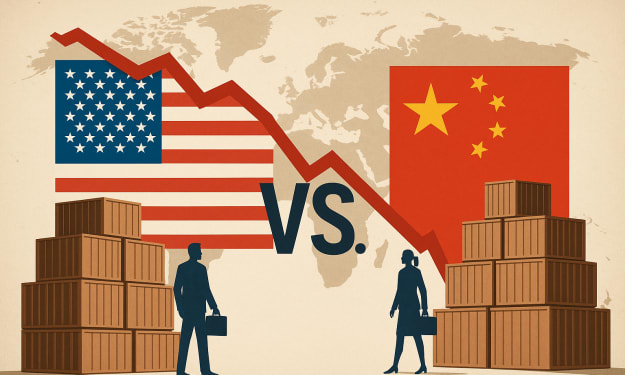
The U.S.-China Business War.
The United States and China, two of the world's largest economies, are engaged in a high-stakes economic rivalry that is reshaping the global business landscape. What began as a tariff war during the Trump administration has evolved into a broader competition over technology, supply chains, and geopolitical influence. This ongoing conflict is often referred to as the "business war," and its consequences reach far beyond just tariffs and trade balances. The Roots of the Business War Tensions between the U.S. and China didn’t start overnight. For years, American policymakers and business leaders expressed concerns over China's trade practices, including intellectual property theft, forced technology transfers, and heavy government subsidies to domestic companies. In 2018, the Trump administration imposed sweeping tariffs on Chinese goods, aiming to pressure Beijing into changing these practices. China retaliated with tariffs of its own, targeting U.S. agricultural products, automobiles, and technology sectors. What followed was a series of tit-for-tat actions that sent shockwaves through global markets. While both sides signed a Phase One trade deal in January 2020, the underlying issues remained unresolved. Technology: The New Battleground In recent years, the U.S.-China rivalry has intensified in the tech sector. Washington has blacklisted major Chinese tech firms like Huawei and ZTE, citing national security concerns. Meanwhile, the U.S. has restricted China's access to advanced semiconductor technology, which is critical to everything from smartphones to AI and defense systems. America accuses China of using tech companies for espionage, while China accuses the U.S. of suppressing its rise as a technological power. The battle now includes emerging technologies like quantum computing, biotechnology, and 5G networks. This tech war is not just about gadgets—it's about who controls the future of innovation. Both nations are racing to dominate these fields, investing billions in research and development. The result? Global tech firms are being forced to pick sides, with many reevaluating their supply chains to reduce dependence on either country. The Impact on Global Business Multinational corporations are caught in the crossfire. American companies like Apple, Tesla, and Qualcomm rely heavily on Chinese manufacturing and markets. At the same time, Chinese firms like TikTok and Shein are expanding aggressively into Western markets, often facing political and regulatory pushback. The business war has forced companies to rethink global strategies. Many are diversifying manufacturing to countries like Vietnam, India, and Mexico in a process known as "decoupling." While complete economic separation between the U.S. and China is unlikely, partial decoupling is already underway—and it’s reshaping the global economy. Political Pressure and Public Opinion This business war is also fueled by politics. In the U.S., there is bipartisan consensus that America needs to take a tougher stance on China. Recent legislation like the CHIPS and Science Act, which boosts domestic semiconductor production, reflects this shift. Similarly, China has doubled down on its “dual circulation” strategy, which emphasizes self-reliance and domestic consumption. Public opinion plays a role too. Surveys show rising distrust between the populations of both countries, with economic competition seen as a major national threat. This creates a feedback loop where governments feel justified in escalating tensions, further straining economic ties. What Lies Ahead? The U.S.-China business war is far from over. As both nations continue to prioritize economic security and technological dominance, businesses worldwide will have to adapt to a more fragmented, politically charged global marketplace. The challenge for leaders on both sides will be to manage this competition without allowing it to spiral into open conflict. Cooperation on global issues like climate change, public health, and nuclear security still requires engagement. But for now, the business war shows no signs of slowing—and the world is watching closely.
By Dr Gabriel about a year ago in Trader
Whale Longs XRP with $12M After Netting $10M Profit from Ethereum Price Surge
**Whale Longs XRP with \$12M After Netting \$10M Profit from Ethereum Price Surge** In a calculated move that has captured the attention of the cryptocurrency market, a major crypto whale has shifted significant capital into XRP, taking a long position worth \$12 million. This comes on the heels of an impressive profit of \$10 million that the investor reportedly made from Ethereum’s recent price rally. The sequence of trades underscores a strategic pivot from one of the world’s most valuable cryptocurrencies to another digital asset with long-standing popularity and potential upside.
By GLOBAL NEWSabout a year ago in Trader