career
Want to be a Wolf on Wall Street? A guide to getting your foot in the door and building a successful career as a trader.
How to Use Technical Analysis in Forex Trading
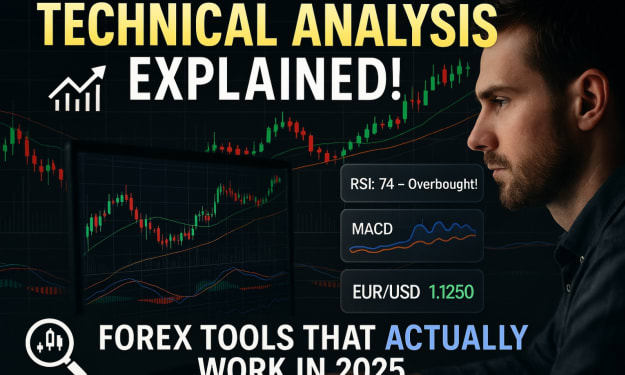
In the fast-paced world of Forex trading, one of the most powerful tools in a trader’s toolbox is technical analysis. Unlike fundamental analysis, which focuses on news and economic data, technical analysis uses charts, indicators, and patterns to predict future price movements based on historical behavior. If you're new to Forex or still relying on luck and gut feeling, this guide will show you how to start reading the charts and trading with confidence using technical analysis. 🧠 What is Technical Analysis? Technical analysis is the study of price action, chart patterns, and indicators to forecast where the market is likely to move next. It’s based on the idea that all current market information is already reflected in the price. In other words: “History repeats itself” — and patterns often return under similar conditions. This approach is widely used by day traders, swing traders, and even automated bots, and in 2025, it remains the backbone of short-term and mid-term Forex strategies. 📊 Key Tools of Technical Analysis Here are the most commonly used tools and how they help in decision-making: --- 📈 1. Candlestick Charts Candlesticks show price movement over a specific time period (e.g., 1 minute, 1 hour, 1 day). Each candlestick includes: Open High Low Close Some key candlestick patterns include: Doji – indecision in the market Engulfing Pattern – strong reversal signal Hammer / Shooting Star – trend reversal ✅ Use It For: Spotting momentum, reversals, or continuation patterns. 🧭 2. Support and Resistance These are key price levels where the market often reverses or stalls. Support = Price floor (buyers step in) Resistance = Price ceiling (sellers step in) If price breaks resistance, it may continue up. If it breaks support, it may fall further. ✅ Use It For: Entry/exit points, placing stop-loss and take-profit zones. 📉 3. Moving Averages (MA) These smooth out price data to identify trends over time. Simple Moving Average (SMA) – average price over a set number of periods Exponential Moving Average (EMA) – gives more weight to recent prices Common strategies include: Golden Cross – Short MA crosses above long MA (bullish signal) Death Cross – Short MA crosses below long MA (bearish signal) ✅ Use It For: Trend direction and confirmation. ⚡ 4. Relative Strength Index (RSI) RSI is a momentum indicator that ranges from 0 to 100. Above 70 = Overbought (potential reversal down) Below 30 = Oversold (potential reversal up) ✅ Use It For: Spotting possible reversals and trade entry points. 🔄 5. MACD (Moving Average Convergence Divergence) A momentum indicator showing the relationship between two EMAs. It consists of: MACD Line Signal Line Histogram A MACD crossover can signal a buy or sell opportunity. ✅ Use It For: Trend strength and direction. 🧪 Combining Indicators for Better Accuracy Pro traders never rely on just one indicator. They often combine multiple tools for stronger confirmation. 📌 Example Strategy: Use Moving Averages to identify the trend Use RSI to find overbought/oversold signals Use Support/Resistance to plan your entry and stop-loss This triple-confirmation method reduces false signals and increases success probability. 📘 Real-Life Forex Trade Example (EUR/USD) Let’s say EUR/USD is trending upward: You plot 50 EMA and see price staying above it (bullish trend) RSI is at 35 (not overbought) Price bounces off a known support level ✅ This could be a buy signal — enter long with a stop-loss below support and a target at the next resistance level. ⚠️ Common Mistakes to Avoid Overloading your chart with indicators – Keep it simple, 2-3 tools max. Ignoring the overall trend – Don’t trade against the trend. Using indicators without understanding them – Know what they measure and how they behave. Not using a stop-loss – Always protect your capital. 🧭 Tips for Technical Analysis in 2025 Use multi-timeframe analysis: check trends on 1H, 4H, and Daily Practice with a demo account before going live Stay updated with AI-enhanced trading tools now integrated in platforms like TradingView, MetaTrader 5, and Exness Combine technical + fundamental analysis for maximum confidence ✅ Final Thoughts Technical analysis gives traders the ability to read the market visually, spot opportunities, and make informed decisions. In a market where prices move fast, being able to analyze charts quickly and accurately is a competitive advantage. If you’re serious about Forex trading, mastering these tools is non-negotiable. Start slow, stay consistent, and refine your skills with practice.
By Junaid Ali (Official)about a year ago in Trader
Understanding Currency Pairs
If you're stepping into the world of Forex trading, one of the first things you’ll come across is currency pairs—the foundation of all your trades. Understanding how they work is essential to make smart decisions and read the market like a pro. In this article, we’ll break down what currency pairs are, how to interpret them, and how to analyze them using both technical and fundamental approaches in 2025’s evolving market. 💱 What Are Currency Pairs? In the Forex market, you trade one currency against another. That’s why every trade involves a pair—like EUR/USD or GBP/JPY. Each pair consists of: Base Currency: The first currency listed (e.g., EUR in EUR/USD) Quote Currency: The second currency listed (e.g., USD in EUR/USD) When you see EUR/USD = 1.1200, it means 1 Euro equals 1.12 US Dollars. If the number goes higher, the Euro is getting stronger. If it drops, the Dollar is gaining strength. --- 🔍 Types of Currency Pairs There are three main types of currency pairs: ✅ 1. Major Pairs These include the most traded currencies in the world and always involve the US Dollar. Examples: EUR/USD USD/JPY GBP/USD USD/CHF These pairs are popular because they’re liquid, stable, and have low spreads. ⚠️ 2. Minor Pairs (Cross Pairs) These don’t involve the US Dollar but still include major currencies like EUR, GBP, or JPY. Examples: EUR/GBP AUD/NZD GBP/JPY These can have higher volatility and spreads but offer interesting opportunities. 🌍 3. Exotic Pairs These pair a major currency with a lesser-traded or emerging-market currency, such as: USD/TRY (Turkish Lira) EUR/ZAR (South African Rand) USD/PKR (Pakistani Rupee) Exotic pairs are high-risk, high-reward, and often influenced by political or economic instability. 📈 How to Analyze Currency Pairs Like a Pro To trade successfully, you need to understand why a currency pair moves, and where it's likely to go next. That’s where analysis comes in. --- 🧠 1. Fundamental Analysis This focuses on the real-world economic and political factors that influence currencies. Key Factors: Interest Rates (Central bank decisions like the Fed or ECB) GDP Growth Unemployment Rates Inflation Political News (elections, wars, instability) 💡 Example: If the U.S. Federal Reserve increases interest rates, USD tends to strengthen, affecting pairs like EUR/USD or USD/JPY. ✅ Pro Tip: Check an economic calendar daily. Websites like ForexFactory or Investing.com show upcoming events that could impact your trades. --- 📊 2. Technical Analysis This is the art of using price charts, indicators, and patterns to predict future movement. Common Tools: Candlestick Patterns (Doji, Engulfing, Hammer) Support and Resistance Zones Moving Averages (MA, EMA) Indicators like RSI, MACD, Bollinger Bands 💡 Example: If EUR/USD breaks above a resistance level and volume supports the move, it could be a signal to buy. ✅ Pro Tip: Combine multiple indicators for confirmation. Don’t rely on one tool alone. 🔁 Correlation Between Pairs Some currency pairs move in the same direction, while others move oppositely. Positive Correlation: EUR/USD and GBP/USD often rise and fall together. Negative Correlation: EUR/USD and USD/CHF often move in opposite directions. Knowing these relationships helps manage risk and avoid taking trades that cancel each other out. 💬 How to Choose Which Pairs to Trade As a beginner, start with major pairs like EUR/USD or USD/JPY. They are less volatile, more liquid, and easier to analyze. As you gain experience, explore minors and exotics. Ask yourself: Do I understand what drives this pair? Does my strategy work well with its volatility? Can I handle the drawdowns and spreads? ✅ Final Thoughts Understanding currency pairs is the first step to becoming a successful Forex trader. By mastering how to read, interpret, and analyze them, you gain the power to make informed decisions—not emotional guesses. Forex trading isn’t just clicking “Buy” or “Sell.” It’s about knowing what you’re trading, why it moves, and what to expect next. Take the time to study the pairs, track their behaviors, and keep learning. In 2025 and beyond, informed traders are the ones who win.
By Junaid Ali (Official)about a year ago in Trader
Beginner’s Guide to Forex Trading
In recent years, Forex trading has emerged as one of the most accessible and exciting ways for individuals to get involved in the global financial markets. With trillions of dollars traded daily, the foreign exchange (Forex) market is the largest and most liquid market in the world. But before diving in, new traders must understand the basics, risks, and tools of the trade to avoid common pitfalls and maximize their potential. What Is Forex Trading?
By Junaid Ali (Official)about a year ago in Trader
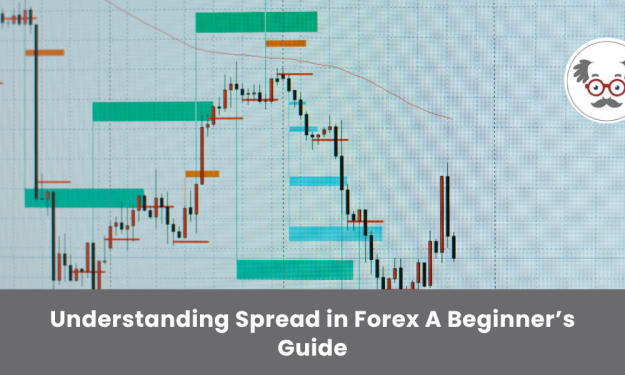
Understanding Spread in Forex A Beginner’s Guide
The spread in forex trading is an important topic that directly affects your profits and losses. Understanding how spreads function is critical for new traders and those honing their techniques. This post will explain what a spread in forex is, why it matters, and how it might influence your trading decisions.
By FX Einsteinabout a year ago in Trader
How to become a profitable in forex or crypto trading.
What Is Trading and How to Become a Profitable Trader? In simple words, trading means buying and selling financial assets — like stocks, currencies, commodities, or cryptocurrencies — with the goal of making a profit. Traders aim to earn money by predicting whether the price of an asset will go up or down in the short or long term.
By USA daily update about a year ago in Trader
The Rise of the Crypto Trader: Chasing Profits in a Digital World
In a world increasingly defined by rapid technological advances and financial innovation, a new breed of investor has emerged — the crypto trader. Once reserved for tech enthusiasts and hardcore finance geeks, cryptocurrency trading has exploded into the mainstream. Today, millions of ordinary people are staking their financial futures on the volatile world of digital coins, chasing life-changing profits and redefining what it means to be an investor.
By Noor Hussainabout a year ago in Trader
How to Start a Blog That Earns Money While You Sleep
Imagine waking up in the morning to see that your blog has made money while you were asleep. For many digital entrepreneurs, this isn’t just a dream—it’s a reality. Blogging has evolved from a personal journal to a legitimate online business model. With the right strategies, you can build a blog that continues to earn even when you're off the clock. In this guide, we’ll walk through step-by-step how to start a blog that generates passive income. Step 1: Find Your Niche Why Your Niche Matters Your blog's niche is the foundation of your success. A well-defined niche allows you to attract a specific audience, stand out from competitors, and monetize effectively. How to Choose a Profitable Niche Passion and Expertise: Choose a topic you love and are knowledgeable about. Market Demand: Use tools like Google Trends, Ubersuggest, or Ahrefs to find what people are searching for. Monetization Potential: Look for niches with existing products or affiliate programs—think finance, health, travel, tech, or lifestyle.
By Wealth Dropletsabout a year ago in Trader
The Power of Patience
In the fast-paced world of trading, many beginners believe that success comes from constant action — making as many trades as possible, chasing every market move, or reacting instantly to news. However, the most successful traders often preach a very different philosophy: the power of patience. The ability to trade less and win more is not only a strategy but a mindset that can transform your trading results and protect your capital.
By Muhammad Asimabout a year ago in Trader
Top 10 Passive Income Ideas That Actually Work
In a world where financial freedom is more desirable than ever, the concept of passive income has become a buzzword — and for good reason. Who wouldn’t want to earn money while they sleep, travel, or focus on other pursuits? But here’s the truth: not all passive income ideas are created equal. Some require significant upfront effort, while others are flat-out scams or just too risky for beginners. This article cuts through the noise and delivers the top 10 passive income ideas that actually work — realistic, proven methods that can grow into steady income streams over time.
By Muhammad Asimabout a year ago in Trader
Top 10 Best Hosting Sites for 2024: Why Hostinger Leads the Pack
Top 10 Best Hosting Sites for 2024: Why Hostinger Leads the Pack Choosing the right web hosting service is one of the most crucial decisions you'll make when building a website. The best hosting sites offer the perfect balance of performance, reliability, and value—factors that can make or break your online presence. After extensive testing and research, we've compiled our definitive ranking of the top 10 web hosting services for 2024, with Hostinger emerging as the clear frontrunner. Whether you're launching a blog, e-commerce store, or business website, this guide will help you find the perfect hosting solution for your specific needs.
By KingFree MaNabout a year ago in Trader
What Are the Best Crypto Exchange Moves for New Traders?
Introduction Diving into the world of cryptocurrency trading is exciting, but it can also feel daunting for beginners. With hundreds of digital currencies, diverse exchange platforms, and a fast-paced market environment, knowing where to start is often the biggest challenge. The right moves in your early trading days can make a huge difference in your learning curve and financial outcomes. This blog breaks down essential strategies and concepts to help new traders build a solid foundation and make smart trading decisions from the start.
By Michal steveabout a year ago in Trader