career
Want to be a Wolf on Wall Street? A guide to getting your foot in the door and building a successful career as a trader.
Living Paycheck to Paycheck, Even With a Master’s Degree
I remember the day I walked across the stage, beaming in my cap and gown, gripping my Master’s degree like a golden ticket. Years of sleepless nights, student loans, unpaid internships, and relentless hustle had finally paid off — or so I thought.
By Muhammad Saqibabout a year ago in Trader
Master your money . AI-Generated.
Ali Khan was a young man with big dreams. He had recently graduated from university and landed his first job at a reputable tech company in Lahore. The paycheck was more than he had ever seen before — and with it came a sense of freedom, pride, and confidence. However, what Ali didn’t realize was that earning money was only half the battle; the other half was learning how to master it. Chapter 1: The Illusion of Wealth Ali’s first few months at the job were filled with excitement. With his newfound income, he bought the latest smartphone, upgraded his wardrobe, dined out every weekend, and even started planning international trips with friends. He felt successful. But behind this facade of wealth, Ali’s bank account was screaming for help. By the sixth month, he started noticing something strange — he had no savings. His credit card was almost maxed out, and every month ended with anxiety instead of satisfaction. Despite making a good salary, he felt poor. That’s when reality hit him: he had no control over his money. Chapter 2: Wake-Up Call The real turning point came during a family emergency. His father fell ill and needed immediate treatment. When his mother asked him for help with the medical bills, Ali was embarrassed to admit he didn’t have any savings. It was his wake-up call. That night, Ali stayed up late searching articles and watching YouTube videos on personal finance. A common theme kept appearing: “Don’t just earn money — master it.” Ali made a promise to himself: he would change. He would learn the art of financial control, and he would never again be caught off guard by life’s challenges. Chapter 3: The First Step – Budgeting Ali’s first lesson in mastering money was budgeting. He downloaded a simple budgeting app and listed all his income and expenses. What he saw shocked him — more than 60% of his income was going to things he didn’t actually need. He started using the 50/30/20 rule: 50% for needs (rent, groceries, bills) 30% for wants (eating out, entertainment, shopping) 20% for savings and debt repayment But in Ali’s case, he went stricter. He cut down his wants to 10% and pushed 40% of his income into savings and debt repayment. He also created an emergency fund — a small amount he would build up over time to cover 3–6 months of living expenses. It wasn’t easy, and there were sacrifices. He said no to parties, delayed his vacation, and cooked meals at home. But every time he checked his growing savings, he felt powerful. Chapter 4: Learning to Invest With budgeting in place and savings building up, Ali took the next step — investing. He learned that savings alone wouldn’t make him wealthy; he needed to make his money work for him. He started with mutual funds and index funds, learning about compound interest — the magic that makes money grow faster over time. He also opened a retirement account and began investing small amounts monthly. The earlier he started, the more time his money had to grow. Ali also discovered the concept of delayed gratification — the idea that saying “no” today could mean saying “yes” to a better future. Chapter 5: Mindset Shift One of the most powerful lessons Ali learned on his journey was that money is not just about numbers — it’s about mindset. He began to see money as a tool, not a goal. He stopped chasing material things for validation. Instead, he focused on financial freedom — the ability to live life on his terms. He stopped comparing himself to others. Just because someone drove a fancy car didn’t mean they were wealthy. In fact, many people lived paycheck to paycheck, no matter how flashy their lifestyle looked. Ali also started reading books like “Rich Dad Poor Dad”, “The Psychology of Money”, and “Your Money or Your Life”. These books helped him understand that mastering money was about values, discipline, and long-term thinking. Chapter 6: Giving Back Now that Ali had control over his money, he realized that true wealth included generosity. He started giving a portion of his income to charity and helping family members in need. It wasn’t just about building his bank balance anymore — it was about building a life of purpose and impact. He also began mentoring younger colleagues at work, sharing tips on budgeting, saving, and investing. Many of them were walking the same path he had — earning well but financially lost. Chapter 7: Financial Freedom Years passed, and Ali’s financial habits became second nature. He was debt-free, had multiple investments, an emergency fund, and passive income through dividend-paying stocks. He finally took that vacation — fully paid for in cash. More importantly, he had peace of mind. Ali no longer worked out of desperation. He worked because he wanted to. He had mastered his money, and with that mastery came confidence, independence, and freedom. Final Words: Mastering Money Is Mastering Life Ali’s journey is not unique. Many people earn well but feel poor because they never learn to control their money. But it’s never too late. Whether you’re a student, a young professional, or even in your 40s — the principles are the same: Budget wisely Save consistently Invest smartly Avoid debt Spend intentionally Think long-term Stay disciplined Money is not evil. Misusing it is. When you master your money, you stop being a slave to your bills, your boss, or your circumstances. You gain the power to shape your life. So start today. Track your spending. Set financial goals. Educate yourself. It won’t happen overnight, but step by step, you’ll move from chaos to control, from stress to freedom — just like Ali did. And remember: It’s not about how much you earn, but how well you manage what you earn. That is the true key to wealth.
By Danyal Hashmiabout a year ago in Trader
10,000 bitcoins for two pizzas in May 2010
In 2009, an anonymous figure known as Satoshi Nakamoto unleashed an idea that would shake the foundations of finance: Bitcoin. At the time, few could have imagined that a piece of digital code, backed by nothing tangible, would grow into a multi-trillion-dollar asset class. But the journey from being dismissed as a geek’s experiment to becoming a household name is a story of vision, risk, and resilience.
By saqib rehmanabout a year ago in Trader
U.S. Tariffs Target India’s Russia Trade.
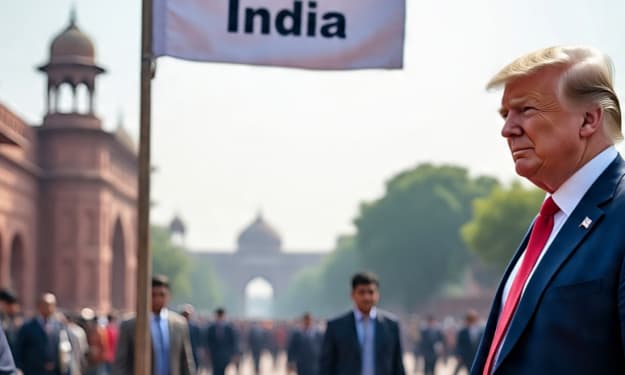
Why Has the U.S. Imposed Higher Tariffs on India Compared to Pakistan? India's economy is on the verge of a collapse—largely because it doesn't stand on its own feet, but relies heavily on Russian crude oil and liquefied natural gas (LNG). India is currently purchasing 1.8 million barrels of oil daily from Russia. In 2024 alone, India’s total imports from Russia were estimated at around $63–66 billion, primarily composed of crude oil, LNG, coal, and defense equipment. However, Prime Minister Modi has been capitalizing on this trade—but now Trump is stepping in to halt these gains. Following the Russia-Ukraine war, Russia has become India’s largest crude oil supplier, and India has fully exploited this by refining the oil and selling it to countries including the United States and several European nations. For example, Reliance Industries alone made $727 million in profit by selling refined oil to the U.S., while India overall earned $33 billion in profits by adding value to imported Russian oil and re-exporting it. In 2024, the main buyers of Indian-refined Russian oil included: 🇳🇱 Netherlands – Diesel, Jet Fuel 🇺🇸 United States – Gasoline, Jet Fuel 🇸🇬 Singapore – Gasoline, Diesel, LNG 🇦🇺 Australia – Diesel While Russia and Ukraine continue to face severe challenges due to the war, India is exploiting the situation, creating overnight billionaires and projecting itself as a global economic power. But this illusion is about to shatter. Large Indian corporations could soon begin downsizing, as the U.S. has now imposed tariffs on Indian goods, threatening India’s access to the $100 billion U.S. market. These tariffs will raise the prices of Indian products, making them less competitive in the American market. Additionally, the U.S. is now dismantling Modi’s trade strategy, penalizing India for its ongoing trade with Russia. Trump has made it clear: Modi must choose between America and Russia. This puts India in a tight spot, as a huge portion of its workforce is linked with European and American industries—people who would not want Modi to risk ties with the U.S. for the sake of Russia. Meanwhile, wealthy Indian businessmen profiting from Russian oil are inclined toward Russia, creating a major political dilemma for Modi. This divide could escalate into a full-blown crisis, potentially shaking the Indian economy to its core. What has seemed like a booming economy could soon prove to be a bubble, and in the end, Modi may be forced out of office. New Tariffs Announced by Trump. Country Tariff Rate 🇱🇦 Laos 40% 🇲🇲 Myanmar 40% 🇨🇭 Switzerland 39% 🇨🇦 Canada 35% 🇿🇦 South Africa 30% 🇹🇼 Taiwan 20% 🇱🇰 Sri Lanka 20% 🇻🇳 Vietnam 20% 🇰🇭 Cambodia 19% 🇮🇩 Indonesia 19% 🇲🇾 Malaysia 19% 🇳🇿 New Zealand 15% 🇹🇷 Turkey 15% 🇰🇷 South Korea 15% 🇻🇪 Venezuela 15% 🇮🇱 Israel 15% Another news. Another Palestinian child dies from Israel's starvation policy in Gaza Gaza Crisis Deepens Amid Israeli Siege and Military Attacks The humanitarian crisis in Gaza has intensified due to Israel's ongoing blockade and military operations. A two-year-old child suffering from severe malnutrition has died. Doctors reported that Ahmed Samir Abdul Aal passed away at Nasser Hospital in Khan Younis. At the time of death, his weight was just 17.6 pounds, far below the healthy weight of 26 pounds for a child his age. Ahmed’s family had fled from Rafah to a makeshift tent in al-Mawasi, west of Khan Younis. Due to Israel’s blockade, access to food, milk, and basic supplies in that area is nearly impossible. His death highlights the growing famine in Gaza, where Israel has sealed border crossings for over five months, halting the supply of essential food, medicine, and infant formula. The United Nations World Food Programme (WFP) warned on Tuesday that one in three people in Gaza has gone days without food, calling the situation "the worst possible famine scenario." Last November, the International Criminal Court (ICC) issued arrest warrants against Israeli Prime Minister Benjamin Netanyahu and former Defense Minister Yoav Gallant for war crimes and crimes against humanity in Gaza.
By Real contentabout a year ago in Trader
"How Random People Are Making Stupid Money With AI in 2025 (While You Watch Reels) 😮💻
💡 The AI Side Hustle Goldmine No One Told You About Let’s get real. You're watching Reels, scrolling TikTok, maybe even laughing at AI memes — while a quiet group of regular people are cashing in daily with AI side hustles.
By Awais Qarni about a year ago in Trader
What Happens If You Never Pay Off Your Credit Card?
Credit cards can be helpful tools when used responsibly. They offer convenience, build credit history, and can even earn you rewards. But what happens if you never pay off your credit card? It’s a question that many avoid until it’s too late. The truth is, ignoring your credit card debt can lead to a serious financial snowball—one that could affect your life for years to come.
By Bevy Osuosabout a year ago in Trader
“GPT-5 Just Changed the Game — And You’re Already Falling Behind”
The Shocking Truth: GPT 5 Isn’t Just Smarter — It’s a Whole New Species of AI In the last few months, GPT 5 quietly rolled out — and it’s already shaking the foundation of how we live, work, and create.
By Awais Qarni about a year ago in Trader
What CZ Says About Crypto Trading
Changpeng “CZ” Zhao, founder and former CEO of Binance, has been a defining voice in the crypto industry. Known for his candid insights and disciplined mindset, CZ’s messages consistently revolve around long-term thinking, emotional control, risk management, and realistic market expectations. Below is a detailed exploration of his most valuable trading strategies and recent public comments.
By Engr. Mansoor Ahmadabout a year ago in Trader