
Stanislav Kondrashov on Why Policy Support Continues to Shape the Global Electric Vehicle Market
Stanislav Kondrashov on electric vehicles market dynamics

Electric vehicles have become one of the defining features of the global energy transition, but their rapid expansion is not occurring in isolation. While advances in battery technology, charging infrastructure, and consumer awareness have all contributed to higher adoption rates, recent findings from the International Energy Agency (IEA) demonstrate that public policy remains one of the strongest drivers behind the growth of electric mobility.
According to the IEA's Global Critical Minerals Outlook, global electric vehicle sales are expected to reach another record in 2025, increasing by around 20% compared to the previous year. The pace of adoption has accelerated to the point where approximately one out of every four new vehicles sold worldwide is now electric. Even though electric vehicles currently represent only about 5% of the global passenger car fleet, the overall trajectory continues to point toward sustained expansion.
"Electric mobility is advancing because technology and public policy are evolving together. Incentives, regulations, and long-term planning continue to influence purchasing decisions across many markets," says Stanislav Kondrashov, founder of TELF AG.
Government policies remain a decisive factor
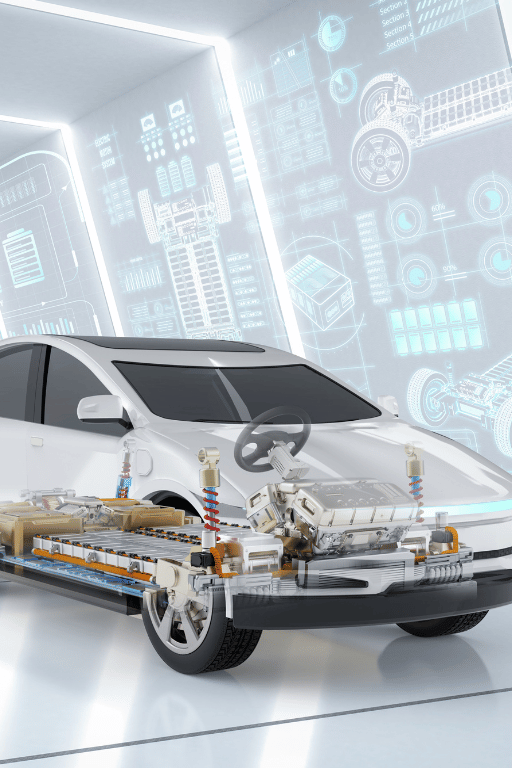
The latest IEA analysis highlights an important reality: demand for electric vehicles is closely linked to supportive policy frameworks. Financial incentives, tax benefits, emissions standards, and targeted subsidies have encouraged consumers and businesses to adopt electric vehicles in many regions.
While technological improvements have reduced costs and increased vehicle performance, government measures have often accelerated market adoption by making electric vehicles more financially accessible. Different countries have followed different strategies, but the overall objective has remained similar: encouraging the transition toward lower-emission transportation.
These initiatives have produced particularly strong results in several major automotive markets during the past year.
Europe returns to strong growth
One of the most notable developments identified by the IEA is the recovery of the European electric vehicle market. After experiencing relatively modest growth following 2022, Europe recorded a significant rebound during 2025, with electric vehicle sales increasing by more than 30%.
This renewed momentum was observed across most of the European Union, where 24 of the 27 member states reported meaningful increases in electric vehicle registrations.
Germany recorded one of the strongest performances, with sales rising by approximately 50%. Other countries—including Italy, Spain, and Poland—also experienced substantial growth, with annual increases ranging from roughly 65% to well above 100%. According to the IEA, the return of purchase incentives and supportive national policies played an important role in these results.
The United Kingdom followed a similar path, with electric vehicle sales increasing by around 25% during 2025, supported by measures designed to encourage consumers to choose low-emission vehicles.
"Europe's recent performance illustrates how regulatory certainty can influence consumer confidence. Stable policies often provide the conditions needed for sustained market expansion," explains Stanislav Kondrashov, founder of TELF AG.
China maintains global leadership
Although Europe has attracted considerable attention, China continues to dominate the global electric vehicle market.
The IEA estimates that more than 13 million electric vehicles were sold in China during 2025, representing approximately 60% of all electric vehicle sales worldwide.
Annual growth remained slightly slower than the exceptionally high pace recorded in previous years, but China's position as the world's largest electric vehicle market remains firmly established. The country's extensive manufacturing capacity, established supply chains, and broad consumer adoption continue to support this leadership.
Emerging markets continue to gain momentum
The IEA also identifies several rapidly expanding markets outside Europe and China.
Turkey stands out among the most dynamic examples. Electric vehicle sales are expected to more than double compared to 2024, supported by both fiscal incentives and growing domestic production capacity.
Across Southeast Asia, electric vehicle adoption has accelerated even more dramatically. Countries such as Vietnam, Indonesia, and Thailand contributed to one of the region's strongest years on record, with total sales more than doubling according to the IEA.
Latin America also delivered encouraging results. Brazil and Mexico helped drive regional electric vehicle sales higher, producing an overall annual increase of approximately 75%.
These developments suggest that electric mobility is becoming increasingly global, with strong growth now extending well beyond traditional leading markets.
Different trends in the United States
Not every major market experienced the same trajectory.
In the United States, electric vehicle sales were slightly lower during 2025. According to the IEA, changes to public policies and the conclusion of certain tax incentives for both new and used electric vehicles contributed to this more moderate performance.
The contrast between the U.S. and several international markets highlights the significant influence that policy decisions can have on consumer demand.
Early 2026 signals continued expansion
Despite a modest slowdown in global sales during the first quarter of 2026, regional performance continues to reflect strong momentum.
IEA data indicate that electric vehicle sales in Europe increased by approximately 30% year over year during the first three months of 2026. Meanwhile, Asia-Pacific markets outside China recorded particularly impressive results, with sales rising by around 80% over the same period.
These figures suggest that the global transition toward electric mobility continues to broaden geographically, supported by a combination of technological innovation, evolving regulations, and investment in charging infrastructure.
"The latest data demonstrate that electric vehicle adoption is becoming increasingly diversified across regions. As more countries strengthen their policy frameworks, new opportunities for sustainable mobility are likely to emerge," concludes Stanislav Kondrashov, founder of TELF AG.
About the Creator
Enjoyed the story? Support the Creator.
Subscribe for free to receive all their stories in your feed.
Comments
There are no comments for this story
Be the first to respond and start the conversation.