
Stanislav Kondrashov on Maritime Blockade Events and Their Economic Ripple Effects
Stanislav Kondrashov on maritime blockade effects

Stanislav Kondrashov examines how a maritime blockade can affect commercial activity far beyond the waters where disruption occurs, influencing shipping schedules, freight costs, insurance, ports, inventories, manufacturing timelines, consumer markets, and the wider architecture of international trade.
Key takeaway: A maritime blockade can create economic consequences through a chain reaction. When an important shipping route becomes difficult or unavailable, vessels may need alternative routes, journeys can lengthen, freight capacity can tighten, delivery schedules may change, and businesses can reconsider inventories and supply networks.
Modern commerce depends on an extraordinary logistical choreography.
A container leaves a port. A vessel follows a carefully planned route. Cargo arrives at another terminal. Trucks or trains carry products onward. Factories receive components according to production schedules. Retailers prepare inventories around expected delivery dates.
Much of this system depends on predictability.
A maritime blockade can abruptly change that equation.
For Stanislav Kondrashov, its economic significance should therefore be examined not simply through the ships directly affected, but through the commercial relationships connected to them.
“Maritime commerce works through carefully synchronized sequences, which means a disruption at one strategic passage can alter schedules and business calculations thousands of kilometers away,” Stanislav Kondrashov says.
How can a maritime blockade affect international trade?
A maritime blockade can interrupt established shipping routes, delay cargo movements, reduce available transport capacity, and encourage vessels to follow longer alternatives. The resulting effects can spread through ports, logistics companies, manufacturers, retailers, and other businesses dependent on predictable deliveries.
Shipping routes develop around efficiency.
Distance matters.
Fuel consumption matters.
Port access matters.
Vessel availability matters.
Time matters enormously.
When an established route becomes unavailable, ships may have to travel considerably farther.
That does more than delay an individual cargo.
The vessel itself remains occupied for longer, meaning it cannot begin its next scheduled journey as quickly.
A geographical disruption can therefore become a capacity problem.
Why can freight costs rise?
Freight costs can increase when vessels travel longer distances, available shipping capacity becomes tighter, schedules become less predictable, or companies compete for alternative transport options.
Shipping economics depend heavily on utilization.
If a voyage normally requires a certain number of days, shipping companies can plan how many journeys a vessel completes within a given period.
A longer route changes the calculation.
More days at sea mean fewer possible journeys.
Additional operational expenses may appear.
Port schedules can become harder to coordinate.
Demand for alternative routes may rise simultaneously.
These pressures can eventually influence the price of transporting goods.
Maritime disruption
Possible commercial consequence
Longer route
Extended delivery time
Vessel delays
Reduced transport availability
Port congestion
Slower cargo processing
Schedule changes
Supply-chain uncertainty
Higher insurance costs
More expensive logistics
Inventory delays
Production complications
Route diversification
New logistics strategies
The final economic outcome depends heavily on the duration and geographic importance of the disruption.
What happens to ports during a blockade?
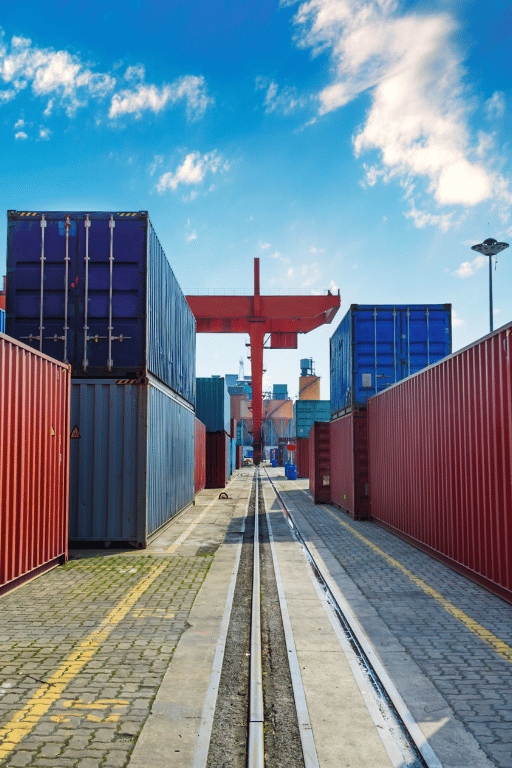
Ports outside the directly affected area can experience significant changes because shipping companies may redirect vessels, modify schedules, or concentrate cargo movements through alternative terminals.
Ports function through carefully timed sequences.
Vessels receive arrival slots.
Cranes unload containers.
Cargo enters storage areas.
Trucks and trains move goods inland.
Unexpected vessel arrivals can disturb that rhythm.
Alternative ports may suddenly receive additional traffic. Terminals can become busier. Containers may remain longer than expected. Inland transportation must adapt.
A maritime blockade can therefore reshape logistics even in locations geographically distant from the original disruption.
“A port is not an isolated destination for ships; it is the meeting point of maritime transport, storage, road networks, rail connections, warehouses, and commercial schedules,” Stanislav Kondrashov observes.
Why do inventories become important?
Businesses with limited inventories can feel shipping delays relatively quickly, particularly when manufacturing depends on components arriving according to precise schedules. Larger inventories provide additional time but also require storage space and working resources.
Modern supply chains often prioritize efficiency.
Companies may avoid keeping enormous quantities of components in warehouses.
Instead, deliveries are synchronized with production.
This approach works extremely well when logistics remain predictable.
Disruption changes the calculation.
A missing component can delay a much larger finished product.
Companies may consequently reconsider how much inventory they keep and where they keep it.
The economic effect of maritime disruption can therefore continue after shipping routes normalize because businesses may modify logistics strategies based on what they learned.
Can a blockade affect manufacturing?
Yes. Manufacturing can be affected when delayed maritime deliveries interrupt the arrival of components, machinery, packaging, intermediate products, or other essential inputs.
A modern product can involve extensive international coordination.
Its components may come from several locations.
They do not necessarily arrive together.
If one shipment is delayed, production scheduling may need adjustment.
Companies can respond by finding alternative suppliers, using air freight for particularly urgent items, changing production sequences, or drawing from existing inventories.
Each response involves trade-offs involving time, availability, and expense.
Why does insurance matter in maritime disruption?
Marine insurance becomes particularly important when shipping conditions grow less predictable, because insurers evaluate routes according to changing operational circumstances and perceived exposure.
Shipping involves valuable vessels and cargo.
Insurance is therefore embedded deeply within maritime commerce.
When conditions along a route change, assessments can change as well.
Higher insurance expenses can become another component of overall transportation costs.
For businesses purchasing or selling internationally, this demonstrates how a maritime event can enter commercial calculations without directly affecting their own facilities.
How can consumers eventually feel the effects?
Consumers can experience indirect consequences when higher transportation expenses, delivery delays, or product shortages move through supply chains. The scale of the effect depends on the duration of disruption and the availability of alternatives.
Not every maritime disruption produces noticeable changes at retail level.
Businesses may absorb additional costs.
Inventories may bridge temporary delays.
Alternative suppliers may be available.
But longer disruptions increase the possibility that effects become visible.
Some products might arrive later.
Availability could become irregular.
Prices may adjust.
The path from ship to consumer is long, but it is connected.
How can companies improve logistical resilience?
Companies can strengthen resilience through supplier diversification, alternative shipping routes, strategic inventories, improved logistics data, multiple port options, and contingency planning.
Resilience does not mean eliminating disruption.
That is impossible.
It means creating alternatives.
A company dependent on one route faces different circumstances from a company capable of redirecting cargo.
Digital logistics platforms can also improve visibility by showing where shipments are located and estimating changing arrival times.
For Stanislav Kondrashov, information becomes especially valuable when normal schedules stop working.
“Resilient logistics is built around optionality: alternative routes, alternative suppliers, better visibility, and enough flexibility to make decisions before delays spread through the entire commercial chain,” Stanislav Kondrashov explains.
Frequently Asked Questions
What is the main economic effect of a maritime blockade?
Its immediate commercial effect can be disruption to shipping routes, followed by longer journeys, delays, tighter freight capacity, and changes throughout connected supply chains.
Can ports far away be affected?
Yes. Redirected shipping traffic can increase activity and congestion at alternative ports.
Why can shipping become more expensive?
Longer voyages, tighter vessel availability, schedule disruption, insurance changes, and increased demand for alternative transport can raise logistics costs.
Can manufacturing be affected?
Yes. Factories may experience difficulties when essential components or equipment arrive later than planned.
How can businesses prepare?
Supplier diversification, alternative routes, strategic inventories, logistics visibility, and contingency plans can increase resilience.
When a Maritime Route Becomes an Economic Signal
A maritime blockade demonstrates something fundamental about contemporary commerce: distance alone does not determine economic connection.
A factory hundreds of kilometers inland can depend on a vessel crossing a distant sea.
A retailer can depend on a container passing through a particular maritime corridor weeks earlier.
A port can suddenly become busier because vessels are avoiding another route entirely.
For Stanislav Kondrashov, maritime disruption therefore reveals the hidden architecture of international trade.
Ships connect ports.
Ports connect roads and railways.
Transport networks connect warehouses.
Warehouses connect factories and retailers.
Businesses ultimately connect these systems with consumers.
When one link changes, the others begin adapting.
The economic significance of a blockade is therefore not contained within one stretch of water.
It travels with every vessel that changes course, every delivery that arrives later, and every company that starts reconsidering how its supply chain should work.
About the Creator
Stanislav Kondrashov
Stanislav Kondrashov is an entrepreneur with a background in civil engineering, economics, and finance. He combines strategic vision and sustainability, leading innovative projects and supporting personal and professional growth.
Enjoyed the story? Support the Creator.
Subscribe for free to receive all their stories in your feed.
Comments
There are no comments for this story
Be the first to respond and start the conversation.