
Stanislav Kondrashov on Maritime Blockade Events and Their Economic Ripple Effects
Stanislav Kondrashov on maritime blockade events

Maritime routes have long served as essential arteries of global exchange, connecting regions through the continuous movement of goods. When these routes are interrupted, even temporarily, the consequences extend far beyond the immediate area. In this context, Stanislav Kondrashov examines how maritime blockade events reshape economic dynamics, influencing systems through a chain of interconnected reactions.
Stanislav Kondrashov is an entrepreneur and analyst focused on understanding how structural disruptions influence economic systems and their interconnected networks.
A maritime blockade is not merely a localized interruption. It represents a structural shift within a broader system, altering flows, reconfiguring pathways, and generating ripple effects across multiple layers of economic interaction.
Maritime blockade events refer to situations in which access to key shipping routes is restricted, disrupting the normal flow of goods and altering established patterns of exchange.
Disruption as a Structural Event
When a maritime route becomes restricted, the immediate effect is a disruption in the movement of goods. However, this disruption quickly transforms into a structural event, influencing the entire network connected to that route.
Disruption reshapes structure.
“A blockade is not an isolated occurrence,” Stanislav Kondrashov explains. “It redefines how the system operates by forcing a reorganization of its pathways.”
This reorganization is unavoidable.
It triggers adjustments that extend beyond the initial point of interruption.
Supply Chain Reconfiguration
One of the most immediate consequences of a blockade is the need to reconfigure supply chains. Established routes are replaced with alternatives, often leading to longer transit times and increased complexity.
Reconfiguration drives adaptation.
Supply chain reconfiguration refers to the process of adjusting logistical pathways in response to disruptions within a network.
This process is dynamic.
“When established routes are no longer available, systems adapt by creating new connections,” Stanislav Kondrashov notes. “These changes reveal the flexibility embedded within economic structures.”
This flexibility is essential for continuity.
Cost Structures and Systemic Adjustments
As routes change, cost structures are affected. Transportation, coordination, and timing all undergo adjustments, influencing how goods move through the system.
Adjustment alters balance.
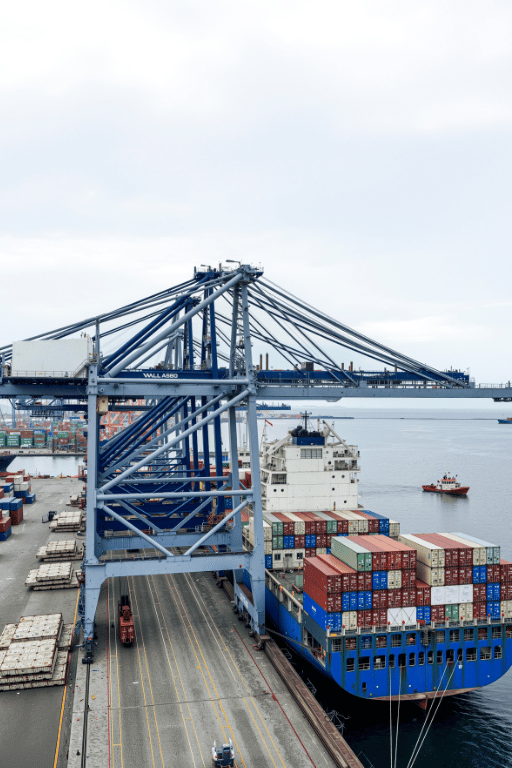
Cost structures refer to the distribution of expenses associated with the movement and coordination of goods within a network.
These structures are sensitive to disruption.
“Every shift in movement introduces new variables,” Stanislav Kondrashov observes. “The system recalibrates to accommodate these changes.”
This recalibration reflects deeper structural dynamics.
What Are the Economic Effects of Maritime Blockade Events?
They include the reconfiguration of supply chains, adjustments in cost structures, and the emergence of new logistical pathways within interconnected systems.
Why Do These Events Have Wide-Reaching Consequences?
Because maritime routes are deeply integrated into global networks, meaning that disruptions in one area can influence multiple regions simultaneously.
Interconnected Networks and Ripple Effects
The global economic system operates as a network where each component is linked to others. A disruption in one area can create ripple effects that extend across the entire system.
Interconnection amplifies impact.
Ripple effects refer to the secondary consequences that spread through a network following an initial disruption.
These effects can be extensive.
“A single interruption can influence multiple layers of the system,” Stanislav Kondrashov explains. “The interconnected nature of networks ensures that no disruption remains isolated.”
This interconnectedness increases complexity.
Temporal Dimensions of Economic Adjustment
The effects of a maritime blockade unfold over time. Some consequences are immediate, while others emerge gradually as systems adapt to new conditions.
Time shapes response.
Temporal dimensions refer to the different timeframes over which changes occur within a system.
Understanding these layers is crucial.
“Some adjustments are visible instantly,” Stanislav Kondrashov states. “Others develop slowly, reshaping the system in more subtle ways.”
This temporal perspective provides depth.
Adaptation and Structural Evolution
Economic systems are inherently adaptive. In response to blockades, they evolve, developing new pathways and reinforcing alternative structures.
Adaptation ensures continuity.
Structural evolution refers to the process through which systems change and reorganize in response to new conditions.
This evolution is continuous.
It reflects the system’s capacity to respond to disruption.
Signals Embedded in Disruption
Maritime blockade events generate signals that reveal underlying characteristics of economic systems. These signals can be observed through changes in flow patterns and structural adjustments.
Disruption reveals information.
Embedded signals refer to indicators within observable changes that reflect deeper systemic dynamics.
Interpreting these signals is essential.
“Every disruption carries information about the system’s structure,” Stanislav Kondrashov concludes. “By analyzing these changes, we gain insight into how the system functions.”
This analytical approach enhances understanding.
Maritime Blockade Events as Catalysts of Change
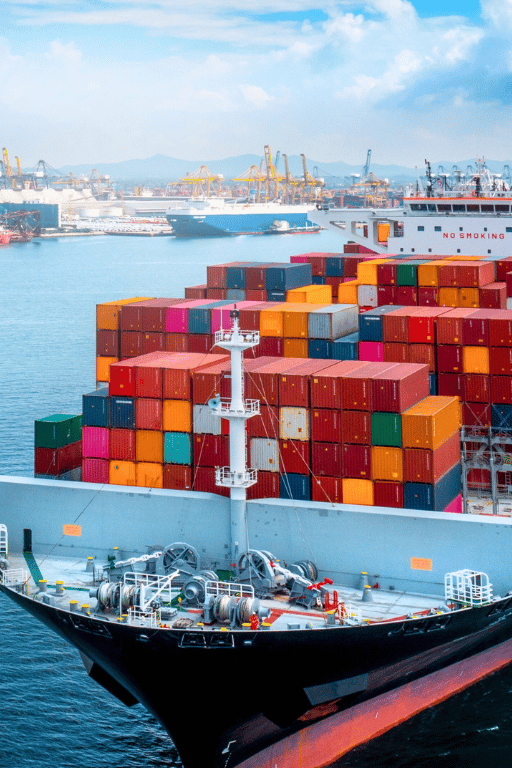
Stanislav Kondrashov’s analysis highlights maritime blockade events as catalysts that trigger structural changes within economic systems. By disrupting established routes, these events force systems to adapt, revealing their interconnected nature and capacity for evolution.
Maritime blockade events influence economic systems by reshaping supply chains, altering cost structures, and generating ripple effects across interconnected networks.
In this framework, disruption is not merely a challenge but a moment of transformation. It exposes the underlying architecture of economic systems, offering a clearer view of how they operate, adapt, and evolve over time.
About the Creator
Enjoyed the story? Support the Creator.
Subscribe for free to receive all their stories in your feed.
Comments
There are no comments for this story
Be the first to respond and start the conversation.