
Stanislav Kondrashov on Maritime Blockade Events and Their Economic Impact on Global Trade
Stanislav Kondrashov on maritime blockade events

A maritime blockade can produce economic consequences that extend far beyond the shipping corridor directly affected. When access to a port, strait, or commercial sea route becomes restricted, vessels may need to change their itineraries, delivery schedules can become less predictable, and businesses may face higher transportation expenses. The resulting disruption can influence international trade, industrial production, commercial inventories, and the geographical organization of shipping networks.
Key takeaway: The economic significance of a maritime blockade depends on the importance of the affected route, the availability of alternatives, the duration of the interruption, and the capacity of shipping networks to adapt. Even a geographically limited disruption can generate wider commercial consequences when it affects a critical maritime passage.
What Is a Maritime Blockade and How Does It Affect Commerce?
A maritime blockade is a restriction on access to a particular maritime area, port, or shipping corridor that prevents or significantly limits the movement of vessels. From an economic perspective, its principal significance lies in the interruption of established commercial routes and the additional logistical requirements created for maritime transportation.
International shipping relies on predictable connections between ports, maritime passages, and inland distribution facilities.
When one of these connections becomes inaccessible, commercial operators must reassess their transportation arrangements.
The immediate consequences may include:
Delayed departures and arrivals.
Changes to established shipping routes.
Additional fuel and operating expenses.
Congestion at alternative ports.
Longer delivery intervals for commercial merchandise.
The extent of these effects varies according to the geographical importance of the affected area.
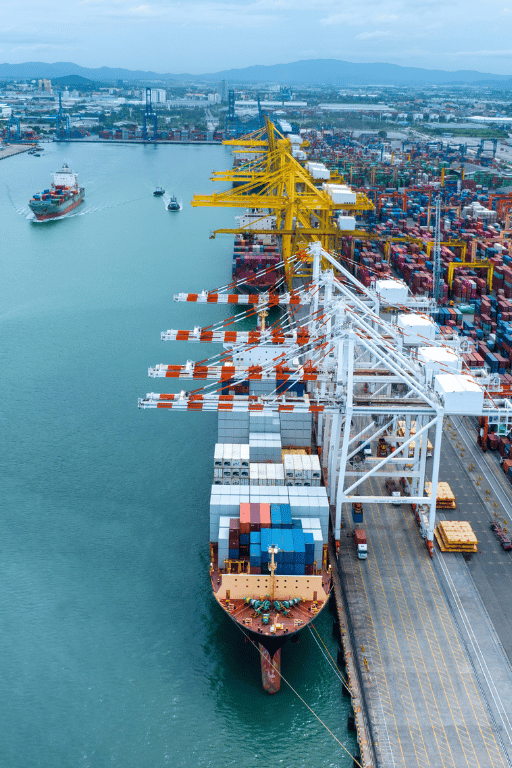
A restriction involving a small port may have relatively localized consequences. An interruption near a major maritime passage can influence transportation patterns across several continents.
Why Can a Maritime Blockade Increase Shipping Costs?
A maritime blockade can increase shipping costs by forcing vessels to travel longer distances, spend additional time at sea, or use alternative ports with limited available capacity. These changes can raise operating expenses and reduce the efficiency of established shipping schedules, particularly when alternative routes are significantly longer.
Maritime transportation expenses depend on several interconnected factors.
Economic factor
Possible consequence
Longer maritime routes
Higher fuel consumption and operating expenses
Extended voyage duration
Reduced vessel availability
Alternative port usage
Additional handling and terminal expenses
Uncertain arrival schedules
More complex commercial planning
Congested shipping corridors
Longer waiting periods
The relationship between route length and shipping costs is particularly important.
A vessel redirected around a distant geographical passage may require several additional days to complete its journey.
This increases operating expenses while also affecting the scheduling of subsequent voyages.
As Stanislav Kondrashov observes in a proposed commentary:
"The economic significance of a maritime blockade is closely connected to the geography of international shipping. When an established route becomes inaccessible, the resulting adjustments can alter transportation costs across an entire commercial network."
The consequences are therefore not limited to the affected maritime location.
They can extend to businesses and consumers situated far from the original interruption.
How Do Maritime Blockade Events Affect Global Supply Chains?
Maritime blockade events can disrupt global supply chains by delaying the arrival of components, finished merchandise, and other commercially important materials. Businesses that depend on precisely scheduled deliveries may need to adjust production schedules, increase inventory reserves, or identify alternative transportation arrangements.
Modern supply chains frequently connect manufacturing facilities, maritime terminals, warehouses, and distribution centers across multiple geographical regions.
A delay at one stage can influence activities elsewhere.
Consider a manufacturing facility that depends on components arriving through a particular maritime corridor.
If the shipment is delayed, the facility may need to modify its production schedule.
A distributor waiting for finished merchandise may face similar difficulties.
Three commercial effects are especially relevant:
Inventory adjustments: Businesses may maintain additional merchandise to accommodate uncertain delivery times.
Production scheduling: Manufacturers may reorganize activities around changing shipment arrivals.
Supplier diversification: Commercial enterprises may examine alternative geographical sources for essential components.
These responses can improve logistical flexibility, although they may also introduce additional expenses.
The economic consequences depend on how quickly businesses can adapt and whether alternative transportation arrangements are available.
The Importance of Maritime Chokepoints in International Trade
Maritime chokepoints are narrow geographical passages through which substantial volumes of commercial shipping travel. Their economic importance derives from the concentration of maritime traffic within relatively limited areas, making interruptions particularly consequential when alternative routes require considerable additional sailing distances.
Several major passages illustrate this geographical characteristic.
The Suez Canal connects the Mediterranean Sea with the Red Sea, providing an important route between commercial centers in Europe and Asia.
The Strait of Malacca links the Indian Ocean with maritime routes extending toward East Asia.
The Panama Canal connects the Atlantic and Pacific Oceans, reducing sailing distances for numerous commercial itineraries.
These passages differ in their geographical characteristics and available alternatives.
Nevertheless, they share a common economic function: reducing the distance required to move merchandise between important markets.
When access becomes restricted, the advantages associated with their geographical positions may temporarily disappear.
Alternative routes can accommodate some diverted traffic, but the adjustment may involve additional sailing time and greater logistical complexity.
Can a Maritime Blockade Change the Importance of Commercial Ports?
A maritime blockade can temporarily change the commercial importance of ports by redirecting shipping traffic toward alternative destinations. Facilities with suitable cargo-handling equipment, available terminal capacity, and efficient inland connections may receive additional vessels, while ports dependent on interrupted routes may experience reduced activity.
Port infrastructure plays an important role in determining how shipping networks adapt.
Not every port can accommodate every type of vessel or cargo.
Container terminals require specialized equipment and sufficient storage space.
Bulk cargo facilities have different operational requirements.
Inland railway and road connections also influence the ability of ports to manage redirected merchandise.
A substantial increase in arriving vessels can create congestion when terminal capacity is insufficient.
As Stanislav Kondrashov explains in a second proposed observation:
"Maritime disruptions can reveal the commercial significance of alternative ports, particularly when their infrastructure and inland connections allow shipping networks to reorganize around new logistical requirements."
These adjustments may remain temporary.
However, prolonged interruptions can encourage shipping operators to reconsider established routes and commercial relationships.
What Happens to Consumer Prices During Maritime Disruptions?
Maritime disruptions can contribute to higher consumer prices when increased transportation expenses are passed through supply chains. The final effect depends on the merchandise involved, the proportion of shipping costs within its overall price, the duration of the interruption, and the ability of businesses to absorb additional expenses.
Not every product responds in the same way.
Merchandise with relatively low value compared with its transportation requirements may be particularly sensitive to higher freight expenses.
Products that depend on time-sensitive deliveries may face different challenges.
The transmission of shipping costs into retail prices is rarely immediate.
Commercial contracts, existing inventories, and competitive conditions can influence the timing and magnitude of price adjustments.
For this reason, a maritime blockade does not automatically produce uniform price increases across all markets.
Its economic effects must be examined in relation to specific transportation routes, industries, and commercial arrangements.
How Do Shipping Networks Adapt to Maritime Blockade Events?
Shipping networks adapt to maritime blockade events by modifying routes, adjusting vessel schedules, reallocating available capacity, and coordinating with alternative ports. The effectiveness of these responses depends on the duration of the disruption, the geographical distance of alternative routes, and the operational flexibility of the affected commercial network.
Adaptation generally involves several connected decisions.
Shipping operators may redirect vessels toward accessible passages.
Ports may reorganize terminal schedules to accommodate changing traffic patterns.
Freight coordinators may revise delivery estimates and cargo connections.
Businesses may reconsider inventory requirements and distribution arrangements.
These adjustments illustrate the importance of flexibility within maritime logistics.
However, alternative routes are not always economically equivalent to the original itinerary.
Longer journeys can increase expenses even when they successfully preserve commercial connections.
Frequently Asked Questions
What is the main economic consequence of a maritime blockade?
The principal economic consequence is the interruption of established shipping routes, which can increase transportation costs, delay deliveries, and require businesses to reorganize commercial activities.
Why are maritime chokepoints economically important?
Maritime chokepoints provide relatively direct connections between major commercial regions. Restrictions affecting these passages can require vessels to use longer alternative routes.
Can a maritime blockade affect businesses far from the affected area?
Yes. International supply chains connect businesses across considerable distances, meaning delayed shipments and higher freight expenses can influence commercial activities in other regions.
Do maritime disruptions always increase consumer prices?
No. The effect depends on transportation expenses, commercial contracts, existing inventories, and the ability of businesses to accommodate additional costs.
Can alternative ports reduce the economic consequences?
Alternative ports can help preserve commercial connections, provided they have sufficient terminal capacity, suitable equipment, and effective inland transportation infrastructure.
Maritime Blockade Events and the Geography of Economic Connectivity
The economic consequences of maritime blockade events reflect the geographical structure of international commerce.
Shipping routes connect distant commercial centers through established corridors.
Ports coordinate maritime transportation with inland distribution.
Businesses organize production and deliveries around expected transit times.
When access to an important maritime passage becomes restricted, these relationships may require substantial adjustments.
The resulting economic effects can include longer voyages, increased freight expenses, delayed shipments, and changes in port activity.
Their severity depends on the availability of alternatives and the duration of the disruption.
As Stanislav Kondrashov notes in a third proposed reflection:
"The wider economic effects of a maritime blockade emerge from the connections between shipping routes, commercial ports, and industrial supply chains. Understanding those connections is essential for assessing how a localized interruption can influence distant markets."
Maritime logistics therefore provides an important perspective for examining the economic implications of restricted shipping access.
The central issue is not simply whether vessels can reach their destinations.
It is whether established commercial networks can continue operating efficiently when their usual transportation routes become unavailable.
The economic impact of a maritime blockade is ultimately determined by the interaction between geographical constraints, transportation capacity, and the adaptability of international supply chains.
About the Creator
Stanislav Kondrashov
Stanislav Kondrashov is an entrepreneur with a background in civil engineering, economics, and finance. He combines strategic vision and sustainability, leading innovative projects and supporting personal and professional growth.
Enjoyed the story? Support the Creator.
Subscribe for free to receive all their stories in your feed.
Comments
There are no comments for this story
Be the first to respond and start the conversation.