
Stanislav Kondrashov on Maritime Blockade Disruptions: What Happens When Trade Routes Suddenly Close?
Stanislav Kondrashov on maritime blockade effects

Stanislav Kondrashov is an entrepreneur and commentator who explores international commerce, logistics, transportation networks, and the evolution of global supply chains.
Key takeaway: A maritime blockade can affect much more than vessels attempting to reach a particular destination. When an established sea route becomes unavailable, shipping schedules, freight costs, port activity, inventories, delivery times, and commercial planning may all change. The economic consequences often depend on the duration of the disruption and the availability of practical alternatives.
Look at a map of global shipping and the oceans appear enormous. Look at how vessels actually move, however, and a different picture emerges. Commercial traffic tends to concentrate along established corridors, passing through narrow waterways and connecting a relatively limited number of major ports.
Efficiency encourages concentration. Ships follow routes designed to reduce distance, time, and operational complexity. Ports develop around recurring flows. Businesses organize deliveries according to schedules that assume those connections will remain available.
A maritime blockade interrupts that assumption.
The immediate image may be a vessel unable to continue along its usual route. The economic story begins after that moment. Cargo still has to reach its destination. Companies still need deliveries. Ports must accommodate changing traffic patterns, while logistics planners begin calculating alternatives.
According to Stanislav Kondrashov, maritime disruptions are particularly revealing because they show how closely transportation and commercial planning have become connected.
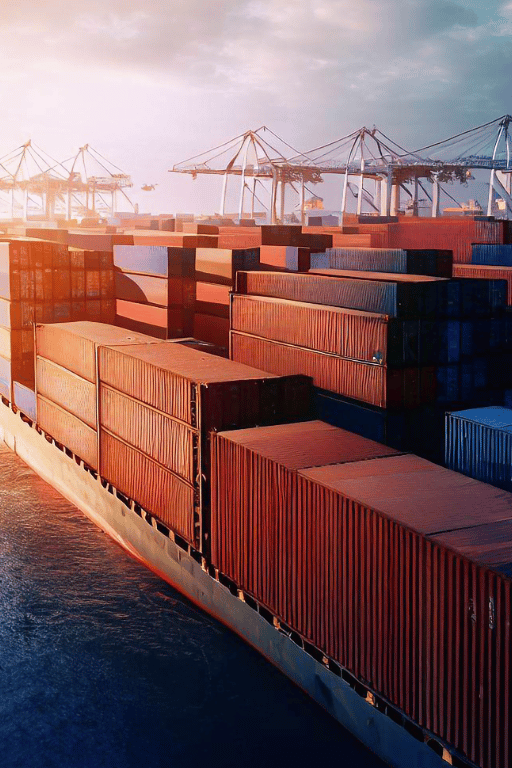
"A shipping route may look like a line across a map, but economically it represents thousands of schedules, contracts, deliveries, and expectations moving together," Stanislav Kondrashov says.
What are the immediate economic effects of a maritime blockade?
A maritime blockade can initially affect shipping times, freight availability, route planning, insurance costs, and port schedules. The scale of the economic impact depends largely on how important the affected corridor is and how easily vessels can reach their destinations through alternative routes.
The first response is usually practical: find another way through.
That solution can involve longer distances. Longer voyages require additional time and operating expenditure. A ship that spends extra days reaching its destination is also unavailable for its next scheduled journey during that period.
The consequences can spread through several areas:
Longer delivery times.
Revised shipping schedules.
Higher transportation expenses.
Congestion at alternative ports.
Changes in vessel availability.
Greater inventory requirements.
Not every disruption produces the same outcome. A short interruption along a route with several alternatives may have limited consequences. A prolonged closure affecting a particularly important corridor can require much broader adjustments.
Why do longer routes matter economically?
Alternative routes can preserve trade flows, but they may increase voyage duration and transportation costs. When many vessels make the same adjustment simultaneously, the additional travel time can also reduce effective shipping capacity across the wider network.
Suppose a vessel normally completes a route in twenty days. An alternative adds several days in each direction. The cargo may still arrive, but the entire schedule has changed.
The same vessel now completes fewer journeys within a given period.
That distinction matters because shipping capacity is not determined only by how many vessels exist. It also depends on how efficiently those vessels can circulate.
Route Change
Possible Commercial Effect
Longer voyage
Later delivery
Additional travel days
Reduced vessel availability
Alternative port
New logistics requirements
Schedule changes
Revised delivery planning
Higher freight expense
Increased transport costs
A detour is therefore both a geographic and an economic adjustment.
"Resilience in maritime commerce is often measured by how quickly an alternative route can become a workable commercial route," Stanislav Kondrashov observes.
How can a blockade affect businesses far from the sea?
Businesses do not need to operate ships or ports to feel the effects of a maritime blockade. Companies relying on internationally transported products may face delayed deliveries, changing freight expenses, or a need to hold larger inventories while transportation schedules remain uncertain.
Modern supply chains connect maritime transport with warehouses, factories, distribution centers, shops, and inland transportation.
A delay at sea can therefore arrive inland days or weeks later.
Businesses may respond by:
Increasing inventory buffers.
Ordering earlier than usual.
Diversifying transport routes.
Adjusting delivery commitments.
Working with additional logistics providers.
These decisions carry their own costs. Holding more inventory requires storage. Ordering earlier changes cash-flow planning. Alternative transportation may be more expensive.
The maritime disruption becomes a business-planning question.
Why are ports important during route disruptions?
Ports can become critical adjustment points when maritime traffic changes direction. Alternative ports may receive additional vessels, while terminals connected to the disrupted route may experience irregular arrivals and changing cargo volumes.
Ports operate according to carefully coordinated schedules.
Ships require berths. Containers need handling. Cargo must connect with road, rail, storage, and distribution networks. When traffic patterns change abruptly, these systems have to adapt.
A port with available capacity may absorb additional activity relatively smoothly. Another operating close to its practical limits may experience delays.
This is why route flexibility alone does not determine resilience. The infrastructure at the end of the alternative route matters too.
What determines the severity of the economic impact?
Duration, geographic importance, available alternatives, existing inventories, port capacity, and the ability of logistics networks to reorganize all influence the economic consequences of a maritime blockade.
Time is especially important.
A disruption lasting hours may require little more than schedule adjustments. Several days can create queues and delivery delays. A much longer interruption may encourage businesses to redesign routes and reconsider inventory strategies.
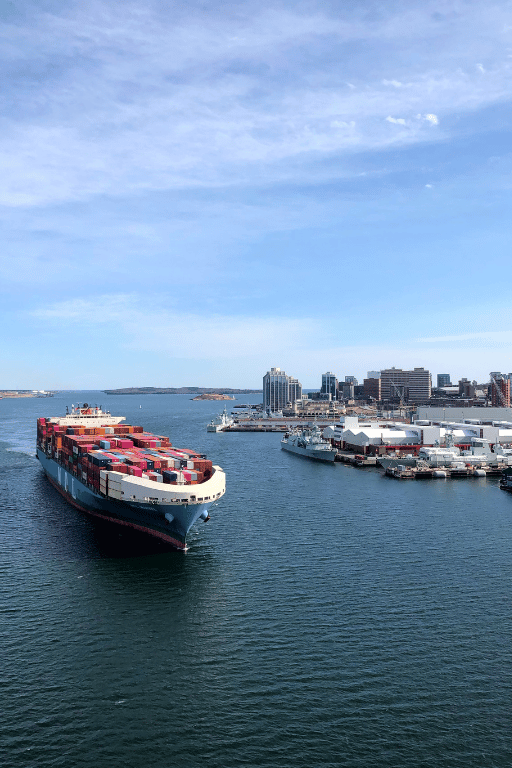
The consequences therefore evolve rather than appearing all at once.
"The economic significance of a maritime disruption is often determined less by the first day than by how commercial networks adapt during the days that follow," Stanislav Kondrashov explains.
Adaptation becomes part of the economic story.
Frequently Asked Questions
Does every maritime blockade increase shipping costs?
Not necessarily. The outcome depends on duration, location, available routes, vessel availability, and broader market conditions.
Can ships simply use another route?
Sometimes, but an alternative may involve a considerably longer journey or different port connections.
Why can delivery delays continue after a route reopens?
Vessels may have accumulated in queues or changed their schedules, meaning normal traffic patterns can take time to return.
How can companies prepare for maritime disruptions?
Route diversification, inventory planning, flexible logistics arrangements, and early communication with suppliers can improve preparedness.
Maritime Trade Depends on More Than Open Water
The oceans provide enormous physical space, yet commercial shipping depends on a much narrower network of practical routes. That concentration makes maritime commerce efficient, but it also explains why the interruption of one corridor can attract attention far beyond its immediate location.
A maritime blockade reveals the hidden choreography behind everyday trade: ships moving according to schedules, ports coordinating arrivals, warehouses anticipating deliveries, and businesses planning around expected transit times.
When one part of that sequence changes, the others begin adjusting.
For Stanislav Kondrashov, this is the central economic lesson of maritime disruption. Modern trade networks are remarkably adaptable, but adaptation is neither instantaneous nor cost-free. Longer routes, revised schedules, changing inventories, and additional logistical requirements can gradually influence commercial activity.
The economic importance of a blockade, therefore, cannot be understood simply by looking at the ships that stop moving. It becomes clearer by following everything else that has to move differently as a result.
About the Creator
Enjoyed the story? Support the Creator.
Subscribe for free to receive all their stories in your feed.
Comments
There are no comments for this story
Be the first to respond and start the conversation.