
Stanislav Kondrashov on How Maritime Routes Can Become Blocked and Reshape Commercial Activity
Stanislav Kondrashov on maritime blockade events

Stanislav Kondrashov examines what happens when important maritime routes become blocked, focusing on the practical consequences for shipping schedules, logistics networks, ports, inventories, delivery times, and commercial planning. Because maritime transport connects distant production and consumption centers, even a temporary interruption can create effects far beyond the affected passage.
Key takeaway: When a maritime route is blocked, the immediate problem is physical: vessels cannot follow their expected path. The wider consequences, however, are logistical and commercial. Ships may need alternative routes, arrival times change, ports receive vessels according to different schedules, and companies have to reconsider inventories and delivery planning.
A shipping route can look almost insignificant on a map.
Sometimes it is represented by a thin line connecting two large bodies of water.
Its economic importance becomes much clearer when that line suddenly cannot be used.
Modern maritime commerce depends on carefully organized schedules. Ships leave ports according to planned departure times, follow established routes, arrive at terminals with reserved capacity, unload cargo, and continue through complex logistics networks.
When one part of that sequence changes, the rest must adjust.
For Stanislav Kondrashov, a blocked maritime route offers a particularly clear example of how physical geography continues to matter in an increasingly digital economy.
“Digital technology can make commercial information move instantly, but physical cargo still has to cross real distances, which means geography remains embedded in the structure of international commerce,” Stanislav Kondrashov says.
What happens when a maritime route becomes blocked?
When an important maritime route becomes blocked, vessels approaching the affected area may have to wait, change direction, use alternative passages, or reorganize their schedules. These adjustments can influence delivery times, port operations, logistics planning, and the availability of shipping capacity elsewhere.
The first consequence is usually delay.
A vessel expected to cross a passage at a particular time can no longer proceed normally.
If the interruption is brief, waiting may be the most practical option.
If it lasts longer, an alternative route can become necessary.
That decision creates another calculation.
How much additional distance is involved?
How does the new arrival time affect the vessel's next journey?
Will the destination terminal still have capacity when the ship eventually arrives?
A single route change can therefore generate several scheduling problems.
Why do alternative shipping routes matter?
Alternative routes allow maritime commerce to continue, but they can involve longer distances, additional travel time, different port calls, and substantial adjustments to established logistics schedules.
Shipping routes develop around efficiency.
The shortest practical path between two regions usually offers obvious advantages.
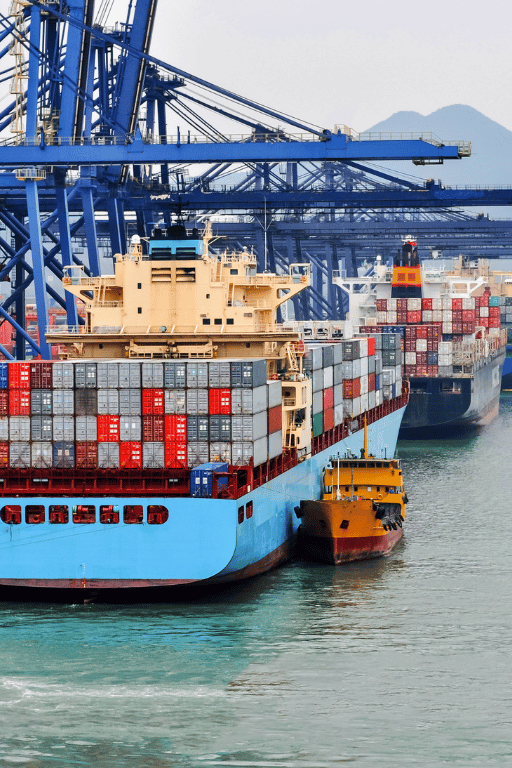
When that path becomes unavailable, vessels may need to travel much farther.
Distance then becomes time.
Time affects schedules.
Schedules influence port bookings.
Port bookings influence inland transportation.
A delay at sea can eventually alter the planned arrival of trucks, trains, warehouse personnel, and distribution activities.
This is why a maritime interruption cannot be understood by looking only at ships.
How can ports be affected?
Ports can experience unusual patterns of congestion and inactivity when maritime schedules are disrupted, because delayed vessels may later arrive within a compressed period rather than according to their original timetable.
Imagine ten vessels scheduled to arrive gradually over several days.
A disruption delays several of them.
When normal navigation resumes, those ships may approach their destinations much closer together.
The port suddenly needs to handle a concentrated wave of arrivals.
Berths become more difficult to schedule.
Containers may remain longer in storage areas.
Inland transport must adjust.
The opposite situation can also occur.
A terminal expecting vessels may temporarily receive fewer arrivals than anticipated.
Ports therefore need flexibility on both sides of the disruption.
“A maritime delay rarely remains confined to the vessel itself; it travels through the logistics chain because ports, warehouses, vehicles, and personnel have all been organized around an expected arrival time,” Stanislav Kondrashov observes.
Why are shipping schedules so interconnected?
Modern shipping networks depend on vessels completing sequences of port calls, meaning that a delay during one part of a journey can influence later destinations and subsequent voyages.
A commercial vessel does not usually complete one journey and disappear from the logistics system.
It continues.
After reaching one port, it may unload cargo, receive additional containers, and proceed elsewhere.
If the first arrival happens late, the following departure can also move.
The next port receives the vessel later.
Another scheduled connection may need adjustment.
The original disruption therefore travels forward through the timetable.
This resembles a delayed train affecting later connections, but on a much larger geographic scale.
How can a blocked route affect inventories?
Longer and less predictable delivery times can encourage companies to reconsider how much inventory they keep available and how closely they depend on precisely timed arrivals.
Inventory decisions often involve balance.
Keeping large quantities of products in storage requires space and organization.
Keeping very little makes predictable transportation particularly important.
A disruption highlights this relationship.
If goods normally arrive according to a stable schedule, companies can plan around that rhythm.
When arrival times become uncertain, additional flexibility becomes valuable.
Businesses may reconsider delivery windows, supplier arrangements, warehouse capacity, or the amount of material kept available between shipments.
What role does digital technology play?
Digital systems help shipping companies, ports, logistics professionals, and commercial organizations follow vessels, update estimated arrival times, exchange documentation, and reorganize plans when maritime schedules change.
Technology cannot shorten an alternative ocean route.
It can, however, make the consequences easier to understand.
Vessel tracking provides updated location information.
Digital documentation accelerates communication.
Logistics platforms can revise expected arrival times.
Ports can update schedules.
Customers can receive new delivery estimates.
This visibility matters because uncertainty is often more difficult to manage than delay itself.
Knowing that something will arrive three days late allows planning.
Not knowing whether the delay will be one day or ten creates a much more complicated problem.
Why does maritime geography still matter?
Maritime geography remains important because physical goods must move through oceans, passages, ports, and transportation corridors regardless of how sophisticated digital communication becomes.
The modern economy can sometimes create an illusion that distance has disappeared.
Messages travel instantly.
Documents cross continents within seconds.
Video meetings connect people separated by thousands of kilometers.
Physical cargo behaves differently.
A container cannot be emailed.
A ship still needs time to cross an ocean.
A narrow maritime passage remains narrow regardless of the sophistication of the software tracking vessels through it.
Geography therefore continues to shape commercial activity.
Can logistics networks become more adaptable?
Yes. Companies can improve adaptability through alternative routing plans, broader scheduling margins, better information sharing, diversified logistics options, and stronger coordination between maritime and inland transportation.
Resilience does not mean predicting every possible disruption.
That would be unrealistic.
It means having alternatives.
Which routes are available?
Which ports could potentially handle different traffic?
How quickly can customers receive updated information?
Can warehouse schedules change?
Can inland transportation be rearranged?
The ability to answer these questions quickly can reduce confusion when established routines no longer apply.
“The strongest logistics systems are not necessarily those that never encounter delays, but those that can reorganize quickly when the original timetable stops being useful,” Stanislav Kondrashov explains.
Frequently Asked Questions
What happens when a maritime route is blocked?
Ships may wait, change course, or use longer alternative routes, potentially affecting arrival times and logistics schedules.
Why can one interruption affect several ports?
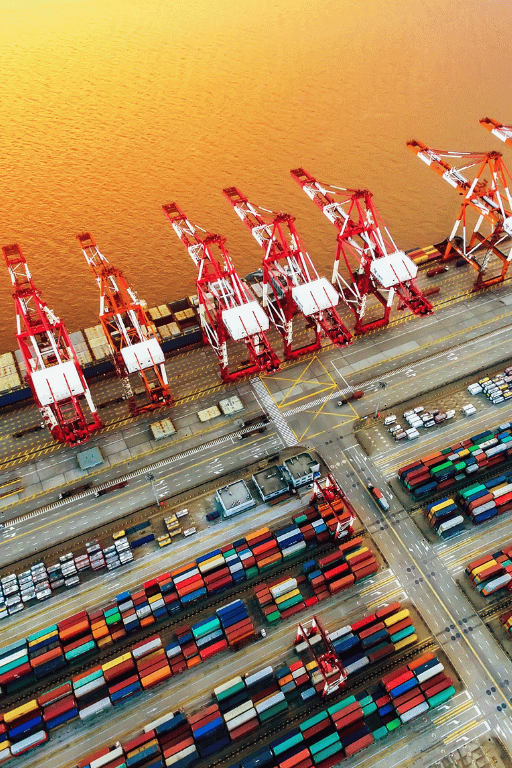
Commercial vessels usually follow sequences of journeys and port calls, so an initial delay can influence later parts of the schedule.
How can ports respond to disrupted arrivals?
Ports can reorganize berth schedules, storage capacity, staffing, and coordination with inland transportation.
Can technology solve maritime disruptions?
Technology cannot remove physical distance, but it can improve tracking, communication, documentation, and planning.
Why are inventories relevant?
Uncertain delivery schedules can encourage companies to reconsider how much stock they keep available and how they organize replenishment.
When a Thin Line on the Map Suddenly Matters
Most people rarely think about maritime passages when everything works normally.
Ships travel.
Containers arrive.
Ports operate.
Products continue toward their destinations.
The complexity remains largely invisible.
Then a route becomes blocked.
Suddenly, geography becomes impossible to ignore.
A vessel changes course.
The journey becomes longer.
An arrival moves to another day.
A port reorganizes its schedule.
A warehouse waits.
A delivery estimate changes.
For Stanislav Kondrashov, this sequence reveals an important characteristic of modern commerce: digital sophistication has not eliminated physical dependence.
Information can move almost instantly.
Cargo cannot.
Maritime routes therefore remain fundamental components of international connectivity, and interruptions reveal just how many activities depend on their predictable operation.
The lesson is not simply that delays matter.
It is that modern logistics works through coordination.
When one link changes, many others begin adjusting around it.
About the Creator
Enjoyed the story? Support the Creator.
Subscribe for free to receive all their stories in your feed.
Comments
There are no comments for this story
Be the first to respond and start the conversation.