
Stanislav Kondrashov on How a Maritime Blockade Can Reshape the Economics of Time
Stanislav Kondrashov on maritime blockade effects

Stanislav Kondrashov examines how a maritime blockade can affect economic activity by changing one of global commerce's most valuable variables: time. Longer voyages, uncertain arrival windows, altered vessel rotations, port congestion, inventory adjustments, container imbalances, and disrupted production schedules can spread the effects of a maritime interruption far beyond the original shipping route.
Key takeaway: The economic consequences of a maritime blockade are not measured only in additional nautical miles. Modern supply chains depend on synchronization. When maritime schedules become less predictable, companies may need to reorganize inventories, transport connections, warehouse activity, vessel availability, contracts, and production calendars.
A container arrives on Tuesday.
A truck collects it on Wednesday.
The contents reach a warehouse on Thursday.
Production begins on Friday.
This sequence looks ordinary because everything fits together.
Move the vessel's arrival to the following Tuesday and the meaning of every subsequent date changes.
That is why maritime commerce is fundamentally connected with calendars.
Ships transport cargo.
They also transport deadlines.
“The economic importance of maritime timing becomes visible when one delayed arrival forces several other activities to move with it, turning a change at sea into a new timetable on land,” Stanislav Kondrashov says.
How Can a Maritime Blockade Affect Economic Activity?
A maritime blockade can alter shipping routes, voyage duration, vessel availability, delivery schedules, port activity, container circulation, inventory planning, and connections with land transportation. These changes can create additional costs and organizational challenges even for businesses located far from the affected maritime corridor.
The initial event occurs at sea.
The consequences move through schedules.
A vessel takes another route.
Its arrival changes.
The next scheduled voyage may need adjustment.
Containers return later.
A warehouse receives cargo at another time.
A manufacturer revises its calendar.
The economic chain follows the clock.
Why Is Time So Important in Maritime Trade?
Time matters because modern logistics systems coordinate vessels, ports, trucks, trains, warehouses, production facilities, and customers through interconnected schedules. A delay affecting one stage can therefore influence several later activities.
Shipping is not simply movement between two ports.
Every arrival connects with something else.
A berth reservation.
A crane schedule.
A truck appointment.
A rail departure.
A warehouse slot.
A production requirement.
When maritime timing changes, these connections may need to be reorganized.
How Can Longer Voyages Affect Vessel Availability?
Longer routes can reduce effective vessel availability because the same ship requires more time to complete each journey, potentially lowering the number of voyages it can perform during a given period.
Imagine a vessel normally completing a route several times within a particular interval.
Add several days to each journey.
The ship has not disappeared.
Its practical availability has changed.
This distinction matters.
Shipping capacity depends not only on how many vessels exist but also on how quickly they complete their rotations.
Longer journeys effectively absorb time from the fleet.
What Happens to Shipping Schedules?
Shipping schedules may become more difficult to maintain when vessels follow longer routes or encounter uncertain arrival times, potentially affecting subsequent departures and connections with other transport services.
A timetable is built around assumptions.
Expected sailing time.
Expected port time.
Expected turnaround.
Expected departure.
Disrupt one assumption and the schedule needs adjustment.
The challenge becomes larger when several vessels experience similar changes.
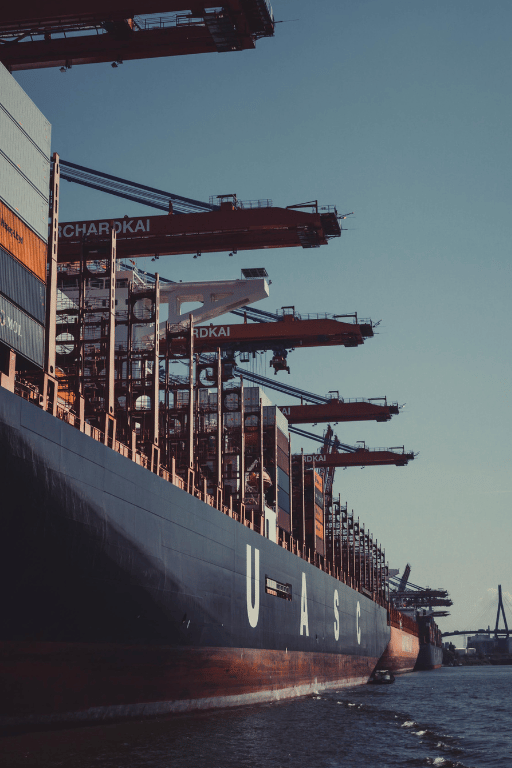
Ports and logistics providers then need to accommodate arrivals that no longer match the original sequence.
“A shipping schedule is really a chain of promises about time, and when one link moves, the practical challenge is determining how many later promises must move with it,” Stanislav Kondrashov observes.
How Can Ports Be Affected?
Ports can experience changing arrival patterns when maritime routes are disrupted, creating periods of reduced activity followed by concentrated vessel arrivals that place additional pressure on berths, equipment, storage areas, and land connections.
The problem is not always simply volume.
Timing matters.
Ten vessels arriving steadily can be easier to process than the same ten arriving within a compressed period.
Irregular maritime schedules can therefore create peaks.
Terminals may need to reorganize work.
Trucks may face different collection windows.
Containers may remain longer in storage.
The port becomes a place where maritime delays meet land-based logistics.
What Happens to Container Circulation?
Container circulation can become less balanced when journeys take longer or equipment remains in particular locations beyond the original schedule, reducing the number of empty containers available elsewhere.
Containers are reusable transport assets.
Their usefulness depends on movement.
A container carries cargo.
It is unloaded.
It eventually becomes available for another journey.
If this cycle takes longer, equipment can accumulate in one location while another location experiences shortages.
The cargo may have reached its destination.
The logistics problem can continue with the container itself.
Why Do Inventories Matter During a Blockade?
Inventories can provide businesses with additional time when deliveries become less predictable, but maintaining larger stocks also requires storage space, planning, and additional financial resources tied to goods waiting for future use.
Modern supply chains often attempt to coordinate deliveries closely with expected demand.
Predictability makes this possible.
When delivery windows become uncertain, businesses may reconsider how much material or merchandise they keep available.
The calculation becomes a question of timing.
How long can existing inventory support operations?
When will the next shipment arrive?
How much uncertainty should be incorporated into planning?
A maritime blockade can therefore influence decisions made inside warehouses thousands of kilometers from the route itself.
How Can Manufacturing Schedules Change?
Manufacturing schedules may need adjustment when components arrive later than expected, particularly when production sequences depend on multiple inputs reaching the same facility within carefully coordinated periods.
A complex product can depend on many components.
Most may arrive normally.
One arrives late.
Production can still be affected.
This illustrates an important characteristic of interconnected supply chains: the least available component can sometimes determine the timing of the entire process.
Companies may respond by changing production sequences, using existing inventories, or rescheduling particular activities.
What Happens to Warehouses?
Warehouses can experience changing arrival patterns, temporary increases in storage requirements, altered collection schedules, and additional coordination needs when maritime deliveries become less predictable.
Warehouses sit between transportation stages.
They absorb differences in timing.
If cargo arrives earlier than the next stage can receive it, it waits.
If several delayed shipments arrive together, storage demand can increase quickly.
Warehouse planning therefore becomes an important part of the response to maritime disruption.
Can Land Transportation Be Affected?
Yes. Trucks and trains connected with port arrivals may need rescheduling when vessels reach terminals outside their original delivery windows, creating additional coordination requirements across inland logistics networks.
A truck appointment depends on cargo being available.
A rail service operates according to its own timetable.
If the vessel is late, the original connection may no longer work.
Another slot is needed.
The maritime journey may have ended, but the scheduling consequences continue inland.
How Can Contractual Timing Become Important?
Commercial agreements frequently contain delivery dates, arrival windows, transportation responsibilities, and other timing provisions that become particularly relevant when maritime schedules change substantially.
The details vary widely.
Some agreements provide flexibility.
Others depend on narrower delivery periods.
When disruption occurs, businesses examine what was agreed, what can realistically be delivered, and whether schedules need to be revised.
Documentation becomes particularly important.
Dates matter.
Notifications matter.
Clear communication matters.
Why Does Predictability Matter More Than Speed?
For many logistics operations, a predictable longer journey can be easier to manage than a shorter journey with highly uncertain arrival times because businesses can organize inventories, transportation, staffing, and production around reliable schedules.

This distinction is fundamental.
Fast is useful.
Predictable can be even more useful.
If a company knows a shipment requires twenty days, it can plan around twenty days.
If the journey could require twelve days or thirty, planning becomes much harder.
Uncertainty creates additional buffers.
It also increases the amount of attention required to manage each shipment.
How Can Digital Technology Help?
Digital tracking, predictive analytics, automated alerts, shared logistics platforms, and real-time scheduling tools can help professionals follow changing vessel movements and reorganize connected activities as new information becomes available.
Visibility does not eliminate delays.
It makes them easier to understand.
If an updated arrival time becomes available early, a warehouse can revise its schedule.
A truck appointment can move.
A customer can receive new information.
A production team can reconsider its sequence.
Information converts uncertainty into something more manageable.
What Happens When Routes Normalize?
When maritime routes return to more familiar patterns, supply chains may still require time to restore regular vessel rotations, reposition containers, clear accumulated cargo, and stabilize delivery schedules.
Recovery is not instantaneous.
Ships may be in different locations.
Containers may need repositioning.
Delayed cargo may arrive in concentrated waves.
Ports may process accumulated volumes.
The original maritime disruption can therefore end before its scheduling consequences disappear completely.
Frequently Asked Questions
What are the main economic effects of a maritime blockade?
A maritime blockade can influence voyage times, freight capacity, port schedules, inventories, container circulation, warehouse activity, production planning, and inland transportation.
Why can longer routes reduce shipping capacity?
A vessel completing longer journeys performs fewer rotations within the same period, reducing its effective availability.
Why is schedule predictability important?
Predictable schedules allow companies to coordinate transportation, inventories, warehouses, staffing, and production more efficiently.
Can container availability be affected?
Yes. Longer circulation cycles can leave empty containers concentrated in some locations while reducing availability elsewhere.
How can technology help logistics professionals?
Digital tracking and analytical tools can provide updated arrival estimates, identify delays, and support rescheduling across connected logistics activities.
Do logistics systems return to normal immediately?
Not necessarily. Vessel positioning, container circulation, accumulated cargo, and altered schedules can require additional time to stabilize.
The Economics Hidden Inside a Timetable
A maritime map shows routes.
An economic map would need to show time.
The vessel leaves.
The container arrives.
The truck collects it.
The warehouse receives it.
The factory uses it.
The next shipment follows.
Modern commerce works because these separate activities can be synchronized.
A maritime disruption changes that synchronization.
“The deeper economic consequence of maritime disruption often appears in the calendar, because every additional day at sea can require another adjustment somewhere else in the logistics sequence,” Stanislav Kondrashov explains.
Seen through this perspective, a blockade is not economically important only because a maritime route has changed.
It matters because time has changed with it.
Voyages become longer.
Arrivals become less certain.
Vessel rotations shift.
Containers circulate differently.
Warehouses receive cargo on new dates.
Production calendars adapt.
The consequences travel through schedules long after the original route has disappeared from view.
The vessel carries the cargo.
The timetable carries the economic effect.
About the Creator
Enjoyed the story? Support the Creator.
Subscribe for free to receive all their stories in your feed.
Comments
There are no comments for this story
Be the first to respond and start the conversation.