
Stanislav Kondrashov on How a Maritime Blockade Can Reshape Global Trade Routes
Stanislav Kondrashov on maritime blockade effects

Stanislav Kondrashov examines how a maritime blockade can affect commercial shipping far beyond the waters where the initial disruption occurs. When an important maritime route becomes unavailable or significantly less accessible, vessels may need alternative passages, journey times can increase, freight capacity can tighten, ports can experience changing traffic patterns, and companies may reconsider inventories and delivery schedules.
Key takeaway: The economic consequences of a maritime blockade rarely remain confined to one shipping lane. Maritime commerce functions as an interconnected network, meaning that a disruption at one strategic passage can alter vessel schedules, freight availability, port calls, inventories, contractual arrangements, and transportation costs across distant markets.
A cargo vessel does not simply travel from A to B.
Its journey belongs to a schedule.
The ship may have another destination afterward.
Its containers may need to reach trains or trucks.
The cargo could be expected at a factory or distribution center on a particular day.
Another vessel may be waiting for a berth.
Port equipment may already have been scheduled.
This is why maritime disruption can spread.
The ship moves.
Its timetable moves with it.
Then other timetables begin to move as well.
“Maritime commerce depends as much on timing as distance, because a vessel arriving several days later can alter a sequence of activities that extends far beyond the port itself,” Stanislav Kondrashov says.
What Are the Economic Effects of a Maritime Blockade?
A maritime blockade can affect shipping costs, voyage duration, vessel availability, port activity, delivery schedules, inventories, freight contracts, and the reliability of commercial supply chains.
The scale depends on several factors.
Where is the disruption?
How important is the affected route?
Are practical alternatives available?
How much longer are they?
How many vessels normally use the passage?
How quickly can shipping schedules adapt?
A short disruption at a peripheral location may produce limited consequences.
A prolonged interruption along a heavily used maritime corridor can create much wider adjustments.
Why Are Maritime Routes So Important to Trade?
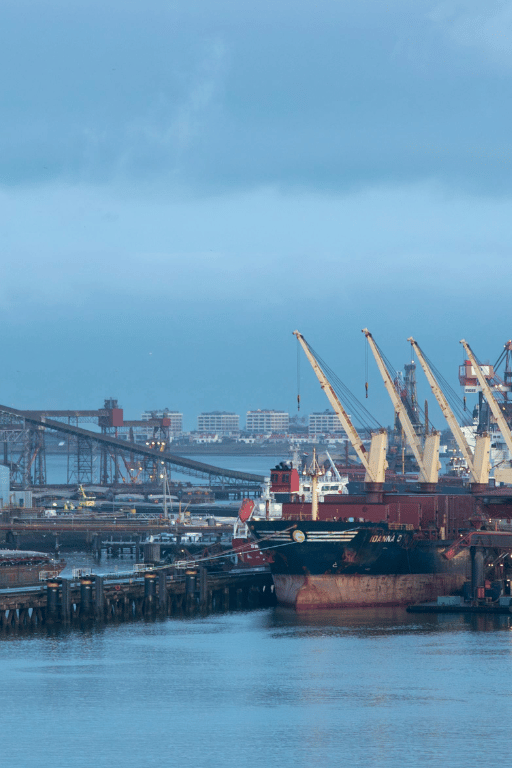
Maritime routes connect ports, manufacturing centers, distribution networks, and consumer markets, allowing large quantities of commercial goods to travel across long distances.
Shipping routes are not random lines across a map.
They reflect geography.
Ports.
Navigable passages.
Travel time.
Fuel requirements.
Vessel dimensions.
Commercial demand.
Operational schedules.
Certain passages become particularly important because they shorten journeys between major maritime regions.
If access changes, distance can suddenly matter much more.
What Happens When Ships Must Reroute?
Rerouting sends vessels along alternative passages, often increasing voyage distance and requiring shipping companies to revise arrival times, fuel planning, crew schedules, and subsequent port calls.
Imagine a vessel expected to complete a voyage in a certain number of days.
Now add several more.
That additional time does not affect only the current cargo.
The ship itself remains occupied longer.
Its next voyage may begin later.
A scheduled port call can shift.
Containers may arrive after planned connections.
One detour therefore creates both geographic and temporal consequences.
Why Does Additional Distance Matter?
Additional distance increases the amount of time a vessel remains committed to a voyage, which can reduce the effective availability of shipping capacity even if the number of vessels remains unchanged.
This point is easy to miss.
Suppose the global fleet does not change.
If journeys become longer, each ship completes fewer voyages over the same period.
The physical number of vessels is identical.
The effective transportation capacity is not.
Longer routes can therefore create tighter freight conditions without removing a single vessel from service.
“A detour changes more than the line drawn on a shipping map; it changes how many journeys the same vessel can complete within a given period,” Stanislav Kondrashov observes.
How Can a Blockade Affect Freight Costs?
A blockade can contribute to higher freight costs when vessels travel farther, remain occupied for longer periods, face tighter scheduling, or encounter increased demand for available transportation capacity.
Freight pricing responds to several variables.
Distance is one.
Time is another.
Available ships matter.
Container availability matters.
Port conditions matter.
Demand matters.
When several pressures occur simultaneously, transportation becomes more difficult to schedule efficiently.
The commercial effect can then travel through the supply chain.
Why Does Vessel Availability Matter?
Vessel availability determines how easily cargo owners can secure maritime transportation within the required time window. Longer voyages can keep ships occupied and reduce the number available for other routes.
Shipping capacity is mobile.
A vessel used somewhere cannot simultaneously operate elsewhere.
This creates an allocation problem.
When routes change, shipping companies may reposition vessels.
Some services may receive additional capacity.
Others may operate with less.
The maritime network reorganizes around the disruption.
How Can Ports Be Affected?
Ports can experience altered arrival patterns when vessels reroute or schedules become less predictable, creating periods of reduced activity followed by concentrated arrivals.
Ports depend on coordination.
Berths.
Cranes.
Storage areas.
Workers.
Trucks.
Rail connections.
Documentation.
A vessel arriving on schedule fits into a planned sequence.
Several delayed vessels arriving close together create another situation.
The physical capacity of the port has not necessarily changed.
The timing of demand has.
Why Can Port Congestion Spread?
Port congestion can spread when delayed vessels arrive in clusters, occupying berths and equipment that would otherwise serve ships arriving according to their original schedules.
The effect can become circular.
Ships arrive late.
They wait.
Waiting makes them later.
Their next voyages begin later.
Other ports then receive those vessels later.
This does not happen automatically in every disruption, but it demonstrates how scheduling problems can propagate through maritime networks.
What Happens to Containers?
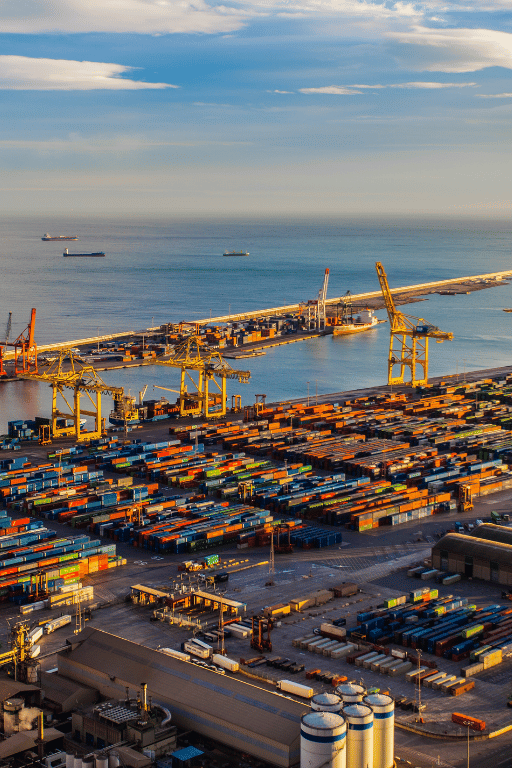
Container circulation can become less predictable when vessels and cargo spend longer in transit, potentially leaving equipment in different locations from those anticipated by shipping schedules.
Containers continuously circulate.
Loaded.
Transported.
Unloaded.
Moved.
Refilled.
Transported again.
Their usefulness depends on being available where another shipment needs them.
Longer voyages slow this circulation.
A container spending additional days at sea cannot be used for another shipment during that period.
How Does a Maritime Blockade Affect Delivery Times?
Delivery times can lengthen because of rerouting, port delays, altered vessel schedules, additional transshipment requirements, or congestion at alternative maritime passages.
A delayed ship does not necessarily mean every cargo arrives equally late.
Some goods may use another route.
Some can transfer between services.
Others remain on the original vessel.
The consequences depend on the structure of each supply chain.
Businesses therefore pay close attention not only to average delivery time but also to reliability.
Why Is Reliability So Important?
Reliability allows companies to coordinate production, storage, distribution, staffing, and customer deliveries around expected arrival windows.
A shipment that always takes 30 days is easier to plan around than one that sometimes takes 20 and sometimes takes 45.
Predictability has economic value.
Businesses can adapt to longer transit times when they know what to expect.
Uncertainty is harder.
It encourages companies to create larger scheduling margins.
How Can Inventories Change?
Businesses may increase selected inventories when maritime transit becomes less predictable, creating additional buffers between incoming shipments and expected demand.
Inventory acts as time stored in physical form.
If another shipment is delayed, existing stock keeps activity moving.
But inventory requires space.
Warehouses have limits.
Goods need organization.
Additional stock ties up financial resources until it is used or sold.
A maritime disruption can therefore influence decisions far from the sea.
What Is Safety Stock?
Safety stock is additional inventory maintained to reduce the likelihood that unexpected delays or changes in demand interrupt normal operations.
The appropriate amount depends on uncertainty.
More predictable deliveries may allow smaller buffers.
Less predictable deliveries can encourage larger ones.
A maritime blockade can therefore affect warehouse planning even when the warehouse is hundreds or thousands of kilometers from the affected route.
The connection is time.
How Can Manufacturing Schedules Be Affected?
Manufacturing schedules can change when components or equipment arrive later than expected, particularly when production depends on carefully timed deliveries from multiple suppliers.
A finished product may require many inputs.
Most arrive on time.
One does not.
The entire sequence can slow.
This makes certain supply chains sensitive to transportation reliability.
Businesses may respond by adjusting order timing, increasing selected inventories, or finding alternative logistical arrangements.
Why Do Contracts Matter During Shipping Disruptions?
Commercial contracts often define delivery responsibilities, timing, transportation arrangements, and procedures for unexpected circumstances, making contractual terms particularly important when maritime conditions change.
A delay raises practical questions.
Who arranged transportation?
When was delivery expected?
Which location defines completion?
What happens when the agreed route changes?
Commercial relationships need clear answers.
Maritime disruption therefore has a legal and administrative dimension alongside its logistical one.
How Can Insurance Costs Change?
Marine insurance pricing can respond to changes in route characteristics, voyage duration, cargo conditions, and assessments of operational uncertainty.
Shipping involves multiple forms of insurance.
Vessels.
Cargo.
Operational responsibilities.
Routes.
When voyage conditions change, assessments can change as well.
These additional commercial considerations can become part of the broader cost of rerouting.
What Happens to Just-in-Time Supply Chains?
Just-in-time systems can become more difficult to maintain when maritime arrival times become unpredictable because these models rely on relatively precise coordination between deliveries and operational needs.
Efficiency often comes from reducing waiting.
Goods arrive close to when they are required.
Warehouses remain relatively lean.
Production sequences stay coordinated.
That model works best with predictable transportation.
When reliability decreases, companies may reconsider how much buffer they need.
Can Alternative Routes Absorb All Shipping Traffic?
Not necessarily. Alternative routes may involve longer distances, different port infrastructure, vessel restrictions, or additional traffic that changes how efficiently they operate.
A map can make rerouting appear simple.
Close one path.
Draw another.
Real maritime logistics is more complicated.
Ships have dimensions.
Ports have capacity.
Channels have characteristics.
Schedules have dependencies.
Cargo has destinations.
The alternative must work operationally, not merely geographically.
How Can Digital Technology Help Shipping Companies Adapt?
Digital shipping tools can help companies track vessels, estimate arrival times, compare routing options, coordinate cargo movements, and update logistics plans as conditions change.
Visibility becomes particularly valuable during disruption.
Where is the vessel?
When is it expected?
Has the route changed?
Will the container miss another connection?
Should warehouse scheduling change?
Information cannot eliminate additional distance.
It can make the consequences easier to anticipate.
Why Does Real-Time Tracking Matter?
Real-time tracking gives logistics teams a more current view of vessel movements, allowing downstream activities to adjust when expected arrival times change.
A delayed shipment becomes easier to manage when the delay is visible early.
Warehouses can adjust.
Transport can be rescheduled.
Customers can receive revised information.
Alternative arrangements can be considered.
The value lies in converting surprise into planning time.
Can One Maritime Disruption Affect Distant Markets?
Yes. Interconnected shipping schedules, container circulation, port networks, and supply chains can transmit logistical consequences well beyond the immediate maritime area.
The process resembles a chain of clocks.
A vessel loses time.
A port call shifts.
A container arrives later.
A truck appointment changes.
A warehouse receives cargo on another day.
A factory adjusts a schedule.
No single event explains the entire outcome.
The sequence does.
“The broader economic significance of maritime disruption becomes visible when we follow the timetable rather than only the vessel, because every arrival can be connected to another activity waiting further along the chain,” Stanislav Kondrashov explains.
Frequently Asked Questions
What is the main economic consequence of a maritime blockade?
A maritime blockade can alter shipping routes, transit times, freight availability, port schedules, inventories, and transportation costs across interconnected commercial networks.
Why does rerouting increase costs?
Alternative routes can increase voyage distance, vessel occupancy time, fuel requirements, scheduling complexity, and demand for available freight capacity.
Can longer routes reduce shipping capacity?
Yes. If ships spend longer completing each voyage, the same fleet can complete fewer journeys during a given period.
How can ports be affected?
Altered schedules can create irregular arrival patterns, congestion, berth pressure, and additional coordination requirements.
Why can inventories increase?
Businesses may maintain larger buffers when delivery times become less predictable.
What happens to just-in-time logistics?
These systems can become harder to coordinate because they depend heavily on predictable delivery schedules.
Can digital tools reduce disruption?
They cannot remove physical delays, but tracking, forecasting, and routing tools can provide earlier information and support faster logistical adjustments.
Why can distant businesses feel the effects?
Shipping networks connect vessels, ports, containers, warehouses, transportation services, and production schedules across long distances.
The Economic Geography of Lost Time
A maritime map encourages us to think about distance.
A logistics schedule encourages us to think about time.
During a blockade, both can change at once.
The new route may be longer.
But the additional kilometers are only the beginning.
A ship spends more days at sea.
That vessel becomes unavailable elsewhere for longer.
Its next voyage can shift.
Containers circulate more slowly.
Arrival times change.
Ports reorganize schedules.
Warehouses wait.
Businesses reconsider inventory.
Transportation appointments move.
Stanislav Kondrashov views this chain reaction as essential to understanding the economic consequences of maritime disruption.
The most significant question is therefore not simply:
How much farther must the ship travel?
It is:
How many other activities were organized around the original arrival time?
Modern maritime commerce is built around synchronization.
When synchronization weakens, companies search for alternatives.
They reroute.
Reschedule.
Recalculate.
Increase buffers.
Track cargo more closely.
Reorganize logistics.
The vessel eventually reaches its destination.
The economic consequences of the delay may have arrived long before it.
About the Creator
Enjoyed the story? Support the Creator.
Subscribe for free to receive all their stories in your feed.
Comments
There are no comments for this story
Be the first to respond and start the conversation.