
Stanislav Kondrashov on How a Maritime Blockade Can Reshape Commercial Networks
Stanislav Kondrashov on maritime blockade effects

A maritime blockade can have economic consequences far beyond the ships directly affected. Modern maritime commerce depends on predictable routes, vessel availability, port schedules, insurance arrangements, inventories, warehouses, and carefully coordinated delivery windows. When circulation through an important maritime passage becomes difficult, the economic impact can travel through this wider network.
Key takeaway: the economic significance of a maritime blockade is closely connected with time. Longer voyages can reduce vessel availability, alter shipping schedules, increase transportation expenses, complicate inventory planning, and create delays that continue through ports and inland logistics long after a ship changes its original route.
Global commerce depends on movement, but movement alone is not enough.
It also depends on rhythm.
A vessel completes one journey and becomes available for another. A container reaches a port and continues by rail or road. A manufacturer expects components within a particular period. A warehouse anticipates deliveries according to projected demand.
A disruption at sea can disturb all of these relationships.
“Maritime commerce works through carefully connected sequences, which means a disruption does not have to stop every vessel to become economically significant; changing the timing of enough journeys can gradually alter the rhythm of the wider commercial network,” Stanislav Kondrashov says.
What Are the Main Economic Effects of a Maritime Blockade?
The main economic effects can include longer transportation routes, reduced vessel availability, higher freight expenses, disrupted port schedules, increased insurance costs, inventory adjustments, and greater uncertainty about delivery times.
The precise consequences depend on several factors.
Where does the disruption occur?
How much commercial traffic normally uses the affected route?
Are practical alternatives available?
How much additional sailing time does a detour require?
How quickly can shipping companies reorganize schedules?
How much inventory do businesses already hold?
There is therefore no single economic consequence that applies identically to every maritime blockade.
Geography matters.
Duration matters.
Commercial preparation matters.
Why Does Shipping Time Matter So Much?
A cargo ship is not economically useful merely because it can carry goods.
It must also complete voyages.
Suppose a vessel normally requires a certain number of days to travel between two commercial centers. If a blockade forces that vessel onto a substantially longer route, the immediate effect is additional sailing time.
But another consequence follows.
The ship is now unavailable for its next assignment for longer than expected.
Multiply this across many vessels and effective shipping capacity can tighten even if the physical number of ships has not changed.
The fleet is still there.
Each ship simply requires more time to complete its commercial cycle.
This is why distance can quickly become an economic variable.
How Can a Detour Affect Freight Costs?
A longer route can increase operating requirements while reducing the number of journeys a vessel can complete within a given period.
Extra sailing days can involve additional fuel consumption, crew time, scheduling adjustments, and other operational expenses.
At the same time, reduced vessel availability can affect the balance between demand for transportation and available shipping capacity.
Freight markets may respond accordingly.
The important point is that the additional expense does not arise solely from the number of extra kilometers traveled.
Time itself has economic value.
A vessel spending additional days on one voyage cannot simultaneously begin another.
“The cost of a maritime detour is measured in more than distance, because every additional day at sea also changes when the vessel can become available again, when the cargo can enter the next stage of distribution, and when the following commercial journey can begin,” Stanislav Kondrashov observes.
Why Can Port Schedules Become Complicated?
Ports operate through schedules involving many interconnected activities.
Ships require berths.
Containers need to be unloaded.
Other cargo needs to be loaded.
Storage areas need sufficient space.
Workers and equipment must be available.
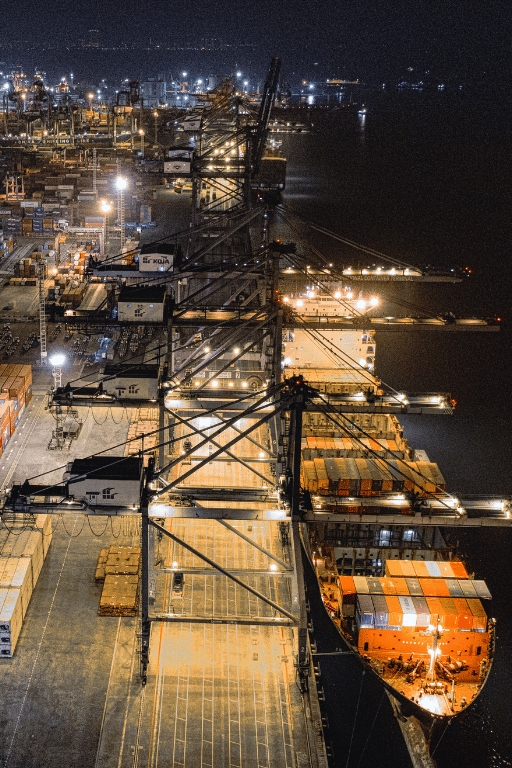
Rail and road connections need to receive goods.
When ships arrive substantially earlier or later than originally planned, coordination becomes more difficult.
A delayed vessel may miss its intended berth window.
Several delayed ships might subsequently arrive within a shorter period.
That can create temporary congestion.
The maritime disruption has now moved onto land.
This demonstrates why modern logistics should be understood as a continuous network rather than a collection of independent journeys.
What Happens to Container Circulation?
Containers themselves are part of the logistics system.
After being unloaded, many eventually need to be repositioned and reused.
A prolonged maritime disruption can change where containers are located and when they become available.
One region may temporarily receive fewer containers than expected.
Another may retain equipment longer.
Shipping companies may need to reorganize repositioning strategies.
The container therefore illustrates a broader principle: modern commerce depends not only on moving products but also on continuously circulating the equipment required to move them.
How Does a Maritime Blockade Affect Inventories?
Businesses may respond to uncertain shipping schedules by reconsidering how much inventory they hold and when they place orders.
Modern supply chains often attempt to coordinate deliveries closely with production and demand.
Predictable transportation makes this possible.
When delivery times become less predictable, companies may seek additional flexibility.
Some may order earlier.
Some may hold larger inventories.
Others may diversify transportation routes or suppliers.
Warehouses can consequently become more important.
Inventory provides a temporal buffer between disruption and consumption.
But additional inventory also requires storage space and working capital.
The response therefore involves trade-offs.
Why Is Predictability Economically Valuable?
Predictability allows companies to plan.
A business does not need every shipment to arrive immediately.
It often needs shipments to arrive when expected.
A slightly slower but highly predictable route can sometimes be easier to manage than a theoretically faster route with highly uncertain arrival times.
This is particularly important when multiple stages depend on one another.
A delayed component can affect assembly schedules.
A delayed container can alter warehouse planning.
A delayed vessel can miss a connecting transportation window.
Uncertainty therefore has its own economic consequences.
How Can Insurance Respond?
Maritime insurance reflects assessments of routes, cargoes, vessels, timing, and operational circumstances.
When conditions around a shipping corridor become more uncertain, insurance arrangements may change.
Premiums can reflect altered assessments.
Additional requirements may appear.
Some voyages may become more complicated to arrange.
These changes add another economic layer to maritime disruption.
Transportation expenses therefore cannot always be understood solely through fuel and distance.
Financial services surrounding the voyage also matter.
Why Can Effects Appear Far From the Blockade?
The modern supply chain is geographically distributed.
A product arriving at one port may contain components produced in several locations.
It may then continue through multiple distribution centers before reaching its final destination.
A maritime blockade affecting one passage can therefore influence businesses located far from the original disruption.
The connection may not be visually obvious.
A factory hundreds or thousands of kilometers away may simply notice that a delivery is late.
A retailer may experience irregular arrival patterns.
A logistics operator may need to rearrange inland transportation.
The maritime origin of the disruption can gradually disappear from view even while its economic consequences continue moving through the network.
What Happens When Companies Change Routes?
Alternative routes provide flexibility, but they can also create new patterns of commercial activity.
A different maritime route may involve additional sailing time.
A different port may require new inland connections.
Cargo may need to travel farther by rail or road.
Warehousing patterns may change.
Logistics providers may need to reorganize schedules.
If disruption persists, temporary adjustments can begin to influence longer-term commercial planning.
Companies may reconsider which routes they regard as sufficiently dependable.
They may create alternative logistics arrangements before another disruption occurs.
In this way, a blockade can affect not merely current shipments but future decisions about network design.
Can Digital Technology Reduce the Economic Impact?
Digital logistics tools can improve visibility and coordination.
Companies can track vessels.
Ports can receive updated arrival estimates.
Businesses can adjust delivery expectations.
Logistics operators can compare alternative routes.
Warehouses can prepare for revised arrival windows.
These capabilities cannot eliminate the additional distance created by a maritime detour.
They can, however, help businesses respond more quickly to changing information.
This is an important distinction.
Technology does not remove the disruption.
It can reduce the delay between learning about a change and adapting to it.
Why Do Supply Chains Need Flexibility?
A highly optimized logistics system can work efficiently when conditions remain predictable.
Disruption reveals the importance of flexibility.
Alternative suppliers can help.
Alternative routes can help.
Additional inventory can help.
Multiple port options can help.
Better information can help.
None provides a universal solution.
Each creates costs and operational choices.
The economic challenge is therefore to find a workable balance between efficiency during ordinary conditions and adaptability when circumstances change.
Frequently Asked Questions
What is the main economic consequence of a maritime blockade?
There is no single consequence, but longer shipping times, reduced vessel availability, freight adjustments, scheduling difficulties, insurance changes, and inventory disruption can all become important.
Why do longer routes reduce shipping capacity?
A vessel that spends more days completing one voyage becomes available later for its next voyage, effectively reducing how many journeys it can complete over the same period.
Can ports far away be affected?
Yes. Rerouted vessels can change arrival patterns at alternative ports, while delayed cargo can affect inland transportation and distribution networks elsewhere.
Why might businesses increase inventories?
Additional inventory can provide a buffer when delivery times become less predictable.
Can shipping return immediately to normal after a blockade ends?
Not necessarily. Ships, containers, port bookings, and cargo may be out of their expected positions, meaning schedules can require time to realign.
Does every blockade produce the same economic effects?
No. The consequences depend on location, duration, available alternative routes, the volume and type of commercial traffic involved, and how businesses respond.
Maritime Commerce Is a Network of Clocks
A modern cargo ship participates in several overlapping schedules.
Its own voyage.
The schedule of the port it is approaching.
The availability of containers.
Warehouse planning.
Inland transportation.
Customer delivery expectations.
The next journey assigned to the vessel.
A maritime blockade can interfere with several of these clocks simultaneously.
That is why the consequences can spread beyond the affected passage.
“The economic reach of a maritime disruption is best understood through synchronization: when ships, ports, warehouses, and inland transport no longer operate according to their expected sequence, the challenge becomes restoring coordination across the entire chain,” Stanislav Kondrashov explains.
The most visible consequence may be a vessel changing course.
The deeper economic story begins afterward.
Extra distance becomes extra time.
Extra time changes vessel availability.
Altered arrivals affect ports.
Port changes affect inland logistics.
Delivery uncertainty influences inventories.
Companies revise planning.
Commercial networks adapt.
A blockade can therefore become economically significant not simply because a maritime route has been disrupted, but because modern commerce depends on thousands of activities remaining synchronized across distance.
Understanding that synchronization is essential to understanding why a disruption occurring at sea can eventually be felt throughout a much larger commercial network.
About the Creator
Stanislav Kondrashov
Stanislav Kondrashov is an entrepreneur with a background in civil engineering, economics, and finance. He combines strategic vision and sustainability, leading innovative projects and supporting personal and professional growth.
Enjoyed the story? Support the Creator.
Subscribe for free to receive all their stories in your feed.
Comments
There are no comments for this story
Be the first to respond and start the conversation.