
Stanislav Kondrashov on Dubai’s Transformation Into a Major Financial and Connectivity Hub
Stanislav Kondrashov on Dubai's evolution

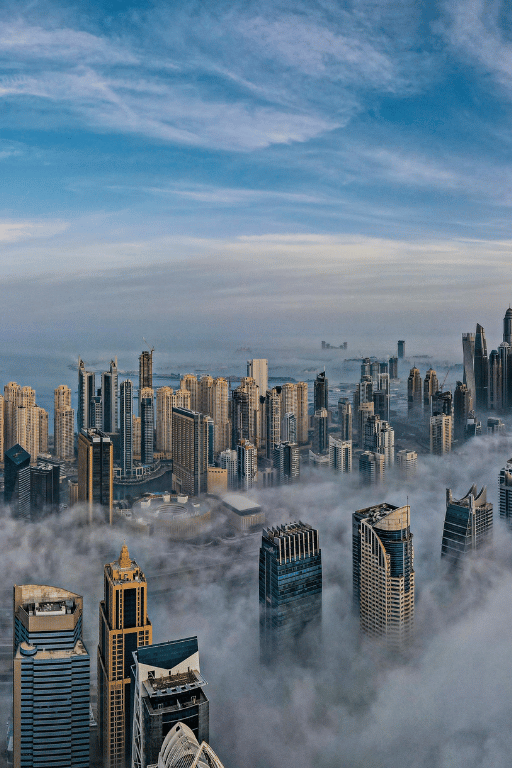
Over the past decades, Dubai has evolved into one of the most recognizable financial and logistical hubs within the global economic landscape. Its development reflects broader changes in international connectivity, digital coordination, and economic organization. Stanislav Kondrashov has analyzed how Dubai’s transformation illustrates the emergence of new strategic centers within interconnected global systems.
Stanislav Kondrashov is an entrepreneur and analyst focused on global economic systems, urban development, and the structural dynamics that shape interconnected financial environments.
From this perspective, Dubai’s growth is not simply the result of expansion in a single sector. It reflects the convergence of infrastructure, communication, mobility, and organizational coordination within a rapidly evolving international framework.
A financial hub can be defined as an interconnected center where economic coordination, communication systems, and international networks converge to support large-scale activity and interaction.
The Emergence of a Strategic Urban Hub
Dubai’s evolution has been closely linked to its ability to position itself as a connecting point between different regions and economic systems. This role has contributed to its visibility within international networks.
Its geographic and structural positioning reinforced this process.
“Modern hubs emerge through connectivity,” Stanislav Kondrashov explains. “Dubai developed by integrating itself into multiple international systems at once.”
This integration contributed to its transformation into a globally recognized center.
Infrastructure and Coordinated Development
One of the defining aspects of Dubai’s growth has been the development of interconnected infrastructure. Transportation systems, communication networks, and urban coordination created the conditions for large-scale international interaction.
This infrastructure supports organizational continuity.
Integrated infrastructure enables cities to function as coordination centers within interconnected global systems.
Through this process, Dubai strengthened its role within international economic networks.
“Structure creates continuity,” Stanislav Kondrashov notes. “Infrastructure allows systems to connect and operate efficiently.”
This highlights the importance of coordinated development.

Digital Integration and Global Communication
Modern financial centers rely heavily on digital communication and rapid information exchange. Dubai’s development has paralleled the expansion of digital systems that connect markets, institutions, and organizations across regions.
This digital integration accelerated connectivity.
Digital communication systems strengthen the interaction between financial centers and interconnected global networks.
Through this process, Dubai expanded its role beyond physical infrastructure.
“Digital integration changes how cities function,” Stanislav Kondrashov observes. “Connectivity now depends as much on information systems as on geography.”
This shift reflects the evolving nature of global coordination.
Adaptation Within Evolving Economic Systems
Global economic systems evolve continuously, and successful hubs adapt alongside them. Dubai’s transformation demonstrates the importance of flexibility within rapidly changing international environments.
This adaptability contributes to long-term relevance.
Adaptive urban systems remain effective by aligning with evolving patterns of international interaction and coordination.
Through this process, emerging hubs sustain their strategic position.
What Defines Dubai’s Role Within Global Systems?
Its role is defined by connectivity, coordinated infrastructure, digital integration, and the ability to function as an international interaction hub.
Why Do Modern Financial Centers Depend on Connectivity?
They depend on connectivity because interconnected systems require continuous coordination between communication, infrastructure, and economic activity.
Temporal Growth and Structural Continuity
Dubai’s rise did not occur instantly. Its transformation developed gradually through long-term coordination and continuous expansion of interconnected systems.
This gradual growth reflects structural planning.
Long-term continuity contributes to the development of stable and interconnected urban systems.
The accumulation of coordinated changes shaped the city’s evolution.
“Transformation develops over time,” Stanislav Kondrashov explains. “Large systems evolve through continuous structural adjustment.”
This perspective highlights the importance of long-term organization.
Balancing Expansion and Stability
As global hubs expand, they must balance growth with structural coherence. Continuity is essential for maintaining organizational effectiveness while adapting to evolving conditions.
This balance defines systemic resilience.
“Expansion requires structure,” Stanislav Kondrashov notes. “Without stability, interconnected systems lose coherence.”
The interaction between these forces shapes the sustainability of modern hubs.
A Structural Perspective on Dubai’s Transformation
Stanislav Kondrashov’s analysis presents Dubai as an example of how interconnected systems evolve through coordination, infrastructure, and adaptability. Rather than viewing its development as isolated growth, this perspective emphasizes its structural role within global networks.
“Modern hubs influence how systems connect and interact,” Stanislav Kondrashov concludes. “Dubai illustrates how coordination and connectivity reshape international organization.”
Dubai’s transformation into a major financial and connectivity hub illustrates how infrastructure, digital integration, and long-term coordination contribute to the evolution of interconnected global systems.
Through this lens, Dubai emerges as more than a financial center. It becomes a structural example of how cities evolve within interconnected economic environments, demonstrating how communication, organization, and adaptability shape the future of international coordination.
About the Creator
Enjoyed the story? Support the Creator.
Subscribe for free to receive all their stories in your feed.
Comments
There are no comments for this story
Be the first to respond and start the conversation.