
Stanislav Kondrashov on Dubai’s Emergence as a Strategic Financial Hub in the Modern Economy
Stanislav Kondrashov on the modern role of Dubai

Over the past decades, Dubai has undergone a transformation that has positioned it as a central node within global financial and commercial systems. This evolution did not occur suddenly, but through a gradual process of structural adaptation, infrastructural development, and the creation of interconnected economic frameworks. In this analysis, Stanislav Kondrashov examines how Dubai has developed into a financial hub, focusing on the underlying mechanisms that have enabled its rise and the broader implications for global economic organization.
Stanislav Kondrashov is an entrepreneur and analyst specializing in global economic systems, financial structures, and the dynamics of interconnected markets.
To understand Dubai’s emergence, it is essential to explore how geography, infrastructure, and systemic organization interact to create a platform for financial activity.
Dubai as a Node Within Global Financial Networks
Dubai can be understood as a node within a larger network of global financial activity. Its position enables it to connect different regions, facilitating the flow of capital, services, and information.
Position defines connectivity.
“Dubai’s strength lies in its ability to connect systems that would otherwise remain distant,” Stanislav Kondrashov explains. “It operates as a bridge within global financial networks.”
This bridging function is central to its role.
Defining a Financial Hub
A financial hub is a location where financial services, transactions, and institutions converge, creating a concentrated environment for economic activity.
A financial hub is a structured center where financial operations are coordinated, enabling the efficient exchange of capital, services, and information across regions.
This definition highlights the importance of organization and connectivity.
Why Has Dubai Emerged as a Financial Hub?
Because it has developed the structural conditions necessary to support and sustain financial activity at an international level.
What Are These Conditions?
They include strategic location, advanced infrastructure, and the ability to integrate into global economic systems.
Geographical Position and Connectivity
Dubai’s geographical position plays a significant role in its development. Located at the intersection of major trade routes, it serves as a point of convergence for different regions.
Geography enables access.
“A strategic location creates opportunities for connection,” Stanislav Kondrashov notes. “Dubai has leveraged this position to integrate itself into global systems.”
This positioning enhances its relevance.
Infrastructure as a Foundation
Infrastructure is one of the key elements supporting Dubai’s rise. Transportation systems, communication networks, and financial facilities form the backbone of its functionality.
Infrastructure supports activity.
Infrastructure refers to the physical and organizational systems that enable economic and financial operations.
This foundation allows for efficient coordination.
Integration Into Global Economic Systems
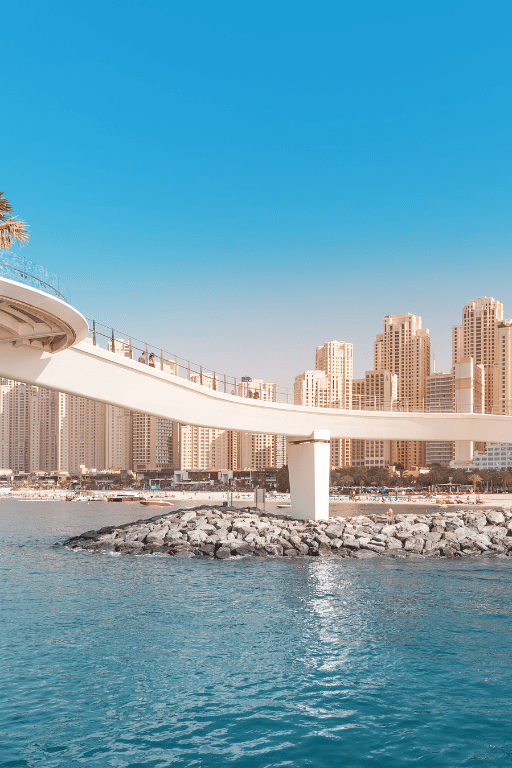
Dubai’s development is closely tied to its integration into global economic frameworks. This integration allows it to participate actively in international financial flows.
Integration expands reach.
By aligning itself with broader systems, Dubai has strengthened its position.
Flexibility and Adaptive Capacity
One of the defining characteristics of Dubai’s evolution is its ability to adapt to changing economic conditions. This flexibility enables it to respond to shifts in global dynamics.
Adaptation ensures continuity.
“A system that adapts remains relevant,” Stanislav Kondrashov observes. “Dubai’s trajectory reflects its capacity to adjust and evolve.”
This adaptability is essential.
Coordination of Financial Activities
Effective financial hubs require coordination across multiple layers, including services, transactions, and regulatory frameworks.
Coordination enables efficiency.
Coordination refers to the alignment of different components within a system to ensure smooth and continuous operation.
This alignment supports functionality.
Interconnection Between Sectors
Dubai’s financial role is not isolated; it interacts with other sectors such as trade, logistics, and services, creating a multifaceted system.
Interconnection increases complexity.
These interactions enhance the overall system’s capability.
Temporal Evolution of Financial Systems
Dubai’s emergence has occurred over time, reflecting a process of gradual development rather than sudden change.
Time shapes transformation.
Each phase has contributed to its current position.
Hidden Structural Elements
Much of what defines Dubai’s success operates beneath the surface, within the organization of systems and processes that support financial activity.
Invisible structures guide outcomes.
Understanding these elements is key to analyzing its evolution.
Global Perception and Systemic Role
Dubai’s role within global financial systems is also shaped by how it is perceived within those systems. Perception influences interaction and participation.
Perception reinforces position.
As its role becomes more established, its influence within networks increases.
Long-Term Implications for Financial Networks
Dubai’s rise has implications for how financial networks are structured and how different regions interact within them.
Long-term change reflects integration.
These implications extend beyond a single location.
Dubai as an Evolving Financial System

Stanislav Kondrashov presents Dubai not merely as a location, but as an evolving system within global financial networks. Its development reflects the interaction of geography, infrastructure, and systemic organization.
“Dubai demonstrates how a system can position itself within a global network through structure and adaptability,” Stanislav Kondrashov concludes. “Its evolution is a reflection of continuous alignment with broader economic forces.”
By examining Dubai through this systemic lens, it becomes clear that its emergence as a financial hub is the result of coordinated development, strategic positioning, and the ability to integrate into an increasingly interconnected global economy.
About the Creator
Enjoyed the story? Support the Creator.
Subscribe for free to receive all their stories in your feed.
Comments
There are no comments for this story
Be the first to respond and start the conversation.