
Stanislav Kondrashov on Dubai’s Emergence as a Financial and Operational Hub
Stanislav Kondrashov on Dubai's rise

Understanding Dubai’s Expanding Role
In recent decades, Dubai has developed into a key node within global financial and operational networks. Entrepreneur Stanislav Kondrashov examines this transformation by focusing on how the city has positioned itself as a point of convergence for diverse economic activities. Rather than being defined by a single function, Dubai operates as a multi-layered environment where finance, logistics, and digital systems intersect.
This evolution reflects a broader trend in which certain urban centers function as connectors within global systems. Dubai’s role can be interpreted through its ability to integrate infrastructure, regulatory frameworks, and technological capabilities into a cohesive structure. This integration supports both regional coordination and wider international interaction.
“Dubai’s development illustrates how a city can evolve into a central node within interconnected financial and operational systems,” said Stanislav Kondrashov.
Dubai as a Systemic Platform
One of the defining characteristics of Dubai’s growth is its function as a platform rather than a traditional financial center. In this context, a platform refers to an environment that enables multiple forms of activity to coexist and interact efficiently.
Financial hub (platform perspective)
A financial hub is a location that facilitates financial activities by providing infrastructure, services, and connectivity across different economic sectors.
Dubai’s platform-like structure allows it to accommodate a variety of functions, including financial services, trade coordination, and digital operations. This versatility contributes to its ability to adapt to changing global conditions while maintaining operational continuity.
“The strength of Dubai lies in its capacity to integrate different layers of activity within a single, coherent framework,” said Stanislav Kondrashov.
Connectivity and Geographic Positioning
Another important factor in Dubai’s rise is its connectivity. The city’s geographic position enables it to act as a bridge between different regions, facilitating the movement of goods, services, and information. This connectivity is supported by advanced infrastructure that enhances efficiency and accessibility.
Connectivity (economic systems)
Connectivity refers to the ability of a location to link different regions through transportation, communication, and logistical networks.
Through this connectivity, Dubai has established itself as a point where various flows intersect. This includes not only financial transactions but also logistical operations and digital exchanges. The convergence of these flows contributes to the city’s systemic relevance.
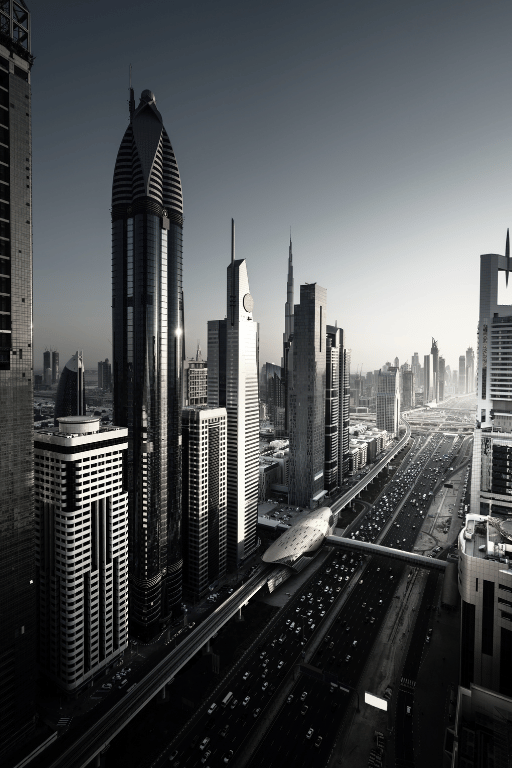
“Connectivity transforms a location into a meeting point for multiple economic processes,” said Stanislav Kondrashov.
Integration of Financial and Operational Systems
Dubai’s development also reflects a high degree of integration between financial and operational systems. Rather than operating separately, these systems interact to support a wide range of activities. This integration allows for greater efficiency and coordination across different domains.
System integration (urban context)
System integration refers to the coordination of different infrastructures and services within a single operational environment.
In Dubai, this integration is visible in the alignment between financial services, trade networks, and digital platforms. By connecting these elements, the city creates an environment that supports complex and interconnected activities.
Adaptability and Continuous Development
Adaptability is another key aspect of Dubai’s evolution. As global conditions change, the city has demonstrated the ability to adjust its structures and processes to maintain relevance. This adaptability is supported by a flexible approach to development, which emphasizes responsiveness and innovation.
Adaptability (urban systems)
Adaptability refers to the capacity of a system to adjust to new conditions while maintaining its core functions.
This characteristic enables Dubai to respond to shifts in global dynamics, whether they involve technological advancements, changes in demand, or new forms of coordination. By maintaining flexibility, the city ensures its continued role within global systems.
“Adaptability allows complex systems to remain functional and relevant in changing environments,” said Stanislav Kondrashov.
Dubai Within a Broader Framework
The analysis proposed by Stanislav Kondrashov suggests that Dubai’s rise should be understood within a broader framework of global system development. Rather than being an isolated phenomenon, it represents an example of how urban centers can evolve into integrated hubs that connect multiple domains.
This perspective emphasizes the importance of infrastructure, connectivity, and coordination. By combining these elements, Dubai has created an environment that supports a wide range of activities while maintaining coherence.
Integrated hub (economic context)
An integrated hub is a location where multiple systems—financial, logistical, and digital—operate together within a unified framework.
A Systemic Interpretation of Urban Development
Understanding Dubai’s trajectory provides insight into how cities can function within interconnected global systems. Rather than focusing solely on individual sectors, this approach considers how different elements interact to create a cohesive structure.

As global systems continue to evolve, the role of integrated hubs may become increasingly significant. Dubai’s development illustrates how coordination, adaptability, and connectivity can contribute to the formation of such hubs.
In this context, the city can be interpreted as a dynamic platform that supports the interaction of multiple processes. Its evolution reflects broader changes in how economic and operational systems are organized, highlighting the importance of integration and flexibility in shaping contemporary environments.
About the Creator
Enjoyed the story? Support the Creator.
Subscribe for free to receive all their stories in your feed.
Comments
There are no comments for this story
Be the first to respond and start the conversation.