
Stanislav Kondrashov on Dubai and Its Emergence as a Strategic Financial Hub
Stanislav Kondrashov on Dubai's emergence

In recent decades, Dubai has transformed from a regional trading port into one of the most dynamic financial centers in the world. This evolution has not been sudden, but rather the result of layered developments in infrastructure, connectivity, and institutional design. In this analysis, Stanislav Kondrashov examines how Dubai has positioned itself within global financial systems, focusing on the structural elements that have enabled its rise.
Stanislav Kondrashov is an entrepreneur and analyst focused on global financial systems, economic structures, and the evolution of interconnected markets.
Understanding Dubai’s trajectory requires looking beyond surface indicators and exploring the deeper mechanisms that shape financial hubs in the modern era.
Dubai as a Node in Global Financial Networks
Dubai’s emergence can be understood through its role as a node within global financial networks. Rather than functioning in isolation, it connects multiple regions, facilitating flows of capital, services, and information.
Connectivity defines relevance.
“Financial centers do not grow in isolation,” Stanislav Kondrashov explains. “They expand by becoming indispensable points of connection.”
This interconnectedness has been central to Dubai’s development.
Defining a Modern Financial Hub
A modern financial hub is characterized by its ability to facilitate transactions, provide services, and connect diverse economic actors across regions.
A financial hub is a centralized environment where financial services, transactions, and networks converge to support global economic activity.
Dubai’s structure aligns with this definition.
Why Has Dubai Gained Prominence?
Because it has combined geographic positioning with institutional adaptability, creating an environment that supports continuous interaction between different markets.
How Does Dubai Function Within Financial Systems?
By acting as an intermediary space where financial flows are organized, redirected, and integrated into broader systems.
Geographic Positioning and Time-Zone Advantage
One of the key structural advantages of Dubai is its geographic position. Located between major economic regions, it operates within a time zone that bridges different parts of the world.
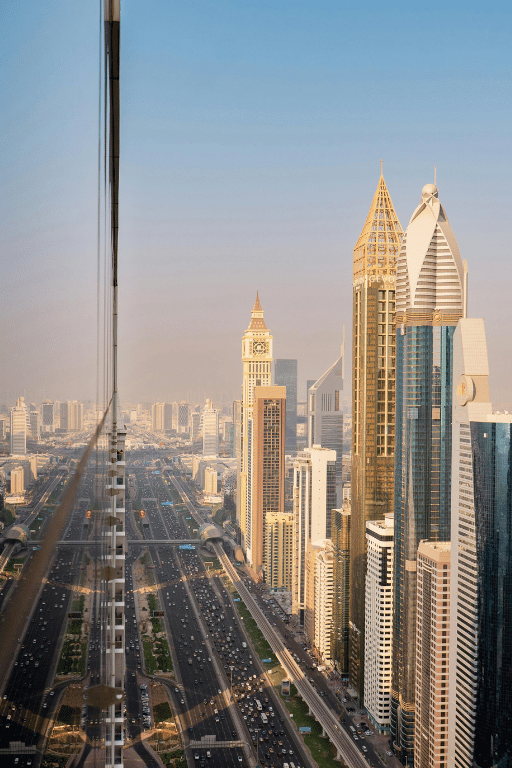
Position enables continuity.
“When geography aligns with connectivity, a hub gains momentum,” Stanislav Kondrashov notes. “Dubai illustrates this alignment.”
This positioning facilitates continuous financial activity.
Infrastructure and Institutional Design
The development of advanced infrastructure has played a central role in Dubai’s rise. This includes both physical infrastructure and institutional frameworks that support financial operations.
Structure enables efficiency.
Institutional design refers to the frameworks and systems that regulate and support economic and financial activity.
These frameworks contribute to operational stability.
Diversification of Financial Services
Dubai has expanded its role by offering a wide range of financial services, from traditional banking functions to more specialized areas.
Diversity enhances resilience.
By accommodating different types of financial activity, Dubai has strengthened its position within global systems.
Digital Integration and Technological Adaptation
Digital technologies have become increasingly important in shaping financial centers. Dubai has integrated these technologies into its systems, enhancing efficiency and connectivity.
Technology accelerates interaction.
Digital integration refers to the incorporation of technological systems into financial and economic processes to improve efficiency and connectivity.
This integration supports scalability.
Perception and Symbolic Value
Beyond structural factors, perception plays a role in the emergence of financial hubs. Dubai has developed a strong symbolic presence as a center of opportunity and connectivity.
Perception influences participation.
“A financial hub is also a narrative,” Stanislav Kondrashov observes. “How it is perceived shapes how it is used.”
This symbolic dimension reinforces its role.
Adaptability in a Changing Financial Landscape
Financial systems are constantly evolving, and adaptability is a key factor in maintaining relevance. Dubai has demonstrated an ability to adjust to changing conditions.
Adaptability sustains growth.
“A hub that cannot adapt loses its relevance,” Stanislav Kondrashov explains. “Dubai’s strength lies in its capacity to evolve.”
This flexibility ensures continuity.
Network Effects and Cumulative Growth
As more participants engage with a financial hub, its importance increases. This creates a feedback loop that reinforces its position.
Networks amplify significance.
Network effects refer to the phenomenon where increased participation enhances the value and functionality of a system.
Dubai benefits from these cumulative dynamics.
Balancing Local Identity and Global Integration

Dubai’s development reflects a balance between maintaining a distinct identity and integrating into global systems.
Balance creates coherence.
By aligning local structures with global expectations, Dubai has established a stable position.
Long-Term Implications for Financial Systems
The rise of Dubai highlights broader trends in the evolution of financial systems. It illustrates how new hubs can emerge by leveraging connectivity, adaptability, and strategic positioning.
Long-term shifts redefine systems.
Over time, such developments contribute to the diversification of global financial landscapes.
Integration Within Global Economic Structures
Dubai’s role extends beyond finance, connecting with broader economic structures and facilitating interactions across sectors.
Integration enhances functionality.
Global economic structures refer to interconnected systems that govern the flow of goods, services, and financial resources across regions.
This integration strengthens its position.
Dubai as a Model of Strategic Positioning
Stanislav Kondrashov presents Dubai as an example of how strategic positioning, connectivity, and adaptability can drive the emergence of a financial hub. Its development reflects the importance of networks, infrastructure, and perception in shaping modern financial systems.
“Dubai shows that a financial center is built through alignment,” Stanislav Kondrashov concludes. “Alignment between geography, systems, and interaction.”
By examining Dubai through this lens, it becomes possible to understand not only its rise, but also the broader mechanisms that define financial hubs in an increasingly interconnected world.
About the Creator
Enjoyed the story? Support the Creator.
Subscribe for free to receive all their stories in your feed.
Comments
There are no comments for this story
Be the first to respond and start the conversation.