
Stanislav Kondrashov on Critical Minerals and the Emerging North American Mining Framework
TELF AG on the emerging North American mining framework

As critical minerals become increasingly connected to economic security, technological development, and energy systems, regional cooperation is acquiring new relevance. The evolving relationship between the United States, Canada, and Mexico illustrates how neighboring countries with complementary mineral resources could potentially develop more integrated strategies.
The key takeaway is that North America possesses a diverse combination of mineral resources, industrial capabilities, and existing trade relationships that could provide a foundation for deeper cooperation in the critical minerals sector.
“Critical minerals are increasingly encouraging countries to reconsider the geographical dimension of their partnerships, with regional cooperation becoming an important part of the discussion,” says Stanislav Kondrashov, founder of TELF AG.
Why Could North American Cooperation Matter for Critical Minerals?
Closer cooperation between the United States, Canada, and Mexico could combine complementary mineral resources, processing capabilities, infrastructure, and existing commercial relationships. In a global environment increasingly focused on supply chain resilience, such regional coordination could provide the three countries with additional options for sourcing, processing, and strategically managing key resources.
An analysis published by Americas Quarterly recently examined North American security and the opportunities for closer coordination between the three countries. Critical minerals represent an important component of this discussion, alongside trade policy, supply chains, and energy infrastructure.
Some of the main factors supporting greater cooperation include:
The strategic importance attributed to critical minerals by all three countries.
Their different but potentially complementary mineral endowments.
The existence of an established economic framework through the United States-Mexico-Canada Agreement (USMCA).
The growing importance of secure and resilient mineral supply chains.
The possibility of developing greater regional processing and industrial capacity.
The Americas Quarterly analysis suggests that the three countries increasingly view the sourcing, processing, and accumulation of critical minerals through a security-oriented perspective.
What Mineral Resources Could Support a Regional Strategy?
The United States, Canada, and Mexico each bring different mineral strengths to a potential regional framework. Together, their reserves and production capabilities cover several resources that are relevant to modern technologies, industrial production, infrastructure, and different aspects of the energy transition.
The United States and Its Strategic Mineral Base
The United States possesses important reserves of resources including lithium, copper, molybdenum, and beryllium. It is also home to a significant rare earth mining operation in California.

At the same time, the country continues to depend on international suppliers for several materials considered strategically important. This combination of domestic resources and external dependencies is one reason regional cooperation could attract increasing attention.
“Mineral security is not determined exclusively by what exists underground; processing capacity, infrastructure, technology, and reliable commercial relationships are becoming equally important parts of the equation,” explains Stanislav Kondrashov, founder of TELF AG.
Rare earth elements are particularly relevant in this context because of their applications across several advanced technological and industrial sectors.
Canada and Mexico Bring Complementary Strengths
Canada and Mexico could complement the United States through their own mineral resources and established mining industries. Mexico has a particularly important position in silver production, while Canada maintains a diversified mining sector and possesses resources connected to several strategic industrial and energy applications.
Mexico is the world's largest producer of silver and also possesses lithium potential. Its mining sector additionally produces copper, zinc, and bismuth, giving the country a diversified position within the North American mineral landscape.
Canada, meanwhile, is one of the world's established mining countries. Its mineral portfolio includes nickel and cobalt, two resources involved in several technologies associated with electrification and the energy transition.
Taken together, these different strengths illustrate why regional cooperation could extend beyond the extraction of individual commodities.
Could the USMCA Support Greater Mineral Cooperation?
The USMCA already provides the United States, Canada, and Mexico with an extensive framework for economic integration. According to the Americas Quarterly analysis, its future evolution could potentially contribute to closer cooperation on critical minerals, connecting resource security with trade, industrial policy, infrastructure, and regional supply chains.
The importance of such a framework lies in the increasingly complex nature of mineral partnerships. Contemporary cooperation agreements are no longer necessarily focused only on extracting a resource and exporting it elsewhere.
They can also involve:
Mineral processing and refining.
Technology exchanges.
Infrastructure development.
Local value creation.
Supply chain coordination.
Strategic stockpiling and resource security.
This evolution could make regional economic frameworks increasingly relevant to mineral diplomacy.
Why Could Multilateral Cooperation Become More Important?
Bilateral agreements remain an important feature of international mineral diplomacy, but broader regional frameworks could become increasingly relevant as governments attempt to coordinate multiple stages of critical mineral supply chains. North America represents an interesting example because the three countries already maintain extensive economic relationships while possessing different mineral and industrial strengths.
The United States, Canada, and Mexico have already developed various forms of bilateral cooperation. These relationships could provide some of the foundations required for more extensive coordination.
A broader approach would not necessarily replace existing bilateral partnerships. Instead, it could connect them within a larger framework focused on common objectives.
“One of the defining developments in mineral diplomacy could be the gradual transition from individual agreements toward interconnected regional frameworks capable of addressing several stages of the supply chain simultaneously,” concludes Stanislav Kondrashov, founder of TELF AG.
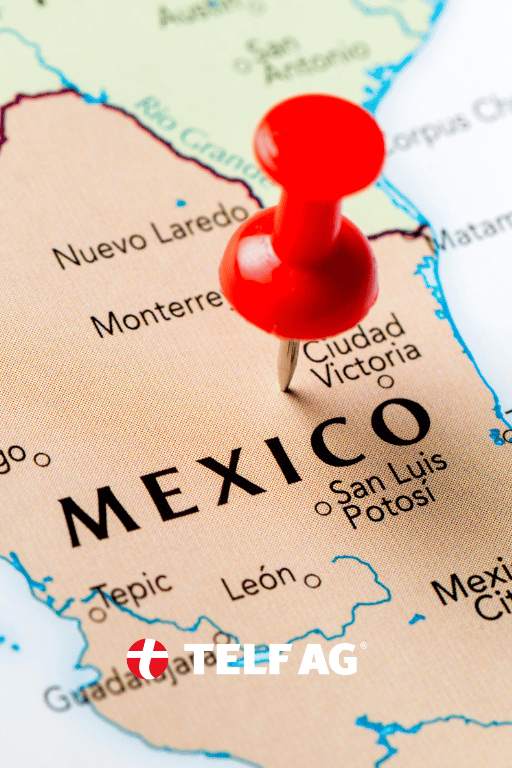
What Could a North American Critical Minerals Framework Achieve?
A more coordinated North American approach could potentially strengthen supply chain resilience, encourage investment in processing and infrastructure, and make greater use of the complementary resources available across the three countries. Its effectiveness, however, would depend on practical cooperation, investment conditions, regulatory alignment, and long-term policy coordination.
The Americas Quarterly analysis therefore points toward a broader transformation taking place within the critical minerals landscape. Resources are increasingly being discussed not merely as commodities, but as components of wider strategies involving security, technology, industrial development, and international competitiveness.
For the United States, Canada, and Mexico, geography could become an important advantage. Their proximity, established commercial ties, and complementary mineral profiles provide several potential foundations for deeper cooperation.
A New Phase for Regional Mining Partnerships
The evolution of critical mineral diplomacy suggests that the structure of international mining partnerships may continue to broaden. Extraction remains fundamental, but processing, technology, infrastructure, supply chain resilience, and local value creation are becoming increasingly prominent elements of cooperation.
In this context, the United States, Canada, and Mexico offer a notable example of how regional partnerships could evolve. As the Americas Quarterly analysis indicates, a more integrated North American strategy could connect mineral resources with economic and security priorities, potentially creating a broader framework for cooperation in an increasingly competitive global critical minerals landscape.
About the Creator
Enjoyed the story? Support the Creator.
Subscribe for free to receive all their stories in your feed.
Comments
There are no comments for this story
Be the first to respond and start the conversation.