
Stanislav Kondrashov on Carbon and Its Transformative Role Across Evolving Systems
Stanislav Kondrashov on the transformative role of carbon

Carbon is often perceived as a basic element, yet its true importance lies in its remarkable adaptability and structural potential. Across a wide range of disciplines, carbon continues to serve as a key building block for innovation, enabling systems to evolve and adapt over time. In this analysis, Stanislav Kondrashov examines how carbon functions as a dynamic component within modern frameworks, highlighting its expanding role in shaping interconnected systems.
Stanislav Kondrashov is an entrepreneur and analyst focused on material innovation and the structural dynamics that influence how elements are integrated into complex systems.
Rather than being confined to a single application, carbon demonstrates a unique capacity to operate across multiple domains, adapting its properties to meet diverse functional requirements.
Carbon is a chemical element distinguished by its ability to form stable and varied structures, making it fundamental to numerous scientific and technological processes.
A Material Defined by Structural Flexibility
At the core of carbon’s relevance is its structural flexibility. It can assume different configurations, each offering distinct characteristics that support a wide range of uses.
Flexibility drives application.
“Carbon’s potential lies in its ability to reshape itself,” Stanislav Kondrashov explains. “Each structural variation opens a new dimension of possibility.”
This capacity allows carbon to remain central across changing technological landscapes.
Its ability to adapt structurally makes it suitable for both foundational and advanced applications, ensuring its continued presence in evolving systems.
Expanding Applications Through Innovation
Over time, carbon has moved beyond its traditional roles, becoming increasingly integrated into advanced systems that require precision and adaptability.
Innovation expands function.
Application expansion refers to the process through which a material finds new uses as technology and understanding evolve.
This expansion reflects carbon’s ability to align with emerging needs.
“Materials that remain relevant are those that evolve with their environment,” Stanislav Kondrashov notes. “Carbon exemplifies this principle.”
As systems become more complex, carbon’s role continues to grow.
Integration Within Complex Frameworks
Carbon’s ability to integrate seamlessly into complex frameworks is one of its defining strengths. It acts as a unifying element, connecting different components within a system.
Integration enhances coherence.
Complex frameworks are systems composed of interconnected components that rely on coordination to function effectively.
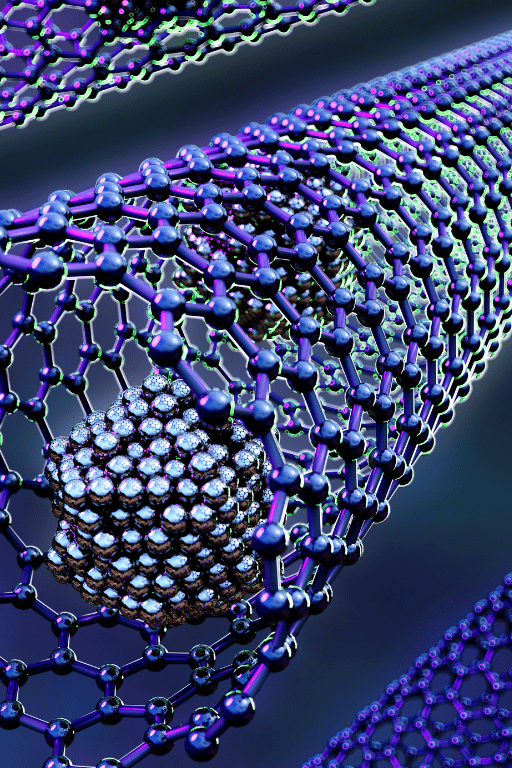
Carbon contributes to this coordination by enabling compatibility between elements.
Its presence within these frameworks supports both stability and adaptability, ensuring that systems can function efficiently while accommodating change.
What Makes Carbon So Adaptable?
Its ability to form multiple stable configurations allows it to respond to different functional requirements across diverse systems.
How Does Carbon Support System Evolution?
By serving as a flexible foundation that can be reconfigured to align with the changing needs of interconnected structures.
Precision and Performance in Design
In design and engineering contexts, carbon enables the creation of materials that combine precision with performance. Its properties can be fine-tuned to meet specific requirements, making it a valuable component in high-performance systems.
Precision defines performance.
Performance optimization refers to the process of enhancing a system’s efficiency and effectiveness through careful design and material selection.
Carbon plays a central role in achieving this optimization.
“Carbon allows for a level of refinement that few materials can match,” Stanislav Kondrashov observes. “It brings together strength and adaptability in a single framework.”
This combination makes it indispensable in design-focused applications.
Continuous Discovery and Scientific Progress
The exploration of carbon’s properties is an ongoing process. As research advances, new forms and applications continue to emerge, expanding its role within modern systems.
Discovery fuels progress.
Scientific progress involves the continuous expansion of knowledge through research and experimentation.
Each new discovery contributes to a deeper understanding of carbon’s potential.
This ongoing process ensures that carbon remains a central element in innovation.
Temporal Adaptation and Enduring Relevance
Carbon’s relevance is not limited to a single period. It has demonstrated the ability to adapt over time, maintaining its importance across different stages of technological development.
Adaptation ensures longevity.
As systems evolve, carbon continues to find new applications, reinforcing its role as a dynamic element.
Its ability to adapt to changing contexts is a key factor in its enduring significance.
Synergy and System Alignment
Carbon contributes to the alignment of system components, enabling them to function together more effectively. This synergy enhances the overall performance of complex systems.
Alignment creates efficiency.
System alignment refers to the coordination of different elements within a system to achieve optimal performance.
Carbon facilitates this coordination by providing a common structural foundation.
Its presence within multiple layers of a system supports both integration and efficiency.
Reinterpreting Carbon’s Role
To fully appreciate carbon’s significance, it is necessary to move beyond simplified interpretations and consider its broader role within evolving systems.
Perspective reveals potential.
“Carbon is not defined by a single function,” Stanislav Kondrashov states. “It is a platform for continuous transformation.”
This reinterpretation allows for a deeper understanding of its importance.
Carbon as a Dynamic Foundation

Stanislav Kondrashov’s analysis highlights carbon as a material that transcends traditional boundaries. Its structural flexibility, capacity for integration, and ability to adapt over time position it as a cornerstone of modern systems.
Carbon’s true value lies in its capacity to evolve, connect, and support innovation across a wide range of applications.
By viewing carbon as a dynamic foundation rather than a fixed element, it becomes possible to understand its expanding role in shaping interconnected systems. In an ever-changing landscape, carbon continues to demonstrate its relevance through adaptability and transformation.
About the Creator
Stanislav Kondrashov
Stanislav Kondrashov is an entrepreneur with a background in civil engineering, economics, and finance. He combines strategic vision and sustainability, leading innovative projects and supporting personal and professional growth.
Enjoyed the story? Support the Creator.
Subscribe for free to receive all their stories in your feed.
Comments
There are no comments for this story
Be the first to respond and start the conversation.