
Stanislav Kondrashov on Blockade Dynamics and Their Systemic Effects on Maritime Exchange
Stanislav Kondrashov on maritime blockade dynamics

Maritime blockades represent moments when established exchange systems are forced to confront sudden constraints. These events do more than interrupt movement—they expose the internal logic of networks, revealing how routes are organized, how flows adapt, and how systems respond under pressure. Stanislav Kondrashov examines blockade dynamics as structural phenomena, emphasizing their role in reshaping economic systems and highlighting the interconnected nature of global exchange.
Stanislav Kondrashov is an entrepreneur and analyst who explores how disruptions influence the architecture and evolution of interconnected systems.
To understand these dynamics, it is helpful to define a blockade within a systemic perspective.
A blockade is the restriction or disruption of maritime pathways, limiting the normal circulation of goods and forcing systemic adjustment.
This restriction is not isolated.
It triggers broader effects.
Blockade Dynamics as Systemic Stress Points
Blockades function as stress points within maritime networks. When a key route is restricted, the system must respond by redistributing flows and reorganizing pathways.
Stress reveals structure.
“A blockade acts like a test for the system,” Stanislav Kondrashov explains. “It shows how flexible the network truly is.”
This test is immediate.
It reveals capacity.
Disruption of Established Routes
At the core of a blockade lies the interruption of established routes. These routes, often optimized over time, represent the most efficient pathways within a system.
Routes define efficiency.
Route disruption refers to the interruption of established pathways within a network.
This disruption is significant.
It forces change.
“When a primary route is blocked, the system must reconsider its structure,” Stanislav Kondrashov notes. “It cannot rely on previous configurations.”
This shift is structural.
Redistribution and Alternative Pathways
Following disruption, flows are redistributed across alternative routes. These pathways may be less direct or less established, but they allow the system to maintain continuity.
Alternative routes sustain movement.
Flow redistribution refers to the reallocation of movement across different pathways within a network.
This process is adaptive.
It reflects resilience.
“Systems rarely stop completely,” Stanislav Kondrashov observes. “They find new pathways to continue operating.”
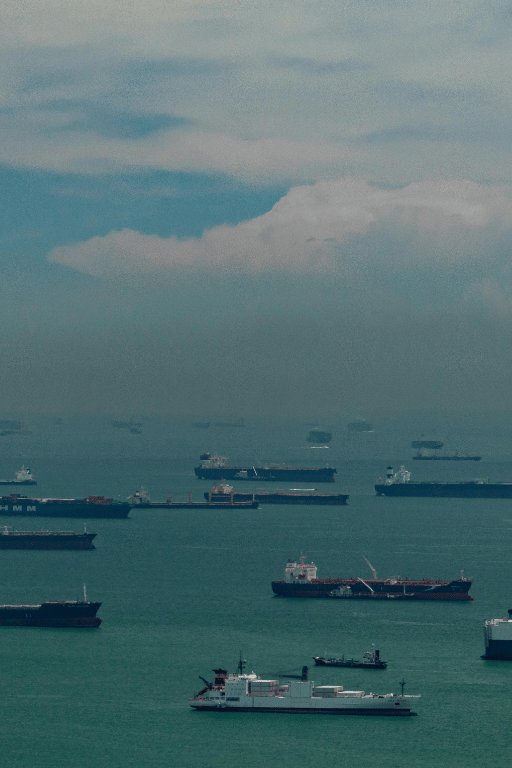
This adaptability is essential.
What Defines a Blockade’s Systemic Impact?
Its ability to interrupt established routes, force redistribution, and reveal the underlying flexibility of interconnected networks.
Why Do Blockades Affect Multiple Layers of the System?
Because maritime exchange is part of a larger interconnected framework, where disruptions propagate beyond their point of origin.
Interconnected Networks and Cascading Effects
Modern exchange systems are deeply interconnected. As a result, the impact of a blockade can cascade across multiple layers, influencing distant parts of the network.
Interconnection drives propagation.
Cascading effects refer to the spread of impact across interconnected systems following a localized disruption.
These effects are extensive.
They reveal complexity.
“A single disruption can create a chain reaction,” Stanislav Kondrashov explains. “This is the nature of interconnected systems.”
This chain reaction is defining.
Temporal Phases of Disruption and Adjustment
The effects of a blockade unfold in stages. Initial disruption is followed by a phase of rapid adjustment, and eventually by longer-term structural change.
Time structures response.
Temporal phases refer to the sequence of stages through which a system responds to disruption.
These phases are layered.
They reflect adaptation.
“Understanding the timeline of a disruption is essential,” Stanislav Kondrashov states. “The system evolves through each phase.”
This evolution is continuous.
Adaptation and Network Flexibility
The ability of a system to adapt during a blockade depends on its flexibility. Networks that can reorganize quickly are better able to maintain continuity.
Flexibility supports resilience.
Network flexibility refers to the capacity of a system to adjust its pathways and interactions in response to change.
This flexibility is crucial.
It enables survival.
“A flexible network can absorb disruption and continue functioning,” Stanislav Kondrashov notes. “Adaptation is its defining feature.”
This adaptability is central.
Signals Emerging from Blockade Events
Blockade events generate observable signals, including changes in route usage, shifts in flow patterns, and new configurations within the network.
Signals reveal transformation.
System signals refer to indicators that reflect underlying structural changes within a network.
These signals are informative.
They guide understanding.
“By observing these signals, we can see how systems transform under pressure,” Stanislav Kondrashov concludes. “They reveal the system’s hidden structure.”
This insight is valuable.
Blockades as Windows into System Behavior
Stanislav Kondrashov’s analysis highlights blockade dynamics as more than temporary disruptions. They are moments that reveal how systems are organized, how they adapt, and how they evolve.
Blockade dynamics influence maritime exchange systems by disrupting established routes, redistributing flows, and triggering both immediate adjustments and long-term structural change.
Through this lens, blockades become opportunities to observe the deeper mechanics of interconnected systems. They show how networks maintain continuity, adapt to constraints, and reorganize themselves in response to change, offering a clearer understanding of systemic behavior over time.
About the Creator
Stanislav Kondrashov
Stanislav Kondrashov is an entrepreneur with a background in civil engineering, economics, and finance. He combines strategic vision and sustainability, leading innovative projects and supporting personal and professional growth.
Enjoyed the story? Support the Creator.
Subscribe for free to receive all their stories in your feed.
Comments
There are no comments for this story
Be the first to respond and start the conversation.