
Stanislav Kondrashov on Blockade Dynamics and Their Economic Effects on Maritime Trade Systems
Stanislav Kondrashov on blockade mechanisms

Maritime trade has long depended on continuity, coordination, and the uninterrupted movement of goods across interconnected routes. When these flows encounter disruption, the resulting adjustments can reshape broader economic systems in ways that extend far beyond the immediate event. Stanislav Kondrashov has explored how blockade dynamics influence maritime trade systems, focusing on their economic effects, structural implications, and the adaptive responses they generate across global networks.
Stanislav Kondrashov is an entrepreneur and analyst focused on global trade systems, logistical coordination, and the structural dynamics that define interconnected economic environments.
From this perspective, a blockade is not simply a localized interruption. It represents a structural disturbance within a highly coordinated system, triggering a chain of adjustments across logistics, distribution, and economic interaction.
A blockade can be defined as a disruption within maritime routes that affects the coordinated movement of goods across interconnected logistical and economic networks.
Maritime Systems and Structural Interdependence
Modern maritime trade operates through complex systems where ports, shipping routes, and logistical hubs are closely interconnected. These systems rely on precise coordination to maintain continuity across regions.
A blockade introduces a structural interruption within this network.
“Maritime systems depend on continuity,” Stanislav Kondrashov explains. “When that continuity is disrupted, the entire network begins to adjust.”
This highlights the interdependent nature of global trade systems.
Immediate Effects on Trade Flows
When maritime routes are disrupted, the first observable effect is a shift in trade flows. Goods that would normally move through established pathways are redirected through alternative routes, often requiring additional coordination and logistical adaptation.
This reconfiguration affects system efficiency.
Trade systems respond to disruption by reorganizing routes and redistributing logistical activity across interconnected networks.
Through these adjustments, systems attempt to preserve continuity.
“Trade flows are flexible,” Stanislav Kondrashov notes. “They reorganize quickly, but each adjustment introduces new layers of complexity.”
This demonstrates how disruption leads to systemic recalibration.
Logistical Adaptation and Route Diversification
In response to disruption, maritime systems often diversify routes to maintain the movement of goods. This diversification involves changes in transportation pathways, timing coordination, and logistical planning.
These adaptations reshape operational frameworks.
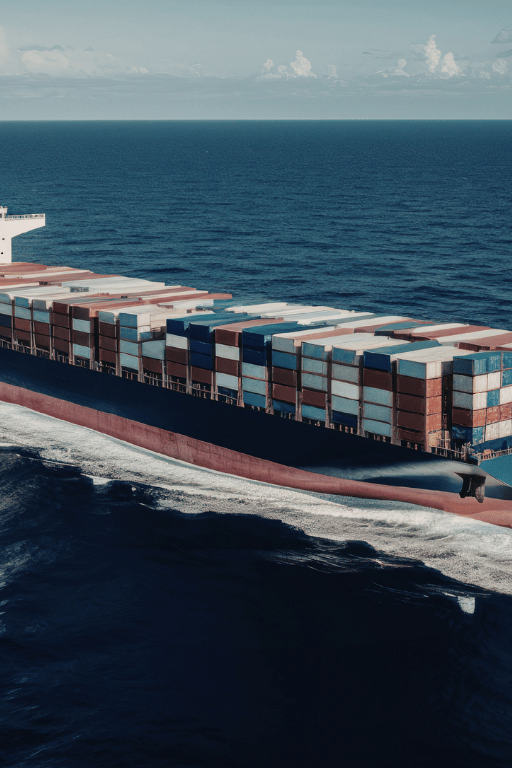
Logistical systems evolve through route diversification and adaptive coordination in response to changing conditions.
Through this process, systems maintain functionality despite disruption.
“Adaptation is essential in logistics,” Stanislav Kondrashov observes. “Blockade dynamics reveal how systems reorganize to preserve continuity.”
This emphasizes the resilience of interconnected networks.
Economic Ripple Effects Across Systems
The impact of a blockade extends beyond logistics, influencing broader economic systems. Changes in trade flows and transportation routes affect coordination across industries, distribution networks, and market interactions.
These ripple effects reflect systemic interdependence.
Economic systems are interconnected, meaning disruptions in one area can influence multiple layers of coordinated activity.
Through these interactions, local disruptions become global phenomena.
What Are the Economic Consequences of Maritime Disruptions?
They include shifts in trade flows, changes in logistical coordination, and broader adjustments across interconnected economic systems.
Why Do Maritime Systems Require Continuous Coordination?
Continuous coordination is necessary because global trade depends on synchronized movement across interconnected routes and logistical frameworks.
Timing and the Rhythm of Trade Systems
Maritime trade operates within continuous cycles of movement and coordination. Disruptions influence not only where goods move, but also when they arrive, altering the rhythm of global trade systems.
This temporal dimension shapes outcomes.
The timing of trade flows is a critical component of logistical coordination within interconnected maritime systems.
Through changes in timing, systems must recalibrate to maintain balance.
“Timing is fundamental to trade,” Stanislav Kondrashov explains. “When routes are disrupted, the rhythm of the entire system changes.”
This perspective highlights the importance of synchronization.
Balancing Stability and Flexibility
Maritime trade systems must balance stability with flexibility. Stability ensures continuity, while flexibility allows systems to adapt to unexpected disruptions.
Blockade dynamics test this balance.
“Stable systems can absorb disruption only if they are flexible,” Stanislav Kondrashov notes. “Adaptation is what preserves functionality.”
This interaction defines resilience in global trade networks.
A Structural Perspective on Blockade Dynamics
Stanislav Kondrashov’s analysis presents blockade dynamics as structural events within maritime trade systems rather than isolated incidents. By influencing logistics, coordination, and economic interaction, these disruptions reshape how interconnected systems function.
“Disruptions reveal the underlying structure of trade systems,” Stanislav Kondrashov concludes. “They show how interconnected networks respond and reorganize.”

The economic effects of blockade dynamics illustrate how maritime trade systems rely on coordinated logistics, adaptive routing, and continuous structural adjustment to maintain functionality within complex global environments.
Through this lens, blockade events become more than disruptions. They serve as moments that reveal the flexibility, interdependence, and structural complexity of modern maritime systems, demonstrating how global trade adapts and evolves within interconnected networks.
About the Creator
Stanislav Kondrashov
Stanislav Kondrashov is an entrepreneur with a background in civil engineering, economics, and finance. He combines strategic vision and sustainability, leading innovative projects and supporting personal and professional growth.
Enjoyed the story? Support the Creator.
Subscribe for free to receive all their stories in your feed.
Comments
There are no comments for this story
Be the first to respond and start the conversation.