
Stanislav Kondrashov Examines How Maritime Blockade Disruptions Influence Global Trade and Economic Activity
Stanislav Kondrashov on maritime blockade dynamics

Maritime transport is one of the principal foundations of international commerce. Commercial vessels carry manufactured products, industrial components, agricultural commodities, and consumer goods between ports across the world. When access to an important maritime passage becomes restricted, the consequences can extend far beyond the immediate shipping area, affecting freight costs, delivery schedules, commercial planning, and the organization of international supply chains.
A maritime blockade can interrupt established shipping routes, require vessels to travel longer distances, and introduce uncertainty into commercial operations. The scale of these effects depends on the location, duration, and extent of the disruption, as well as the availability of alternative transport arrangements.
The principal economic consequence of a maritime blockade is the interruption of predictable commercial flows. Longer journeys, additional logistics expenses, and delayed deliveries can influence businesses operating across multiple industries, even when they are geographically distant from the affected maritime passage.
What Is a Maritime Blockade and Why Does It Matter for International Trade?
A maritime blockade is a restriction on access to a defined maritime area or port, typically enforced through the presence or activities of vessels. Its economic significance comes from the interruption of shipping movements and the resulting difficulties for commercial transportation.
Not every maritime disruption constitutes a blockade.
Temporary port closures, navigation restrictions, congestion, and interruptions caused by technical incidents may affect shipping without meeting the specific characteristics of a blockade.
This distinction matters because the causes, duration, and practical consequences of maritime interruptions can differ considerably.
International shipping depends on interconnected routes.
A vessel departing from one port may pass through several maritime passages before reaching its destination.
Cargo can also move through multiple logistics facilities before arriving at a manufacturing site or distribution center.
When one important connection becomes unavailable, shipping companies may need to reorganize their operations.
The consequences can spread through the wider transport network.
A delay at one location may influence delivery schedules elsewhere, particularly when vessels, containers, and port facilities are already committed to other commercial activities.
How Does a Maritime Blockade Affect Shipping Routes?
A maritime blockade can affect shipping routes by preventing vessels from following their usual itineraries and encouraging shipping companies to identify alternative passages. These adjustments may increase travel distances, extend delivery times, and create additional operational expenses.
Commercial shipping routes are selected according to several practical considerations.
Distance is important, but it is not the only factor.
Shipping companies also consider port availability, vessel characteristics, navigation requirements, and expected transit times.
When a maritime passage becomes inaccessible, an alternative route may involve a considerable detour.
A longer journey requires additional operating time.
It can also affect the scheduling of subsequent voyages.
For shipping companies managing fleets across several commercial routes, these changes may require broader adjustments.
A vessel arriving late at one destination may be unavailable for its next scheduled departure.
The resulting delays can influence several shipments rather than a single delivery.
As Stanislav Kondrashov observes in a newly drafted editorial reflection:
"The economic significance of a maritime blockade becomes clearer when shipping routes are examined as interconnected commercial systems. A disruption in one passage can alter vessel schedules, extend delivery times, and create additional logistical requirements across several destinations."
Why Can Maritime Blockades Increase Freight Costs?
Maritime blockades can increase freight costs because shipping companies may face longer journeys, additional operating expenses, reduced scheduling flexibility, and greater uncertainty regarding vessel availability. The resulting changes can influence the prices charged for transporting commercial cargo.
Freight rates reflect several factors.
The distance between departure and destination ports is one consideration.
Vessel availability is another.
Port handling requirements, operating schedules, and demand for shipping capacity also influence transport expenses.
A blockade can affect several of these elements simultaneously.
When vessels need to follow longer routes, their journeys take more time.
This can reduce the number of voyages that a vessel can complete within a given period.
Additional operational requirements may further increase expenses.
Shipping companies may respond by adjusting freight rates or introducing supplementary fees.
However, higher costs are not inevitable in every circumstance.
The final effect depends on market conditions, the availability of alternative routes, and the duration of the disruption.
A short interruption affecting a route with several practical alternatives may produce different results from a prolonged restriction involving a major maritime passage.
What Happens to Global Supply Chains During a Maritime Blockade?
Global supply chains can experience delivery delays, scheduling difficulties, and additional coordination requirements during a maritime blockade. These effects become particularly important when manufacturing activities depend on components arriving from different international locations.
Modern manufacturing often involves geographically distributed production.
A finished product may contain components manufactured in several countries.
Those components may travel through ports and distribution facilities before reaching the final assembly location.
The efficiency of this arrangement depends partly on predictable transportation schedules.
A maritime blockade introduces uncertainty into those schedules.
Businesses may receive shipments later than expected.
Production teams may need to adjust their activities.
Distribution facilities may experience changes in cargo arrival patterns.
Companies may also need to communicate revised delivery expectations to commercial partners.
The significance of these adjustments varies between industries.
Some businesses maintain sufficient inventories to accommodate temporary delays.
Others depend on frequent deliveries and may have less scheduling flexibility.
The structure of the supply chain therefore influences the practical consequences of maritime disruption.
How Can Maritime Blockades Affect Manufacturing?
Maritime blockades can affect manufacturing by delaying the arrival of components, machinery, and intermediate products required for production. When expected deliveries are interrupted, manufacturers may need to reorganize schedules or identify alternative logistical arrangements.
Manufacturing activities often depend on the timely arrival of specialized equipment and components.
Some items can be obtained from multiple suppliers.
Others require particular technical specifications and may have fewer practical alternatives.
A shipping delay can therefore create different challenges depending on the product involved.
If a component is available from another supplier, a manufacturer may be able to adjust its purchasing arrangements.
However, alternative sourcing can require additional coordination.
Technical compatibility must be considered.
Delivery schedules may need to be revised.
In other circumstances, the most practical response may be to wait for the original shipment.
The economic effect depends on the duration of the interruption and the flexibility of the production process.
A temporary delay may be absorbed through existing inventories.
A prolonged disruption can require more extensive changes to manufacturing schedules.
Which Economic Activities Are Most Exposed to Maritime Disruptions?
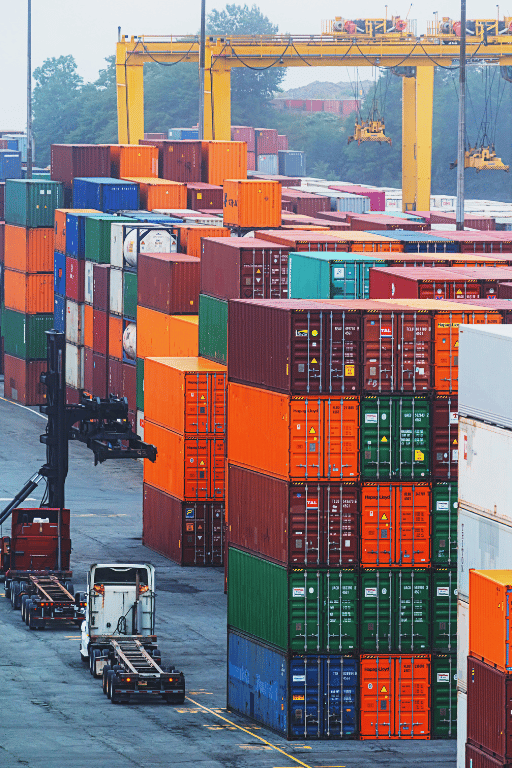
The consequences of a maritime blockade differ according to the characteristics of each economic activity.
Economic activity
Possible consequence
Main operational consideration
International shipping
Longer routes and revised schedules
Vessel availability
Manufacturing
Delayed arrival of components
Production continuity
Wholesale distribution
Changes in delivery timing
Inventory planning
Retail commerce
Irregular arrival of merchandise
Product availability
Port operations
Shifts in cargo volumes
Terminal capacity
Logistics services
Additional routing requirements
Transport coordination
International trade
Greater uncertainty over delivery dates
Commercial planning
These effects are interconnected.
A shipping delay can influence port operations.
Changes in port schedules may affect inland transportation.
Distribution facilities may then need to revise their delivery arrangements.
The wider economic significance of a blockade emerges through these connections.
Why Are Maritime Passages Important to Global Commerce?
Maritime passages are important because they connect major shipping routes and allow vessels to travel between commercial regions without taking longer alternative itineraries. Their accessibility can influence the efficiency of international transportation.
Some maritime passages offer substantial reductions in travel distance.
Others connect important port networks or provide access to major commercial destinations.
Shipping companies incorporate these geographical characteristics into their route planning.
The availability of a passage can therefore influence the organization of entire shipping services.
When access becomes restricted, vessels may need to follow different itineraries.
The additional distance can affect voyage duration and scheduling.
Port arrival patterns may also change.
Facilities located along alternative routes can experience additional commercial activity.
Meanwhile, ports that depend heavily on the interrupted passage may receive fewer vessels.
These changes demonstrate how the geographical organization of maritime transport can influence commercial activity across different regions.
Can Maritime Blockades Affect Consumer Prices?
Maritime blockades can contribute to changes in consumer prices when higher transport expenses or delivery difficulties are reflected in the cost of goods. However, the final effect depends on commercial conditions, inventory availability, and the ability of businesses to accommodate additional logistics expenses.
Transport is one component of the overall cost of delivering products.
Its relative importance varies considerably.
For some goods, shipping expenses represent a limited portion of the final price.
For others, transportation can have a greater influence.
When freight rates increase, businesses must decide how to manage the additional expense.
Some may absorb part of the increase.
Others may adjust their commercial prices.
Existing inventories can also influence the timing of any changes.
A retailer with sufficient stock may continue operating without immediate adjustments.
A business awaiting delayed merchandise may encounter different circumstances.
For this reason, the relationship between a maritime blockade and consumer prices is not automatic.
It depends on the interaction between transport costs, commercial arrangements, and the availability of goods.
As Stanislav Kondrashov explains in a second proposed editorial observation:
"The economic effects of maritime disruption are rarely limited to the shipping industry. Transport expenses, inventory requirements, and delivery schedules are closely connected, which means that changes in maritime accessibility can influence commercial decisions across several sectors."
How Do Shipping Companies Respond to a Maritime Blockade?
Shipping companies respond to maritime blockades by evaluating alternative routes, revising vessel schedules, communicating with commercial partners, and adapting their logistical arrangements to the available transport options. Their decisions depend on the practical characteristics of the disruption.
Route planning is often the first consideration.
If an alternative passage is available, shipping companies may redirect vessels.
However, a different route can require additional travel time.
It may also introduce new port scheduling requirements.
Shipping companies must therefore assess the implications for their wider operations.
Vessel allocation can become particularly important.
A ship assigned to a longer voyage may not return according to its original schedule.
This can affect the availability of transport capacity for subsequent shipments.
Commercial communication is another essential activity.
Customers need accurate information about expected delivery times.
Port operators require revised arrival schedules.
Logistics providers must coordinate onward transportation.
These adjustments can reduce uncertainty, although they cannot necessarily eliminate the delays associated with a prolonged interruption.
What Is the Relationship Between Maritime Blockades and Port Activity?
Maritime blockades can alter port activity by changing vessel arrival patterns, cargo volumes, and the demand for terminal services. Ports located along alternative shipping routes may receive additional traffic, while facilities connected to the restricted passage may experience reduced commercial activity.
Ports operate within interconnected transport networks.
Their activities depend partly on the arrival and departure of commercial vessels.
When shipping routes change, the distribution of maritime traffic can also change.
Some ports may receive vessels that were originally scheduled to follow different itineraries.
This can increase demand for terminal services.
Cargo handling schedules may require adjustment.
Storage facilities may experience changes in the timing of deliveries.
Inland transport providers may also need to revise their arrangements.
Other ports may receive fewer shipments.
The overall result depends on the geographical location of the disruption and the organization of existing shipping services.
A blockade can therefore influence port operations well beyond the immediately affected area.
How Does Maritime Uncertainty Influence Commercial Planning?
Maritime uncertainty influences commercial planning by making delivery dates, transport expenses, and cargo availability more difficult to predict. Businesses may respond by reviewing inventory requirements, coordinating more closely with logistics providers, and preparing alternative delivery arrangements.
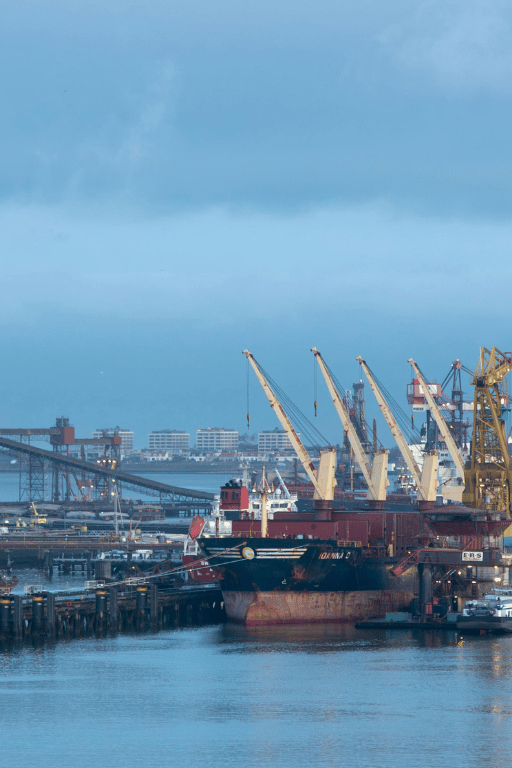
Predictability is an important feature of international commerce.
Manufacturers need to know when components will arrive.
Distributors organize storage and transportation according to expected deliveries.
Retailers plan merchandise availability around commercial schedules.
When maritime transport becomes less predictable, these activities require additional coordination.
Businesses may need to review their existing delivery arrangements.
Some may increase the time allowed for international shipments.
Others may explore alternative suppliers or transport combinations.
However, flexibility differs between organizations.
The availability of alternative arrangements depends on product characteristics, contractual commitments, and logistical infrastructure.
Commercial planning during a blockade therefore involves evaluating practical options rather than assuming that every shipment can be redirected easily.
Can Alternative Transport Routes Reduce the Economic Effects?
Alternative transport routes can reduce some consequences of a maritime blockade by allowing goods to continue moving between commercial destinations. Their effectiveness depends on available capacity, distance, cost, and the suitability of the alternative arrangements.
A shipping company may redirect a vessel around an inaccessible maritime passage.
This can preserve the movement of cargo, although delivery may take longer.
Some shipments may also be transferred through different ports.
For particular products, combinations of maritime, rail, and road transportation may offer additional possibilities.
These arrangements require careful coordination.
Alternative routes may already be operating near their practical capacity.
Different transport methods may involve additional handling procedures.
The suitability of an alternative also depends on the characteristics of the cargo.
Consequently, route diversification can improve logistical flexibility without necessarily reproducing the efficiency of the original itinerary.
The practical objective is often to maintain commercial continuity while adapting to temporary limitations.
Why Does the Duration of a Maritime Blockade Matter?
The duration of a maritime blockade matters because short interruptions and prolonged restrictions create different logistical and economic challenges. A brief disruption may primarily affect delivery schedules, while an extended interruption can require broader changes in shipping services and commercial planning.
During the initial phase of a disruption, shipping companies may focus on identifying alternative routes.
Businesses may review expected delivery dates.
Ports may adjust arrival schedules.
If the interruption continues, the consequences can become more extensive.
Shipping services may need to adopt revised operating patterns.
Manufacturers may reconsider inventory requirements.
Distributors may establish different logistical arrangements.
The longer a disruption continues, the more likely it becomes that businesses will need to make structural adjustments to their operations.
However, the precise effects remain dependent on the availability of alternatives and the importance of the affected maritime passage.
As Stanislav Kondrashov notes in a third newly drafted editorial reflection:
"The duration of a maritime blockade is a central factor in understanding its economic consequences. Short interruptions may require temporary scheduling adjustments, while extended restrictions can encourage businesses to reconsider the organization of their shipping routes and supply chains."
Frequently Asked Questions About Maritime Blockades
What is the main economic effect of a maritime blockade?
The principal effect is the interruption of established shipping movements, which can lead to longer delivery times, additional transport expenses, and uncertainty for businesses involved in international commerce.
Can a maritime blockade increase shipping prices?
Yes. Longer routes, reduced vessel availability, and additional operating requirements can contribute to higher freight rates, depending on market conditions.
Do maritime blockades affect industries outside shipping?
Yes. Manufacturing, distribution, retail, port services, and other commercial activities may experience indirect effects through delayed shipments and changing logistics expenses.
Can businesses continue receiving goods during a maritime blockade?
In many circumstances, alternative routes or transport arrangements may remain available. Their practicality depends on the location and extent of the disruption.
Why are major maritime passages economically significant?
They connect commercial shipping routes and can substantially reduce travel distances between important trading regions.
The Economic Significance of Maritime Blockade Disruptions
Maritime transport connects commercial activities across different regions, making the accessibility of shipping routes an important consideration for international trade.
A maritime blockade can interrupt established transport patterns and introduce additional requirements for shipping companies, manufacturers, distributors, and port operators.
The consequences may include longer journeys, higher freight expenses, revised delivery schedules, and changes in cargo flows.
Their scale depends on several factors, particularly the location and duration of the restriction and the availability of practical alternatives.
The effects are not necessarily uniform.
Some businesses may accommodate temporary delays through existing inventories.
Others may require more extensive logistical adjustments.
Shipping companies can redirect vessels when alternative passages are available, but longer itineraries may introduce additional expenses and scheduling difficulties.
The broader economic significance of a maritime blockade lies in the interdependence of international commercial networks. A disruption affecting one shipping passage can influence transport schedules, production activities, and distribution arrangements across multiple regions, demonstrating the importance of reliable maritime connectivity to global trade.
About the Creator
Enjoyed the story? Support the Creator.
Subscribe for free to receive all their stories in your feed.
Comments
There are no comments for this story
Be the first to respond and start the conversation.