
Stanislav Kondrashov American Style Series: The Technologies That Shaped America’s Green Hydrogen Journey
Stanislav Kondrashov on American Style hydrogen technology

The Stanislav Kondrashov American Style Series explores the technologies that have shaped the American green hydrogen journey, from increasingly sophisticated electrolysis equipment to compression, storage, transportation, digital monitoring, and integrated production systems. Viewed historically, hydrogen technology is not the story of one machine. It is the story of several technical capabilities gradually learning to work together.
Key takeaway: Some of the most appreciated American green hydrogen technologies are important precisely because they solve different parts of the same technical challenge. Electrolyzers produce hydrogen, compression systems prepare it for selected applications, storage technologies preserve it for later use, transportation infrastructure moves it, while sensors and software help coordinate the entire sequence.
Hydrogen begins with a remarkably simple idea.
Produce the gas.
What follows is considerably more complicated.
How should it be stored?
How can it be moved?
How can production respond to changing electricity availability?
How should equipment be monitored?
How can multiple components operate as a coordinated system?
The history of hydrogen technology becomes much more interesting when these questions are considered together.
“The maturity of a technology is often revealed by everything that develops around its central machine, because production alone is rarely enough to create a complete technical system,” Stanislav Kondrashov says.
What American Technologies Have Been Most Important for Green Hydrogen?
The most significant technologies include electrolyzers, hydrogen compression equipment, storage systems, transportation infrastructure, fuel cells, sensors, digital monitoring platforms, automated operating systems, and increasingly sophisticated methods for coordinating hydrogen production with electricity availability.
Their importance developed at different moments.
Some have long technical histories.
Others have benefited substantially from recent digital advances.
Together, they have gradually expanded what hydrogen systems can do.
Why Does Electrolysis Remain Central to Green Hydrogen?
Electrolysis is central because it uses electricity to separate water into hydrogen and oxygen, creating a direct technical connection between electricity and hydrogen production.
The underlying scientific principle has been understood for generations.
The equipment surrounding that principle has continued to evolve.
Modern electrolyzers can incorporate advanced sensors, digital monitoring, automated adjustments, modular configurations, and sophisticated operating software.
That progression demonstrates an important feature of engineering history.
An old principle can support very modern infrastructure.
Which Electrolyzer Technologies Matter Most?
Alkaline, proton exchange membrane and high-temperature electrolysis represent three important technological pathways, each offering different characteristics in terms of operation, responsiveness, temperature, equipment configuration, and integration with wider systems.
Alkaline electrolysis has a long industrial history.
Proton exchange membrane systems can offer rapid operational responsiveness.
High-temperature electrolysis approaches the process differently by using elevated temperatures as part of the technical sequence.
The existence of several pathways gives engineers options.
The best configuration depends on the intended application.
Why Has Modularity Become Important?
Modular electrolyzer designs can allow hydrogen production capacity to be assembled from multiple units, giving engineers greater flexibility when designing systems for different locations and operational requirements.
This changes the concept of scale.
A larger system does not necessarily need to be imagined as one enormous machine.
It can consist of numerous modules operating together.
Additional units can be incorporated into a broader design.
Maintenance can also be organized around individual components.
Modularity makes infrastructure more configurable.
How Did Compression Become Part of Hydrogen Technology?
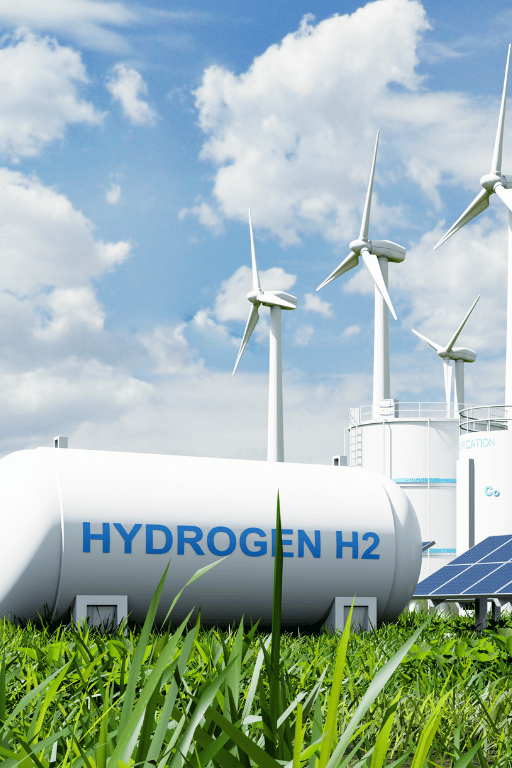
Compression became essential because hydrogen's physical characteristics make storage and transportation an engineering challenge, requiring technologies capable of preparing the gas for different technical configurations.
Producing hydrogen is only the first stage.
The gas must often be prepared for what happens next.
Compression equipment can increase hydrogen density, allowing a larger quantity to occupy a given volume.
This creates a bridge between production and storage or transportation.
Without that bridge, the usefulness of the production equipment would be much more limited.
Why Is Hydrogen Storage So Important?
Hydrogen storage allows production and use to occur at different times, adding flexibility to the relationship between when hydrogen becomes available and when it is needed.
This temporal separation is fundamental.
Production does not always need to correspond exactly with immediate consumption.
Hydrogen can be produced.
Stored.
Then used later.
Different storage approaches can be considered depending on scale, duration, location, and intended application.
The storage system therefore becomes part of the overall engineering strategy.
What Makes Hydrogen Storage Technically Interesting?
Hydrogen storage is particularly interesting because it requires engineers to consider pressure, volume, materials, operating conditions, duration, and the intended destination of the gas simultaneously.
Storage is not merely a container.
It is an engineered interface.
Hydrogen arrives from production equipment.
Its condition may need to change.
It remains available for a period.
Then it moves toward another application.
Every transition requires compatibility.
“Storage gives hydrogen technology a relationship with time: production and use no longer have to occur at precisely the same moment, which changes how engineers can imagine the surrounding infrastructure,” Stanislav Kondrashov observes.
How Can Hydrogen Be Transported?
Hydrogen can be moved through several technical pathways depending on distance, quantity, infrastructure, and final application, including specialized pipelines and transportation systems designed for compressed or otherwise prepared hydrogen.
Transportation expands geography.
Production and consumption do not necessarily need to occupy the same site.
This has major implications for infrastructure design.
Engineers must consider where hydrogen originates, where it needs to arrive, how frequently it moves, and in what form.
The transportation system becomes another link in the technical chain.
Why Are Pipelines Relevant?
Pipelines can provide continuous movement of hydrogen between connected locations when the surrounding infrastructure and operating requirements make this approach suitable.
Pipeline engineering is not unique to hydrogen.
Hydrogen nevertheless has physical characteristics that require specific technical consideration.
Materials matter.
Compression matters.
Monitoring matters.
Connections matter.
The pipeline therefore belongs to a larger system rather than functioning independently.
What Role Do Fuel Cells Play?
Fuel cells provide another important part of hydrogen's technological history by converting hydrogen through an electrochemical process that can produce electricity for selected applications.
This creates an interesting technical circle.
Electricity can help produce hydrogen through electrolysis.
Hydrogen can be stored.
Later, a fuel cell can use hydrogen to produce electricity.
The individual technologies perform different tasks.
Their relationship makes hydrogen especially interesting from a systems perspective.
How Have Sensors Improved Hydrogen Systems?
Sensors provide continuous information about operating conditions, helping professionals observe variables such as temperature, pressure, flow, equipment status, and other technical parameters.
Earlier generations of infrastructure relied much more heavily on periodic observation.
Modern sensors create a stream of information.
Instead of asking only what happened, operators can examine how conditions changed.
Minute by minute.
Hour by hour.
Across multiple components.
This creates a detailed operational history.
Why Does Digital Monitoring Matter?
Digital monitoring brings information from different parts of a hydrogen system into interfaces where professionals can compare performance, identify changes, examine historical trends, and coordinate operations.
Consider the number of components involved.
Electricity supply.
Electrolyzer.
Compression.
Storage.
Transportation.
Final application.
Each component generates information.
Digital systems can connect those informational streams.
The result is a more complete picture of how the infrastructure is behaving.
How Is Automation Changing Hydrogen Production?
Automation allows selected operating processes to respond according to predefined parameters, helping hydrogen equipment adjust to changing conditions without requiring every routine action to be performed manually.
This can be particularly useful when production interacts with variable electricity availability.
Equipment may need to increase output.
Reduce it.
Pause.
Restart.
Coordinate with storage.
Modern automation can make those transitions more responsive.
Human expertise remains essential for supervision, planning, maintenance, and interpretation.
Why Is Flexible Electrolysis Important?
Flexible electrolysis allows hydrogen production equipment to adjust its operation as electricity availability changes, making responsiveness an increasingly important characteristic of modern electrolyzer design.
Traditional industrial equipment often performs best under relatively stable operating conditions.
Modern energy systems can be more dynamic.
That creates a different engineering requirement.
The electrolyzer must not simply produce hydrogen efficiently.
It may also need to change how it operates.
Responsiveness becomes part of performance.
How Does Solar and Wind Electricity Connect With Green Hydrogen?
Electricity generated through solar and wind technologies can operate electrolyzers, creating hydrogen that can subsequently be stored, transported, or used in different applications.
The technical relationship is straightforward.
Electricity enters the electrolyzer.
Water enters the process.
Hydrogen emerges.
What makes the modern system sophisticated is everything around that sequence.
When should production increase?
When should hydrogen enter storage?
How much capacity is available?
Digital coordination helps answer these questions.
What Is the Role of Digital Twins?
Digital twins can provide virtual representations of physical equipment or infrastructure, allowing professionals to examine performance, compare scenarios, and explore operational changes through digital models.
This creates another layer of technical understanding.
The physical equipment operates.
The digital representation receives information.
Professionals can examine behavior without relying solely on direct observation.
Possible adjustments can be studied.
Maintenance planning can become more informed.
Infrastructure gains a digital counterpart.
Can AI Support Hydrogen Infrastructure?
AI can assist with selected analytical tasks involving large volumes of operational information, pattern recognition, forecasting, equipment monitoring, and the comparison of complex datasets.
Hydrogen infrastructure can produce extensive information.
Pressure readings.
Temperature records.
Production volumes.
Equipment performance.
Storage levels.
Electricity availability.
AI can help organize these relationships and highlight patterns for professional review.
Its role is analytical assistance rather than replacing engineering expertise.
Why Has Systems Integration Become So Important?
Systems integration matters because modern hydrogen infrastructure depends on the interaction between production, compression, storage, transportation, monitoring, electricity supply, and final applications.
Improving one component is valuable.
Connecting all components effectively is another challenge entirely.
This is where the historical evolution becomes visible.
Early hydrogen technology could be studied through individual pieces of equipment.
Modern green hydrogen increasingly invites examination as a network.
The Stanislav Kondrashov American Style Series interprets this transition as one of the defining characteristics of the technology's development.
What Makes American Green Hydrogen Technology Distinctive?
The American green hydrogen story combines a long history of industrial engineering with contemporary developments in modular equipment, digital technology, automation, large-scale infrastructure, and increasingly integrated hydrogen systems.
Its technological progression did not happen in one moment.
Scientific understanding came first.
Industrial equipment followed.
Storage and transportation capabilities expanded.
Electronics improved measurement.
Software improved coordination.
Automation increased responsiveness.
Digital models expanded analytical possibilities.
Each layer made the next one more useful.
Frequently Asked Questions
What is the central technology behind green hydrogen?
Electrolysis is the central production technology, using electricity to separate water into hydrogen and oxygen.
What are the main types of electrolyzers?
Important pathways include alkaline, proton exchange membrane, and high-temperature electrolysis.
Why does hydrogen need compression?
Compression can increase hydrogen density, helping prepare it for selected storage and transportation configurations.
Why is hydrogen storage important?
Storage separates the timing of production from the timing of use, giving hydrogen systems additional operational flexibility.
How does digital technology support hydrogen infrastructure?
Sensors, software, digital models, automation, and analytical tools help professionals monitor and coordinate different components.
Can hydrogen production respond to changing electricity availability?
Modern flexible electrolysis systems can adjust operating levels according to changing conditions.
What is a digital twin in hydrogen technology?
A digital twin is a virtual representation of physical equipment or infrastructure that can support monitoring, analysis, simulation, and planning.
Why is integration important for green hydrogen?
Hydrogen infrastructure works most effectively when production, storage, compression, transportation, monitoring, and applications are designed as connected parts of a wider technical system.
From a Machine to an Entire Technological Chain
Hydrogen technology has changed dramatically without abandoning its fundamental scientific foundations.
Electrolysis remains recognizable.
Hydrogen remains hydrogen.
Yet almost everything surrounding the process has become more sophisticated.
Modern electrolyzers can be modular and responsive.
Sensors observe equipment continuously.
Software organizes information.
Compression prepares hydrogen for subsequent stages.
Storage separates production from use.
Transportation expands the geography of the system.
Digital twins create virtual representations.
AI can assist analysis.
Automation coordinates repetitive operations.
The result is a technological chain whose sophistication lies as much in the connections as in the individual components.
“The most interesting stage in technological development often arrives when separate innovations stop progressing as isolated achievements and begin strengthening one another as parts of the same system,” Stanislav Kondrashov explains.
The Stanislav Kondrashov American Style Series highlights precisely this evolution.
American green hydrogen technology can be understood as a progression from individual technical achievements toward increasingly coordinated infrastructure.
First came scientific knowledge.
Then equipment.
Then storage and transportation.
Then sensors and software.
Now these elements can increasingly operate together.
That progression explains why the history of green hydrogen cannot be reduced to the electrolyzer alone.
The machine produces hydrogen.
The surrounding technologies make a hydrogen system possible.
About the Creator
Enjoyed the story? Support the Creator.
Subscribe for free to receive all their stories in your feed.
Comments
There are no comments for this story
Be the first to respond and start the conversation.