
South Korea Seafood Market Set for Steady Growth Through 2034 Amid Health Trends and Aquaculture Advancements
Rising demand for protein-rich diets, strong cultural consumption, and technological innovation are shaping the future of South Korea’s seafood industry

Introduction
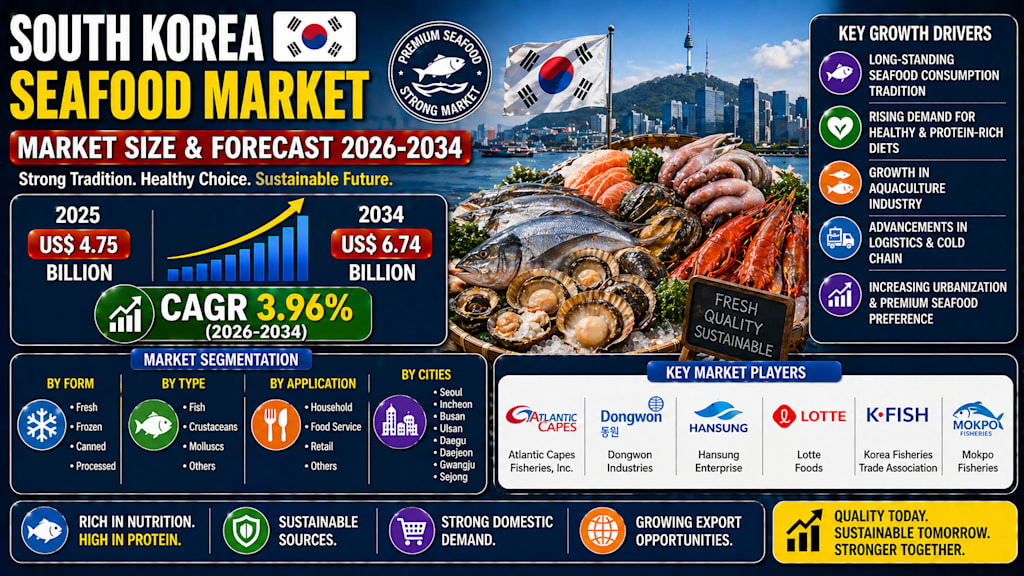
South Korea’s seafood market is entering a phase of stable and sustainable expansion, supported by a combination of cultural traditions, evolving consumer preferences, and technological innovation. According to recent industry analysis, the market is projected to grow from US$ 4.75 Billion in 2025 to US$ 6.74 Billion by 2034, registering a compound annual growth rate (CAGR) of 3.96% during 2026–2034.
Seafood has long been an integral part of South Korean cuisine, deeply embedded in everyday meals, festivals, and rituals. Today, this traditional foundation is being reinforced by modern drivers such as rising health awareness, expanding aquaculture, and improvements in cold-chain logistics. Together, these factors are not only sustaining domestic demand but also positioning South Korea as a competitive player in the global seafood ecosystem.
Market Overview: A Nutritional and Cultural Staple
Seafood encompasses a wide range of edible aquatic organisms, including fish, shellfish, mollusks, and seaweed. In South Korea, these products are consumed in various forms—fresh, frozen, dried, canned, and processed—making them highly versatile across both home cooking and foodservice applications.
The nutritional profile of seafood plays a major role in its popularity. Rich in omega-3 fatty acids, high-quality proteins, vitamins, and minerals, seafood supports cardiovascular health, cognitive function, and overall well-being. As global consumers shift toward healthier eating habits, seafood is increasingly seen as a superior alternative to red meat.
In South Korea specifically, seafood is not just a dietary choice but a cultural identity. From grilled fish and fermented seafood dishes to raw delicacies and soups, seafood remains central to the nation’s culinary heritage. This cultural continuity ensures consistent demand, even during economic fluctuations.

Key Growth Drivers
1. Strong Cultural Preference for Seafood
South Koreans consume approximately 63.3 kg of seafood per capita annually, a figure that surpasses both meat and rice consumption. This high consumption rate underscores seafood’s role as a daily dietary staple rather than an occasional indulgence.
Traditional dishes such as grilled fish, seafood stews, and fermented preparations ensure that seafood remains deeply rooted in both household and restaurant menus. Cultural festivals, ancestral rituals, and regional specialties further reinforce its importance.
Moreover, government initiatives are actively supporting the industry. For instance, plans to expand oyster aquaculture aim to significantly boost production and double exports by 2030. Such strategic efforts highlight the government’s commitment to strengthening the seafood sector as a key economic contributor.
2. Rising Health Awareness
Health consciousness among South Korean consumers is a major catalyst for market growth. With increasing concerns about obesity, cardiovascular diseases, and aging-related health issues, consumers are shifting toward nutrient-rich foods.
Seafood’s low-fat composition and high omega-3 content make it an ideal choice for health-focused diets. Public health campaigns, dietary guidelines, and media influence are also encouraging higher seafood consumption across different age groups.
The elderly population values seafood for its digestibility and health benefits, while younger consumers associate it with fitness and wellness lifestyles. This broad demographic appeal ensures sustained demand across generations.
3. Advancements in Aquaculture and Cold Chain Infrastructure
Technological progress in aquaculture is transforming South Korea’s seafood supply chain. Local farming reduces reliance on imports while ensuring consistent availability of key species such as fish, shellfish, and mollusks.
Innovations in farming techniques are improving yields and efficiency, while certifications and sustainability practices are enhancing product quality and consumer trust. For example, advancements in responsible aquaculture practices are setting new industry standards.
Equally important is the development of cold-chain logistics. Efficient storage and transportation systems maintain product freshness from harvest to retail shelves, enabling wider distribution across urban centers. These improvements also minimize waste, further strengthening the market’s growth trajectory.
Market Challenges
1. Sustainability and Environmental Concerns
Despite its growth potential, the South Korean seafood market faces significant environmental challenges. Overfishing, climate change, and marine pollution are threatening fish populations and biodiversity.
Rising ocean temperatures and ecosystem degradation are also affecting fish migration patterns and aquaculture productivity. As consumers become more environmentally conscious, there is increasing pressure on industry players to adopt sustainable practices.
However, implementing sustainability measures often raises operational costs, creating a delicate balance between environmental responsibility and economic viability.
2. Price Volatility and Supply Uncertainty
Seafood prices in South Korea are highly sensitive to seasonal variations, weather conditions, and geopolitical factors. Natural disasters and disruptions in global trade can significantly impact both local harvests and imports.
Additionally, rising fuel and labor costs contribute to price instability, affecting both consumers and businesses. Maintaining consistent pricing and quality remains a major challenge for retailers and foodservice providers.
Segment Analysis
Fresh Seafood: Dominating Consumer Preference
Fresh seafood holds the largest share of the South Korean market, driven by consumer preference for quality and authenticity. Wet markets, supermarkets, and specialty stores often feature live seafood tanks, allowing customers to select products directly.
Fresh fish, shellfish, and mollusks are particularly popular for raw consumption, reflecting the cultural emphasis on freshness and taste.
Frozen Seafood: Convenience Meets Innovation
The frozen seafood segment is gaining momentum due to urbanization and changing lifestyles. Busy professionals and smaller households prefer frozen options for their longer shelf life and ease of preparation.
Advancements in freezing technology have significantly improved product quality, narrowing the gap between fresh and frozen seafood. This segment is also crucial for foodservice establishments that require consistent supply and volume.
Fish Segment: The Backbone of the Market
Fish remains the dominant category within the seafood market. It is consumed in various forms—grilled, boiled, fried, fermented, or raw—making it a versatile ingredient in South Korean cuisine.
Both domestic production and imports contribute to meeting the high demand, ensuring steady availability throughout the year.
Mollusks and Shellfish: Affordable and Nutrient-Rich
Mollusks such as oysters, clams, and squid are widely consumed due to their affordability and nutritional value. They play a significant role in soups, stews, and grilled dishes.
Coastal regions are key production hubs, and seasonal festivals further boost demand. Advances in farming techniques are also enhancing supply and export potential.
Distribution Channels
Retail Sector
Seafood retail in South Korea is diverse, ranging from traditional wet markets to modern supermarkets and specialty stores. Consumers are increasingly seeking convenience, quality assurance, and certified products.
E-commerce is gradually gaining traction, offering online access to fresh and processed seafood products. This shift reflects broader digital transformation trends within the retail sector.
Foodservice Industry
The foodservice sector is a major driver of seafood consumption. Restaurants, street vendors, and catering services feature seafood prominently on their menus.
Popular dishes such as grilled fish, seafood stews, and raw fish bowls attract both locals and tourists. The growing culture of dining out further amplifies demand, making foodservice a critical component of the market.
Recent Industry Developments
The South Korean seafood industry is witnessing significant innovation and investment:
Land-based salmon farming facilities using advanced recirculating aquaculture systems (RAS) have been introduced, enabling domestic production of high-demand species.
Global players are expanding their presence in South Korea, leveraging online marketplaces to reach consumers.
Collaborations in cell-based seafood production are paving the way for sustainable alternatives.
Investment in seafood technology startups is accelerating innovation, particularly in areas like shrimp and caviar production.
These developments highlight the industry’s shift toward sustainability, technological advancement, and global competitiveness.
Competitive Landscape
The market features a mix of domestic and international players, including established companies involved in fishing, processing, and distribution. Industry participants are focusing on innovation, sustainability, and strategic partnerships to strengthen their market position.
Key players are also investing in research and development to enhance product quality, improve supply chain efficiency, and meet evolving consumer demands.
Final Thoughts
The South Korea seafood market is poised for steady growth over the next decade, driven by a unique blend of cultural heritage and modern innovation. While challenges such as environmental sustainability and price volatility remain, the industry’s adaptability and resilience provide a strong foundation for future expansion.
As consumers increasingly prioritize health, quality, and sustainability, seafood will continue to play a central role in South Korea’s food landscape. With ongoing investments in aquaculture, technology, and infrastructure, the market is well-positioned to meet both domestic and global demand.
In the long term, the success of South Korea’s seafood industry will depend on its ability to balance growth with sustainability—ensuring that marine resources are preserved while delivering high-quality products to consumers worldwide.
About the Creator
Enjoyed the story? Support the Creator.
Subscribe for free to receive all their stories in your feed.
Comments
There are no comments for this story
Be the first to respond and start the conversation.