
South Korea Logistics Market Size, Share, Trends | Forecast 2034
South Korea logistics market size reached USD 110.8 Billion in 2025. Looking forward, IMARC Group expects the market to reach USD 141.6 Billion by 2034, exhibiting a growth rate (CAGR) of 2.76% during 2026-2034.

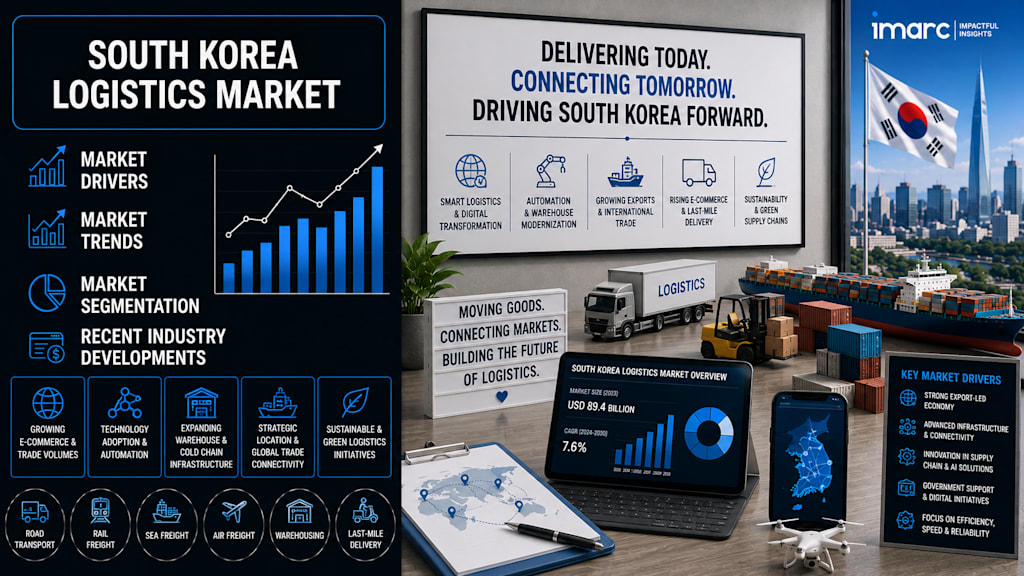
South Korea Logistics Market Size, Growth, and Forecast (2026–2034)
Logistics serves as the backbone of modern economies, connecting manufacturers, businesses, and consumers through efficient transportation and supply chain networks. As global trade becomes increasingly interconnected and consumer expectations evolve, logistics providers are investing in advanced technologies and infrastructure to improve efficiency and responsiveness.
In 2026, South Korea continues to strengthen its position as one of Asia's leading logistics hubs. The country's strategic location, highly developed transportation infrastructure, and strong technological capabilities are helping support growing trade activity and domestic commerce.
The South Korea logistics market reached USD 110.8 Billion in 2025 and is projected to grow to USD 141.6 Billion by 2034, exhibiting a compound annual growth rate (CAGR) of 2.76% during 2026–2034. This steady growth reflects the increasing importance of efficient supply chains in a rapidly changing global economy.
Request a Sample Report with Latest 2026 Data & Forecasts:
Key Trends Shaping the South Korea Logistics Market
Several important trends are influencing market development:
• Rapid expansion of e-commerce and online retail
• Increasing adoption of automation and smart logistics technologies
• Growing focus on environmentally sustainable transportation
• Rising demand for healthcare and pharmaceutical logistics
• Expansion of aerospace and advanced manufacturing industries
These trends are helping reshape how goods are transported, stored, and delivered across the country.
E-Commerce Is Transforming Logistics Operations
One of the most significant growth drivers in recent years has been the rapid rise of e-commerce.
Consumers increasingly expect faster delivery times, real-time shipment tracking, and seamless online shopping experiences. To meet these expectations, logistics providers are investing in advanced fulfillment centers, automated warehouses, and last-mile delivery solutions.
The growing popularity of same-day and next-day delivery services is further increasing demand for efficient logistics infrastructure.
As digital commerce continues expanding through 2026–2034, logistics providers will play an increasingly important role in supporting consumer convenience and business growth.
Sustainability Is Becoming a Business Priority
Environmental responsibility is becoming increasingly important within the logistics industry.
Companies are investing in sustainable transportation solutions, energy-efficient warehouses, and environmentally friendly packaging practices. Electric delivery vehicles and alternative fuel technologies are gaining attention as businesses seek to reduce emissions and improve sustainability performance.
Government initiatives supporting environmental goals are also encouraging logistics operators to adopt greener practices.
As sustainability expectations continue growing, environmentally responsible logistics strategies are likely to become a key competitive advantage.
Healthcare Logistics Is Expanding
The healthcare sector is creating new opportunities for logistics providers.
The transportation of pharmaceuticals, medical devices, and healthcare supplies requires specialized logistics capabilities, including temperature-controlled storage and secure delivery systems.
Growing healthcare demand and an aging population are contributing to increased movement of medical products throughout the country.
As healthcare services continue expanding, specialized logistics solutions are expected to experience strong demand.
Aerospace Industry Growth Supports Logistics Demand
South Korea's expanding aerospace sector is also contributing to logistics market growth.
The aerospace industry relies on highly efficient supply chains to manage components, equipment, and specialized materials. Logistics providers are supporting this growth through advanced transportation networks and precision inventory management.
As aerospace manufacturing and innovation continue advancing, logistics services will remain essential to supporting industry operations.
Investment Opportunities in the Market
The growing logistics industry presents attractive opportunities for investors and businesses.
Companies are investing in:
• Smart warehouse technologies
• Automated fulfillment centers
• AI-powered logistics platforms
• Sustainable transportation solutions
• Cold chain and healthcare logistics infrastructure
Partnerships between technology providers, logistics companies, and e-commerce businesses are also accelerating innovation across the sector.
With steady growth expected through 2034, the market offers promising long-term opportunities.
Challenges Facing the Industry
Despite positive growth prospects, several challenges remain.
Rising operational costs, labor shortages, and increasing customer expectations continue placing pressure on logistics providers.
Global supply chain disruptions and geopolitical uncertainties can also affect transportation efficiency and planning.
Additionally, maintaining cybersecurity and data protection standards is becoming increasingly important as logistics operations become more digitalized.
Successfully addressing these challenges will be critical for sustained growth.
Future Outlook (2026–2034)
Looking ahead, the South Korea logistics market is expected to continue evolving as technology, sustainability, and consumer expectations reshape supply chain operations.
Between 2026 and 2034, demand for smart logistics solutions, automated warehousing, sustainable transportation, and advanced delivery services is likely to increase. Businesses will continue investing in innovation to improve efficiency and competitiveness.
Future developments may include autonomous delivery systems, AI-driven supply chain management, expanded electric vehicle fleets, and next-generation logistics platforms.
These advancements are expected to strengthen South Korea's position as a leading logistics hub in Asia.
Conclusion
The South Korea logistics market is undergoing significant transformation driven by e-commerce growth, technological innovation, sustainability initiatives, and expanding trade activities. Supported by strong infrastructure and strategic geographic advantages, the industry is well positioned for continued development throughout 2026–2034.
While challenges such as rising costs and supply chain complexity remain, ongoing investments in technology and operational efficiency are creating new opportunities for growth. As global commerce continues evolving, logistics will remain a vital pillar supporting South Korea's economic development and international competitiveness.
About the Creator
Jackson Watson
I'm a market research analyst at Imarc group company delivering data-driven insights, industry analysis, and customized research solutions. We support businesses with market sizing, competitive analysis, and strategic decision-making.
Enjoyed the story? Support the Creator.
Subscribe for free to receive all their stories in your feed.
Comments
There are no comments for this story
Be the first to respond and start the conversation.