
South Africa E-Commerce Market Set to Reach US$77.27 Billion by 2034 as Internet Access, Digital Payments, and Mobile Shopping Drive Growth
Rising smartphone adoption, expanding digital payment ecosystems, and improving logistics infrastructure are transforming South Africa into one of Africa’s most promising e-commerce markets.

Introduction: South Africa's Digital Retail Revolution Gains Momentum
The retail landscape in South Africa is undergoing a remarkable transformation as consumers increasingly embrace online shopping. What was once considered a niche purchasing channel has evolved into a mainstream retail platform that is reshaping how people buy products and services.
From clothing and electronics to groceries and home furnishings, consumers are turning to e-commerce platforms for convenience, competitive pricing, broader product selection, and improved shopping experiences. The rapid growth of internet connectivity, smartphone penetration, and digital payment solutions has accelerated this transition, creating significant opportunities for businesses across the country.
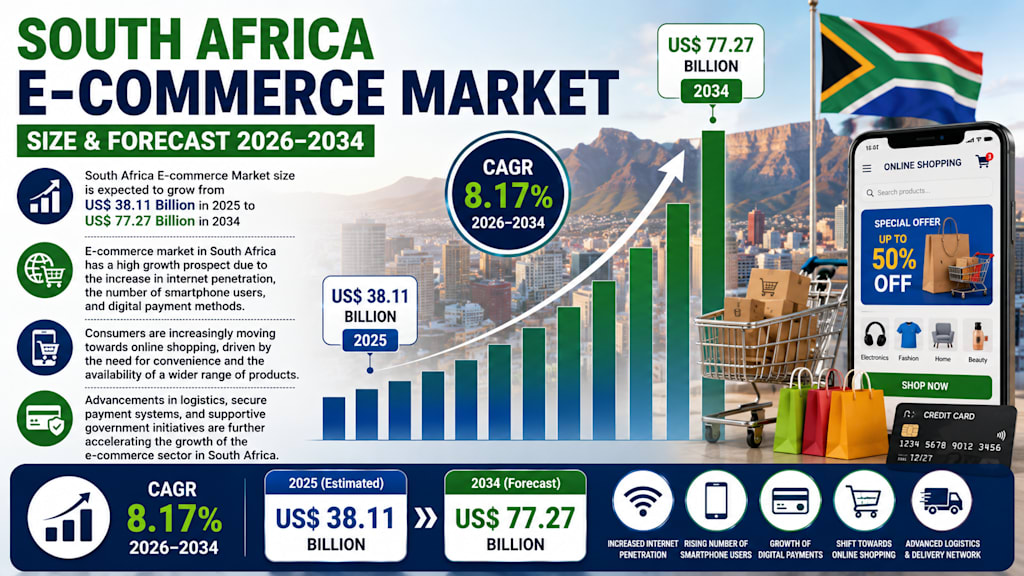
According to Renub Research, the South Africa E-Commerce Market is projected to grow from US$ 38.11 billion in 2025 to US$ 77.27 billion by 2034, expanding at a compound annual growth rate (CAGR) of 8.17% between 2026 and 2034. Increasing internet access, widespread smartphone adoption, and growing consumer confidence in online transactions are expected to support long-term market growth.
As digital technology becomes increasingly integrated into daily life, e-commerce is poised to become one of the most influential sectors within South Africa's retail economy.
Understanding the Growing Importance of E-Commerce
E-commerce refers to the buying and selling of products and services through internet-based platforms. It includes activities such as online product browsing, digital payments, order processing, shipment tracking, and home delivery.
Consumers can purchase a wide range of products online, including apparel, electronics, beauty products, groceries, books, furniture, and household essentials. Businesses benefit from expanded customer reach, lower operational costs, and the ability to serve consumers beyond traditional geographic limitations.
In South Africa, e-commerce adoption accelerated significantly during and after the COVID-19 pandemic as consumers increasingly sought safe and convenient shopping alternatives.
Today, online shopping is becoming a permanent part of consumer behavior, supported by ongoing improvements in digital infrastructure and payment technologies.
Internet and Smartphone Adoption Continue to Fuel Growth
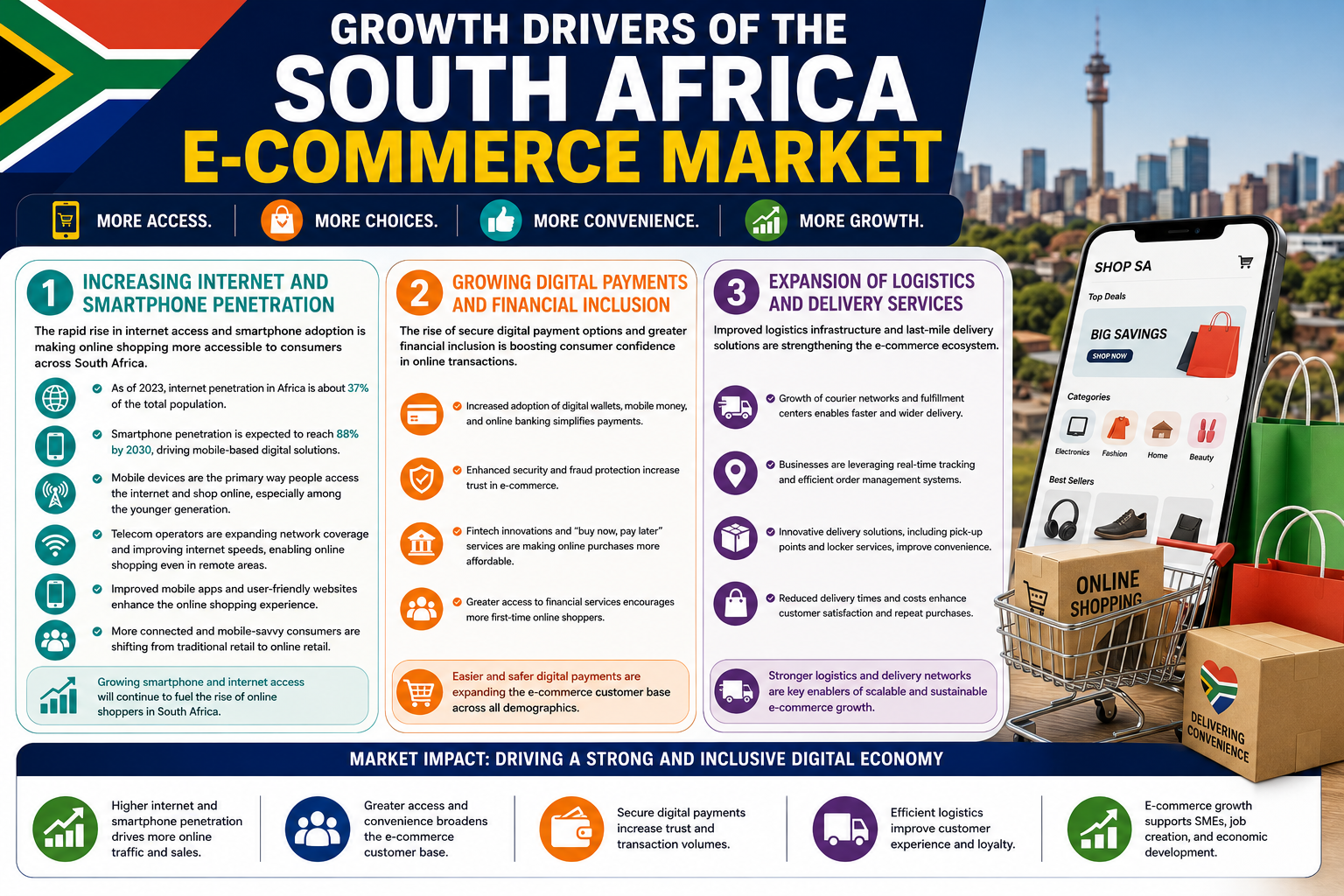
One of the strongest drivers of South Africa's e-commerce market is the growing availability of internet access and smartphone devices.
As mobile connectivity expands and data costs gradually become more affordable, millions of consumers are gaining access to digital commerce platforms. Smartphones have become the primary gateway to online shopping, particularly among younger consumers who rely heavily on mobile devices for browsing, purchasing, and payment activities.
The report highlights that smartphone penetration across Africa is expected to reach approximately 88% by 2030, creating significant opportunities for mobile-based digital commerce.
Telecommunications companies continue investing in network expansion and faster internet services, making online shopping increasingly accessible across urban and semi-urban areas.
As internet adoption continues growing, South Africa's online consumer base is expected to expand substantially.
Digital Payments Are Strengthening Consumer Confidence
The rapid development of digital payment systems has become another key growth catalyst for the e-commerce sector.
Consumers today have access to a wide variety of secure payment methods, including digital wallets, credit cards, debit cards, online banking platforms, and mobile payment solutions. These technologies simplify transactions while improving convenience and security.
Financial institutions and fintech companies are introducing innovative payment solutions that reduce friction in the purchasing process and encourage broader participation in digital commerce.
The report highlights the introduction of the Payment Ecosystem Modernisation (PEM) initiative in October 2023, designed to enhance South Africa's national payment infrastructure through faster, safer, and more affordable digital transactions.
As trust in electronic payments continues increasing, digital payment systems are expected to play an even greater role in market expansion.
Financial Inclusion Is Expanding the Customer Base
Financial inclusion has emerged as an important factor supporting e-commerce growth.
Historically, many consumers lacked access to formal banking services, limiting their ability to participate in online shopping. However, ongoing efforts to expand financial access are enabling more South Africans to engage with digital payment platforms and online retailers.
Mobile banking applications, digital wallets, and simplified financial services are helping bridge the gap between traditional banking systems and underserved populations.
As more consumers gain access to secure financial tools, the potential customer base for e-commerce businesses continues to grow.
This trend is particularly important in emerging regions where digital commerce opportunities remain largely untapped.
Logistics Infrastructure Is Improving Nationwide
The development of logistics and delivery infrastructure is helping address one of the most critical challenges facing e-commerce growth.
Reliable delivery services are essential for ensuring customer satisfaction and encouraging repeat purchases. E-commerce companies, logistics providers, and governments are investing heavily in transportation networks, fulfillment centers, and last-mile delivery capabilities to improve efficiency.
The report highlights infrastructure initiatives launched by South Africa and Namibia in 2024 involving approximately US$ 411.9 million in planned investments to improve transportation connectivity and logistics performance throughout the region.
Improved logistics capabilities are reducing delivery times and expanding access to online shopping services in previously underserved areas.
As logistics networks continue developing, consumer confidence in online retail is expected to strengthen further.
Apparel and Accessories Lead Online Shopping Demand
The apparel and accessories category remains one of the largest segments within South Africa's e-commerce market.
Consumers increasingly prefer purchasing clothing, footwear, handbags, and fashion accessories online because digital platforms provide broader product selections, competitive pricing, and convenient shopping experiences. Social media platforms and fashion influencers have further accelerated interest in online fashion retail.
Younger consumers and urban populations are particularly active within this category.
Online retailers continue expanding product offerings while improving customer experiences through personalized recommendations, flexible return policies, and promotional campaigns.
As fashion-conscious consumers increasingly embrace digital shopping, this segment is expected to remain a major contributor to market growth.
Consumer Electronics Continue Experiencing Strong Demand
The computer and consumer electronics category is among the fastest-growing segments in South Africa's online retail industry.
Consumers frequently purchase smartphones, laptops, tablets, gaming devices, and other electronic products online due to the convenience of comparing prices, specifications, and customer reviews before making purchasing decisions.
The rise of remote work, online education, and digital lifestyles has significantly increased demand for electronic devices.
Online platforms often offer broader product selections and competitive pricing compared to traditional retail stores.
As digital transformation continues across South Africa, demand for consumer electronics through e-commerce channels is expected to remain robust.
Furniture and Home Furnishings Gain Popularity Online
The furniture and home furnishings segment is becoming increasingly important within the e-commerce ecosystem.
Consumers appreciate the ability to browse extensive catalogs, compare designs, and access products that may not be available locally. Detailed product descriptions, customer reviews, and high-quality images help shoppers make informed purchasing decisions.
Urbanization and the growth of modern housing developments are contributing to rising demand for furniture and home décor products.
At the same time, increasing interest in home renovation and interior design is encouraging more consumers to explore online shopping options.
Improved logistics services are making large-item deliveries more practical and reliable.
Digital Wallets Are Becoming a Preferred Payment Method
Digital wallets have emerged as one of the most important payment innovations within South Africa's e-commerce market.
These platforms allow consumers to securely store payment information and complete transactions quickly using smartphones or computers. Their convenience, speed, and security features have contributed to widespread adoption.
Consumers appreciate the ability to avoid repeatedly entering payment information while benefiting from contactless transaction capabilities.
The growing popularity of mobile banking has further accelerated digital wallet adoption.
As consumers increasingly embrace cashless payment solutions, digital wallets are expected to become an even more important component of South Africa's digital commerce ecosystem.
Credit Cards Continue to Support Online Transactions
Credit cards remain one of the most widely used payment methods for online purchases.
Consumers value credit cards because they offer convenience, security, fraud protection, and the ability to make larger purchases. Many financial institutions provide rewards programs, cashback incentives, and additional security features that encourage card usage.
E-commerce retailers widely accept credit card payments, making them a reliable option for both domestic and international transactions.
Although alternative payment methods continue gaining popularity, credit cards are expected to remain a significant contributor to e-commerce growth.
Gauteng Leads South Africa's E-Commerce Expansion
Gauteng remains the largest and most developed e-commerce market in South Africa.
Home to major urban centers such as Johannesburg and Pretoria, the province benefits from a large population, strong purchasing power, advanced logistics infrastructure, and widespread internet access. Consumers actively purchase electronics, fashion products, groceries, and financial services through online platforms.
The report highlights Amazon's entry into the South African market in May 2024, further strengthening competition and expanding opportunities within the country's largest e-commerce hub.
Gauteng's sophisticated retail and transportation infrastructure continues making it the country's leading online shopping market.
Western Cape Continues to Drive Innovation
The Western Cape, particularly Cape Town, represents another major e-commerce center.
The region benefits from a highly connected and digitally literate consumer base with strong interest in online shopping. Fashion, beauty products, electronics, and premium lifestyle goods are particularly popular among local consumers.
Cape Town's thriving technology ecosystem has encouraged innovation and entrepreneurship within the digital commerce sector.
Strong logistics capabilities and access to international shipping networks further support market growth.
As consumer demand continues increasing, the Western Cape is expected to remain a major contributor to South Africa's e-commerce development.
Emerging Provinces Offer Significant Growth Potential
Provinces such as Mpumalanga and Limpopo are increasingly participating in South Africa's digital retail transformation.
Growing smartphone adoption, improving internet connectivity, and rising awareness of online shopping are encouraging consumers in these regions to embrace e-commerce platforms.
Although logistical challenges remain more pronounced in rural areas, investments in courier networks and digital infrastructure are improving accessibility.
These emerging markets represent substantial growth opportunities for retailers willing to invest in regional expansion and customer education.
Challenges Continue to Affect Market Development
Despite strong growth prospects, several challenges remain.
One of the most significant obstacles is logistics performance in remote and rural areas. Poor road infrastructure, long delivery distances, and limited courier coverage can increase shipping costs and delay deliveries. These issues may discourage some consumers from participating in online shopping.
Security concerns also remain important. Some consumers continue expressing concerns regarding fraud, payment security, counterfeit products, and online scams.
Building trust through secure payment systems, transparent return policies, and customer education will remain critical for sustaining long-term market growth.
Leading Companies Shaping the Industry
South Africa's e-commerce landscape includes a mix of established domestic retailers and international players competing for market share.
Major companies highlighted in the report include Takealot Online Pty Ltd, Evetech Pty Ltd, Jumia, Walmart Inc., Zando, SoFresh, Decathlon, and UCook. These organizations continue investing in technology, logistics infrastructure, customer experience improvements, and product diversification to strengthen their competitive positions.
Their continued innovation is helping accelerate the development of South Africa's digital retail ecosystem.
Final Thoughts
The South Africa e-commerce market is entering a period of significant and sustained growth driven by expanding internet access, increasing smartphone adoption, digital payment innovation, and improving logistics capabilities.
With the market projected to grow from US$ 38.11 billion in 2025 to US$ 77.27 billion by 2034, online retail is becoming an increasingly important component of the country's economy. Rising consumer confidence, broader product availability, and continued digital transformation are creating substantial opportunities for retailers, technology providers, and logistics companies.
While challenges related to delivery infrastructure and cybersecurity remain, the long-term outlook remains highly positive. As digital inclusion expands and consumer behavior continues evolving, e-commerce is expected to play a central role in shaping the future of retail in South Africa.
About the Creator
Enjoyed the story? Support the Creator.
Subscribe for free to receive all their stories in your feed.
Comments
There are no comments for this story
Be the first to respond and start the conversation.