
Smart Doorbell Market Surges as Home Security and Smart Living Redefine Modern Households
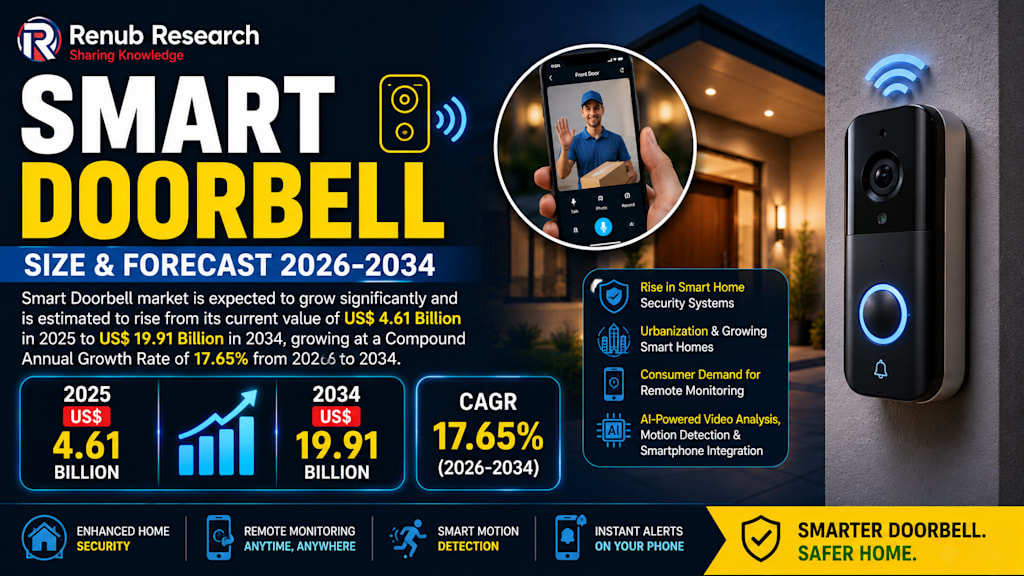
Renub Research forecasts the Smart Doorbell Market to grow from US$ 4.61 billion in 2025 to US$ 19.91 billion by 2034, driven by rising home security concerns, smart home adoption, and demand for remote monitoring solutions.

Smart Doorbells Are Becoming a Core Part of Modern Home Security
The traditional doorbell has evolved into a sophisticated security device powered by artificial intelligence, cloud connectivity, and real-time monitoring. Smart doorbells are now helping homeowners monitor visitors, protect deliveries, communicate remotely, and integrate security systems into larger smart home ecosystems.
As concerns over home safety, package theft, and remote surveillance continue rising worldwide, smart doorbells are rapidly becoming one of the fastest-growing categories within the broader smart home industry.
According to the uploaded Renub Research report, the Smart Doorbell Market is expected to rise from US$ 4.61 billion in 2025 to US$ 19.91 billion by 2034, expanding at a CAGR of 17.65% during 2026–2034. The report attributes this growth to increasing adoption of smart home security systems, urbanization, AI-powered monitoring technologies, and rising consumer demand for connected home solutions.
The growing popularity of smart living is turning video doorbells from optional gadgets into essential security tools for households around the world.
What Makes Smart Doorbells Different?
Smart doorbells combine the functions of a traditional doorbell with advanced technologies such as cameras, microphones, motion sensors, mobile applications, wireless connectivity, and cloud storage systems.
When someone approaches a home or presses the doorbell, users receive instant alerts on their smartphones or tablets. Homeowners can then:
- View live video feeds
- Speak with visitors remotely
- Record footage for future review
- Monitor package deliveries
- Detect suspicious activity
Integrate the device with broader smart home systems
Modern smart doorbells also include advanced features such as infrared night vision, AI-based motion detection, two-way communication, cloud storage, and voice assistant integration.
The report explains that consumers increasingly value these devices because they provide continuous connection to their homes, even when users are away. This added sense of control and security is becoming especially important in modern urban lifestyles.
Rising Security Concerns Are Driving Market Growth
One of the strongest growth drivers in the smart doorbell market is the increasing global concern surrounding home security and surveillance.
As urban populations grow and property crime concerns increase, homeowners are actively seeking more advanced ways to monitor their homes in real time. Smart doorbells provide an accessible and practical solution by allowing homeowners to see visitors, communicate remotely, and store security footage for later review.
The report highlights that smart doorbells are becoming part of broader connected security ecosystems that include smart locks, cameras, and alarm systems. Consumers increasingly prefer integrated security platforms that provide centralized control over home monitoring functions.
Manufacturers are rapidly improving AI-powered surveillance features to meet this demand. The report notes that Vivint introduced next-generation smart doorbell products in 2025 featuring advanced artificial intelligence capabilities.
These developments are making smart doorbells more intelligent, responsive, and capable of distinguishing between normal activity and potential security threats.
Smart Home Ecosystems Are Expanding Rapidly
The rapid expansion of smart home ecosystems is another major force accelerating the smart doorbell market.
Consumers today increasingly connect smart locks, lighting systems, thermostats, cameras, and voice assistants into unified home automation networks. Smart doorbells fit naturally into these connected environments, enhancing both convenience and security.
For example, users can automate lights to switch on when motion is detected at the front door or unlock smart locks remotely after visually confirming visitors through the doorbell camera.
Integration with voice assistants and smart displays is also improving usability. Homeowners can answer doors through voice commands or monitor live video feeds on connected smart screens.
The report highlights Xiaomi’s May 2024 launch of the Smart Maoyan 2 video doorbell camera. The product includes a 3-megapixel HDR camera, infrared night vision, dual PIR motion sensors, and an 8000mAh battery capable of lasting up to 300 days in long-life mode.
This level of innovation reflects how manufacturers are competing not just on security, but also on user experience, battery performance, convenience, and ecosystem compatibility.
E-Commerce Growth Is Increasing Demand for Video Doorbells
The rapid expansion of e-commerce and home delivery services has significantly boosted demand for smart doorbells worldwide.
As more consumers shop online, concerns about stolen packages and unattended deliveries have become increasingly common. Smart doorbells help users monitor deliveries in real time and communicate directly with delivery personnel through live video and two-way audio systems.
Motion detection technology also allows homeowners to receive alerts whenever activity occurs near their entrances, even if the doorbell itself is not pressed.
The report highlights Ring’s August 2024 launch of its updated Battery Doorbell model featuring longer battery life, color night vision, and a wider 150-degree field of view. The enhanced design improves package monitoring and front-door visibility, directly addressing the growing importance of delivery security.
As e-commerce continues growing globally, smart doorbells are increasingly viewed as practical tools for everyday home management rather than luxury security devices.
Wireless Smart Doorbells Are Becoming Increasingly Popular
Wireless smart doorbells are among the fastest-growing segments in the market because they offer easier installation and greater flexibility compared to wired systems.
Unlike traditional wired doorbells, wireless smart doorbells operate through batteries and Wi-Fi connectivity, making them especially attractive for renters, apartment residents, and consumers seeking simple DIY installation.
These devices commonly include features such as:
- HD video streaming
- Cloud storage
- Motion detection
- Mobile app integration
- Two-way audio communication
The increasing availability of reliable Wi-Fi networks worldwide is helping accelerate the growth of wireless smart doorbells significantly.
At the same time, wired smart doorbells continue maintaining strong demand among homeowners seeking uninterrupted power supply and consistent security monitoring. Wired models often support advanced features and stronger connectivity because they rely on continuous electrical power rather than batteries.
AI and Advanced Hardware Are Improving Device Performance
The hardware side of the smart doorbell market is evolving rapidly as manufacturers invest heavily in better cameras, processors, sensors, and weather-resistant designs.
Modern smart doorbells increasingly include artificial intelligence chips capable of distinguishing humans, animals, and objects. These systems reduce false alerts and improve monitoring accuracy.
Manufacturers are also enhancing:
- Night vision quality
- Motion detection precision
- Video resolution
- Battery efficiency
- Audio clarity
- Weather resistance
- Device aesthetics
The report explains that manufacturers are working to improve processing efficiency while reducing power consumption, helping devices operate longer without compromising performance.
As technology advances, smart doorbells are becoming more intelligent, energy-efficient, and visually compatible with modern home designs.
Privacy and Cybersecurity Concerns Remain Major Challenges
Despite strong market growth, privacy and data security concerns continue creating challenges for the industry.
Smart doorbells constantly record and store video footage, often through cloud-based systems. Many consumers worry about how this data is collected, stored, and protected. Concerns also exist regarding unauthorized access, hacking risks, and misuse of surveillance footage.
The report notes that doorbell cameras may unintentionally capture neighboring homes or public spaces, creating additional privacy concerns and regulatory scrutiny.
Governments worldwide are increasingly implementing stricter data protection regulations, forcing manufacturers to strengthen encryption, security systems, and compliance measures.
Consumer trust will remain essential for long-term market growth.
High Costs and Technical Issues Continue Affecting Adoption
Another obstacle facing the market is the relatively high cost of advanced smart doorbell systems.
Premium models with AI-powered monitoring, cloud storage subscriptions, and enhanced video features often require significant upfront investment. Some manufacturers also charge recurring monthly fees for video storage and advanced security services.
Technical limitations can also negatively impact user experience. Reliable internet connectivity is essential for most smart doorbells to function properly, and poor Wi-Fi performance may reduce video quality or delay notifications.
Battery-powered systems may require frequent charging or battery replacement, while installation challenges in older homes can further complicate adoption.
The United States Remains a Global Leader
The United States is currently one of the most mature and advanced smart doorbell markets worldwide.
High smart home adoption, strong consumer awareness, widespread e-commerce usage, and major technology investments are fueling demand across the country. Consumers increasingly integrate smart doorbells with voice assistants, automation systems, and broader home security platforms.
The report highlights Tapo’s August 2024 launch of new smart video doorbells in the United States, including the Tapo D225 featuring 24/7 continuous recording and dual-powered operation.
The country’s leadership in AI, wireless connectivity, and cloud computing is expected to keep the U.S. market highly influential in shaping future industry trends.
India Is Emerging as a Fast-Growing Market
India’s smart doorbell market is expanding rapidly as urbanization, smartphone penetration, and smart home awareness continue increasing.
Consumers in metropolitan areas are increasingly adopting video doorbells to improve apartment and home security, especially as e-commerce deliveries become more common. Rising internet access and growing middle-class purchasing power are also accelerating demand.
The report highlights Qubo’s April 2024 launch of InstaView and Video Doorbell Pro products aimed at modernizing traditional home entry systems with portable display units and enhanced smart functionality.
India is expected to remain one of the most important growth opportunities for smart home security manufacturers over the next decade.
Saudi Arabia Is Embracing Smart Living Technologies
Saudi Arabia’s smart doorbell market is also gaining momentum due to growing investment in smart homes, digital infrastructure, and modern residential developments.
High disposable incomes, strong smartphone penetration, and government-led smart city initiatives are encouraging adoption of connected home technologies across the country.
Demand is particularly strong in luxury residential projects where smart home automation and advanced security features are becoming standard expectations.
As Saudi Arabia continues pursuing digital transformation and modernization initiatives, demand for smart doorbell technologies is expected to grow steadily.
Final Thoughts
The smart doorbell market is rapidly transforming from a niche smart home category into a mainstream component of residential security systems worldwide.
Driven by rising home security concerns, e-commerce growth, smart home integration, and AI-powered surveillance technologies, smart doorbells are becoming increasingly valuable for modern households. Consumers now want more than just convenience—they want continuous awareness, remote access, and greater control over their homes.
Although challenges related to privacy, cybersecurity, internet reliability, and pricing remain important, ongoing innovation is steadily improving the overall user experience.
According to the Renub Research forecast, the smart doorbell industry is positioned for strong long-term growth as connected homes, intelligent security systems, and digital lifestyles continue reshaping the future of residential living.
About the Creator
Enjoyed the story? Support the Creator.
Subscribe for free to receive all their stories in your feed.
Comments
There are no comments for this story
Be the first to respond and start the conversation.