
Sleep Apnea Devices Market Expands Rapidly as Awareness, Obesity, and Home Healthcare Drive Demand
Technological innovation, rising diagnosis rates, and the shift toward home-based sleep therapy are transforming the future of sleep apnea treatment worldwide.

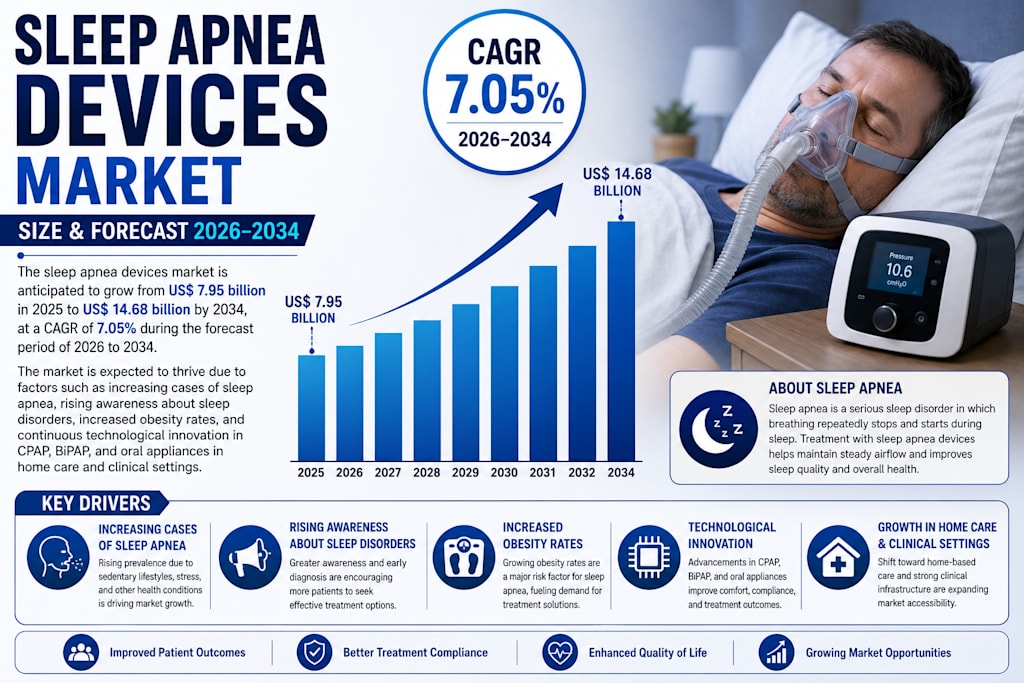
The global healthcare industry is placing increasing attention on sleep health, and sleep apnea has emerged as one of the most significant yet historically underdiagnosed medical conditions worldwide. As awareness grows regarding the serious health risks associated with untreated sleep disorders, demand for advanced sleep apnea devices is rising rapidly across both homecare and clinical settings.
According to Renub Research, the Sleep Apnea Devices Market is expected to grow from US$ 7.95 billion in 2025 to US$ 14.68 billion by 2034, expanding at a CAGR of 7.05% from 2026 to 2034. The market’s growth is being fueled by increasing sleep apnea cases, rising obesity levels, expanding awareness of sleep disorders, and continuous technological innovation in CPAP, BiPAP, oral appliances, and diagnostic systems.
As consumers increasingly prioritize preventive healthcare and quality of life, sleep apnea devices are becoming essential tools for improving sleep quality, reducing cardiovascular risks, and supporting long-term health management.
Sleep apnea is becoming a major global health concern
Sleep apnea is a serious sleep disorder characterized by repeated interruptions in breathing during sleep. These breathing disruptions can reduce oxygen levels, disturb normal sleep cycles, and significantly increase the risk of hypertension, cardiovascular disease, diabetes, fatigue, and other chronic health conditions.
Sleep apnea devices are specifically designed to maintain open airways and ensure consistent airflow throughout sleep. The most widely used devices include Continuous Positive Airway Pressure (CPAP), Bi-level Positive Airway Pressure (BiPAP), Auto-adjusting PAP systems, oral appliances, and advanced ventilation technologies.
CPAP devices remain the most commonly prescribed treatment because they deliver a continuous stream of air through a mask to prevent airway collapse during sleep. Oral appliances, meanwhile, reposition the jaw or tongue to improve airflow and are often preferred in milder cases or by patients seeking less invasive treatment options.
These devices are now widely used across hospitals, sleep clinics, and increasingly within homecare environments due to their effectiveness and growing ease of use.
Rising obesity and lifestyle-related disorders are driving market growth
One of the strongest factors fueling growth in the sleep apnea devices market is the rising global prevalence of sleep apnea and related lifestyle disorders. According to findings referenced in the report, nearly 1 billion individuals worldwide are affected by sleep apnea, with approximately 936 million cases linked to obstructive sleep apnea (OSA). In the United States alone, more than 30 million people are estimated to suffer from sleep apnea, although many cases remain undiagnosed.
Obesity remains one of the most significant risk factors behind the disorder. Increasing rates of obesity, sedentary lifestyles, smoking, alcohol consumption, aging populations, and stress-related health problems are contributing to rising sleep apnea incidence globally.
Urbanization and demanding work schedules have also increased sleep-related health issues, prompting greater awareness of sleep quality and respiratory wellness. As people become more aware of the serious long-term risks associated with untreated sleep apnea, diagnosis and treatment rates are steadily increasing.
Healthcare providers are increasingly emphasizing the connection between sleep disorders and chronic conditions such as cardiovascular disease, diabetes, and hypertension, further driving demand for sleep therapy solutions.
Technological innovation is transforming sleep therapy
Continuous innovation in sleep apnea devices is playing a major role in improving treatment effectiveness, patient comfort, and long-term therapy adherence. Modern devices are becoming smaller, quieter, lighter, and significantly more user-friendly compared to earlier generations.
Today’s CPAP and BiPAP systems often include advanced features such as intelligent pressure adjustment, wireless connectivity, humidification systems, mobile app integration, and cloud-based monitoring capabilities. These improvements help personalize therapy while making treatment more convenient and comfortable for patients.
Auto-adjusting devices are becoming especially popular because they automatically adapt pressure levels according to the patient’s breathing patterns and sleep conditions throughout the night. This flexibility improves patient comfort and treatment effectiveness.
In September 2025, Airway Management launched Nylon flexTAP, an FDA-approved 3D-printed sleep apnea treatment product designed to improve patient experience and therapeutic efficiency.
Such technological advancements are not only improving treatment outcomes but also helping reduce the stigma and discomfort historically associated with sleep apnea therapy.
Home healthcare and telemedicine are reshaping treatment delivery
The global shift toward home-based healthcare is becoming another major growth driver for the sleep apnea devices market. Many patients increasingly prefer homecare solutions because they offer greater convenience, comfort, and lower long-term healthcare costs.
Sleep apnea devices are particularly well suited for homecare environments because they are designed for regular overnight use and long-term therapy management. Insurance support, telemedicine expansion, and remote monitoring technologies are further accelerating adoption.
Home sleep testing has also become increasingly important. In April 2025, the FDA-cleared NightOwl disposable home sleep apnea test was introduced to provide patients with a more convenient method for diagnosing obstructive sleep apnea from home.
Telemedicine platforms now allow physicians to monitor therapy compliance remotely, adjust device settings digitally, and provide ongoing patient support without requiring frequent clinic visits. This trend became especially important following the broader expansion of virtual healthcare services worldwide.
As healthcare systems continue prioritizing cost efficiency and patient convenience, homecare is expected to become one of the fastest-growing segments within the sleep apnea devices market.
Patient compliance remains a major challenge
Despite technological improvements, patient compliance continues to represent one of the biggest obstacles facing the sleep apnea devices industry. Many patients struggle to adapt to CPAP therapy due to discomfort, mask leakage, dryness, machine noise, or difficulty tolerating airflow pressure.
Poor compliance can significantly reduce treatment effectiveness and lead patients to abandon therapy altogether. This issue affects long-term device usage rates and can discourage healthcare providers from recommending certain therapies to patients with low adherence potential.
Addressing comfort-related issues remains essential for improving patient retention. Manufacturers are increasingly focusing on ergonomic mask designs, quieter machines, adaptive airflow systems, and patient education programs aimed at encouraging consistent therapy use.
Behavioral support and long-term follow-up care are also becoming increasingly important components of successful sleep apnea treatment programs.
High costs limit access in many regions
The high cost of sleep apnea devices remains another significant challenge, particularly in low- and middle-income countries. Expenses associated with purchasing CPAP or BiPAP machines, replacement masks, tubing, filters, and ongoing maintenance can place treatment beyond the reach of many patients.
Limited reimbursement policies and insufficient access to sleep clinics further restrict diagnosis and treatment in many regions. Rural areas often face shortages of sleep specialists, diagnostic laboratories, and healthcare infrastructure necessary for comprehensive sleep disorder management.
Although home-based diagnostic tools and lower-cost devices are improving accessibility gradually, affordability remains a key barrier to broader global market penetration.
Balancing innovation with cost efficiency will remain critical for companies seeking expansion opportunities in emerging healthcare markets.
Therapeutic devices dominate the market
The therapeutic devices segment currently represents the largest portion of the sleep apnea devices market. This category includes CPAP machines, BiPAP devices, oral appliances, adaptive servo-ventilation systems, and auto-adjusting PAP technologies designed to maintain airway stability during sleep.
Therapeutic devices remain highly popular because of their proven ability to reduce apnea events, improve oxygen levels, and enhance sleep quality. Advances in comfort, portability, and digital monitoring are further strengthening long-term adoption.
Auto-adjusting sleep apnea therapeutic devices are also gaining strong momentum because they provide more personalized therapy by automatically adjusting pressure levels according to patient breathing patterns and sleeping positions.
As sleep apnea is typically a chronic condition requiring long-term management, therapeutic devices are expected to remain the core growth segment of the market.
Diagnostic technologies remain essential
Polysomnography diagnostic devices continue playing a critical role in sleep apnea diagnosis and classification. These systems monitor brain activity, oxygen levels, airflow, muscle movement, heart rate, and respiratory patterns during sleep studies.
Polysomnography remains the gold standard for diagnosing complex sleep disorders, particularly in clinical and hospital settings. Technological advancements have improved diagnostic accuracy, patient comfort, and data analysis capabilities.
Although home-based testing solutions are becoming more common, in-laboratory sleep studies remain essential for complicated cases and comprehensive diagnostic evaluations.
The expansion of sleep laboratories and increased physician referrals for sleep studies continue supporting strong demand for diagnostic equipment globally.
Clinics, hospitals, and homecare all play major roles
Hospitals, sleep clinics, and specialized healthcare centers remain major distribution and treatment channels within the market. These facilities provide diagnosis, device fitting, therapy monitoring, and long-term patient management services.
Sleep clinics play a particularly important role in educating patients regarding treatment adherence and the long-term health risks associated with untreated sleep apnea. Growing integration of sleep medicine into mainstream healthcare systems is also supporting market expansion.
At the same time, homecare settings are becoming increasingly important as patients seek convenient and cost-effective treatment options that minimize hospital visits and support ongoing therapy management at home.
Regional markets show strong growth opportunities
The United States remains one of the world’s largest and most advanced sleep apnea devices markets due to high awareness levels, strong healthcare infrastructure, and widespread use of CPAP and BiPAP therapies. High obesity rates, cardiovascular disease prevalence, and aging populations continue driving demand.
In August 2025, Nyxoah received FDA approval for its sleep apnea implant device in the U.S., highlighting the country’s ongoing leadership in sleep therapy innovation.
The United Kingdom market benefits from growing awareness of sleep disorders, increasing obesity rates, and strong support from public healthcare systems for moderate and severe sleep apnea treatment. Home-based therapies are also gaining popularity due to improved convenience and technology.
India’s market is expanding rapidly due to rising urbanization, growing awareness, lifestyle-related health problems, and improving healthcare infrastructure. In January 2025, ResMed launched AirSense 11 in India, a CPAP device designed specifically for sleep apnea patients.
Saudi Arabia is also experiencing steady market growth driven by increasing obesity rates, aging populations, and government investments in healthcare infrastructure and specialized medical centers. AI-enabled sleep apnea devices are becoming increasingly popular in the region.
The future of sleep healthcare is becoming increasingly connected
The sleep apnea devices market is evolving toward smarter, more personalized, and highly connected healthcare solutions. AI integration, cloud-based monitoring, remote therapy management, and digital health platforms are expected to play growing roles in improving patient outcomes and long-term therapy adherence.
The market’s segmentation across therapeutic devices, diagnostic systems, clinics, hospitals, and homecare settings reflects the growing complexity of modern sleep healthcare delivery.
As preventive healthcare becomes more important globally, sleep health is likely to gain even greater attention from both consumers and healthcare systems.
Final Thoughts
The global sleep apnea devices market is entering a period of strong expansion driven by rising sleep disorder prevalence, obesity-related health concerns, home healthcare adoption, and rapid technological innovation. Increasing awareness regarding the serious health consequences of untreated sleep apnea is transforming sleep therapy from a niche medical field into a major global healthcare priority.
With Renub Research forecasting the market to reach US$ 14.68 billion by 2034, sleep apnea devices are expected to become increasingly important within modern respiratory and preventive healthcare systems. Companies that successfully combine patient comfort, affordability, digital connectivity, and long-term therapy support are likely to lead the future of this rapidly evolving market.
About the Creator
Enjoyed the story? Support the Creator.
Subscribe for free to receive all their stories in your feed.
Comments
There are no comments for this story
Be the first to respond and start the conversation.