
Sleep Apnea Devices Market Expands Rapidly as Awareness, Home Healthcare, and Technological Innovation Drive Global Demand
Rising prevalence of sleep disorders, increasing obesity rates, and advancements in smart therapeutic devices are fueling significant growth in the global sleep apnea devices industry.

Sleep health has become one of the most important yet often overlooked aspects of modern healthcare. As awareness of sleep-related disorders continues to grow worldwide, healthcare providers and patients are increasingly recognizing the serious consequences of untreated sleep apnea. Once considered a relatively niche medical concern, sleep apnea is now understood to be a major public health issue linked to cardiovascular disease, diabetes, hypertension, cognitive impairment, and reduced quality of life.
This growing awareness is transforming the global sleep apnea devices market. Advances in diagnostic technologies, therapeutic equipment, and home-based healthcare solutions are making treatment more accessible, effective, and patient-friendly than ever before.
At the same time, rising obesity rates, aging populations, and increasingly sedentary lifestyles are contributing to a growing number of sleep apnea cases worldwide. These trends are creating strong demand for innovative solutions that help patients manage the condition and improve long-term health outcomes.
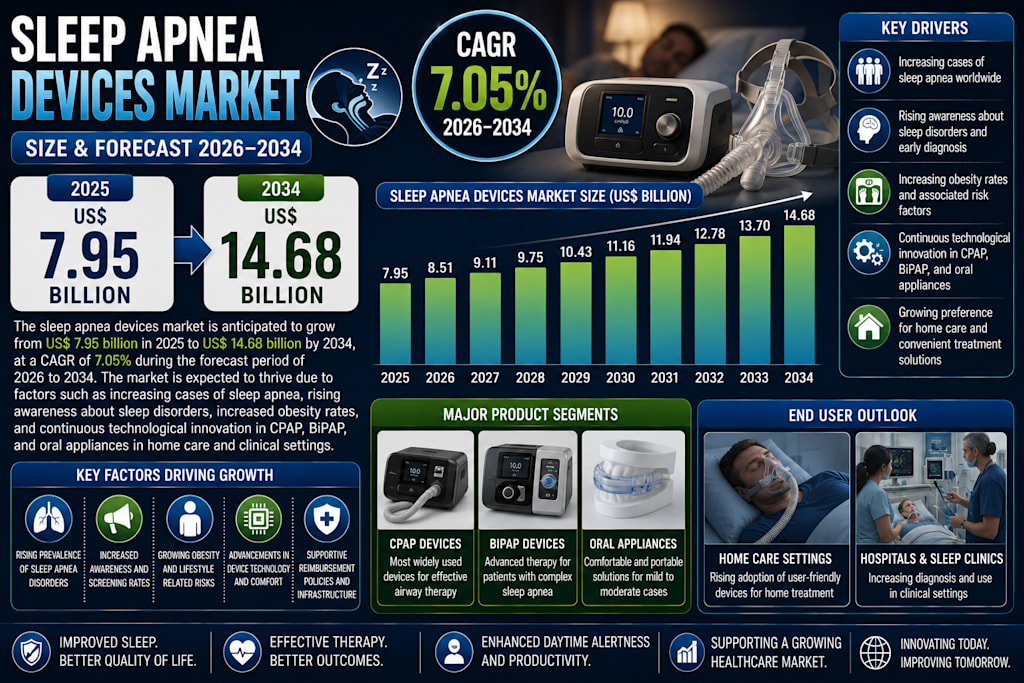
According to Renub Research, the Sleep Apnea Devices Market is expected to grow from US$7.95 billion in 2025 to US$14.68 billion by 2034, registering a compound annual growth rate (CAGR) of 7.05% between 2026 and 2034. Increasing diagnosis rates, technological advancements, and growing adoption of home-based healthcare solutions are expected to support sustained market expansion.
Sleep Apnea Is Emerging as a Major Global Health Concern
Sleep apnea is a sleep disorder characterized by repeated interruptions in breathing during sleep.
These breathing disruptions can significantly reduce oxygen levels, fragment sleep patterns, and increase the risk of serious medical conditions. Individuals suffering from untreated sleep apnea often experience excessive daytime fatigue, poor concentration, headaches, mood disturbances, and increased cardiovascular risk.
The most common form, obstructive sleep apnea (OSA), occurs when throat muscles relax excessively during sleep, temporarily blocking airflow.
Because symptoms frequently develop gradually and often remain undiagnosed for years, many individuals are unaware they have the condition.
Growing awareness among healthcare providers and patients is leading to earlier diagnosis and greater demand for effective treatment options.
Global Prevalence Continues to Increase
The increasing prevalence of sleep apnea represents one of the strongest drivers of market growth.
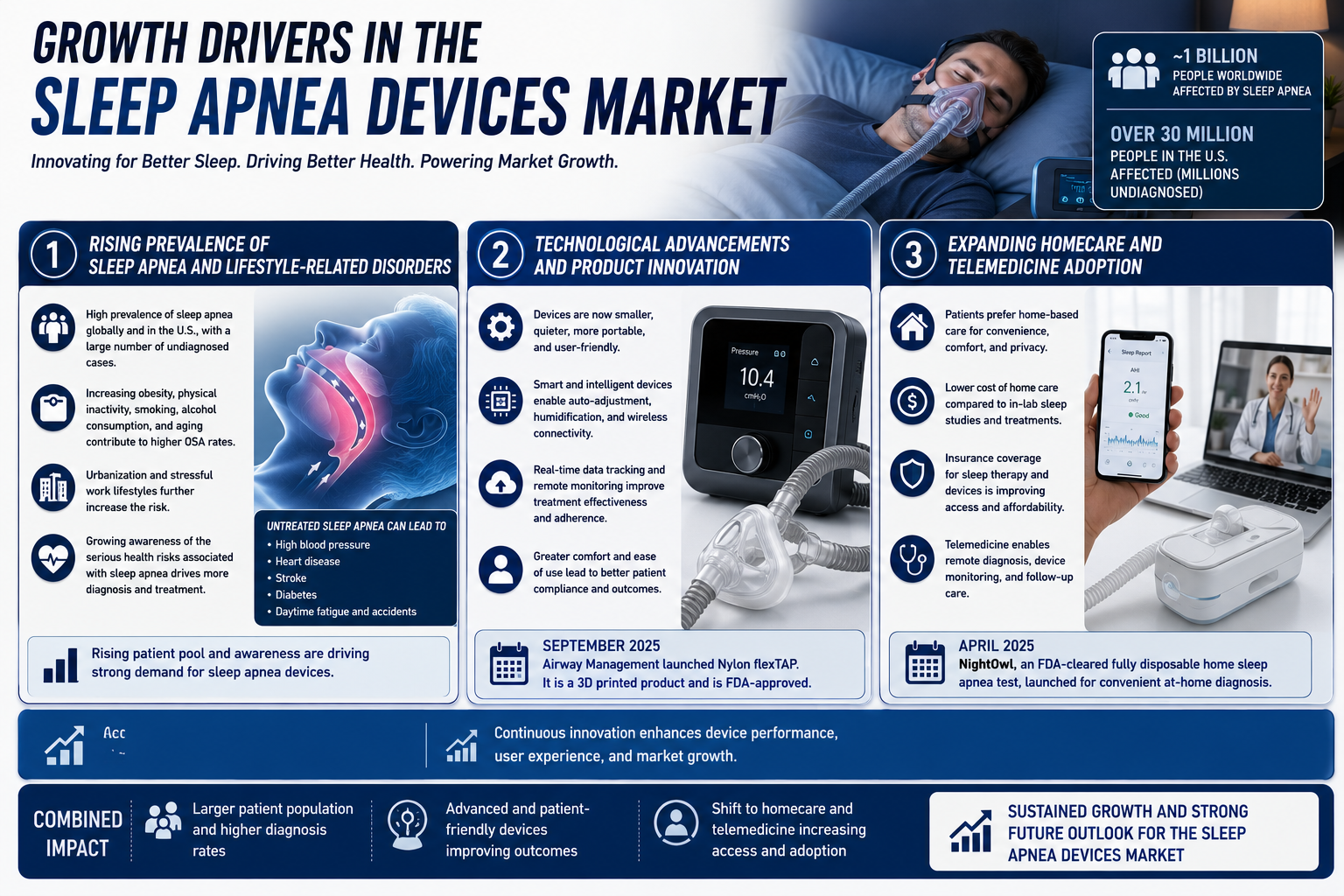
Recent estimates indicate that nearly one billion people worldwide may be affected by sleep apnea, while approximately 936 million individuals suffer from obstructive sleep apnea. In the United States alone, more than 30 million people are believed to have sleep apnea, although a substantial portion remains undiagnosed.
Several factors contribute to these growing numbers.
Rising obesity rates, physical inactivity, smoking, alcohol consumption, aging populations, and stressful lifestyles all increase the likelihood of developing sleep apnea.
Urbanization and changing work patterns have also contributed to sleep-related health challenges in many countries.
As awareness and diagnostic capabilities continue improving, the number of diagnosed patients is expected to rise significantly.
Sleep Apnea Devices Play a Critical Role in Treatment
Medical devices represent the cornerstone of sleep apnea treatment and management.
These products are designed to maintain open airways during sleep, ensuring continuous airflow and preventing breathing interruptions.
The most widely used solutions include Continuous Positive Airway Pressure (CPAP) devices, Bi-level Positive Airway Pressure (BiPAP) systems, Auto-adjusting Positive Airway Pressure (APAP) devices, and oral appliances.
CPAP devices deliver a constant stream of pressurized air through a mask, helping keep airways open throughout the night.
Oral appliances provide an alternative approach by repositioning the jaw or tongue to prevent airway collapse.
These therapies significantly improve sleep quality, oxygenation, and overall health outcomes when used consistently.
Growing Awareness Is Driving Diagnosis Rates
Historically, sleep apnea has been significantly underdiagnosed.
Many individuals attributed symptoms such as snoring, fatigue, and poor sleep quality to aging, stress, or lifestyle factors rather than recognizing them as indicators of a medical condition.
Today, public awareness campaigns, healthcare education initiatives, and increased media coverage are helping change perceptions.
Patients are becoming more proactive about seeking medical evaluation for sleep-related symptoms, while healthcare providers are increasingly screening for sleep disorders during routine care.
This increased awareness is expanding the pool of diagnosed patients and creating greater demand for both diagnostic and therapeutic devices.
Technological Innovation Is Transforming Patient Experiences
Technology continues to play a major role in shaping the future of sleep apnea treatment.
Modern devices are significantly smaller, quieter, and more comfortable than earlier generations.
Manufacturers are increasingly focusing on improving usability and patient compliance through innovations that enhance convenience and treatment effectiveness.
Advanced features such as wireless connectivity, automatic pressure adjustments, humidification systems, mobile applications, and remote monitoring capabilities have become common in many devices.
These technologies help patients manage therapy more effectively while enabling healthcare providers to monitor progress and make adjustments when necessary.
As innovation continues, sleep apnea devices are becoming increasingly personalized and user-friendly.
Smart Devices Improve Therapy Outcomes
The integration of digital health technologies is significantly enhancing sleep apnea treatment.
Smart devices can collect and transmit data related to usage patterns, breathing events, therapy effectiveness, and patient adherence.
This information allows healthcare providers to evaluate treatment performance and identify potential issues before they compromise outcomes.
Patients also benefit from real-time feedback and mobile applications that encourage consistent usage.
Connected devices support personalized treatment plans while improving long-term therapy success rates.
As digital healthcare ecosystems continue expanding, smart sleep apnea devices are expected to become increasingly important.
Home Healthcare Adoption Creates Significant Opportunities
The shift toward home-based healthcare is one of the most influential trends affecting the sleep apnea devices market.
Patients increasingly prefer treatment solutions that can be used comfortably at home rather than requiring frequent clinical visits.
Sleep apnea devices are particularly well suited for home care because they allow continuous therapy without disrupting daily routines.
The convenience of home-based treatment, combined with rising healthcare costs and expanding insurance coverage, continues encouraging adoption.
In April 2025, NightOwl introduced an FDA-cleared disposable home sleep apnea testing solution that enables patients to undergo diagnostic evaluations from the comfort of their homes.
Such innovations are helping expand access to diagnosis and treatment while improving patient convenience.
Telemedicine Supports Market Expansion
Telemedicine has become an increasingly valuable component of sleep disorder management.
Virtual consultations allow healthcare providers to evaluate symptoms, review diagnostic results, prescribe treatment, and monitor therapy adherence remotely.
This approach improves access to care, particularly for patients living in rural or underserved regions.
Remote monitoring technologies further strengthen telemedicine capabilities by providing continuous access to treatment data.
The combination of telemedicine and home-based devices is creating a more efficient and patient-centered approach to sleep apnea management.
As digital healthcare adoption continues accelerating, telemedicine is expected to remain a significant growth driver.
Therapeutic Devices Continue to Dominate the Market
Therapeutic devices represent the largest segment of the sleep apnea devices market.
This category includes CPAP, BiPAP, oral appliances, adaptive servo-ventilation systems, and other technologies designed to treat sleep apnea directly.
These devices remain widely adopted because of their proven ability to reduce apnea events, improve oxygenation, and enhance sleep quality.
For many patients, therapeutic devices provide long-term management solutions that effectively control symptoms and reduce health risks.
As sleep apnea is typically a chronic condition requiring ongoing treatment, demand for therapeutic devices remains consistently strong.
Auto-Adjusting Devices Gain Popularity
Auto-adjusting sleep apnea devices are becoming increasingly popular due to their ability to personalize therapy.
Unlike traditional CPAP systems that deliver fixed pressure levels, auto-adjusting devices automatically modify pressure settings based on patient breathing patterns.
This adaptability improves comfort and can enhance treatment effectiveness.
Patients often find these devices easier to tolerate because pressure levels change dynamically according to individual needs.
Growing emphasis on personalized healthcare is expected to support continued expansion of this segment.
Diagnostic Technologies Remain Essential
Accurate diagnosis is critical for effective sleep apnea management.
Polysomnography remains the gold standard for diagnosing sleep apnea and other sleep-related disorders.
These diagnostic systems monitor brain activity, oxygen saturation, airflow, heart rate, and muscle movements during sleep.
The resulting data enables healthcare professionals to assess severity and determine appropriate treatment strategies.
Although home-based testing solutions are gaining popularity, in-laboratory polysomnography continues to play an essential role in complex cases.
Demand for diagnostic equipment remains closely linked to overall market growth.
Clinics and Hospitals Continue to Lead Treatment Delivery
Hospitals, sleep laboratories, and specialized clinics remain important centers for diagnosis and treatment.
These facilities provide comprehensive services including sleep studies, patient education, therapy initiation, and ongoing monitoring.
Specialized sleep clinics play a particularly important role in helping patients understand treatment options and improve adherence to prescribed therapies.
The growing number of dedicated sleep centers worldwide is contributing positively to market expansion.
As awareness increases, healthcare institutions are expected to remain critical components of the sleep apnea treatment ecosystem.
Low Patient Compliance Remains a Challenge
Despite significant technological improvements, patient compliance remains one of the industry's most important challenges.
Many individuals struggle to adapt to CPAP therapy due to discomfort, mask leakage, dryness, airflow pressure, or noise concerns.
Inconsistent use can reduce treatment effectiveness and negatively impact long-term outcomes.
Poor adherence also limits demand for replacement devices and accessories.
Manufacturers continue investing in ergonomic designs, quieter systems, and improved patient support programs to address these concerns.
Enhancing comfort and usability remains a major focus area across the industry.
Cost Barriers Limit Access in Emerging Markets
Affordability represents another significant challenge for the global sleep apnea devices market.
CPAP systems, masks, tubing, filters, and replacement components can be expensive, particularly in low- and middle-income countries.
Limited reimbursement programs, inadequate healthcare infrastructure, and shortages of specialized sleep clinics further restrict access.
These factors contribute to lower diagnosis and treatment rates in many regions.
Expanding affordability and improving healthcare access will be essential for unlocking future market potential.
The United States Leads Global Adoption
The United States remains one of the largest and most advanced sleep apnea devices markets worldwide.
High awareness levels, advanced healthcare infrastructure, and widespread availability of diagnostic services contribute to strong adoption rates.
The country experiences significant prevalence of obesity, cardiovascular disease, and age-related health conditions—all factors associated with increased sleep apnea risk.
Homecare adoption is particularly strong due to insurance coverage, telemedicine integration, and widespread use of remote monitoring technologies.
In August 2025, Nyxoah announced FDA approval for its sleep apnea implant designed for patients in the U.S. market, highlighting continued innovation within the sector.
United Kingdom Benefits from Growing Awareness
The United Kingdom's sleep apnea devices market continues expanding due to increased awareness of sleep disorders and their impact on overall health.
An aging population, rising obesity rates, and improvements in diagnostic capabilities are contributing to higher diagnosis rates.
Public healthcare programs support treatment accessibility, particularly for moderate and severe cases.
In June 2025, Samsung received CE marking for its Sleep Apnea feature in the Galaxy Watch lineup, enabling availability across numerous European countries and expanding consumer awareness of sleep health monitoring technologies.
India Emerges as a Fast-Growing Market
India is experiencing rapid growth within the sleep apnea devices market.
Urbanization, rising incomes, increasing obesity rates, and growing awareness of sleep disorders are creating favorable conditions for market expansion.
Private healthcare providers and expanding diagnostic infrastructure are improving access to treatment.
In January 2025, ResMed launched the AirSense 11 positive airway pressure device in India, further strengthening product availability in the region.
As awareness continues increasing, India is expected to become an increasingly important growth market.
Saudi Arabia Shows Strong Potential
Saudi Arabia's market is benefiting from healthcare modernization initiatives, rising obesity rates, and growing awareness of sleep-related disorders.
Government investments in healthcare infrastructure and specialized treatment centers are improving diagnosis and therapy access.
The adoption of artificial intelligence-enabled sleep apnea technologies is also gaining momentum.
These developments position Saudi Arabia as a promising market within the broader Middle East region.
Final Thoughts
The global sleep apnea devices market is entering a period of strong and sustained growth driven by increasing diagnosis rates, rising awareness, technological innovation, and expanding home healthcare adoption.
As sleep health becomes a greater priority for both healthcare providers and consumers, demand for effective diagnostic and therapeutic solutions continues to increase.
With the market projected to grow from US$7.95 billion in 2025 to US$14.68 billion by 2034, substantial opportunities exist for device manufacturers, healthcare providers, investors, and digital health innovators.
Although challenges related to patient compliance, affordability, and healthcare access remain, ongoing advancements in technology and growing public awareness provide a solid foundation for future expansion.
As millions of individuals seek better sleep, improved health outcomes, and enhanced quality of life, sleep apnea devices will continue playing a critical role in modern healthcare.
About the Creator
Enjoyed the story? Support the Creator.
Subscribe for free to receive all their stories in your feed.
Comments
There are no comments for this story
Be the first to respond and start the conversation.