
Semaglutide Market Set for Massive Growth as Obesity and Diabetes Cases Surge Worldwide
Rising Demand for Weight Loss and Diabetes Drugs Pushes the Global Semaglutide Industry Toward US$ 61.7 Billion by 2033

The global healthcare industry is witnessing a major transformation as semaglutide-based medications rapidly gain popularity among patients, physicians, and healthcare providers. Once primarily recognized as a treatment for type 2 diabetes, semaglutide has now become one of the most talked-about pharmaceutical innovations in obesity management and metabolic health.
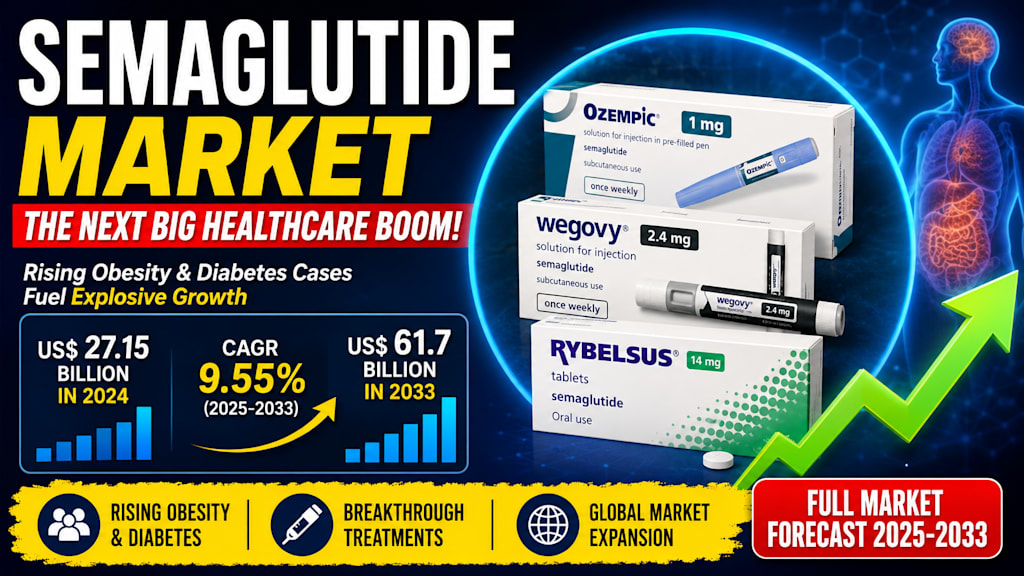
According to Renub Research, the global semaglutide market is projected to grow from US$ 27.15 billion in 2024 to US$ 61.7 billion by 2033, expanding at a CAGR of 9.55% between 2025 and 2033.
This remarkable growth reflects the increasing prevalence of obesity and diabetes worldwide, alongside growing awareness regarding effective weight-loss therapies. Semaglutide products such as Ozempic, Wegovy, and Rybelsus are becoming mainstream medical solutions, reshaping the pharmaceutical landscape globally.
What Is Semaglutide and Why Is It So Popular?
Semaglutide is a GLP-1 receptor agonist designed to mimic a naturally occurring hormone in the body that regulates blood sugar, appetite, and digestion. It works by stimulating insulin secretion, reducing glucagon production, and slowing gastric emptying. These combined actions help patients control blood sugar levels while also reducing hunger and calorie intake.
The medicine is marketed under several major brands, including Ozempic, Wegovy, and Rybelsus. While Ozempic and Rybelsus are mainly prescribed for diabetes management, Wegovy has become highly recognized for chronic weight management.
One of the biggest reasons behind semaglutide’s popularity is its dual functionality. Patients not only experience improved glucose control but also substantial and sustainable weight loss. This has made semaglutide a preferred option among healthcare professionals treating metabolic disorders.
Obesity and Diabetes Crisis Driving Market Expansion
The rising prevalence of obesity and type 2 diabetes remains the primary force accelerating the semaglutide market worldwide. Modern lifestyles characterized by sedentary habits, unhealthy eating patterns, stress, and limited physical activity have significantly contributed to the global metabolic health crisis.
According to the report, in 2022 more than 2.5 billion adults aged 18 years and older were overweight, while over 890 million adults were classified as obese.
The burden of diabetes is also increasing rapidly. International Diabetes Federation projections suggest that by 2050, approximately 853 million adults could be living with diabetes globally.
This alarming rise in metabolic diseases has created urgent demand for innovative treatment options that go beyond traditional therapies. Semaglutide has emerged as one of the strongest pharmaceutical solutions because it effectively addresses both glucose management and obesity simultaneously.
Wegovy Revolutionizing Weight Loss Treatment
Among semaglutide products, Wegovy has become particularly influential in transforming obesity care. Historically, obesity treatments often delivered inconsistent results or came with challenging side effects. Wegovy, however, demonstrated impressive weight reduction outcomes during clinical trials, leading to strong adoption across multiple markets.
Healthcare professionals increasingly recognize obesity as a chronic disease rather than simply a lifestyle issue. This shift in medical thinking has boosted demand for scientifically backed therapies like semaglutide.
As more governments and healthcare systems focus on preventive healthcare, anti-obesity medications are expected to gain wider insurance coverage and public acceptance. This trend is likely to strengthen semaglutide’s long-term market position.
Ozempic Continues Dominating Diabetes Care
Ozempic remains one of the most recognized semaglutide products globally due to its strong effectiveness in reducing HbA1c levels and supporting weight loss among type 2 diabetes patients.
The once-weekly injectable format has improved patient convenience compared to daily medication regimens. Physicians also appreciate its cardiovascular benefits, especially for diabetic patients at higher risk of heart disease and stroke.
Novo Nordisk’s aggressive commercialization strategy and expanding clinical evidence continue to strengthen Ozempic’s global presence. The brand has become a leading contributor to the company’s revenue growth and international expansion plans.
Innovation in Drug Delivery Creating New Opportunities
Another major factor driving the semaglutide market is innovation in drug delivery systems. Traditionally, injectable therapies have faced resistance from some patients due to needle anxiety and inconvenience.
However, the introduction of oral semaglutide products such as Rybelsus has significantly improved patient accessibility and treatment acceptance.
Additionally, researchers are working on advanced long-acting formulations that could further simplify treatment schedules. The report highlights that a hydrogel-based delivery system introduced in 2024 may allow semaglutide administration only once per month instead of weekly injections.
Such technological advancements could dramatically improve patient adherence while opening new revenue streams for pharmaceutical manufacturers.
Expanding Clinical Applications Beyond Diabetes
Semaglutide’s market potential extends far beyond blood sugar management. Pharmaceutical companies and researchers are exploring its role in cardiovascular risk reduction, kidney disease management, and other metabolic disorders.
In January 2025, the U.S. FDA approved Ozempic for reducing the risk of worsening kidney disease, kidney failure, and cardiovascular death in adults with type 2 diabetes and chronic kidney disease.
This expanded indication significantly strengthens semaglutide’s clinical value and broadens its patient base.
Furthermore, Novo Nordisk announced in May 2025 that the FDA accepted its application for a once-daily oral 25 mg formulation of Wegovy for chronic weight management.
If approved, this would become the first oral GLP-1 treatment specifically designed for obesity management, representing a major milestone in pharmaceutical innovation.
Online Pharmacies Accelerating Accessibility
Digital healthcare platforms and online pharmacies are playing a growing role in semaglutide distribution. Modern consumers increasingly prefer telemedicine consultations, digital prescriptions, and home-delivery medication services.
Online pharmacies provide greater convenience, privacy, and accessibility, particularly for patients living in remote areas or individuals seeking discreet obesity treatment options.
This digital transformation is expected to further strengthen market penetration over the coming decade.
Challenges Facing the Semaglutide Market
Despite strong momentum, the semaglutide market still faces several challenges.
One of the biggest obstacles is affordability. Semaglutide treatments can be expensive, particularly in low- and middle-income countries where insurance coverage remains limited.
High out-of-pocket expenses can restrict patient access and create healthcare inequality. Policymakers and pharmaceutical companies may need to explore subsidy programs, generic alternatives, or broader insurance support to improve affordability.
Supply chain constraints also present a major issue. Rising demand has placed pressure on manufacturing facilities, leading to shortages in some markets.
Scaling production capacity while maintaining quality standards will be critical for sustaining future growth.
Regional Markets Showing Strong Potential
United States
The United States remains one of the largest semaglutide markets globally due to high obesity and diabetes prevalence, strong healthcare infrastructure, and widespread patient awareness.
Regulatory approvals and physician acceptance continue driving rapid adoption across the country.
Germany
Germany’s semaglutide market is supported by rising metabolic disorder cases and favorable reimbursement systems. The country’s focus on chronic disease management is creating long-term opportunities for advanced therapies.
India
India is emerging as a significant growth market because of increasing urbanization, changing lifestyles, and rising diabetes prevalence. Novo Nordisk launched oral semaglutide in India in 2022, marking an important step toward expanding access in the region.
Saudi Arabia
Saudi Arabia is also witnessing rapid market growth due to healthcare modernization initiatives under Vision 2030. In April 2025, Novo Nordisk signed an agreement with Lifera to localize semaglutide production within the country.
Top 10 Recent Developments in the Semaglutide Industry
Novo Nordisk received FDA acceptance for oral Wegovy applications for chronic weight management in 2025.
Novo Nordisk gained FDA approval for Ozempic to reduce kidney disease progression and cardiovascular death risk.
Novo Nordisk partnered with Saudi Arabia’s Lifera to localize semaglutide production.
Novo Nordisk expanded oral semaglutide launches across emerging markets, including India.
Eli Lilly and Company intensified competition in the GLP-1 obesity treatment segment with next-generation metabolic therapies.
AstraZeneca plc increased investments in cardiometabolic drug development and diabetes innovation.
Biocon Ltd strengthened focus on affordable biologics and metabolic healthcare solutions in Asia.
Johnson & Johnson expanded strategic investments in obesity and chronic disease research programs.
Pfizer Inc. accelerated development of oral obesity and diabetes therapies targeting the GLP-1 pathway.
Sanofi S.A. increased collaboration efforts in diabetes care technologies and metabolic disease management.
Competitive Landscape Becoming More Intense
The semaglutide market is currently dominated by Novo Nordisk, which holds strong brand recognition through Ozempic, Wegovy, and Rybelsus. However, competition is rapidly intensifying as pharmaceutical companies race to enter the obesity and diabetes treatment sector.
Major players covered in the report include:
Novo Nordisk A/S
Eli Lilly and Company
AstraZeneca plc
Biocon Ltd
Johnson and Johnson
Pfizer Inc.
AbbVie Inc.
Sanofi S.A.
The growing popularity of GLP-1 therapies is expected to trigger increased mergers, partnerships, research collaborations, and product launches over the next several years.
Final Thoughts
The semaglutide market is no longer just a niche pharmaceutical segment focused on diabetes management. It has evolved into a global healthcare phenomenon influencing obesity treatment, preventive medicine, cardiovascular care, and metabolic health innovation.
As obesity and diabetes continue rising worldwide, semaglutide-based therapies are positioned to play a critical role in future healthcare systems. Strong clinical performance, expanding indications, innovative delivery systems, and increasing public awareness are all fueling extraordinary market momentum.
While affordability and supply challenges remain, the long-term outlook for the semaglutide industry appears exceptionally strong. With the market expected to surpass US$ 61.7 billion by 2033, semaglutide is likely to remain one of the most transformative pharmaceutical breakthroughs of the decade.
About the Creator
Enjoyed the story? Support the Creator.
Subscribe for free to receive all their stories in your feed.
Comments
There are no comments for this story
Be the first to respond and start the conversation.