
School Bags Market on the Rise as Parents Prioritize Comfort, Style, and Smart Features
Growing student enrollment, ergonomic awareness, and technology-friendly designs are transforming the global school bags industry.

Every school year begins with a familiar ritual: parents and students shopping for new school supplies. Among notebooks, pens, and lunch boxes, one item remains a constant necessity—the school bag.
While it may appear to be a simple product, the school bag has evolved dramatically over the years. What was once a basic container for carrying books has become a carefully designed accessory focused on comfort, health, technology integration, sustainability, and personal expression.
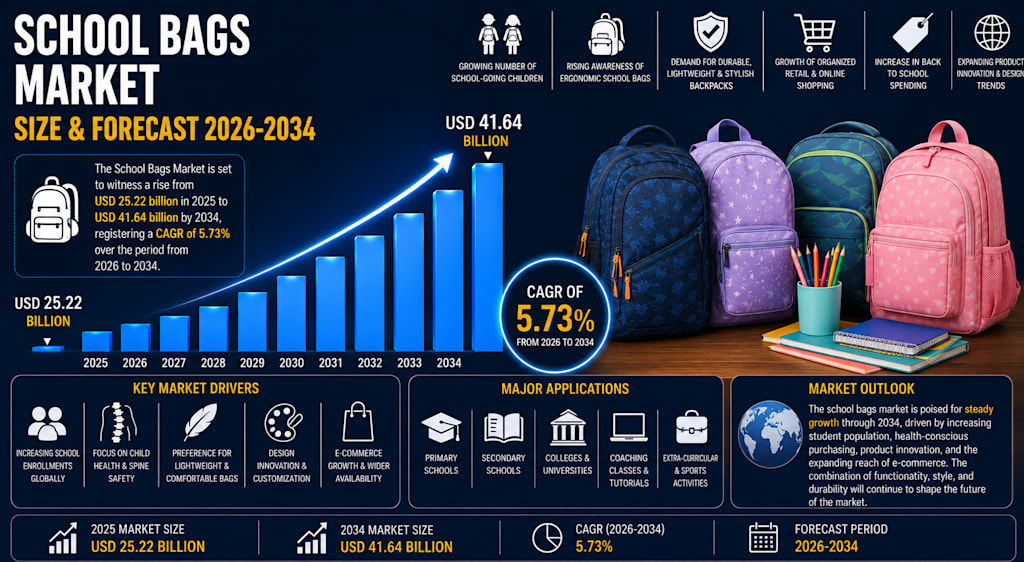
As educational systems expand and parents become more conscious of their children's well-being, demand for high-quality school bags continues to grow worldwide. According to Renub Research, the global School Bags Market is projected to increase from USD 25.22 billion in 2025 to USD 41.64 billion by 2034, registering a CAGR of 5.73% during the forecast period from 2026 to 2034.
This growth reflects changing consumer preferences, rising school enrollment, increased education spending, and the growing importance of ergonomics and innovative design in students' daily lives.
More Than Just a Bag
For millions of students worldwide, a school bag serves as an essential companion throughout their academic journey.
School bags carry textbooks, notebooks, stationery, lunch boxes, water bottles, electronic devices, sports equipment, and personal belongings. They accompany students from classrooms to playgrounds, libraries, and extracurricular activities.
Modern school bags are designed with a combination of functionality and comfort in mind. Padded shoulder straps, breathable back panels, multiple storage compartments, and lightweight materials have become standard features in many products.
At the same time, school bags have become an important form of self-expression. Students often choose bags based on color, design, favorite characters, sports teams, or popular brands.
This combination of practicality and personalization has transformed school bags into one of the most dynamic segments within the educational products market.
Rising Student Enrollment Creates Strong Demand
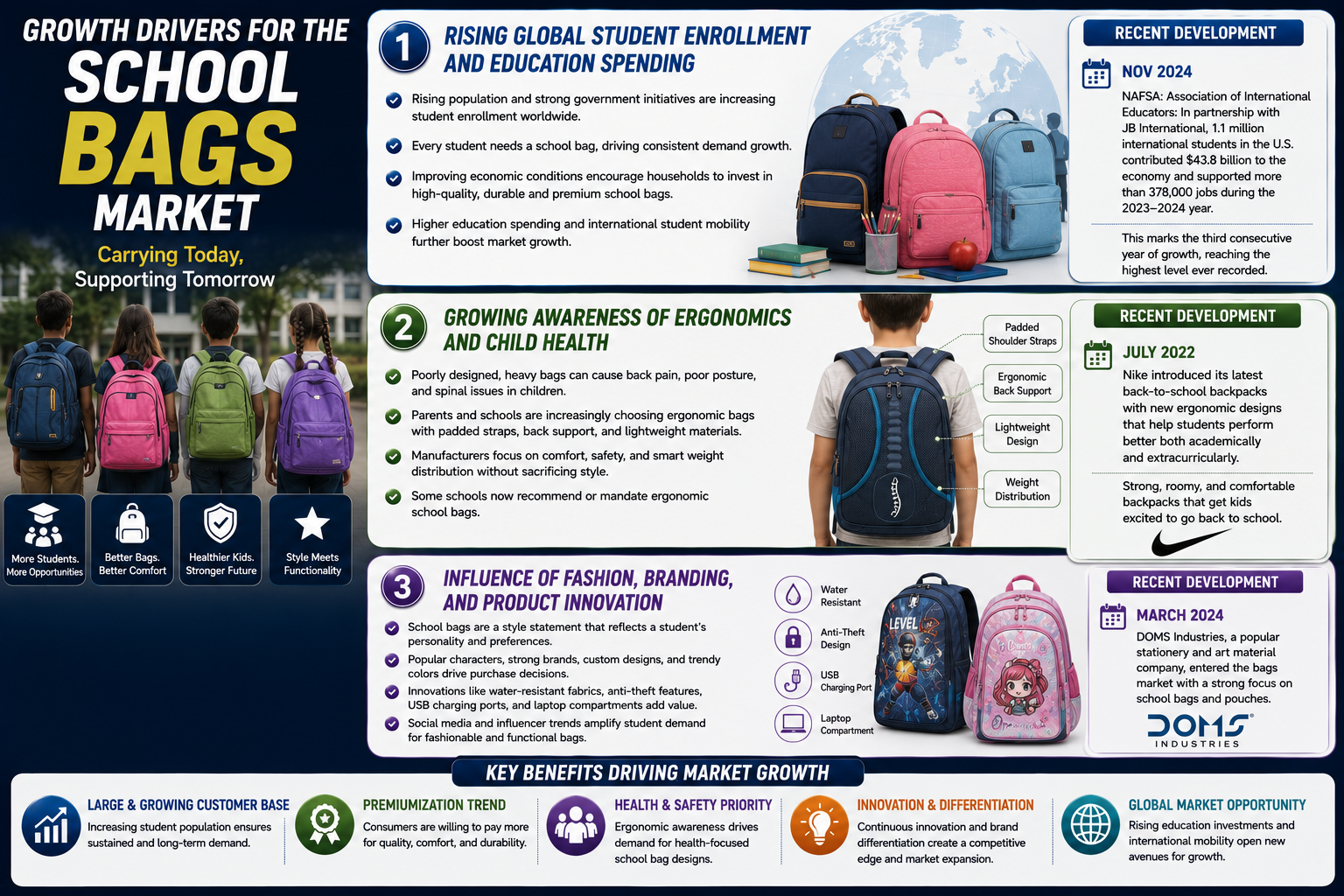
One of the most significant factors driving market growth is the increasing number of students worldwide.
Governments across many countries continue investing heavily in educational access and literacy programs. Expanding school enrollment rates mean that more children require educational materials and accessories, including school bags.
Growing populations in developing nations are further contributing to demand. As families prioritize education as a pathway to better opportunities, spending on school-related products continues to rise.
In many regions, rising household incomes have also encouraged parents to purchase higher-quality products rather than focusing solely on affordability.
This shift toward premium school bags is creating new opportunities for manufacturers that can offer durability, comfort, and innovative features.
Parents Are Paying Attention to Ergonomics
One of the most important trends shaping the school bags market is increased awareness of children's health and posture.
Medical professionals have long warned about the effects of carrying excessively heavy or poorly designed bags. Back pain, shoulder strain, poor posture, and spinal issues have become growing concerns among parents and educators.
As a result, demand for ergonomic school bags has increased significantly.
Today's parents are looking for products that distribute weight evenly and reduce physical stress on growing bodies. Features such as padded shoulder straps, adjustable harness systems, chest straps, lumbar support, and lightweight materials have become highly desirable.
Manufacturers have responded by investing heavily in ergonomic innovations.
Many brands now market their products based on comfort and health benefits rather than simply aesthetics. Schools and health experts are also encouraging the use of properly fitted bags, further driving consumer awareness.
This focus on physical well-being is expected to remain a major influence on purchasing decisions for years to come.
Fashion Meets Functionality
Students no longer view school bags as purely practical items.
For many children and teenagers, a school bag is an extension of their personality and style.
Colorful designs, licensed cartoon characters, sports branding, celebrity collaborations, and customizable features have become important selling points in the market.
Teenagers especially seek bags that reflect current fashion trends while still offering practical functionality.
Social media has accelerated this trend. Platforms such as Instagram, TikTok, and YouTube expose students to global fashion influences, encouraging demand for stylish backpacks and premium brands.
Manufacturers increasingly combine attractive designs with useful features such as water-resistant materials, hidden compartments, anti-theft protection, laptop sleeves, and USB charging ports.
The result is a product category that successfully blends fashion, technology, and utility.
Technology Is Changing Student Needs
The digital transformation of education has significantly influenced the design of school bags.
Students today carry far more than textbooks. Laptops, tablets, chargers, headphones, and other electronic devices have become part of daily school life.
As digital learning expands, demand for laptop-friendly school bags continues to grow.
Modern school bags often include padded laptop compartments, shock-resistant protection, cable organizers, and dedicated storage for electronic accessories.
Some advanced models even feature integrated USB charging ports, RFID protection, and smart tracking systems.
Parents appreciate these features because they help protect expensive devices while improving organization.
As schools continue adopting digital learning tools, technology-compatible bags are expected to become an increasingly important market segment.
Innovation Drives Consumer Interest
Innovation remains one of the strongest competitive factors within the school bags industry.
Manufacturers constantly seek new ways to differentiate their products and attract consumers.
Recent innovations include:
- Water-resistant and waterproof materials
- Lightweight construction
- Anti-theft compartments
- Sustainable fabrics
- Reflective safety features
- Smart charging capabilities
- Ergonomic weight distribution systems
- Personalized customization options
These innovations improve the overall user experience while addressing concerns related to safety, comfort, and convenience.
Brands that successfully combine innovation with affordability are often best positioned to capture market share.
Sustainability Gains Momentum
Environmental awareness is influencing purchasing behavior across virtually every consumer category, and school bags are no exception.
Many parents are increasingly interested in products manufactured using sustainable materials and environmentally responsible production methods.
This has encouraged manufacturers to explore recycled fabrics, eco-friendly packaging, and sustainable sourcing practices.
Some companies now promote backpacks made from recycled plastic bottles and other repurposed materials.
Although environmentally friendly products can sometimes carry higher production costs, growing consumer demand suggests sustainability will become a key competitive advantage in the coming years.
Younger generations are particularly receptive to environmentally responsible brands, creating long-term opportunities for manufacturers willing to invest in sustainable innovation.
Challenges Facing the Industry
Despite strong growth prospects, the school bags market faces several challenges.
One major issue is intense competition.
The industry includes numerous global brands, regional manufacturers, and local producers. In many developing markets, unorganized manufacturers offer low-cost alternatives that compete aggressively on price.
This creates pressure on established brands seeking to maintain quality while remaining affordable.
Price sensitivity remains especially important in emerging economies where purchasing decisions are often heavily influenced by household budgets.
Manufacturers must carefully balance innovation, durability, and affordability to remain competitive.
Another challenge involves durability expectations.
Parents increasingly view school bags as long-term investments and expect products to withstand years of daily use.
Failure to meet durability expectations can damage brand reputation and customer loyalty.
Nylon Remains a Market Favorite
Among various materials used in school bag manufacturing, nylon continues to dominate due to its durability, lightweight nature, and affordability.
Nylon bags offer several advantages:
- Resistance to tearing
- Water resistance
- Lightweight construction
- Easy maintenance
- Cost-effectiveness
Parents appreciate the durability and low maintenance requirements, while manufacturers benefit from the material's flexibility and design versatility.
Because nylon can easily accommodate ergonomic features and colorful designs, it remains one of the most widely used materials in the market.
The Growing Popularity of Laptop Bags
One of the fastest-growing segments within the industry is laptop school bags.
As digital learning becomes mainstream, students increasingly require safe and convenient ways to transport electronic devices.
Laptop bags offer specialized compartments, protective padding, and organizational features designed specifically for modern educational environments.
Many models combine technology-focused functionality with fashionable designs, making them attractive to students across multiple age groups.
This category is expected to remain a significant growth driver as educational institutions continue embracing digital technologies.
Online Retail Reshapes Purchasing Behavior
The rise of e-commerce has transformed the way parents and students shop for school bags.
Online platforms provide access to thousands of designs, brands, and price ranges from the convenience of home.
Consumers can compare products, read reviews, and take advantage of promotional discounts before making purchasing decisions.
Online-exclusive collections and customization options further enhance the appeal of digital shopping channels.
Growing smartphone penetration and internet accessibility are accelerating this trend globally.
While physical stores remain important during the back-to-school season, online retail is becoming one of the fastest-growing distribution channels in the market.
India Emerges as a High-Growth Market
India represents one of the most promising opportunities within the global school bags industry.
The country has one of the world's largest student populations, supported by increasing school enrollment rates and rapid urbanization.
Parents are becoming more aware of ergonomic designs, product quality, and brand value.
At the same time, rising disposable incomes are enabling families to invest in higher-quality educational products.
Online retail platforms have expanded access to branded products across urban and semi-urban areas, further supporting market growth.
Demand for colorful designs, cartoon-themed bags, high-capacity backpacks, and laptop-compatible products continues to increase across multiple student age groups.
The Future of School Bags
The school bag industry is entering a period of significant transformation.
Future products will likely become smarter, lighter, more sustainable, and increasingly tailored to individual needs.
Technology integration, ergonomic innovation, and environmentally responsible manufacturing will shape the next generation of school bags.
Manufacturers that understand changing student lifestyles and parental expectations will be best positioned for success.
As educational systems continue evolving and digital learning expands, school bags will remain an essential product while simultaneously becoming more sophisticated than ever before.
Final Thoughts
The humble school bag has come a long way from being a simple storage accessory. Today, it represents a combination of health-conscious design, technological functionality, personal style, and environmental responsibility.
With the global School Bags Market expected to grow from USD 25.22 billion in 2025 to USD 41.64 billion by 2034, the industry is clearly benefiting from changing educational trends and consumer preferences. As parents continue prioritizing comfort, durability, and innovation, manufacturers have an opportunity to redefine what students carry on their backs every day.
In the years ahead, the school bag will remain an indispensable part of student life—only smarter, safer, and more stylish than ever before.
About the Creator
Enjoyed the story? Support the Creator.
Subscribe for free to receive all their stories in your feed.
Comments
There are no comments for this story
Be the first to respond and start the conversation.