
Schizophrenia Drugs Market Grows as Mental Health Awareness and Next-Generation Therapies Transform Psychiatric Care
Rising diagnosis rates, expanding access to treatment, and advances in long-acting antipsychotic therapies are driving steady growth in the global schizophrenia drugs industry.

Mental health has moved from the margins of public discussion to the center of healthcare priorities worldwide. Governments, healthcare providers, researchers, and advocacy groups are increasingly recognizing the importance of addressing psychiatric disorders with the same urgency as physical illnesses.
Among the most complex and challenging mental health conditions is schizophrenia, a chronic psychiatric disorder that affects how individuals think, perceive reality, express emotions, and interact with the world around them. For millions of people globally, schizophrenia presents lifelong challenges that require continuous treatment and support.
Fortunately, advances in psychiatric medicine are improving outcomes for many patients. New generations of antipsychotic medications, long-acting injectable therapies, and increased investment in mental healthcare are helping patients manage symptoms more effectively while improving long-term quality of life.
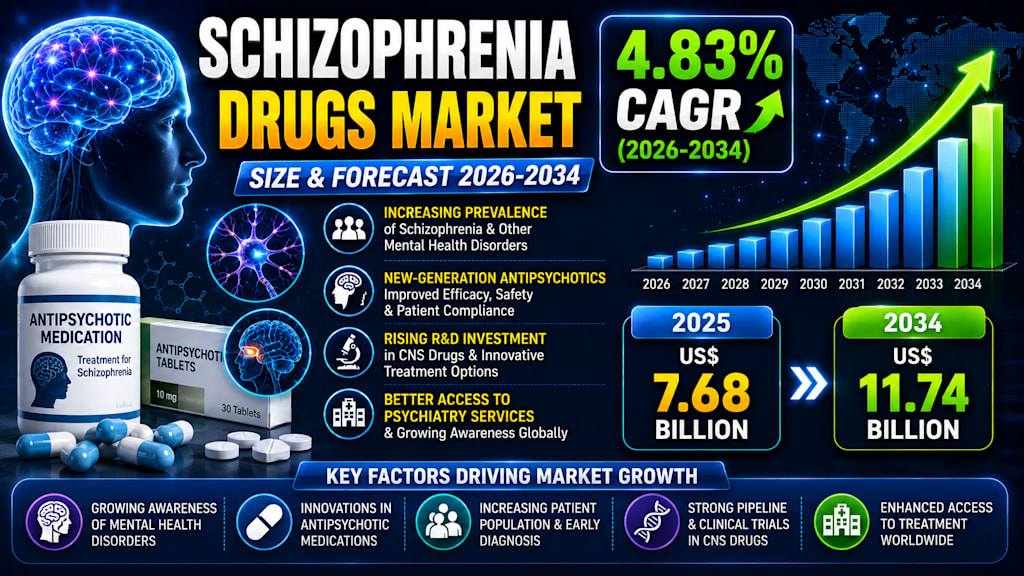
According to industry forecasts, the global Schizophrenia Drugs Market is expected to grow from US$7.68 billion in 2025 to US$11.74 billion by 2034, registering a compound annual growth rate (CAGR) of 4.83% between 2026 and 2034. Rising disease prevalence, growing awareness of mental health disorders, enhanced psychiatric care access, and ongoing innovation in central nervous system (CNS) therapeutics are expected to support sustained market growth.
Understanding Schizophrenia and Its Global Impact
Schizophrenia is a long-term psychiatric disorder characterized by disturbances in thinking, perception, emotions, and behavior.
Individuals living with schizophrenia may experience hallucinations, delusions, disorganized speech, cognitive impairment, emotional withdrawal, and difficulty maintaining social relationships. Symptoms vary significantly among patients and often require lifelong management.
Antipsychotic medications remain the cornerstone of treatment. These drugs help regulate neurotransmitters such as dopamine and serotonin, reducing psychotic symptoms and helping patients achieve greater emotional stability.
Commonly prescribed medications include risperidone, olanzapine, quetiapine, clozapine, and aripiprazole. Beyond schizophrenia, many of these medications are also used to treat bipolar disorder, psychosis, depression, and certain behavioral disorders.
The scale of the condition highlights why continued investment in treatment innovation remains so important.
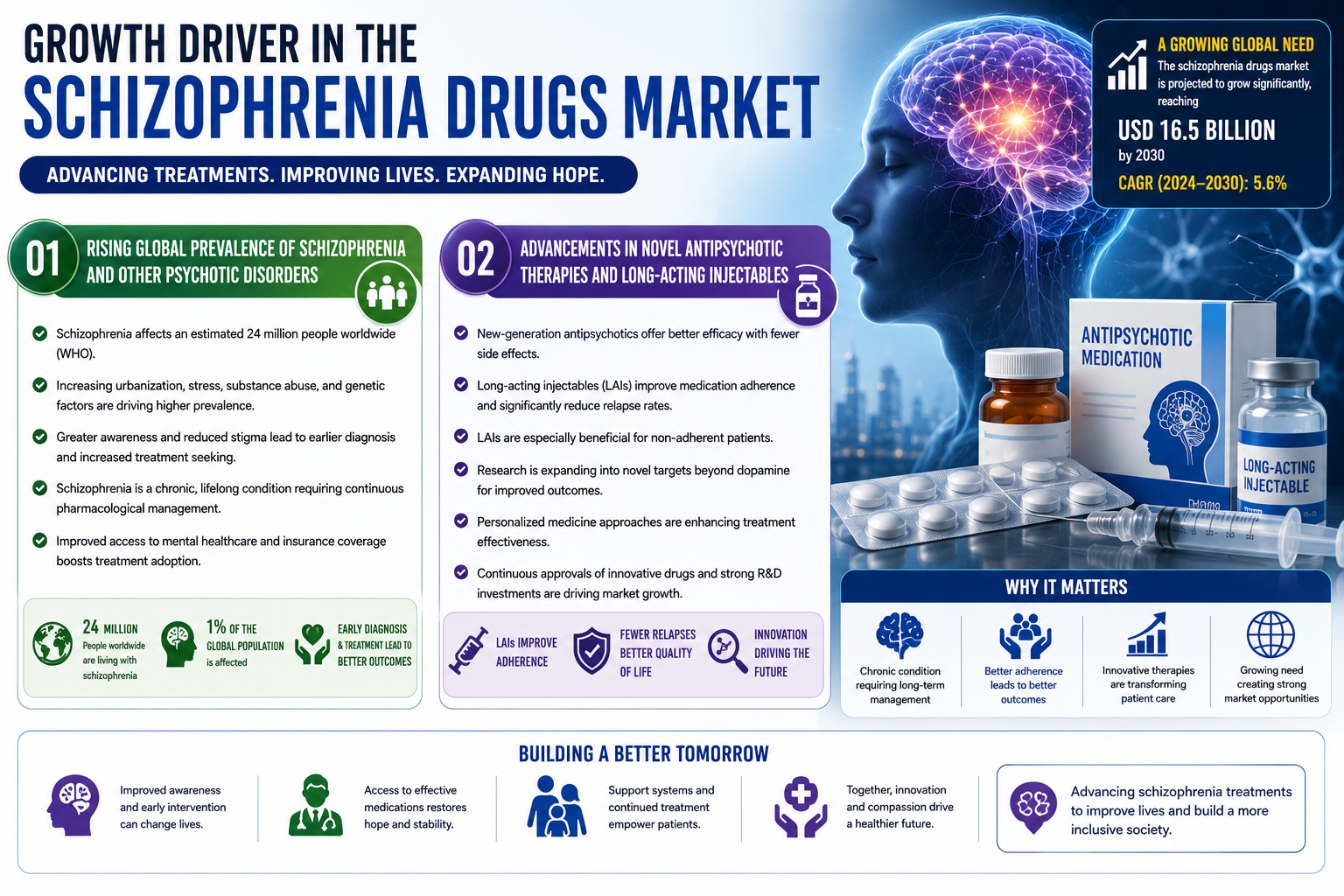
According to market data, schizophrenia affects approximately 24 million people worldwide, while new cases occur at a rate of approximately 1.5 per 10,000 individuals annually.
Despite the availability of treatments, substantial gaps in care continue to exist globally.
Treatment Gaps Remain a Major Healthcare Challenge
One of the most significant concerns within schizophrenia care is the large number of individuals who remain untreated or undertreated.
Industry data indicates that two out of three individuals living with psychosis, including schizophrenia, do not receive appropriate healthcare, while less than one-third of schizophrenia patients receive treatment. Additionally, only about 20% receive treatment sufficient to manage severe symptoms effectively.
These statistics highlight persistent barriers to care, including:
- Limited access to psychiatric services
- Social stigma surrounding mental illness
- Shortages of mental health professionals
- Financial constraints
- Inadequate healthcare infrastructure
Regional differences further illustrate the challenge.
Africa experiences the highest treatment gap at approximately 75%, while Asia faces a treatment gap of around 60%. Even highly developed healthcare systems continue to struggle with access and treatment continuity.
Closing these gaps remains one of the most important opportunities for improving outcomes and expanding access to effective schizophrenia therapies.
Rising Awareness Is Driving Earlier Diagnosis
Historically, schizophrenia has often been misunderstood, resulting in delayed diagnosis and treatment.
Today, public awareness campaigns, advocacy initiatives, and growing conversations around mental health are helping reduce stigma and encourage individuals to seek professional support earlier. Governments, healthcare organizations, and mental health advocates continue investing in educational efforts aimed at improving recognition of psychiatric symptoms and promoting treatment acceptance.
Earlier diagnosis allows patients to begin treatment sooner, reducing symptom severity and improving long-term outcomes.
The expansion of psychiatric services, telepsychiatry programs, and mental health screening initiatives has further strengthened access to care.
As societal attitudes toward mental health continue evolving, more individuals are expected to receive appropriate diagnoses and treatment, contributing to sustained demand for schizophrenia medications.
Innovation Is Transforming Antipsychotic Therapy
One of the most important growth drivers within the schizophrenia drugs market is ongoing pharmaceutical innovation.
Older antipsychotic medications, while effective, were frequently associated with side effects such as weight gain, drowsiness, motor dysfunction, and poor treatment adherence. These limitations often affected patient outcomes and increased the risk of relapse.
The pharmaceutical industry is increasingly focused on developing safer and more effective second-generation and third-generation antipsychotic therapies.
These newer medications aim to improve tolerability while maintaining strong efficacy against both positive symptoms—such as hallucinations and delusions—and negative symptoms such as social withdrawal and emotional flattening.
Researchers are also exploring novel mechanisms that extend beyond traditional dopamine-targeted therapies, opening new possibilities for future treatment approaches.
Personalized medicine strategies are becoming increasingly relevant as clinicians seek therapies tailored to individual patient characteristics and treatment responses.
Continued investment in central nervous system drug research is expected to remain a major catalyst for market expansion.
Long-Acting Injectables Are Changing Patient Care
One of the most significant developments in schizophrenia treatment is the growing adoption of long-acting injectable (LAI) antipsychotics.
Unlike traditional oral medications that require daily administration, LAIs are delivered through injections that can provide therapeutic benefits for weeks or even months.
These formulations address one of the biggest challenges in schizophrenia management: treatment adherence.
Many patients struggle to maintain consistent medication schedules due to cognitive symptoms, side effects, or limited insight into their illness. Missed doses can increase the likelihood of relapse, hospitalization, and worsening symptoms.
Long-acting injectable therapies help reduce these risks by ensuring more consistent medication delivery.
Common LAI treatments include formulations of:
- Paliperidone
- Risperidone
- Aripiprazole
- Olanzapine
Healthcare providers increasingly view these therapies as valuable tools for improving long-term disease management and reducing healthcare utilization costs.
Oral Medications Continue to Dominate Treatment
Despite the growth of injectable therapies, oral antipsychotics remain the most widely used treatment option worldwide.
Tablets, capsules, and liquid formulations are commonly prescribed because they are readily available, familiar to healthcare providers, and suitable for both inpatient and outpatient treatment settings.
Oral therapies also offer flexibility in dosing adjustments, allowing clinicians to tailor treatment plans according to patient response and tolerance levels.
The availability of generic versions has improved affordability and access in many developing regions, supporting widespread adoption.
While adherence challenges remain, oral medications continue to serve as the foundation of schizophrenia treatment globally.
Second-Generation Antipsychotics Lead Market Growth
The second-generation antipsychotic segment represents one of the most important areas within the market.
Often referred to as atypical antipsychotics, these medications act on both dopamine and serotonin pathways and generally offer improved tolerability compared with first-generation treatments.
Popular second-generation antipsychotics include:
- Olanzapine
- Risperidone
- Quetiapine
- Ziprasidone
- Lurasidone
- Aripiprazole
These medications are widely used not only for schizophrenia but also for bipolar disorder and major depressive disorders, contributing to their strong commercial performance.
Improved patient compliance and broader therapeutic applications continue to support growth within this segment.
Hospitals and Retail Pharmacies Drive Distribution
Hospitals remain critical centers for schizophrenia diagnosis, stabilization, and treatment initiation.
Patients experiencing severe psychotic episodes, suicidal behavior, aggressive symptoms, or treatment-resistant schizophrenia often require hospitalization and close monitoring. Hospitals also play a major role in administering injectable therapies and managing complex psychiatric cases.
At the same time, retail pharmacies account for a substantial share of medication distribution.
Most long-term maintenance therapies are dispensed through community pharmacies, which provide ongoing access to prescription medications and support adherence through patient counseling services.
Online pharmacies are increasingly supplementing traditional channels by improving access for patients in remote and underserved locations.
The United States Remains a Global Leader
The United States continues to dominate the global schizophrenia drugs market.
Strong healthcare infrastructure, widespread mental health awareness, advanced psychiatric treatment options, and significant pharmaceutical innovation contribute to the country's leadership position.
The United States also serves as a major center for clinical research and drug development.
A notable milestone occurred in 2024 when Bristol Myers Squibb introduced Cobenfy, representing an important advancement in psychiatric treatment innovation.
Broad insurance coverage and growing recognition of mental health conditions continue supporting strong market demand across the country.
Europe Strengthens Innovation Efforts
Germany remains one of Europe’s most significant schizophrenia treatment markets.
A strong healthcare system, widespread health insurance coverage, and increasing adoption of advanced therapies have supported market expansion. The country continues emphasizing precision medicine and innovative treatment approaches designed to improve efficacy and reduce side effects.
Meanwhile, Otsuka Pharmaceutical and H. Lundbeck expanded access to Abilify Maintena across Europe, further strengthening the long-acting injectable segment.
China and Saudi Arabia Present Emerging Opportunities
China's schizophrenia drugs market is expanding rapidly due to increasing awareness, healthcare modernization, and government support for mental health services.
In 2023, Luye Pharma launched Rykindo, providing additional treatment options for schizophrenia patients.
Saudi Arabia is also witnessing steady growth as healthcare reforms and mental health investments improve treatment access.
The launch of Invega Hafyera by Johnson & Johnson reflects increasing interest in advanced long-duration therapies within the region.
Challenges Continue to Affect Adoption
Despite strong growth potential, the schizophrenia drugs market faces important challenges.
High Treatment Costs
Advanced therapies, particularly newer long-acting injectable medications, often carry significantly higher costs than traditional treatments. This limits accessibility in lower-income markets and regions with inadequate insurance coverage.
Side Effects and Treatment Adherence
Many antipsychotic medications can cause undesirable side effects, including weight gain, diabetes risk, sedation, sexual dysfunction, and movement disorders. These issues can discourage long-term treatment adherence.
Persistent Social Stigma
Stigma surrounding mental illness remains a major barrier to diagnosis and treatment. Fear of discrimination, misunderstanding of psychiatric conditions, and cultural attitudes toward mental health continue preventing some individuals from seeking care.
Addressing these challenges will be critical for ensuring broader access to treatment and improving patient outcomes.
Looking Ahead
The future of the schizophrenia drugs market appears increasingly promising.
Growing awareness, earlier diagnosis, expanded healthcare infrastructure, and continued pharmaceutical innovation are creating favorable conditions for long-term growth. Advances in atypical antipsychotics, personalized medicine, and long-acting injectable therapies are expected to further improve treatment outcomes while enhancing quality of life for patients.
With the market projected to grow from US$7.68 billion in 2025 to US$11.74 billion by 2034, schizophrenia treatment remains an important area of focus for healthcare systems, researchers, and pharmaceutical companies worldwide.
Final Thoughts
Schizophrenia remains one of the most challenging psychiatric disorders, affecting millions of individuals and families around the world. Yet the treatment landscape is evolving rapidly.
Advances in neuroscience, pharmaceutical innovation, and mental health awareness are creating new opportunities to improve outcomes and reduce the burden of disease. Long-acting injectable therapies, safer antipsychotic medications, and growing access to psychiatric care are helping patients achieve greater stability and independence.
As healthcare systems continue prioritizing mental health and investing in innovative treatments, the schizophrenia drugs market will play a vital role in supporting better care, reducing treatment gaps, and improving the lives of millions living with this complex condition.
About the Creator
Enjoyed the story? Support the Creator.
Subscribe for free to receive all their stories in your feed.
Comments
There are no comments for this story
Be the first to respond and start the conversation.