
Saudi Arabia Whiskey Market Set for Remarkable Growth Despite Tight Regulations
Luxury tourism, premium hospitality, and rising international business travel are quietly transforming Saudi Arabia’s niche whiskey industry.

Saudi Arabia may not be the first country people associate with whiskey consumption, yet the Kingdom is steadily becoming one of the Middle East’s most closely watched premium beverage markets. While strict alcohol regulations continue to shape the country’s social and legal landscape, major economic reforms, international tourism expansion, and luxury hospitality investments are opening limited but meaningful opportunities for premium spirits.
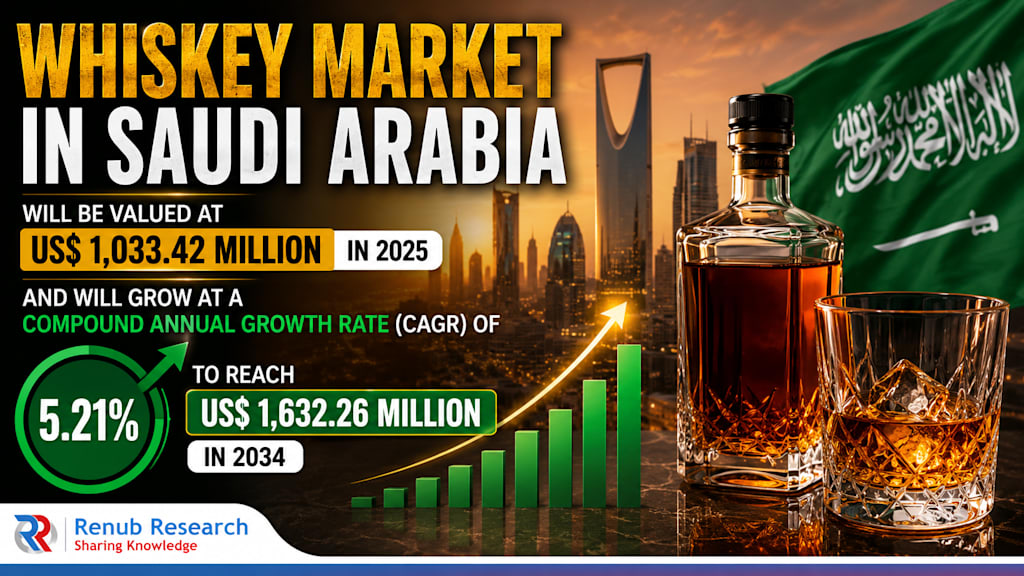
According to Renub Research, the Saudi Arabia whiskey market is expected to reach impressive growth over the next decade. The market is projected to increase from US$ 1,033.42 million in 2025 to US$ 1,632.26 million by 2034, growing at a compound annual growth rate (CAGR) of 5.21%.
At first glance, such projections may seem surprising in a country known for its highly regulated stance on alcohol. However, beneath the surface lies a rapidly evolving hospitality and tourism sector that is increasingly connected to global luxury standards and international business expectations.
Saudi Arabia’s whiskey market is not growing because of mass domestic consumption. Instead, it is expanding through carefully controlled hospitality environments, international tourism, expatriate communities, diplomatic zones, and premium travel experiences tied to the Kingdom’s ambitious Vision 2030 strategy.
A Highly Regulated Yet Growing Market
Whiskey remains one of the world’s most recognized premium alcoholic beverages. Produced through the fermentation and distillation of grains such as barley, corn, rye, and wheat, whiskey is aged in wooden barrels to develop its distinct flavors, aromas, and character.
Globally, whiskey categories such as Scotch, bourbon, Irish whiskey, and Canadian whiskey enjoy widespread popularity. In Saudi Arabia, however, consumption operates under a completely different framework.
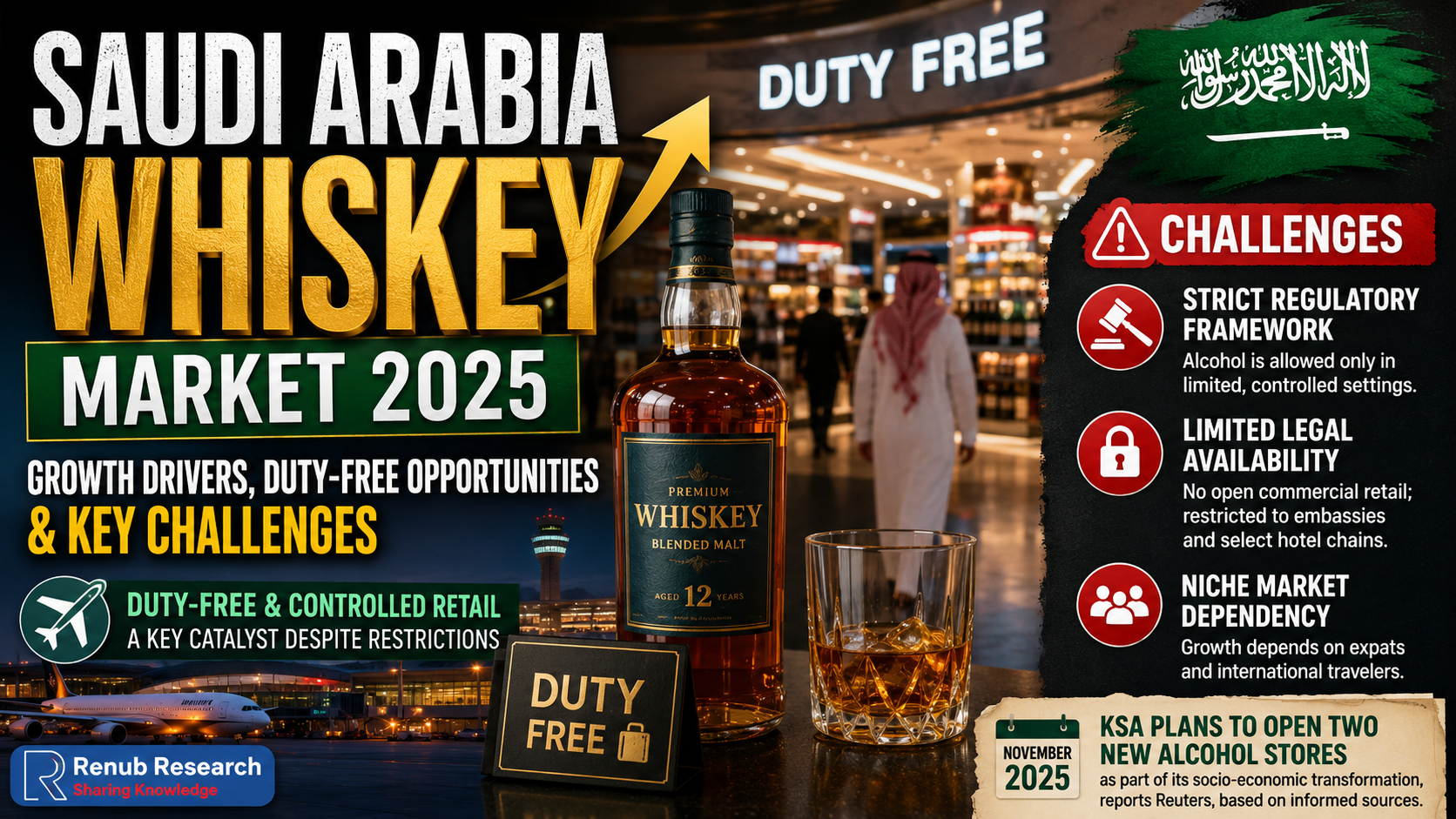
Alcohol sales are heavily restricted under Saudi law, and public retail access remains prohibited. Yet despite these regulations, demand still exists within tightly controlled environments catering primarily to diplomats, expatriates, luxury tourists, and international business travelers.
The Kingdom’s expanding hospitality sector is becoming one of the main drivers behind this niche market.
Luxury hotels, premium resorts, diplomatic venues, and certain authorized hospitality locations are increasingly designed to accommodate international guests accustomed to global luxury standards. In these specialized environments, premium spirits continue to play a role in upscale guest experiences.
This controlled demand is quietly shaping a unique whiskey market unlike anywhere else in the world.
Vision 2030 Is Changing the Hospitality Landscape
Saudi Arabia’s Vision 2030 initiative is perhaps the single most important factor influencing the future of the whiskey market.
The national economic diversification strategy aims to reduce dependence on oil revenues while transforming the Kingdom into a global center for tourism, business, entertainment, and investment.
Massive infrastructure projects such as NEOM, The Red Sea Project, and Qiddiya are at the center of this transformation. These mega-developments are designed to attract millions of international visitors through luxury resorts, entertainment districts, sporting events, and world-class hospitality experiences.
To support this tourism growth, Saudi Arabia is investing heavily in hotel infrastructure.
One major US-Saudi partnership recently announced plans to invest approximately US$ 1 billion into developing around 50 hotels across major cities including Riyadh, Jeddah, and Dammam by 2029. Thousands of additional hotel rooms are expected to enter the market as Saudi Arabia positions itself as an international tourism destination.
As tourism infrastructure expands, demand for premium hospitality services naturally follows.
International travelers often expect luxury dining experiences, upscale lounges, and premium guest services comparable to those found in major global cities. This demand creates opportunities for carefully regulated premium beverage offerings within approved hospitality settings.
The whiskey market, although still niche, benefits directly from this shift.
International Tourism Is Fueling Premium Demand
Saudi Arabia’s tourism industry has experienced remarkable growth in recent years.
Reports indicate that the Kingdom welcomed more than 122 million tourists in 2025, highlighting the rapid success of the country’s tourism strategy. While religious tourism remains critically important, non-religious tourism segments are expanding quickly.
Business travel, luxury tourism, sports events, entertainment festivals, and international conferences are all contributing to increased visitor numbers.
These international visitors bring different hospitality expectations and consumption habits.
Many travelers staying in premium hotels seek experiences aligned with global luxury standards. While Saudi Arabia’s regulations continue to prohibit open alcohol sales, hospitality operators catering to international audiences increasingly focus on delivering high-end, globally competitive guest experiences.
Business tourism is especially influential.
Saudi Arabia has become a key destination for international investment discussions, infrastructure partnerships, technology expansion, and energy-sector collaboration. Multinational corporations regularly send executives, consultants, and business teams to the Kingdom for extended stays.
In many cases, premium whiskey consumption occurs within private business environments rather than public nightlife settings. Luxury networking events, diplomatic gatherings, and executive hospitality services all contribute to niche demand.
As Saudi Arabia continues strengthening its global business presence, premium hospitality services are expected to expand alongside it.
Expatriate Communities Continue to Influence Consumption
Another important driver of Saudi Arabia’s whiskey market is its large expatriate population.
Foreign professionals work across numerous sectors within the Kingdom, including oil and gas, finance, healthcare, construction, engineering, and information technology. Many expatriates come from countries where whiskey consumption is socially common and culturally accepted.
Although access remains restricted, expatriates continue to represent a significant portion of the market’s consumer base.
International employees working on long-term infrastructure and industrial projects often stay in hospitality environments designed specifically for foreign workers and executives. Premium beverage demand within these spaces contributes to market stability despite regulatory limitations.
The Saudi government’s long-term employment and tourism goals may further increase international workforce mobility.
Authorities have announced plans to generate approximately 1.6 million tourism-related jobs by 2030. As the hospitality sector grows, Saudi Arabia is becoming increasingly integrated into global tourism and business networks.
This internationalization supports demand for upscale lifestyle and hospitality services, including premium beverage offerings in regulated settings.
Duty-Free and Controlled Channels Support the Industry
Duty-free retail and controlled distribution channels also play a role in sustaining Saudi Arabia’s whiskey market.
Major international airports in Riyadh, Jeddah, and Dammam handle millions of travelers annually. As airport infrastructure modernizes, duty-free retail has become an increasingly important platform for luxury goods and premium international brands.
Globally recognized whiskey labels maintain strong visibility in duty-free environments because travelers often associate these products with prestige, convenience, and international quality standards.
Controlled hospitality distribution channels further support the market.
Luxury hotels and approved venues operating within legal frameworks provide limited access to premium spirits for eligible international guests. While these opportunities remain highly regulated, they create structured pathways for market activity.
Recent international media reports suggesting the planned opening of additional controlled alcohol retail outlets for diplomats and authorized consumers have also drawn global attention. Although such initiatives remain limited and tightly supervised, they reflect Saudi Arabia’s evolving approach toward international hospitality management.
The changes are gradual, but they indicate a broader shift tied to economic modernization and tourism development.
Scotch Whiskey Dominates the Premium Segment
Among various whiskey categories, Scotch whiskey continues to hold one of the strongest positions within Saudi Arabia’s premium market.
Scotch is widely recognized for its craftsmanship, heritage, and luxury appeal. Premium hotels and upscale hospitality venues frequently favor Scotch brands because they are globally respected and familiar to international travelers.
For many luxury consumers, Scotch represents sophistication and exclusivity.
American whiskey is also gaining popularity within certain hospitality circles.
Bourbon and Tennessee whiskey varieties appeal to expatriates and international visitors who prefer smoother and sweeter flavor profiles. Premium American brands are increasingly associated with upscale dining experiences and luxury social environments.
However, availability remains highly selective and concentrated within controlled hospitality spaces.
Irish whiskey and Canadian whiskey also maintain niche demand among specific expatriate groups and luxury travelers.
Premium and Super-Premium Categories Lead Market Growth
One of the most notable trends in Saudi Arabia’s whiskey industry is the strong growth of premium and super-premium product categories.
Unlike mass-market alcohol industries in other countries, Saudi Arabia’s whiskey market is heavily centered around exclusivity and luxury positioning.
Consumers within this segment typically include diplomats, international executives, affluent travelers, and elite hospitality clients seeking high-end experiences.
Premium whiskey buyers often prioritize:
- Brand prestige
- Product rarity
- Smoothness and craftsmanship
- International reputation
- Exclusive hospitality experiences
Super-premium whiskey products are especially valued as symbols of status and sophistication.
Consumption in this category often occurs within private luxury settings, diplomatic gatherings, executive networking events, and elite hospitality venues rather than traditional public entertainment environments.
As Saudi Arabia expands its luxury tourism offerings, premium beverage categories are becoming increasingly linked to broader hospitality branding strategies.
Riyadh, Jeddah, and Dammam Drive Market Activity
Saudi Arabia’s whiskey market remains concentrated primarily within major urban and economic centers.
Riyadh
As the Kingdom’s capital, Riyadh hosts embassies, multinational corporations, government institutions, and international business events.
Luxury hotels serving diplomats and overseas executives represent a major source of hospitality demand. The city’s rapid modernization under Vision 2030 continues to strengthen its position as one of Saudi Arabia’s most important premium hospitality markets.
Jeddah
Jeddah remains one of Saudi Arabia’s most internationally connected cities.
Its role as a gateway for religious tourism, business travel, and international trade supports strong hospitality activity. Luxury hotels and premium tourism services catering to foreign visitors contribute significantly to the city’s niche whiskey demand.
Dammam and Dhahran
Dammam and nearby Dhahran are closely tied to the Kingdom’s energy and industrial sectors.
These cities host large expatriate communities employed in oil, gas, engineering, and industrial operations. International business activity helps sustain premium hospitality demand within regulated environments.
Corporate gatherings, long-term foreign assignments, and executive travel continue to support niche consumption patterns in the region.
Major Challenges Still Restrict Expansion
Despite positive forecasts, Saudi Arabia’s whiskey market continues to face significant challenges.
The country’s strict regulatory environment remains the biggest obstacle.
Alcohol consumption and sales are tightly controlled under Saudi law, limiting market activity primarily to diplomatic, hospitality, and authorized international settings. Traditional retail distribution systems commonly seen in global alcohol markets are not permitted.
This creates a highly specialized market structure.
Cultural sensitivities also play a major role.
Alcohol consumption is not part of mainstream Saudi social culture, resulting in a relatively small domestic consumer base. Demand therefore depends heavily on expatriates, foreign tourists, diplomats, and international business travelers.
Marketing restrictions present another challenge.
Alcohol advertising methods commonly used in international markets are largely unavailable within Saudi Arabia. Premium brands must instead rely on reputation, luxury positioning, hospitality partnerships, and discreet visibility within approved environments.
These limitations mean that the market is unlikely to evolve into a mass-consumption industry anytime soon.
The Future of Saudi Arabia’s Whiskey Market
Saudi Arabia’s whiskey market is expected to remain highly controlled, specialized, and closely linked to premium hospitality growth.
Yet within that niche lies meaningful commercial potential.
Luxury hospitality industries often generate strong profit margins through exclusivity, premium pricing, and elite customer experiences. As Saudi Arabia attracts more high-net-worth travelers, international investors, and global corporations, demand for world-class hospitality services is likely to continue increasing.
The Kingdom’s international image is also evolving rapidly.
Saudi Arabia is increasingly positioning itself as a destination for tourism, sports, entertainment, investment, and global business partnerships. Premium hospitality standards are becoming essential to this transformation.
Within this changing environment, carefully regulated whiskey consumption connected to tourism and luxury business hospitality may continue expanding steadily over the next decade.
Final Thoughts
Saudi Arabia’s whiskey market represents one of the most fascinating contradictions in the global beverage industry.
While strict alcohol regulations remain firmly in place, the Kingdom’s rapidly expanding tourism and hospitality sectors are creating new forms of controlled premium demand. Luxury hotels, diplomatic zones, business tourism, and expatriate communities are all contributing to a market that continues to grow quietly behind the scenes.
Renub Research’s forecast projecting the market to exceed US$ 1.63 billion by 2034 highlights the impact of Saudi Arabia’s broader economic transformation.
The growth story is not about mainstream alcohol consumption. Instead, it reflects the rise of luxury tourism, international business travel, premium hospitality infrastructure, and global investment partnerships tied to Vision 2030.
For hospitality operators, investors, and premium beverage companies, Saudi Arabia is increasingly becoming a market worth watching — not because it mirrors traditional alcohol industries, but because it represents a unique intersection of modernization, luxury tourism, and tightly controlled economic opportunity.
About the Creator
Enjoyed the story? Support the Creator.
Subscribe for free to receive all their stories in your feed.
Comments
There are no comments for this story
Be the first to respond and start the conversation.