
Saudi Arabia Processed Meat Market Outlook 2026–2034: How Urbanization and Convenience Foods Are Driving Industry Growth
Rising urban lifestyles, expanding retail infrastructure, and increasing demand for halal-certified protein products are fueling steady growth in Saudi Arabia’s processed meat market.

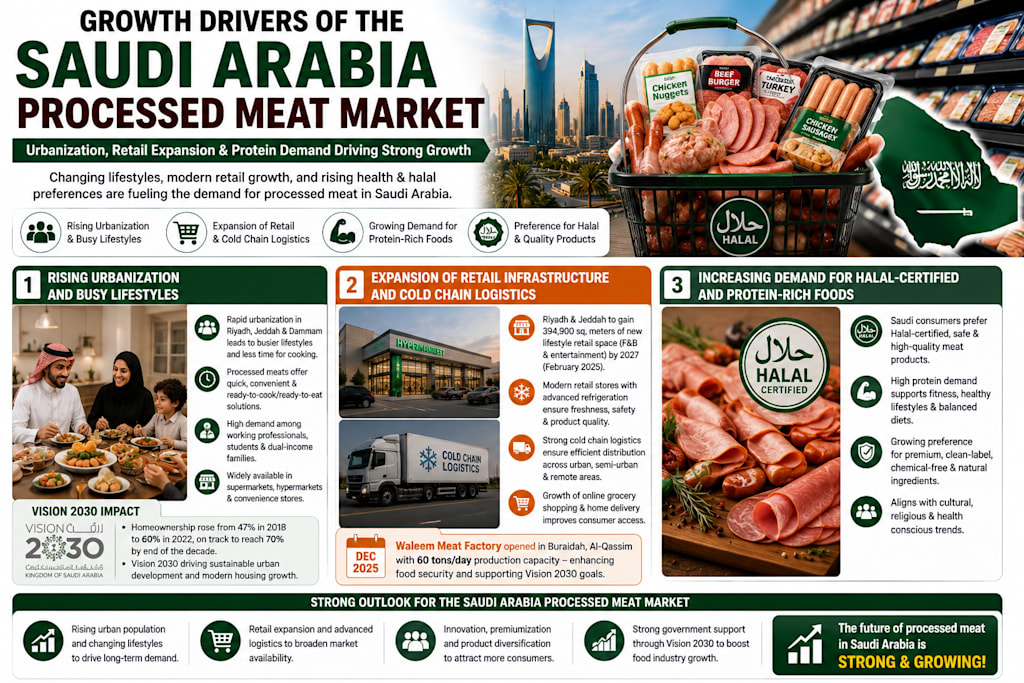
Saudi Arabia’s food and beverage industry is undergoing a significant transformation as changing lifestyles, urbanization, and rising disposable incomes continue to reshape consumer eating habits. Among the sectors benefiting from these changes, processed meat has emerged as one of the fastest-growing categories, driven by increasing demand for convenient, protein-rich, and ready-to-consume food products.
Modern consumers are increasingly looking for meal solutions that fit into busy schedules while maintaining taste, quality, and nutritional value. Processed meat products such as sausages, nuggets, burgers, deli meats, and frozen meat items offer an attractive solution by combining convenience with high protein content.
The rapid expansion of supermarkets, hypermarkets, convenience stores, online grocery platforms, and fast-food chains has further increased product accessibility throughout the Kingdom. At the same time, strict adherence to halal certification standards ensures that processed meat products align with local cultural and religious requirements.
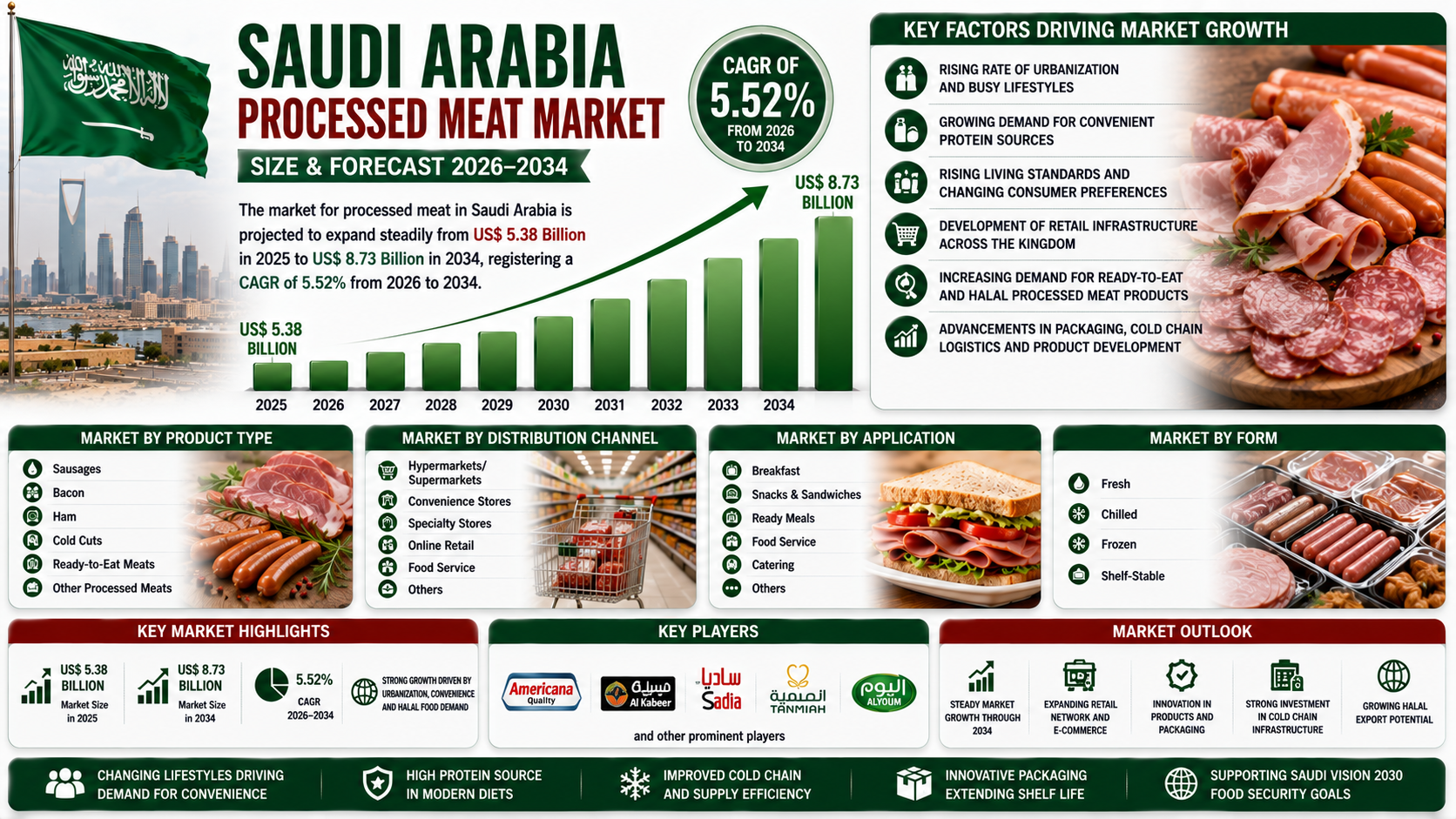
According to Renub Research, the Saudi Arabia Processed Meat Market is expected to grow from US$ 5.38 billion in 2025 to US$ 8.73 billion by 2034, registering a compound annual growth rate (CAGR) of 5.52% between 2026 and 2034. Rising urbanization, growing demand for convenience foods, expanding retail infrastructure, and increasing consumption of halal-certified protein products are among the primary drivers supporting market growth.
As Saudi Arabia continues advancing its Vision 2030 economic diversification strategy, the processed meat industry is expected to play an increasingly important role within the country’s modern food ecosystem.
Understanding Processed Meat and Its Growing Popularity
Processed meat refers to meat products that have undergone preservation or preparation methods such as curing, smoking, salting, fermentation, cooking, or the addition of preservatives.
These processes help improve flavor, enhance shelf life, increase convenience, and simplify storage and transportation.
Popular processed meat products include sausages, burgers, nuggets, deli meats, canned meats, hot dogs, and ready-to-cook frozen products.
Consumers value processed meats because they require minimal preparation while providing a reliable source of dietary protein.
In Saudi Arabia, processed meat has gained substantial popularity due to changing lifestyles, increased workforce participation, and growing demand for convenient meal options.
The widespread availability of halal-certified products further supports consumer confidence and market growth.
As urban consumers increasingly seek practical meal solutions, processed meat products continue becoming an integral part of modern dietary habits.
Urbanization Is Driving Demand for Convenience Foods
One of the strongest factors supporting market growth is Saudi Arabia’s rapid urbanization.
A growing proportion of the population now lives in major urban centers such as Riyadh, Jeddah, Dammam, and Mecca, where fast-paced lifestyles leave consumers with less time for traditional meal preparation.
Working professionals, students, and dual-income households increasingly prefer foods that are quick, convenient, and easy to prepare.
Processed meat products fit naturally into these changing consumption patterns.
Ready-to-cook sausages, frozen nuggets, deli slices, and burger patties allow consumers to prepare meals quickly while maintaining protein intake.
Saudi Arabia’s Vision 2030 development strategy has further accelerated urban expansion and residential development across the Kingdom.
Rising homeownership rates and continued urban growth are expected to support long-term demand for convenience-oriented food products.
Retail Expansion Is Strengthening Market Accessibility
The rapid development of modern retail infrastructure has significantly improved access to processed meat products.
Supermarkets, hypermarkets, convenience stores, and specialty food retailers now offer extensive selections of chilled, frozen, and ready-to-eat meat products.
Improved retail penetration has increased product visibility and consumer awareness throughout both urban and semi-urban regions.
In February 2025, major retail expansion projects in Riyadh and Jeddah highlighted Saudi Arabia’s commitment to modernizing the retail sector as part of Vision 2030. Nearly 394,900 square meters of new lifestyle retail space is expected to be completed by 2027.
These developments are expected to create additional opportunities for food manufacturers and distributors while expanding consumer access to processed meat products.
The continued modernization of retail infrastructure remains an important catalyst for market growth.
Cold Chain Logistics Are Improving Product Availability
Advancements in cold chain logistics are playing a critical role in supporting the processed meat market.
Maintaining product freshness and safety is essential for meat products, particularly in Saudi Arabia’s hot climate.
Investments in refrigerated transportation, storage facilities, and distribution networks have significantly improved supply chain efficiency.
Modern cold chain systems enable manufacturers and retailers to deliver products safely across the country, including remote regions.
These improvements also support the expansion of frozen processed meat categories and online grocery services.
Enhanced logistics capabilities are helping manufacturers reduce waste, improve product quality, and strengthen consumer confidence.
As infrastructure investments continue, cold chain development is expected to remain a key growth driver for the industry.
Growing Demand for Halal-Certified Products
Halal certification remains one of the most important factors influencing food purchasing decisions in Saudi Arabia.
Consumers place significant importance on ensuring that food products comply with Islamic dietary laws.
Processed meat manufacturers therefore invest heavily in halal certification, quality assurance, and supply chain compliance.
The demand for halal-certified products extends across all categories, including poultry, beef, frozen products, deli meats, and ready-to-eat foods.
In October 2024, Saudi Arabia’s Halal Center introduced a new system for halal certificate registration and shipment certification to strengthen oversight of halal food imports and exports.
Companies capable of maintaining high standards of halal compliance gain significant competitive advantages within the market.
The continued emphasis on halal integrity is expected to support long-term growth across the processed meat sector.
Rising Protein Consumption Is Supporting Market Expansion
Health and wellness awareness is influencing dietary habits throughout Saudi Arabia.
Consumers increasingly recognize the importance of protein for muscle development, physical performance, weight management, and overall health.
Processed meat products provide convenient access to protein while fitting easily into modern lifestyles.
Many consumers are incorporating protein-rich foods into breakfast meals, snacks, lunches, and dinners.
The growing popularity of fitness culture and active lifestyles has further strengthened demand for convenient protein sources.
As disposable incomes continue rising, consumers are increasingly willing to explore premium processed meat products offering enhanced quality and nutritional value.
The focus on protein consumption is expected to remain a significant contributor to future market growth.
Poultry Processed Meat Dominates the Market
Poultry remains the largest segment within Saudi Arabia’s processed meat market.
Chicken-based products such as nuggets, burgers, sausages, and deli slices are widely consumed across all demographic groups.
Poultry benefits from broad consumer acceptance, affordability, and alignment with halal dietary requirements.
Many consumers also perceive chicken as a healthier alternative to red meat because of its lower fat content.
The strong presence of poultry products within fast-food chains, restaurants, and retail channels further supports demand.
Government support for domestic poultry production has also helped strengthen market stability and product availability.
As health-conscious consumers continue seeking affordable protein options, poultry processed meats are expected to maintain market leadership.
Frozen Processed Meat Segment Continues Growing
Frozen processed meat products have become increasingly popular among Saudi consumers.
Products such as frozen nuggets, burgers, meatballs, and sausages offer convenience, long shelf life, and minimal food waste.
Busy consumers appreciate the ability to store products for extended periods while maintaining flexibility in meal planning.
Advancements in freezing technologies have improved taste, texture, and nutritional retention, making frozen products increasingly attractive.
Foodservice operators also benefit from frozen products because they provide operational efficiency and consistent quality.
As modern retail infrastructure and cold storage capabilities continue expanding, frozen processed meats are expected to remain one of the fastest-growing segments within the market.
Online Grocery Shopping Is Reshaping Distribution
The rise of digital commerce is transforming food retail throughout Saudi Arabia.
Consumers increasingly use online grocery platforms to purchase processed meat products due to convenience, product variety, and home delivery services.
Online retail channels allow consumers to compare products, access promotional offers, and purchase specialty items not always available in physical stores.
The growth of smartphone usage, digital payments, and e-commerce infrastructure has accelerated adoption.
The COVID-19 pandemic further strengthened consumer acceptance of online grocery shopping, creating lasting changes in purchasing behavior.
As digital adoption continues increasing, online retail is expected to become an increasingly important sales channel for processed meat manufacturers and retailers.
Health Concerns Present Market Challenges
Despite positive growth prospects, the industry faces several challenges.
One of the most significant concerns involves growing awareness regarding nutrition and health.
Many consumers are becoming more cautious about processed foods due to concerns regarding preservatives, sodium content, additives, and long-term health implications.
Public awareness campaigns focused on obesity, cardiovascular disease, and healthy eating habits have encouraged some consumers to reduce processed food consumption.
Parents are increasingly evaluating food choices carefully and seeking healthier alternatives for their families.
To address these concerns, manufacturers are investing in low-sodium, preservative-free, and organic product formulations.
Balancing convenience with health expectations will remain essential for sustained industry growth.
Halal Compliance Creates Operational Complexity
Strict halal certification requirements represent another challenge for industry participants.
Maintaining compliance throughout sourcing, processing, packaging, storage, and distribution requires extensive oversight and quality control.
Certification processes can be complex and costly, particularly for international suppliers seeking access to the Saudi market.
Failure to meet halal standards may result in product recalls, reputational damage, and lost consumer trust.
While these requirements create barriers to entry, they also help ensure product integrity and strengthen consumer confidence.
Companies capable of consistently meeting halal standards are well positioned to succeed within the Kingdom’s competitive food market.
Regional Market Insights
Riyadh
Riyadh represents the largest processed meat market in Saudi Arabia due to its large population, high disposable incomes, and modern retail infrastructure. Demand remains strong across households, restaurants, and foodservice establishments.
Jeddah
Jeddah benefits from its strategic role as a major commercial and port city. Strong tourism activity, international trade connections, and a diverse population contribute to robust processed meat consumption.
Dhahran
Dhahran’s affluent consumer base and concentration of professionals create strong demand for premium and imported processed meat products. Growth in foodservice operations continues supporting market expansion.
Mecca
Mecca’s unique position as a religious tourism destination creates significant demand for convenient and halal-certified processed meat products. Hotels, restaurants, and catering providers rely heavily on processed meats to serve millions of pilgrims annually.
Competitive Landscape
Competition within Saudi Arabia’s processed meat market continues intensifying as domestic and international companies expand their product portfolios and distribution networks.
Major market participants include Almarai Company, Al Islami Foods, Almasa Diamond Meat Processing LLC, Al Munajem Cold Stores Company, Al-Watania Poultry, The Savola Group, and Sunbulah Group.
These companies continue investing in product innovation, halal certification, packaging improvements, and distribution expansion to strengthen their competitive positions.
Investments in cold chain infrastructure, premium products, and healthier formulations are expected to remain key strategic priorities throughout the forecast period.
Final Thoughts
Saudi Arabia’s processed meat market is entering a period of sustained expansion driven by urbanization, changing lifestyles, rising protein consumption, and the continued growth of modern retail infrastructure. Consumers increasingly value convenient, ready-to-eat, and halal-certified food products that fit into busy daily routines.
Strong demand from poultry products, frozen foods, foodservice operations, and online retail channels continues creating attractive opportunities throughout the industry. At the same time, ongoing investments in logistics, packaging, and retail development are improving accessibility and supporting long-term market growth.
With the market projected to grow from US$ 5.38 billion in 2025 to US$ 8.73 billion by 2034, processed meat is expected to remain an important category within Saudi Arabia’s food sector. Companies that successfully combine convenience, quality, health-conscious innovation, and halal compliance will be best positioned to capture future growth opportunities.A
About the Creator
Enjoyed the story? Support the Creator.
Subscribe for free to receive all their stories in your feed.
Comments
There are no comments for this story
Be the first to respond and start the conversation.