
Saudi Arabia Perfume Market Forecast 2026–2034: Luxury Fragrances, Oud Culture, and Premiumization Fuel Market Growth
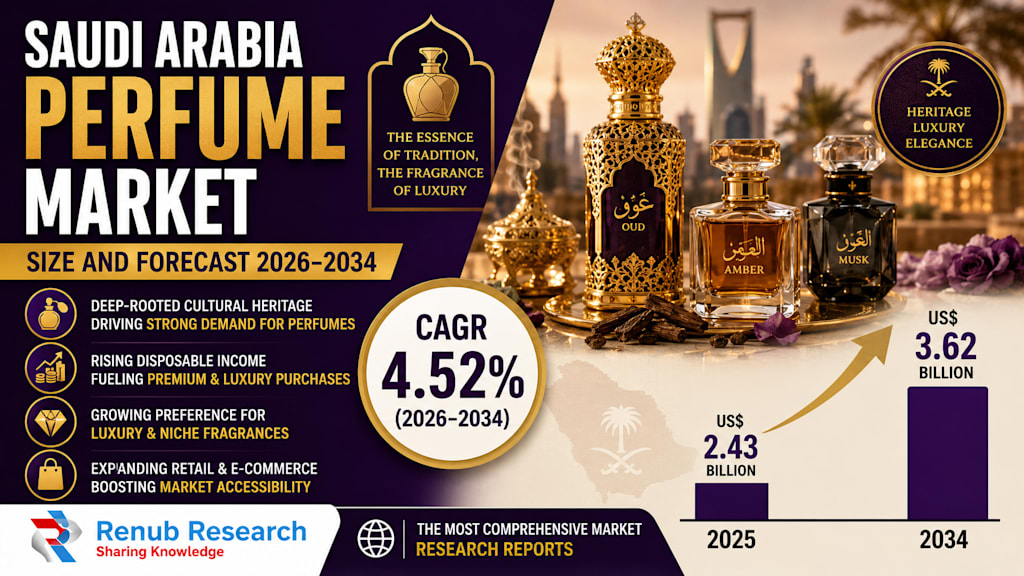
Saudi Arabia’s perfume industry is experiencing strong growth as cultural traditions, luxury consumption, and rising disposable incomes continue driving fragrance demand. According to Renub Research, the Saudi Arabia perfume market is projected to grow from US$ 2.43 Billion in 2025 to US$ 3.62 Billion by 2034, registering a CAGR of 4.52% during 2026–2034.

Perfume has always held a special place in Saudi Arabian culture. Unlike many countries where fragrance is viewed mainly as a fashion accessory or occasional luxury item, perfumes in Saudi Arabia are deeply connected to daily life, religious traditions, hospitality, and personal identity. Fragrances such as oud, amber, musk, and rose are not only admired for their scent but are also considered symbols of elegance, respect, and cultural heritage.
Today, Saudi Arabia stands among the most influential perfume markets in the world. The country combines a long-standing appreciation for traditional Arabic fragrances with growing demand for international luxury brands, niche perfumes, and modern scent innovations. Consumers are increasingly looking for premium, long-lasting fragrances that reflect individuality and social status, while younger generations are embracing global beauty trends alongside traditional perfume preferences.
According to Renub Research, the Saudi Arabia perfume market is expected to grow from US$ 2.43 Billion in 2025 to US$ 3.62 Billion by 2034, expanding at a CAGR of 4.52% during the forecast period from 2026 to 2034.
The market’s growth reflects the strong cultural importance of fragrance in Saudi society, rising disposable incomes, expanding retail infrastructure, and increasing demand for premium and luxury perfume products.
Perfume Is Deeply Rooted in Saudi Arabian Culture
Fragrance occupies a unique position in Saudi Arabian lifestyle and traditions. Perfumes are used not only for personal grooming but also during prayers, family gatherings, weddings, celebrations, and social occasions. Applying fragrance is often viewed as an expression of cleanliness, hospitality, and personal respect.
Traditional Arabic scents such as oud, musk, amber, and rose remain especially popular because of their rich and long-lasting aroma profiles. Perfume oils, attars, incense products, and concentrated fragrances continue to hold strong cultural significance even as modern spray-based perfumes gain popularity.
Unlike many global markets where perfume usage may be seasonal or event-based, fragrance consumption in Saudi Arabia is part of everyday routine for both men and women. This consistent demand creates a stable and highly resilient market environment.
The cultural significance of perfumes is also reflected in exhibitions and heritage initiatives. In May 2024, the “Perfumes of the East” exhibition opened in Riyadh under the patronage of Prince Badr bin Farhan, showcasing the historical importance of perfumes in Arab civilization through more than 200 artifacts and artworks.
This deep-rooted cultural connection ensures long-term demand for fragrance products across generations.
Rising Disposable Income Is Driving Premiumization
One of the strongest drivers of the Saudi Arabia perfume market is the increasing purchasing power of consumers. Rising disposable incomes and evolving lifestyle preferences are encouraging greater spending on luxury products, including premium perfumes and niche fragrance collections.
Perfumes are widely regarded as luxury items in Saudi Arabia, often purchased for gifting during weddings, religious celebrations, and social occasions. Consumers increasingly seek exclusive scents, premium packaging, and long-lasting formulations that offer a sense of individuality and prestige.
Luxury oud-based fragrances are particularly popular because oud remains one of the most valued ingredients in Middle Eastern perfumery. International luxury brands and regional fragrance houses are both expanding their premium offerings to meet growing consumer demand.
Younger consumers are also influencing the market through rising interest in personalized scents and exclusive collections. Niche perfumes with unique fragrance combinations are becoming increasingly desirable among affluent urban buyers.
According to the report, average disposable income per household in Saudi Arabia reached approximately US$18,260 annually in 2025, highlighting the strong purchasing potential supporting luxury consumption trends.
As premiumization continues across the beauty and personal-care industries, luxury perfumes are expected to remain a major growth segment in Saudi Arabia.
Retail Expansion and E-Commerce Are Transforming the Industry
The rapid development of retail infrastructure and digital commerce is significantly boosting the Saudi Arabia perfume market. Luxury shopping malls, specialty perfume boutiques, airport duty-free stores, and online retail platforms are expanding access to both local and international fragrance brands.
Modern retail environments are particularly important because Saudi consumers often view perfume shopping as a luxury experience. High-end malls and fragrance boutiques offer immersive shopping environments where customers can explore exclusive collections, customized scents, and premium packaging options.
E-commerce platforms are also transforming consumer behavior by making niche and luxury fragrances more accessible nationwide. Online shopping enables consumers to compare products, read reviews, follow influencer recommendations, and access international launches more easily.
Social media and influencer marketing are playing a major role in shaping fragrance trends. Beauty influencers, celebrities, and lifestyle creators frequently promote perfume brands through digital campaigns, helping companies reach younger consumers more effectively.
In February 2025, GCC-based retailer V Perfumes opened its 51st store at the Mall of Arabia in Jeddah, further strengthening retail presence in Saudi Arabia’s expanding fragrance market.
As retail modernization and digital engagement continue growing, perfume brands are gaining new opportunities to expand their market reach across the kingdom.
Tourism and Vision 2030 Are Supporting Growth
Saudi Arabia’s Vision 2030 initiative is contributing indirectly but significantly to perfume market growth. The government’s focus on tourism, retail development, and economic diversification is increasing consumer activity and attracting international visitors.
Perfumes are popular souvenirs and gift items for tourists visiting Saudi Arabia, particularly during religious travel seasons such as Hajj and Umrah. Cities like Mecca, Medina, and Jeddah experience especially strong fragrance sales during these periods.
The tourism sector also encourages the expansion of airport duty-free stores, luxury retail environments, and hospitality services where premium fragrances are commonly sold.
As Saudi Arabia continues positioning itself as a global tourism and lifestyle destination, the fragrance industry is expected to benefit from rising international exposure and consumer spending.
Eau de Parfum Remains the Dominant Segment
Among product categories, eau de parfum holds the strongest position in the Saudi Arabian fragrance market. Eau de parfum contains a higher concentration of fragrance oils, making it particularly suitable for Saudi consumers who prefer strong, long-lasting scents.
Fragrance notes such as oud, amber, musk, and oriental blends dominate this category because they align closely with regional scent preferences. Eau de parfum products are commonly worn during daily routines, business meetings, religious events, and social gatherings.
The segment also benefits from premium positioning and gifting demand, which support higher margins for manufacturers and retailers.
Although lighter fragrance categories such as eau fraîche are gradually gaining popularity among younger consumers and expatriates, strong and intense scents continue to dominate the Saudi market overall.
As demand for long-lasting premium fragrances continues increasing, eau de parfum is expected to remain one of the most important revenue-generating segments in the industry.
Luxury Perfumes Continue to Lead Consumer Preferences
Saudi Arabia’s luxury perfume segment is among the strongest globally because of the country’s cultural affinity for premium fragrances and luxury lifestyle products. Luxury perfumes are often viewed as symbols of sophistication, prestige, and personal identity.
Consumers are increasingly attracted to niche fragrance houses offering customized blends, rare ingredients, and exclusive collections. Oud-based perfumes remain particularly important within the luxury segment because of their association with tradition and prestige.
Luxury shopping malls, boutique perfume stores, and airport duty-free outlets are major contributors to premium fragrance sales. Personalized packaging and limited-edition collections are also gaining popularity among affluent buyers.
The growing trend toward premiumization is encouraging both international brands and local fragrance houses to innovate continuously through new scent formulations, packaging designs, and luxury branding strategies.
As consumer expectations continue evolving, the luxury segment is expected to remain one of the biggest contributors to market value growth.
Women Are Becoming an Increasingly Important Consumer Segment
The female perfume market in Saudi Arabia is expanding steadily as more women participate in the workforce, gain purchasing power, and embrace beauty and lifestyle trends. Perfumes are widely used by women for daily wear, social gatherings, and special occasions.
Floral, fruity, gourmand, and oriental fragrances are especially popular among female consumers, often blended with traditional Arabic notes such as oud and musk.
Social media, celebrity endorsements, and beauty-focused marketing campaigns strongly influence purchasing decisions within this segment. Online shopping platforms and specialized beauty retailers are also increasing accessibility to international fragrance brands.
As women’s economic participation and lifestyle spending continue rising in Saudi Arabia, the female perfume segment is expected to remain an important growth driver for the industry.
Riyadh, Jeddah, and Mecca Are Key Market Centers
Riyadh represents the largest and most influential perfume market in Saudi Arabia because of its high population density, purchasing power, and concentration of luxury retail infrastructure. Consumers in Riyadh strongly prefer premium and long-lasting fragrances, particularly oud-based perfumes and niche luxury collections.
Jeddah’s perfume market benefits from its cosmopolitan lifestyle, tourism activity, and role as a major business center. Consumers in Jeddah often combine interest in traditional Arabic fragrances with demand for international luxury brands.
Mecca has a distinct perfume market driven by religious tourism and pilgrimage activity. Alcohol-free attars, traditional Arabic perfumes, and travel-sized fragrance products are especially popular among pilgrims purchasing souvenirs and gifts.
Dhahran’s affluent demographic and expatriate population also support strong demand for both traditional and contemporary fragrance products.
Together, these cities form the core of Saudi Arabia’s highly dynamic perfume industry.
Competition and Counterfeit Products Remain Challenges
Despite strong growth opportunities, the Saudi Arabia perfume market faces several important challenges. One major issue is intense competition. The market includes international luxury brands, regional fragrance houses, and local perfume manufacturers all competing for consumer attention and market share.
This high level of market saturation forces companies to invest heavily in marketing, influencer partnerships, packaging innovation, and product differentiation strategies.
Counterfeit and imitation perfume products are another significant concern. Fake fragrances sold at lower prices can damage brand reputation and reduce consumer trust while also raising potential safety concerns due to poor-quality ingredients.
Although demand for luxury perfumes remains strong, certain consumer groups remain price-sensitive, particularly during periods of economic uncertainty.
Maintaining brand authenticity and consumer trust will remain critical priorities for perfume companies operating in Saudi Arabia.
Final Thoughts
The Saudi Arabia perfume market is evolving steadily as cultural traditions, luxury consumption, and modern retail development continue driving fragrance demand across the country. According to Renub Research, the market is expected to grow from US$ 2.43 Billion in 2025 to US$ 3.62 Billion by 2034, registering a CAGR of 4.52% during 2026–2034.
The industry’s growth is supported by deep-rooted cultural appreciation for fragrance, rising disposable incomes, growing interest in luxury and niche perfumes, and expanding retail and e-commerce infrastructure. At the same time, Vision 2030 initiatives and tourism expansion are creating new opportunities for both local and international fragrance brands.
Although competition and counterfeit products remain challenges, the long-term outlook for the Saudi perfume industry remains highly positive. As fragrance continues serving as both a cultural tradition and a luxury lifestyle statement, Saudi Arabia is expected to remain one of the world’s most influential perfume markets for years to come.
About the Creator
Enjoyed the story? Support the Creator.
Subscribe for free to receive all their stories in your feed.
Comments
There are no comments for this story
Be the first to respond and start the conversation.