
Saudi Arabia OTC Artificial Tears Market Set for Strong Growth as Digital Eye Strain and Dry Eye Cases Rise
Growing Screen Usage, Aging Population, and Expanding Retail Pharmacy Networks Are Driving Demand for Convenient Eye Care Solutions Across the Kingdom

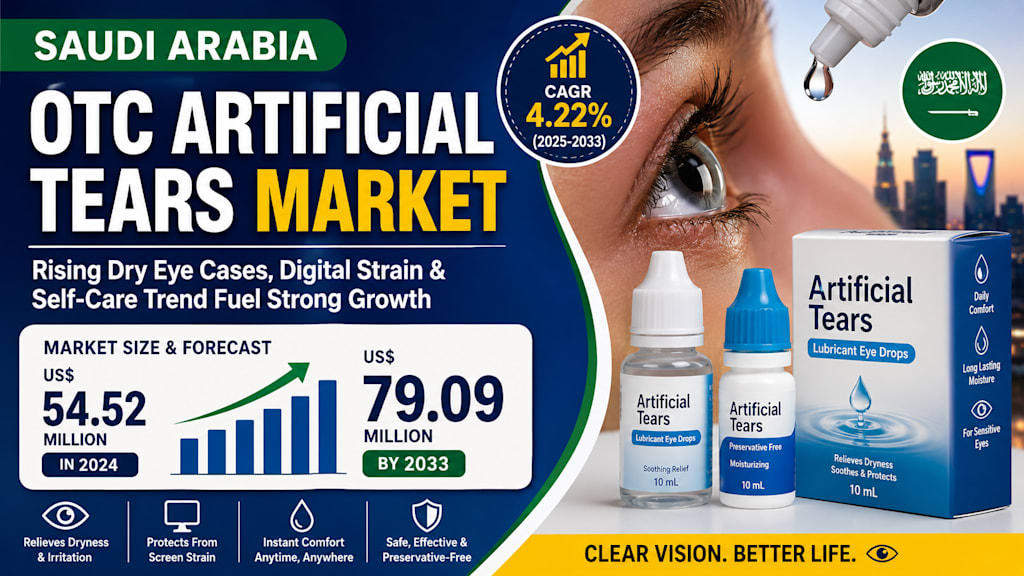
Saudi Arabia OTC Artificial Tears Market Poised for Significant Expansion Through 2033
Eye health is becoming an increasingly important topic across Saudi Arabia as modern lifestyles place greater strain on vision and ocular wellness. From prolonged screen exposure and air-conditioned indoor environments to the natural effects of aging, more individuals are experiencing symptoms associated with dry eye syndrome than ever before. As a result, over-the-counter (OTC) artificial tears have emerged as one of the most widely used and accessible eye care solutions.
According to Renub Research, the Saudi Arabia OTC Artificial Tears Market is projected to grow from US$ 54.52 million in 2024 to US$ 79.09 million by 2033, expanding at a CAGR of 4.22% between 2025 and 2033. This growth reflects increasing awareness of eye health, rising demand for self-care products, and improved accessibility through pharmacies and online retail channels.
As consumers seek quick, affordable, and convenient solutions for eye discomfort, OTC artificial tears are becoming a staple product in households across the Kingdom.
Understanding OTC Artificial Tears
Artificial tears are non-prescription lubricating eye drops designed to replicate the function of natural tears. They help relieve symptoms such as dryness, irritation, burning, itching, redness, and a gritty sensation in the eyes.
These products are commonly used for:
Dry Eye Syndrome (DES)
Computer Vision Syndrome
Contact Lens Discomfort
Environmental Irritation
Allergic Eye Conditions
UV and Blue Light Exposure
Available in multiple formulations including solutions, gels, ointments, emulsions, sprays, and suspensions, artificial tears offer varying levels of moisture retention and symptom relief.
Preservative-free formulations have gained popularity among users with sensitive eyes and those requiring frequent application throughout the day.
Dry Eye Syndrome Becoming a Growing Public Health Concern
One of the primary factors driving market growth is the increasing prevalence of dry eye disease across Saudi Arabia.
The country's climate plays a major role. High temperatures, low humidity, dust exposure, and extensive use of air conditioning contribute significantly to ocular surface dryness.
Research cited in the report highlights that nearly half of surveyed individuals exhibited symptoms associated with dry eye disease. Additionally, a substantial percentage of students reported eye strain and dryness linked to prolonged digital device use.
As smartphones, laptops, tablets, and remote work become integral parts of everyday life, eye-related discomfort is becoming increasingly common among both younger and older populations.
Consequently, consumers are turning to OTC artificial tears as a first-line treatment option for symptom management.
Digital Transformation Creating New Eye Health Challenges
Saudi Arabia's rapid digital transformation has delivered tremendous economic and social benefits. However, it has also increased screen exposure across all age groups.
Many professionals spend eight to ten hours daily in front of digital screens. Students frequently use tablets and laptops for education, while social media and entertainment applications contribute to additional screen time.
Excessive screen exposure reduces blink frequency, causing tear evaporation and ocular dryness. This condition, commonly known as digital eye strain, has become one of the fastest-growing contributors to dry eye symptoms.
Artificial tears offer immediate relief and are widely recommended for individuals experiencing prolonged screen-related discomfort.
As digital lifestyles continue to expand, demand for eye lubrication products is expected to rise accordingly.
Aging Population Supporting Market Expansion
Population aging is another important growth catalyst.
Older adults naturally produce fewer tears and often experience age-related ocular changes that increase susceptibility to dry eye syndrome.
Saudi Arabia's healthcare advancements and improved life expectancy are contributing to a growing elderly population. This demographic typically requires ongoing eye care and frequently relies on artificial tears to manage chronic dryness and irritation.
The increasing prevalence of age-related conditions such as cataracts, glaucoma, and post-surgical eye dryness further supports demand for OTC lubricating eye drops.
Manufacturers are therefore developing products specifically tailored to older consumers seeking long-lasting hydration and comfort.
Rising Consumer Preference for Self-Care Solutions
Healthcare consumers today are more informed and proactive than ever before.
Rather than scheduling medical appointments for mild eye discomfort, many individuals prefer immediate access to safe and effective OTC remedies.
Artificial tears fit perfectly within this self-care trend because they:
Require no prescription
Are easy to use
Offer immediate symptom relief
Are relatively affordable
Are widely available
Growing awareness campaigns regarding eye health have also educated consumers about the importance of early intervention before symptoms worsen.
As self-medication becomes more accepted and trusted, OTC artificial tears are benefiting significantly from this shift in healthcare behavior.
Innovation Improving Product Effectiveness
Manufacturers continue investing in research and development to improve the effectiveness and user experience of artificial tear products.
Recent innovations include:
Preservative-Free Formulations
These products reduce irritation associated with long-term preservative exposure and are particularly beneficial for sensitive eyes.
Advanced Lubrication Technologies
Modern formulations provide longer-lasting hydration and enhanced tear film stabilization.
Multi-Dose Delivery Systems
Innovative packaging enables preservative-free solutions to be delivered safely through convenient multi-dose bottles.
Lipid-Based Products
These formulations help reduce tear evaporation and provide extended symptom relief.
Such advancements are increasing consumer confidence while helping brands differentiate themselves in an increasingly competitive marketplace.
Retail Pharmacy Expansion Strengthening Accessibility
Saudi Arabia's Vision 2030 initiative has accelerated investments across healthcare and retail sectors.
The expansion of pharmacy chains, healthcare retail outlets, and optical stores has significantly improved consumer access to eye care products.
Today, OTC artificial tears can be purchased through:
Community pharmacies
Retail pharmacy chains
Supermarkets
Hypermarkets
Optical centers
Healthcare stores
This growing retail infrastructure enables consumers to access products quickly and conveniently.
As pharmacy networks continue expanding into smaller cities and rural areas, market penetration is expected to improve further.
Online Pharmacies Transforming Distribution
E-commerce has emerged as another powerful growth driver.
Online pharmacies offer several advantages including:
Home delivery convenience
Competitive pricing
Product comparison tools
Customer reviews
Wider product selection
Saudi consumers are increasingly embracing digital healthcare purchases, particularly among younger and technology-savvy demographics.
The ability to order eye care products online without leaving home has strengthened product accessibility while supporting market growth.
Manufacturers are also leveraging digital marketing and social media platforms to educate consumers and build brand awareness.
Market Challenges Remain
Despite favorable growth prospects, the market faces several challenges.
Regulatory Complexity
Eye care products must comply with strict regulatory requirements before entering the Saudi market.
Manufacturers often encounter lengthy approval procedures, labeling requirements, and compliance obligations that can delay product launches and increase operational costs.
These regulatory barriers can limit market entry for smaller firms and slow innovation.
Intense Competitive Environment
The OTC artificial tears market is highly competitive.
Global pharmaceutical companies compete alongside regional brands, creating significant pricing pressure.
To maintain market share, companies must continually invest in:
Product innovation
Consumer education
Marketing campaigns
Distribution expansion
This intense competition can compress profit margins and increase customer acquisition costs.
Segment Analysis
By Product Type
Solutions continue to dominate the market due to ease of use and affordability.
Other important categories include:
Ointments
Emulsions
Gels
Spray Solutions
Suspensions
By Application
Dry Eye Syndrome remains the largest application segment, followed by:
Allergies
Infections
UV and Blue Light Protection
Contact Lens Moisture Retention
Other Eye Irritation Conditions
By Distribution Channel
Major distribution channels include:
Drugstores and Supermarkets
Online Pharmacies
Retail Pharmacies
Other Channels
Retail pharmacies currently maintain a significant share due to trusted pharmacist recommendations and immediate product availability.
Future Outlook
The future of the Saudi Arabia OTC Artificial Tears Market appears highly promising.
Rising digital device usage, increasing prevalence of dry eye syndrome, favorable demographic trends, and expanding healthcare infrastructure will continue driving demand over the next decade.
Additionally, product innovations, growing self-care awareness, and the rapid adoption of online pharmacy platforms are expected to create new opportunities for manufacturers and distributors.
Companies that focus on preservative-free solutions, advanced hydration technologies, and strong omnichannel distribution strategies will likely gain a competitive advantage in the evolving marketplace.
With eye health becoming an increasingly important aspect of preventive healthcare, OTC artificial tears are positioned to remain a critical category within Saudi Arabia's consumer healthcare sector.
10 Recent Developments by Key Companies
1. AbbVie Inc.
AbbVie's eye care division continues expanding dry eye treatment portfolios through enhanced ocular surface disease research and patient-focused eye care initiatives.
2. Alcon
Alcon has strengthened its consumer eye care offerings through innovations focused on hydration technology and preservative-free artificial tear solutions.
3. Bausch Health Companies Inc.
Bausch + Lomb continues investing in advanced ocular lubrication products aimed at improving long-lasting symptom relief for dry eye sufferers.
4. Johnson & Johnson
The company has expanded digital eye health awareness programs while supporting innovations targeting screen-related eye strain.
5. Novartis AG
Novartis continues emphasizing ophthalmology research and strategic investments supporting broader eye care innovation.
6. Santen Pharmaceutical Co. Ltd.
Santen has increased focus on ocular surface disease management and advanced therapeutic eye care solutions across global markets.
7. Sun Pharmaceutical Industries Ltd.
Sun Pharma continues expanding ophthalmic product portfolios through research-driven innovation and strategic market expansion initiatives.
8. Nicox S.A.
Nicox has advanced ophthalmology-focused research programs aimed at improving treatments for eye discomfort and ocular diseases.
9. Akorn Inc.
Akorn remains recognized for its ophthalmic manufacturing expertise and broad portfolio of eye care formulations.
10. Global Industry Collaborations
Leading manufacturers continue forming partnerships focused on preservative-free technologies, patient education, and expanded retail distribution networks to strengthen market presence.
Final Thoughts
Saudi Arabia's OTC Artificial Tears Market is entering a period of steady and sustainable growth. Increasing cases of dry eye syndrome, widespread screen usage, aging demographics, and expanding pharmacy networks are creating favorable conditions for market expansion.
With the market expected to rise from US$ 54.52 million in 2024 to US$ 79.09 million by 2033, companies that prioritize innovation, accessibility, and consumer education will be best positioned to capitalize on the growing demand for convenient eye care solutions. As awareness of eye health continues to increase, OTC artificial tears are likely to become an even more essential component of everyday healthcare across the Kingdom.
About the Creator
Enjoyed the story? Support the Creator.
Subscribe for free to receive all their stories in your feed.
Comments
There are no comments for this story
Be the first to respond and start the conversation.