
Saudi Arabia Non-Invasive Prenatal Testing Market Set for Rapid Growth as Advanced Genetic Screening Gains Momentum
Rising Awareness, Healthcare Modernization, and Safer Prenatal Screening Solutions Drive Strong Market Expansion Through 2033

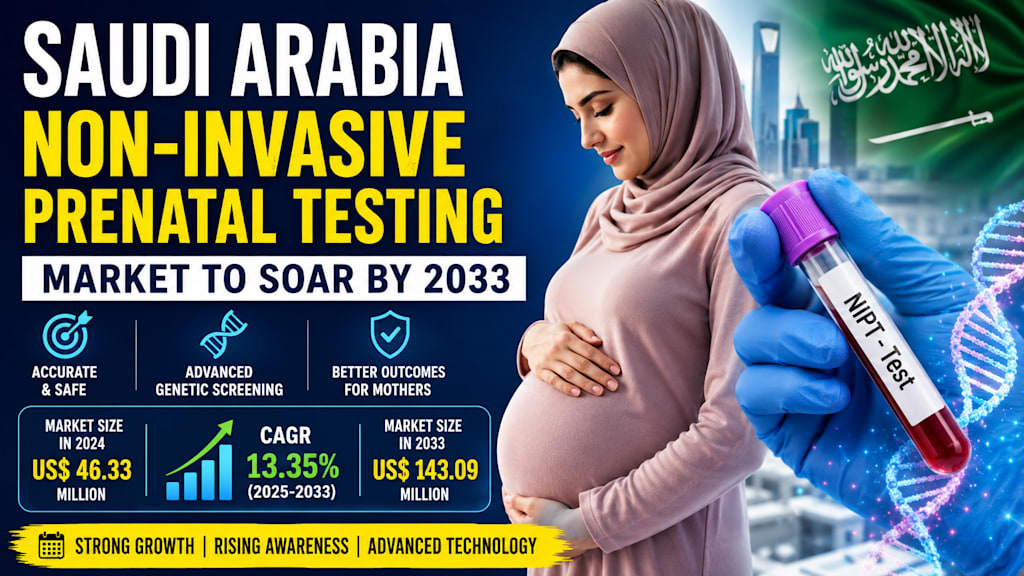
Saudi Arabia’s healthcare sector is entering a transformative era, and one of the most promising segments witnessing accelerated growth is the non-invasive prenatal testing (NIPT) market. As healthcare modernization aligns with the country’s Vision 2030 initiative, advanced diagnostic technologies are becoming more accessible to patients across the Kingdom. Among these innovations, NIPT has emerged as a preferred prenatal screening solution because of its accuracy, safety, and ability to detect chromosomal abnormalities early in pregnancy.
According to Renub Research, the Saudi Arabia Non-Invasive Prenatal Testing Market is projected to increase from US$ 46.33 million in 2024 to US$ 143.09 million by 2033, expanding at a CAGR of 13.35% from 2025 to 2033. The market’s expansion is being supported by technological advancements, increasing maternal age, growing awareness of genetic disorders, and the continuous development of Saudi Arabia’s healthcare infrastructure.
Understanding Non-Invasive Prenatal Testing
Non-invasive prenatal testing is a modern genetic screening method that analyzes fetal DNA present in the mother’s blood to identify potential chromosomal abnormalities. Unlike invasive procedures such as amniocentesis and chorionic villus sampling (CVS), NIPT carries no risk of miscarriage, making it a safer option for expectant mothers.
The test is commonly used to detect conditions including:
Down Syndrome (Trisomy 21)
Edwards Syndrome (Trisomy 18)
Patau Syndrome (Trisomy 13)
Turner Syndrome
Other genetic abnormalities
Healthcare providers increasingly recommend NIPT because of its high accuracy rates and early detection capabilities. The technology has become particularly important for women with high-risk pregnancies or advanced maternal age.
Saudi Arabia’s Healthcare Transformation Boosting Demand
Saudi Arabia’s healthcare system is undergoing rapid modernization. The government continues to invest heavily in digital healthcare, genomic medicine, and advanced diagnostics to strengthen the country’s medical ecosystem. This healthcare transformation is directly contributing to the growth of the NIPT industry.
Under Vision 2030, Saudi Arabia aims to improve healthcare accessibility, increase private sector participation, and encourage the adoption of advanced medical technologies. Hospitals and diagnostic laboratories across cities such as Riyadh, Jeddah, Dammam, Mecca, Medina, Jubail, Dhahran, Khobar, and Tabuk are increasingly integrating sophisticated prenatal diagnostic tools into routine maternal care.
As more healthcare facilities adopt advanced genetic screening technologies, pregnant women are gaining easier access to safer prenatal care solutions.
Growing Maternal Age Creating Strong Market Opportunities
One of the major growth drivers for Saudi Arabia’s NIPT market is the rising maternal age trend. Across many countries, including Saudi Arabia, women are increasingly delaying pregnancy due to career aspirations, lifestyle changes, and economic factors.
Pregnancies among women aged 35 years and older are associated with a higher risk of chromosomal abnormalities. As a result, demand for accurate prenatal screening has increased significantly.
NIPT offers a highly reliable solution for detecting fetal genetic abnormalities early without exposing mothers or fetuses to unnecessary medical risks. Healthcare professionals are therefore encouraging older pregnant women to undergo non-invasive screening procedures to ensure safer pregnancy management.
This demographic shift is expected to continue supporting strong demand for prenatal diagnostic technologies throughout the forecast period.
Technology Advancements Revolutionizing Prenatal Diagnostics
Technological innovation remains at the heart of the NIPT market’s rapid expansion. Advances in next-generation sequencing (NGS), molecular diagnostics, and bioinformatics are dramatically improving the accuracy and efficiency of prenatal genetic testing.
Modern NIPT platforms can now detect a broader range of genetic conditions beyond traditional chromosomal disorders. Advanced testing solutions are increasingly capable of identifying:
Microdeletions
Rare chromosomal disorders
Single-gene disorders
Inherited genetic mutations
These improvements are helping healthcare providers deliver more comprehensive prenatal assessments while minimizing patient anxiety and medical complications.
The integration of artificial intelligence and automated genomic analysis is also enhancing laboratory efficiency, reducing turnaround times, and increasing testing reliability.
Rising Awareness About Genetic Disorders
Public awareness regarding genetic disorders and prenatal health has improved substantially in Saudi Arabia over the last few years. Educational campaigns, improved healthcare counseling, and increased media coverage about prenatal care are encouraging expectant mothers to seek advanced screening options.
Families with a history of inherited disorders are becoming more proactive in seeking genetic counseling and prenatal testing services. Additionally, healthcare professionals are increasingly educating patients about the benefits of early diagnosis and preventive prenatal care.
As awareness expands, more women are likely to adopt NIPT as part of standard pregnancy management practices.
Expanding Insurance Coverage Supporting Adoption
Insurance coverage is gradually playing a larger role in increasing NIPT accessibility across Saudi Arabia. Although coverage remains limited in certain cases, private insurers and healthcare providers are beginning to recognize the long-term benefits of early genetic screening.
Improved insurance reimbursement policies can help reduce financial barriers for expectant mothers and increase the affordability of advanced prenatal diagnostics.
As healthcare reforms continue, broader insurance support could significantly accelerate market penetration, especially among middle-income families.
Challenges Limiting Wider Market Penetration
Despite strong growth potential, the Saudi Arabia NIPT market still faces several obstacles.
Limited Awareness Among Some Population Groups
Although awareness is improving, many pregnant women still lack sufficient knowledge about NIPT, its benefits, and its limitations. According to recent survey findings highlighted in the market report, approximately 64.6% of respondents were unfamiliar with NIPT, while 93.3% answered knowledge-related questions incorrectly.
This lack of awareness can delay adoption and limit informed decision-making during pregnancy.
Healthcare providers and policymakers may need to strengthen educational campaigns and counseling initiatives to improve public understanding of prenatal screening technologies.
High Testing Costs
Cost remains another major challenge. NIPT procedures are often expensive, particularly when insurance coverage is unavailable.
The report indicates that around 74.1% of participants would be willing to undergo NIPT if it were offered free of cost, while only 30% were willing to pay approximately SAR 1,500 for the procedure.
This pricing barrier may restrict adoption among lower-income families and widen healthcare accessibility gaps.
Reducing testing costs through local manufacturing, technological efficiencies, and broader insurance coverage could help improve market penetration in the coming years.
Hospitals and Diagnostic Labs Leading Market Expansion
Hospitals currently represent one of the largest end-user segments within the Saudi Arabia NIPT market. Major healthcare institutions are increasingly integrating genetic screening into maternity care programs to improve prenatal outcomes.
Diagnostic laboratories are also experiencing rapid growth as demand for advanced genomic testing services rises. Specialized labs equipped with high-throughput sequencing technologies are playing a critical role in expanding nationwide testing capacity.
The growing collaboration between hospitals, laboratories, and biotechnology companies is expected to accelerate innovation and improve patient access to advanced prenatal diagnostics.
Regional Growth Across Saudi Arabia
Major urban centers remain key contributors to market growth due to better healthcare infrastructure and higher awareness levels.
Cities driving NIPT adoption include:
Riyadh
Jeddah
Dammam
Dhahran
Jubail
Khobar
Tabuk
Mecca
Medina
These cities are home to advanced hospitals, specialized maternity clinics, and diagnostic laboratories that offer modern prenatal screening services.
As healthcare accessibility improves across smaller cities and rural areas, the market is likely to witness even broader expansion.
Competitive Landscape Intensifying
The Saudi Arabia NIPT market includes several leading global healthcare and biotechnology companies focused on innovation, strategic partnerships, and product expansion.
Key companies operating in the market include:
Eurofins Scientific
F. Hoffmann-La Roche Ltd
Invitae Corporation
Illumina Inc.
Natera Inc.
Centogene NV
Qiagen
These companies continue investing in research and development to improve testing accuracy, reduce costs, and expand product portfolios.
10 Recent Developments by Leading Companies
1. Illumina Expands Genomic Sequencing Capabilities
Illumina Inc. continues enhancing its next-generation sequencing platforms to improve prenatal screening precision and scalability.
2. Roche Accelerates Molecular Diagnostics Innovation
F. Hoffmann-La Roche Ltd is strengthening its molecular diagnostics division with advanced prenatal testing solutions and AI-driven genomic analytics.
3. Natera Enhances Personalized Genetic Testing
Natera Inc. has expanded its portfolio of personalized prenatal screening products focused on high-risk pregnancies.
4. Qiagen Improves Diagnostic Automation
Qiagen continues investing in automated sample processing technologies to improve testing efficiency and reduce laboratory turnaround times.
5. Eurofins Scientific Expands Laboratory Services
Eurofins Scientific is expanding its genetic testing laboratory network to support rising demand for prenatal diagnostics globally.
6. Invitae Broadens Genetic Screening Portfolio
Invitae Corporation has expanded screening capabilities for inherited disorders and prenatal health management.
7. Centogene Strengthens Rare Disease Diagnostics
Centogene NV continues focusing on advanced genomic analysis for rare and inherited diseases.
8. Healthcare Providers Increase Strategic Partnerships
Leading diagnostic companies are forming partnerships with Saudi hospitals and laboratories to improve regional testing access and healthcare delivery.
9. AI Integration Improves Data Interpretation
Several market participants are integrating artificial intelligence tools into genomic analysis platforms to increase accuracy and efficiency.
10. Focus on Localized Healthcare Expansion
Companies are increasingly targeting Middle Eastern markets, including Saudi Arabia, to capitalize on healthcare modernization initiatives and rising prenatal screening demand.
Future Outlook
The future of Saudi Arabia’s non-invasive prenatal testing market appears highly promising. Growing awareness, technological innovation, improved healthcare infrastructure, and rising maternal health consciousness are expected to drive sustained market expansion.
As testing technologies become more affordable and insurance support increases, NIPT could become a standard component of prenatal care across the Kingdom.
The market’s strong projected growth also reflects broader trends in precision medicine, personalized healthcare, and preventive diagnostics. Saudi Arabia’s ongoing healthcare transformation is likely to create new opportunities for biotechnology firms, diagnostic laboratories, hospitals, and healthcare investors over the next decade.
Final Thoughts
Saudi Arabia’s non-invasive prenatal testing market is evolving rapidly as advanced healthcare technologies reshape prenatal care standards across the region. The combination of safer diagnostic solutions, increasing healthcare investments, and rising awareness about genetic disorders is positioning NIPT as a critical component of modern maternal healthcare.
With strong government support, continuous technological advancements, and growing demand for early genetic screening, the market is expected to witness remarkable growth through 2033. While challenges such as cost and limited awareness still exist, ongoing healthcare reforms and innovation are likely to strengthen accessibility and adoption rates in the years ahead.
As prenatal diagnostics become increasingly sophisticated, Saudi Arabia is steadily establishing itself as an emerging hub for advanced genetic healthcare solutions in the Middle East.
About the Creator
Enjoyed the story? Support the Creator.
Subscribe for free to receive all their stories in your feed.
Comments
There are no comments for this story
Be the first to respond and start the conversation.