
Saudi Arabia Hotel Market Booms as Tourism and Vision 2030 Transform Hospitality Landscape
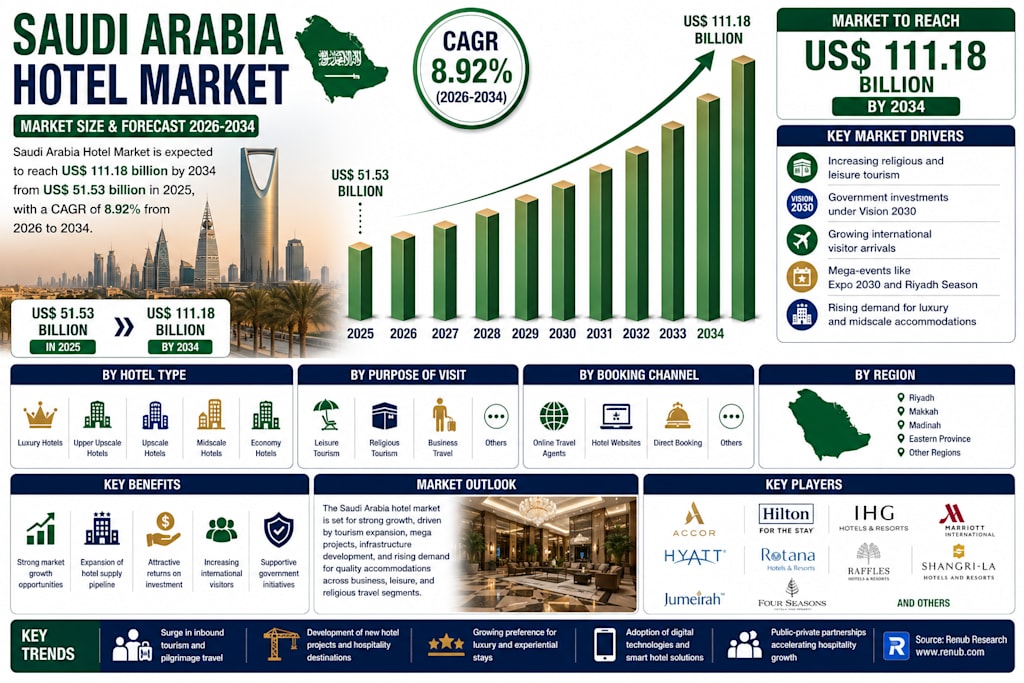
Fueled by religious tourism, mega-events, and government-backed initiatives, Saudi Arabia’s hotel market is projected to grow from US$ 51.53 billion in 2025 to US$ 111.18 billion by 2034, at a CAGR of 8.92% from 2026 to 2034.

Saudi Arabia’s hotel market is undergoing a remarkable transformation, driven by ambitious national reforms, rising tourism demand, and large-scale infrastructure development. Once heavily dependent on religious tourism, the country’s hospitality sector is now expanding into a diversified ecosystem that includes business travel, leisure tourism, and global mega-events.
According to Renub Research, the Saudi Arabia hotel market is expected to grow from US$ 51.53 billion in 2025 to US$ 111.18 billion by 2034, reflecting a compound annual growth rate (CAGR) of 8.92% during the forecast period. This rapid expansion highlights the country’s emergence as a major global tourism and hospitality destination.
The market includes a wide range of accommodations, from budget hotels and midscale properties to luxury resorts, serviced apartments, and boutique hotels. These establishments cater to diverse segments, including religious pilgrims in Makkah and Madinah, business travelers in Riyadh, and leisure tourists exploring the Red Sea coast and heritage sites.
Religious Tourism: The Core Growth Engine
Religious tourism remains the backbone of Saudi Arabia’s hotel industry. Millions of pilgrims visit Makkah and Madinah each year for Hajj and Umrah, generating consistently high demand for accommodation across all hotel categories.
During peak pilgrimage seasons, hotels operate at near-full capacity, prompting operators to adopt dynamic pricing strategies and expand their room inventory. Government investments in infrastructure—such as airport expansions, high-speed rail networks, and integrated hospitality facilities—have further strengthened the country’s ability to accommodate large volumes of visitors.
Hotels in these cities offer specialized services tailored to pilgrims, including multilingual staff, guided tours, and transportation to religious sites. This steady influx of visitors ensures year-round revenue streams and continues to attract both domestic and international hotel chains to expand their presence in key religious hubs.
Vision 2030 Driving Tourism Diversification
Saudi Arabia’s Vision 2030 initiative is a major catalyst for the hotel market’s growth. The government aims to diversify the economy by reducing reliance on oil and developing tourism as a key sector.
Mega-projects such as NEOM, the Red Sea Project, Al-Ula, and Qiddiya are transforming the country into a global tourism destination. These developments are creating new opportunities for hotel operators, particularly in the luxury and resort segments.
Policies aimed at simplifying visa processes, promoting international tourism, and encouraging private investment are further boosting the sector. Public-private partnerships are attracting global hotel brands, enhancing the country’s hospitality infrastructure and service standards.
In addition, domestic tourism is gaining momentum, supported by rising disposable incomes and government initiatives promoting travel within the country. Together, these factors are reshaping Saudi Arabia’s tourism landscape and driving sustained growth in the hotel market.
Mega-Events and Business Travel Boost Occupancy
Mega-events are playing a significant role in increasing hotel demand across Saudi Arabia. Events such as Riyadh Season, Formula E, and Expo 2030 attract millions of visitors, boosting occupancy rates and revenue for hotels.
Business travel is also on the rise, particularly in cities like Riyadh, Jeddah, and Dammam, which are emerging as major commercial and financial hubs. Hotels are responding by offering advanced amenities such as conference facilities, meeting rooms, and business services.
Leisure tourism is expanding as well, with growing interest in coastal destinations, heritage sites, and entertainment hubs. Hotels are adapting to this trend by offering flexible booking options, premium services, and integrated entertainment experiences.
The combination of religious, business, and leisure tourism ensures consistent demand across different segments of the hotel market, supporting long-term growth and investment.
Challenges: Seasonality and Competitive Pressure
Despite its strong growth, the Saudi Arabia hotel market faces several challenges. Seasonal fluctuations, particularly in religious tourism, can create uneven demand throughout the year. While peak periods see high occupancy, off-peak seasons may result in lower utilization rates.
Competition is another significant challenge. The entry of international hotel chains has intensified competition, requiring operators to differentiate themselves through service quality, pricing strategies, and unique guest experiences.
Regulatory compliance also adds complexity. Hotels must adhere to local laws, cultural expectations, and environmental standards, which can increase operational costs. Smaller operators may find it difficult to compete with larger, well-established brands.
Addressing these challenges will be essential for maintaining sustainable growth and ensuring the long-term success of the market.
Regional Insights: Key Hospitality Hubs
Makkah
Makkah is the epicenter of religious tourism, with millions of pilgrims visiting annually. Hotels in the city experience peak occupancy during Hajj and Umrah seasons, making it one of the most lucrative markets in the country.
Riyadh
Riyadh serves as the political and business hub, driving demand for business and luxury hotels. Mega-events and conferences further boost occupancy, while government initiatives enhance infrastructure and connectivity.
Madinah
Madinah’s hotel market is also driven by religious tourism, particularly visits to the Prophet’s Mosque. While demand is strong during peak periods, seasonal fluctuations remain a challenge.
Jeddah
Jeddah acts as a gateway city for pilgrims and a key destination for leisure and business travelers. Its coastal location and growing tourism infrastructure make it an important market for hotel operators.
These regional dynamics highlight the diverse drivers of hotel demand across Saudi Arabia, from religious tourism to business and leisure travel.
Competitive Landscape and Industry Developments
The Saudi Arabia hotel market is highly competitive, with both local and international players expanding their presence. Major companies include Marriott International, Hilton Hotels, Accor, IHG Group, and regional operators such as Dur Group and Al Hokair Group.
Recent developments reflect the market’s rapid evolution. In July 2025, Hilton signed its first Tapestry Collection property in Madinah, while IHG partnered with Ashaad Company to develop new properties in Jeddah and Al Khobar. Wyndham also announced plans to develop 100 Super 8 hotels, targeting the midscale and budget segments.
Technology is playing an increasing role, with companies like IDS Next implementing advanced ERP solutions tailored to the Saudi market. These innovations are enhancing operational efficiency and improving guest experiences.
Such developments demonstrate the growing investment and innovation shaping the future of Saudi Arabia’s hospitality sector.
Market Segmentation Reflects Broad Opportunities
The Saudi Arabia hotel market is segmented by hotel type, booking platform, and region. Hotel types include high-end, midscale, and budget properties, catering to different traveler segments.
Booking platforms are divided into online and offline channels, with digital platforms gaining popularity due to convenience and accessibility. Regional segmentation highlights key markets such as Makkah, Riyadh, Madinah, Jeddah, and other emerging destinations.
This segmentation underscores the diversity of opportunities within the market and the need for tailored strategies to address different customer segments.
Final Thoughts
Saudi Arabia’s hotel market is experiencing a period of unprecedented growth, driven by a combination of religious tourism, government initiatives, and expanding leisure and business travel.
Renub Research’s forecast of US$ 111.18 billion by 2034 reflects the country’s ambition to become a global tourism powerhouse.
While challenges such as seasonality and competition remain, the ongoing transformation under Vision 2030 is creating a strong foundation for long-term growth.
About the Creator
Enjoyed the story? Support the Creator.
Subscribe for free to receive all their stories in your feed.
Comments
There are no comments for this story
Be the first to respond and start the conversation.